Expressionism
Sea (Emil Nolde)
Emil Nolde (1867–1956) a realizat Sea. Face parte din mișcarea Expressionism. Este realizată în Oil On Canvas.
- Oil On Canvas

 Previzualizare

 Tablou în ulei pictat manual
 Trimite prin felicitare
 Distribuie
 Fișă informativă


 Descarcă imaginea
 Produse similare
 Radiografie
 Galerie foto
 Întrebări și răspunsuri

 Statistici
Sea, pe scurt
- Titlu
- Sea
- Artist
- Emil Nolde (1867–1956)
- Artist născut în
- Nolde, Danemarca
- Medium
- Oil On Canvas
- Mișcare
- Expressionism
- Perioadă
- Modern
- Subiect
- sea, sky, waves, clouds, blue, orange
Ce reprezintă Sea?
Identification of the Artwork and Artist
The artwork titled Sea is a painting by Emil Nolde. The artist was born in 1867 in Nolde, Denmark. He became a prominent figure in German expressionism, a movement characterized by the use of color and form to convey internal states rather than objective reality.
This specific work, Sea, focuses on a seascape. The composition centers on the interaction between a dramatic sky and the water below. The artist's approach to the subject matter emphasizes the movement of the elements through the application of pigment. The visual presentation relies on the contrast between the tones used for the clouds and those used for the undulating surface of the water.
Composition and Visual Elements
The composition is organized into distinct horizontal bands that establish a layered perspective. The upper portion of the canvas is occupied by a turbulent sky, which transitions into a middle band representing the water’s surface. At the bottom, a suggestion of a distant shoreline or horizon line provides a boundary to the scene. This arrangement creates a sense of depth through the stacking of color and form rather than through traditional linear perspective.
The color palette relies on high-contrast temperature shifts. The sky is dominated by warm yellows and oranges, while the clouds within this upper section contain strokes of purple and red. Below the sky, the sea is rendered in cool blues and greens. These colors are applied in thick, visible strokes that create a palpable texture across the surface. The water is depicted as undulating waves, formed by broad, heavy brushstrokes that emphasize the movement of the liquid surface.
Artistic Style and Technique
The work is executed in an Expressionistic style. The application of paint relies on an impasto technique, where thick layers of pigment are built up on the surface. These layers create a palpable texture that remains visible across the canvas. The paint is not smoothed or blended into a flat plane; instead, the material maintains a physical presence that defines the forms of the sky and the water.
Bold and expressive brushstrokes characterize the entire composition. In the sky, large, amorphous forms are created through the application of color rather than through the use of precise lines or defined outlines. The sea is rendered with broad, undulating strokes that suggest the movement of waves. These strokes are thick and visible, contributing to the overall tactile quality of the surface. The interaction between the light and the heavy pigment creates a sense of luminosity, as the light appears to emanate from behind the cloud forms.
The Artist and His Artistic Movement
Emil Nolde was a German painter and printmaker who emerged as one of the first Expressionists. His practice involved a tactile connection to his materials, a quality stemming from his early years working as a woodcarver and furniture decorator. He was a member of the Die Brücke group, a collective that sought to move away from academic traditions by searching for a new pictorial language. His approach often prioritized the internal sensation of a subject over its literal likeness, focusing on the psychological and the primal through the use of color and form.
The artist explored color extensively in both oil painting and watercolor. In his oil works, he often utilized heavy, golden yellows and deep reds to provide a sense of weight to the surface. From the 1930s until his death, watercolor became a primary medium for him. He found that this medium allowed him to translate his concepts to the paper with greater speed than oil painting. His watercolors often feature vivid, brooding storm-scapes and brilliant florals, where the color functions as the substance of the shape itself.
- Autumn Sea (about 1908)
- The Mocking of Christ (1909)
- Masks (about 1906-1907)
Related Works by Emil Nolde
The artist's exploration of maritime themes continues in several other compositions. Autumn Sea presents a turbulent seascape where deep reds, magenta, and pink appear in the foreground waves against a sky of yellow and orange. In Sea and ship in the sunset, an oil on canvas, the composition features a large expanse of sky transitioning from yellow to orange above a body of water that reflects these specific tones. This work includes a solitary vessel drifting toward the horizon.
Other works demonstrate a focus on atmospheric conditions and different mediums. Sea with Red Sky is an expressionist painting where the sky is rendered in a deep, saturated red. In Light Sea Mood, the scene depicts the ocean at sunset with a beach in the foreground and clouds forming a backdrop. The water meets the shore in a manner described as calm and serene, featuring two people standing upon the sand.
The artist also utilized watercolor to capture movement. Stormy Sea is a watercolor landscape painting from 1930. This piece contains organic lines and uses bright colors, specifically blues and oranges. The work includes two boats on the horizon and a steam boat positioned off to the right side. The orange light in the sky contrasts with the dark blue waters, and white pigment is used to indicate the crests of moving waves.
Imagini la înaltă rezoluție ale lui Sea
Domeniu public: artistul a decedat în 1956.
Emil Nolde, Sea. Domeniu public
Întrebări despre Sea, răspunsuri
Din ce materiale este realizată „Sea”?
"Sea" este realizat în Oil On Canvas."
Ce subiecte sunt reprezentate în "Sea" de Emil Nolde?
Temele prezente în "Sea" de Emil Nolde includ sea, sky, waves, clouds, blue, orange, yellow, horizon. Împreună, acestea definesc subiectul întregii opere de artă.
Imaginea pentru "Sea" de Emil Nolde poate fi reprodusă liber?
În ceea ce privește drepturile de autor, "Sea" este în domeniul public – drepturile de autor au expirat.
Cine este artistul din spatele "Sea"?
„Sea” este atribuit lui Emil Nolde.
Din ce curent artistic face parte "Sea" de Emil Nolde?
Mișcarea asociată cu "Sea" de Emil Nolde este Expressionism. Această clasificare plasează lucrarea printre artiști și opere de artă conexe.
În ce etapă a evoluției lui Emil Nolde se încadrează „Sea”?
„Sea” aparține perioadei Mature Period din cariera lui Emil Nolde. Această clasificare corelează opera cu evoluția artistului.
Care este motivul statutului drepturilor de autor pentru "Sea"?
Statutul drepturilor de autor pentru "Sea" - în domeniul public – drepturile de autor au expirat - este determinat de data decesului artistului, în anul 1956.
Ce punct comun are "Sea" cu restul creației lui Emil Nolde?
În creația lui Emil Nolde, „Sea” se înscrie în stilul Expressionism, alături de temele post-impressionism, die brücke, expressionism, subjective emotion, nature's raw power.
Este "Sea" reprezentativ pentru temele abordate de obicei de Emil Nolde?
Temele recurente ale lui Emil Nolde includ post-impressionism, die brücke, expressionism, subjective emotion, nature's raw power; „Sea” se concentrează pe sea, sky, waves, clouds, blue, orange, yellow, horizon.
Despre artistul Emil Nolde
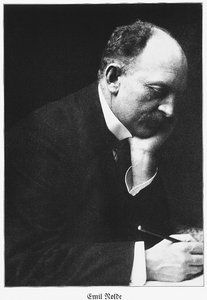
1867–1956, Danemarca
Emil Nolde
Viața și Identitatea lui Emil Nolde Născut sub numele de Hans Emil Hansen, pe 7 august 1867, omul care avea să devină cunoscut sub numele de Emil Nolde, a crescut în apropierea satului Nolde, în Duchia Schleswig. Primii săi ani de viață au fost modelați de viața rurală și agrară a familiei sale, un univers guvernat de ritmurile pământului. Cu toate acestea, el a ales să se îndepărteze de acest destin predeterminat, preferând să lucreze ca sculptor pe lemn și decorator de mobilier. Această muncă tactilă și fizică a fost fundamentul care a precedat transformarea sa către pictură și gravură.
Alte lucrări ale lui Emil Nolde
 Sunset
 Sea with Red Sky
 Couple on the beach1903
 Masks1911
Eseuri despre Sea
 18th century German painters18th century German painters like Caspar David Friedrich and Johann Zoffany defined an era of artistry. View these masterpieces on Original…
 Emil Nolde: The 25 Most Powerful Expressionist MasterpiecesExplore 25 iconic Emil Nolde masterpieces. Discover the soul of Expressionism through his vibrant colors. Explore the full collection onlin…
 Expressionism vs. New Objectivity: Emotion vs. Precision in German ArtMaster the tension between Expressionist emotion and New Objectivity precision. Explore the soul of German modern art now.