Vezi în context
 Trimite
 Distribuie
 Detalii
 Ghidul

 Descarcă
 Produse similare
 Radiografie
 Diaporama
 Statistici
Self-Portrait with Outstretched Arms1911

 Citește mai mult
Giclée / Imprimare artistică
Printuri giclée sau pe canvas de calitate muzeală, cu proces de producție rapid și opțiuni flexibile de finisare. ( Comandă pictură realizată manual Treci la imagine digitală)




P118B lei10

P118H lei10

P118W lei10

P438Z lei10

P508JH lei12

P508YH lei12

P805H lei10

P805Z lei10

P919BZ lei10

P919G lei10

P919XJ lei10

P959ZH lei10

P968JZ lei12

W106C lei8

W218G lei10

W218JH lei8

W218Y lei10

W307PJ lei10

W316G lei10

W316PJ lei8

W316Y lei10

W398PJ lei8

W4111J lei10

W500HY lei15

W500JH lei15

W692G lei12

W849H lei8

W940BG lei15

W953PJ lei8




Alegeți dintre dimensiunile noastre prestabilite, care respectă proporțiile originale ale operei de artă.

Puteți introduce propriile dimensiuni pentru a se potrivi unui anumit cadru sau spațiu. Dacă dimensiunea selectată nu corespunde proporțiilor imaginii originale, vom decupa lucrarea de artă sau vom extinde imaginea cu margini oglindite sau cu o culoare uniformă. Un mockup digital va fi trimis pentru aprobarea dumneavoastră înainte de începerea producției.
Vă rugăm să rețineți că previzualizarea de pe ecran nu reflectă decuparea sau extinderea reală. Doar mockup-ul va arăta cu exactitate compoziția finală.
Deși dimensiunile personalizate sunt disponibile, vă recomandăm să selectați o dimensiune din lista predefinită pentru a păstra proporțiile originale.
Livrare în întreaga lume () în 2 săptămâni, în loc de cele 4/5 săptămâni standard. (8 Octombrie)

Livrare expres gratuită la nivel mondial

Pânză de in premium

Asigurare completă pentru transport

Garanție de rambursare a taxelor vamale

Garanția fidelității culorilor

Politica de retur în 100 de zile (doar pentru defecte)

Garanție de rambursare 100%

Reducere pentru comenzi multiple
 Opțiunea cu sticlă este disponibilă doar pentru dimensiuni de sub 110 cm

Self-Portrait with Outstretched Arms1911
Giclée / Imprimare artistică
Dimensiune reproducere
-


Preț total
lei 362
Self-Portrait with Outstretched Arms – A Window into Schiele’s Soul
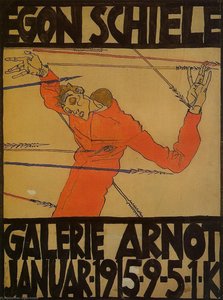
Egon Schiele's "Self-Portrait with Outstretched Arms" (1911) isn’t merely a depiction of a man; it’s an intensely personal and psychologically charged exploration of vulnerability, longing, and the very act of reaching for something just beyond grasp. Painted during a period of profound artistic and emotional upheaval in his life, this work stands as a cornerstone of Expressionism, capturing the raw energy and unsettling beauty that defined Schiele's unique vision. The painting immediately commands attention with its dramatic composition – the figure dominates the canvas, positioned seemingly adrift within a stark white void. This deliberate isolation amplifies the sense of yearning radiating from the subject’s outstretched arms, inviting the viewer to step into his world of intense feeling.
Schiele's masterful use of line is paramount here. The limbs are elongated and sinuous, almost skeletal in their fragility, conveying a sense of both physical vulnerability and an urgent desire for connection. Notice how the lines converge towards the outstretched hands – they aren’t simply extended; they vibrate with a palpable energy, suggesting a desperate plea or perhaps even a silent scream. The brown jacket, rendered with quick, decisive brushstrokes, provides a grounding element amidst the swirling emotionality of the piece, while the mustache, a recurring motif in Schiele's self-portraits, subtly hints at an awareness of his own image and its presentation to the world.
Expressionist Roots and Personal Turmoil
To understand “Self-Portrait with Outstretched Arms,” it’s crucial to situate it within the context of Egon Schiele's tumultuous life. Born in 1890 in Tulln an der Donau, Austria, his early years were marked by illness, loss – notably the death of his father from syphilis at just fourteen – and a pervasive sense of instability. These experiences profoundly shaped his artistic output, fueling a preoccupation with themes of mortality, sexuality, and psychological distress. Schiele’s relationship with his uncle, Leopold Czihaczek, further contributed to this atmosphere of unease; the guardianship imposed upon him fostered a spirit of independence but also a feeling of being perpetually on the periphery.
The painting was created during a period when Schiele was grappling with personal and professional challenges. He had recently moved to Vienna and was navigating the complex world of the Viennese art scene, encountering both admiration and criticism. The influence of Gustav Klimt, a prominent figure in the Secession movement, is evident in Schiele’s early work, but he quickly forged his own distinctive path – one characterized by a brutal honesty and an unflinching exploration of the darker aspects of human experience. The painting reflects this shift; it's less about polished beauty and more about raw emotion.
Symbolism and Emotional Resonance
Beyond its formal elements, “Self-Portrait with Outstretched Arms” is rich in symbolic meaning. The white background serves not as a neutral space but rather as an abyss – a void that mirrors the subject’s internal state of isolation and perhaps even despair. The outstretched arms themselves are laden with significance; they represent a reaching out, a desire for connection, but also a potential for rejection or disappointment. Some art historians interpret them as symbolizing a yearning for spiritual transcendence, while others see them as an expression of loneliness and the inherent human need for intimacy.
The figure’s posture – almost collapsing inward – suggests a vulnerability that is both heartbreaking and compelling. The intensity of his gaze (though not directly visible in this reproduction) is palpable; it speaks to a profound awareness of himself, his mortality, and perhaps even the futility of his efforts to connect with others. Schiele's use of color—primarily browns and muted tones—further enhances the painting’s somber mood, reinforcing its themes of loss and introspection.
A Legacy of Intensity
“Self-Portrait with Outstretched Arms” remains one of Egon Schiele’s most iconic works, a testament to his extraordinary talent and his willingness to confront difficult truths. It's a painting that lingers in the mind long after it has been viewed, prompting reflection on themes of human vulnerability, isolation, and the enduring search for meaning. Reproductions of this powerful image offer a remarkable opportunity to experience Schiele’s intensely personal vision – a window into the soul of an artist grappling with life's most profound questions. Consider commissioning a hand-painted reproduction from OriginalUniqueArt.com to bring this emotionally resonant masterpiece into your home or office, allowing its evocative power to inspire and captivate for years to come.
Întrebări și răspunsuri
Unde pot găsi statistici despre "Self-Portrait with Outstretched Arms1911" de Egon Schiele?
Pagina Statistici pentru "Self-Portrait with Outstretched Arms1911" de Egon Schiele prezintă statistici privind vizitele publice: numărul de vizite lunare ale acestei opere, o comparație cu cele mai vizionate lucrări ale artistului și proveniența vizitatorilor.
Ce emoție transmite opera de Expressionism „Self-Portrait with Outstretched Arms1911”?
În cadrul mișcării Expressionism, „Self-Portrait with Outstretched Arms1911” este înregistrată cu un ton Melancholic.
La ce artist este atribuită opera „Self-Portrait with Outstretched Arms1911”?
„Self-Portrait with Outstretched Arms1911” este atribuit lui Egon Schiele.
Cum pot achiziționa o printă a lucrării "Self-Portrait with Outstretched Arms1911" de Egon Schiele?
„Self-Portrait with Outstretched Arms1911” este disponibil sub formă de o printă de fine art pe canvas din bumbac sau pe hârtie canvas arhivistică. Comenzile pot fi plasate pe această pagină, în dimensiunea dorită de dumneavoastră.
Cine vinde copii pictate manual ale operei "Self-Portrait with Outstretched Arms1911" de Egon Schiele?
Puteți comanda o reproducere pictată manual a operei "Self-Portrait with Outstretched Arms1911" de Egon Schiele direct pe această pagină: o reproducere pictată manual în ulei pe pânză de in, realizată la comandă.
Cât de cunoscută este opera „Self-Portrait with Outstretched Arms1911” de Egon Schiele?
"Self-Portrait with Outstretched Arms1911" de Egon Schiele are un nivel de popularitate Iconic. Această clasificare reflectă cât de larg este recunoscută lucrarea.
În ce tehnică este realizată lucrarea "Self-Portrait with Outstretched Arms1911" de Egon Schiele?
Tehnica utilizată pentru "Self-Portrait with Outstretched Arms1911" de Egon Schiele este Acrylic On Canvas. Reproduucerile urmăresc să reproducă aspectul acestei tehnici.
Biografie artist
A Life Forged in Expression
Egon Schiele’s life, a whirlwind of artistic passion and profound personal hardship, unfolded from his birth in Tulln an der Donau, Austria, in 1890. His early years were steeped in sorrow; the loss of his father, a railway station master, due to syphilis when Egon was just fourteen cast a long shadow, fueling within him a haunting preoccupation with mortality and the fragility of human existence. Raised initially by his mother and later under the watchful eye of his uncle Leopold Czihaczek, Schiele’s childhood lacked the stability common to many, yet it fostered an independent spirit—a crucial element in shaping his artistic vision. From a young age, he displayed an intense fascination with trains – a motif that would subtly reappear throughout his work – and a burgeoning talent for drawing, though this was often met with disapproval from his father who viewed it as a distraction from more practical pursuits. The untimely death of his sister Elvira further deepened the emotional landscape of his youth, imbuing his art with an undercurrent of melancholy and vulnerability. These formative experiences—loss, isolation, and a yearning for self-expression—became the bedrock upon which Schiele’s unique artistic voice was built, constantly grappling with themes of life, death, and the complexities of the human condition.The Crucible of Vienna: Artistic Development
Schiele's formal artistic training began at the Kunstgewerbeschule (School of Arts and Crafts) in Vienna, but he quickly found himself stifled by its conservative approach—a rigid adherence to tradition that clashed with his burgeoning creative spirit. Seeking a more stimulating environment, he transferred to the Akademie der bildenden Künste (Academy of Fine Arts), only to discover further disillusionment with its academic constraints. This dissatisfaction led him to abandon formal training altogether, choosing instead to forge his own path – a bold decision reflecting his unwavering artistic conviction and determination to express himself on his own terms. A pivotal influence during these early years was Gustav Klimt, the celebrated Secessionist painter. Schiele deeply admired Klimt’s decorative style and his exploration of symbolism, even receiving mentorship from the established artist. However, Schiele soon diverged significantly from Klimt's aesthetic, developing a distinctly individual voice characterized by its stark honesty, psychological intensity, and unflinching portrayal of human vulnerability. He became a founding member of the *Neues Wiener Kunstgruppe* (New Viennese Art Group) in 1909, alongside other progressive artists who challenged the prevailing artistic norms of the time. This group provided a space for experimentation and innovation, allowing Schiele to refine his style and explore new avenues of expression. His early works—often unsettling portraits and self-portraits—began to emerge as powerful statements of emotional turmoil, featuring distorted figures, elongated limbs, and a palpable sense of unease. These paintings were not merely representations of physical form but explorations of the inner landscape—the anxieties, desires, and fears that haunted the human psyche. He sought to depict not what he *saw*, but what he *felt*.Raw Emotion and Unflinching Truth
Egon Schiele’s art is immediately recognizable for its raw honesty and psychological depth. He fearlessly confronted themes often considered taboo – sexuality, death, anxiety, isolation – with an unflinching gaze. His distinctive style features elongated figures, contorted poses, and expressive lines that convey a sense of unease and emotional intensity. The human form, particularly the nude, became his primary subject, not as an object of idealized beauty but as a vessel for exploring the complexities of human experience. Self-portraits constitute a significant portion of his oeuvre, offering intimate glimpses into his inner world—a world often marked by loneliness and self-doubt. He didn’t shy away from depicting himself in unflattering or vulnerable poses, revealing a profound level of self-awareness and introspection. Beyond self-portraiture, Schiele created numerous portraits of others, capturing their likenesses with an unsettling realism that seemed to penetrate beneath the surface. His landscapes, while less central to his work than his figurative paintings, demonstrate his mastery of form and color, often reflecting the same emotional intensity as his portraits. The use of line is particularly striking in Schiele’s work; it's not merely a tool for defining shape but an expressive force that conveys emotion and psychological tension. Recurring motifs like the *Physalis* plant – symbolizing death and transience with its delicate, papery husk – further underscore this preoccupation with mortality. The influence of Symbolism is also evident in his use of color and symbolism, adding layers of meaning to his compositions.A Legacy Cut Short: Achievements & Significance
Despite facing censorship and legal challenges—including a brief imprisonment for allegedly corrupting minors with his art—Schiele gained recognition within Vienna’s avant-garde circles. His work challenged the conventions of the time, provoking both admiration and outrage. By the time of his untimely death during the Spanish flu pandemic in 1918 at the age of twenty-eight, he had established himself as a leading figure in Austrian Expressionism. Significant works such as *Self-Portrait with Physalis*, *Couple Embracing*, and *Field Landscape (Kreuzberg near Krumau)* stand as testaments to his artistic genius. His influence on subsequent generations of artists is undeniable, particularly those interested in exploring psychological themes and challenging conventional artistic norms. Schiele’s bold approach to form and subject matter continues to resonate with audiences today, making him one of the most important and influential figures in early 20th-century art. His paintings are now held in major museum collections worldwide, including the Leopold Museum in Vienna and the Egon Schiele Art Centrum in Český Krumlov, ensuring his artistic legacy endures. He left behind a body of work that is not merely aesthetically compelling but profoundly human—a testament to the power of art to confront the complexities of existence with honesty, courage, and unwavering vision.- Key Themes: Mortality, sexuality, isolation, psychological turmoil.
- Influences: Gustav Klimt, Viennese Secession, personal trauma.
- Style Characteristics: Elongated figures, contorted poses, expressive lines, raw emotion.

Egon Schiele
1890 - 1918 , Austria
Informații rapide
- Artistic Movement Or Style: Expressionism
- Artists Or Movements Influenced By This Artist: ['Secession']
- Artists Who Influenced This Artist: ['Klimt']
- Date Of Birth: 1890
- Date Of Death: 1918
- Full Name: Egon Schiele
- Nationality: Austrian
- Notable Artworks:
- Self-Portrait
- Couple
- Peisaj
- Place Of Birth: Tulln, Austria
Articole conexe
Egon Schiele: Expressionism, Anxiety & the Modern Condition – A Comprehensive Exploration
Explore the emotionally charged world of Egon Schiele (1890-1918). Discover his Expressionist masterpieces, psychological themes, and lasting impact on modern art. A comprehensive guide for collectors & enthusiasts.
Egon Schiele: Cele Mai Remarcabile 25 De Opere – Artă, Decorațiuni și Inspirație
Descoperă cele mai importante 25 de opere ale lui Egon Schiele! Explorează expresionismul austriac, portretele intense și autoportretele emoționante. Reproduceri artă de calitate muzeală & inspirație decor pe OriginalUniqueArt.com.
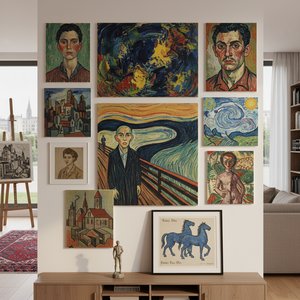
Expresionismul în Artă: Cele Mai Reprezentative 10 Capodopere | OriginalUniqueArt.ro
Descoperă cele mai importante 10 capodopere ale expresionismului! Explorează poveștile lui Munch, Van Gogh și Kandinsky. Reproduceri de artă de calitate muzeală pentru un decor interior unic. OriginalUniqueArt.ro

The Inner Landscape: Exploring Themes of Introspection in Visual Art Across Movements & Eras
Explore the captivating world of introspective art! Discover how artists across eras – from Rembrandt to Kahlo – used self-portraiture to reveal their inner worlds and emotional depths. A journey through art history & psychology.
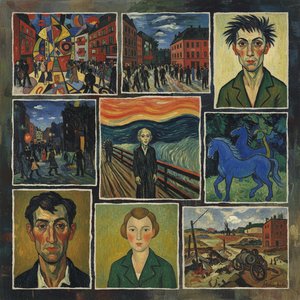
Expresionismul în Artă: 10 Capodopere Definitorii pentru Decorul Tău
Descoperă 10 capodopere expresioniste de la Munch, Van Gogh și Kandinsky! Explorează istoria artei moderne, emoțiile puternice și culorile vibrante. Reproduceri tablouri de calitate muzeală pentru un decor unic pe OriginalUniqueArt.com