Vezi în context
 Trimite
 Distribuie
 Detalii
 Ghidul

 Descarcă
 Produse similare
 Radiografie
 Diaporama
 Statistici
Autorportret


 Citește mai mult
Giclée / Imprimare artistică
Printuri giclée sau pe canvas de calitate muzeală, cu proces de producție rapid și opțiuni flexibile de finisare. ( Comandă pictură realizată manual Treci la imagine digitală)




P118B lei10

P118H lei10

P118W lei10

P438Z lei10

P508JH lei12

P508YH lei12

P805H lei10

P805Z lei10

P919BZ lei10

P919G lei10

P919XJ lei10

P959ZH lei10

P968JZ lei12

W106C lei8

W218G lei10

W218JH lei8

W218Y lei10

W307PJ lei10

W316G lei10

W316PJ lei8

W316Y lei10

W398PJ lei8

W4111J lei10

W500HY lei15

W500JH lei15

W692G lei12

W849H lei8

W940BG lei15

W953PJ lei8




Alegeți dintre dimensiunile noastre prestabilite, care respectă proporțiile originale ale operei de artă.

Introduceți lățimea și înălțimea de care aveți nevoie, pentru a se potrivi ramei sau peretelui dumneavoastră. O printare poate fi doar tăiată, niciodată extinsă dincolo de dimensiunea imaginii originale, astfel încât o dimensiune cu o formă diferită va pierde o parte din imagine. Vă trimitem o simulare digitală pentru aprobare înainte de a imprima orice. Imaginea afișată pe această pagină nu prezintă tăierea reală — doar simularea arată acest lucru.
Livrare în întreaga lume () în 2 săptămâni, în loc de cele 4/5 săptămâni standard. (20 Octombrie)

Livrare expres gratuită la nivel mondial

Pânză de in premium

Asigurare completă pentru transport

Garanție de rambursare a taxelor vamale

Garanția fidelității culorilor

Politica de retur în 100 de zile (doar pentru defecte)

Garanție de rambursare 100%

Reducere pentru comenzi multiple
 Opțiunea cu sticlă este disponibilă doar pentru dimensiuni de sub 110 cm

Autorportret
Giclée / Imprimare artistică
Dimensiune reproducere
-


Preț total
lei 367
Egon Schiele’s Self Portrait: Oglindă a Anxietății Expresioniste
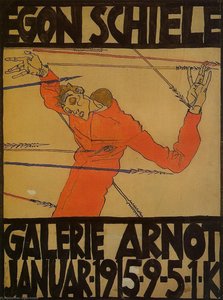
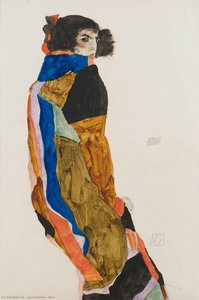
Egon Schiele (1890-1918), pictor expresionist austriac, reprezintă o voce unică în peisajul tumultuos al artei timpurii secolului XX. Opera sa este caracterizată de emoție viscerală și imagini tulburătoare – teme care își găsesc cea mai poignant exprimare în “Self Portrait”, realizat în 1912. Această lucrare nu este doar o reprezentare a artistului; este o explorare neînfricată a tumulturilor interioare, reflectând anxietățile mai profunde care pluteau sub suprafața culturii europene de la acea vreme.
- Context Artistic: Călătoria artistică a lui Schiele a fost profund influențată de Gustav Klimt, al cărui stil decorativ opulent – evident în special în “The Kiss” – a stabilit un precedent pentru palete de culori îndrăznețe și forme stilizate. Cu toate acestea, Schiele s-a distanțat rapid de estetica lui Klimt, creând propriul drum marcat de linii ascuțite și distorsiuni deliberative ale anatomiei. Această rebeliune stilistică l-a consacrat ca o figură centrală în mișcarea expresionistă.
- Tehnică și Compoziție: Realizat în acuarelă pe hârtie, “Self Portrait” exemplifică măiestria lui Schiele în utilizarea mijloacelor. Gama tonală sumbră – predominant maro și negru, punctate de nuanțe subtile de roșu și galben – creează o atmosferă de concentrare intensă. Compoziția minimalistă prioritizează fața în sine, punând accent pe contururile sale expresive și transmitând un sentiment palpabil de profunzime psihologică. Observați modul în care Schiele utilizează spațiul negativ pentru a amplifica impactul privirii subiectului său.
- Simbolism și Profunditate Emoțională: Portretul surprinde privirea emblematică a lui Schiele – o privire pătrunzătoare care pare să străpungă pânza, invitând la reflecție asupra temelor vulnerabilității și conștientizării de sine. Înclinarea ușoară a capului și poziționarea în unghi a trăsăturilor faciale comunică o emoție dinamică – una impregnată de neliniște și introspecție. Omiterea deliberată a degetului mic este deosebit de notabilă; simbolizează detașarea și poate incapacitatea de a te cuprinde pe tine însuți.
- Semnificație Istorică: “Self Portrait” îmbrățișează impulsul artistic mai larg al epocii sale, unde artiștii au căutat să se confrunte cu întrebări existențiale și să transmită experiențe subiective, în loc de reprezentări obiective. Alături de operele lui Klimt și Munch, contribuția lui Schiele a ajutat la propulsarea expresionismului spre apogeul său, consacrându-l ca un pilon al artei moderne.
Astăzi, “Self Portrait” continuă să rezoneze puternic cu publicul din întreaga lume. Emoția sa brută și alegerile sale stilistice inovatoare servesc drept mărturie durabilă a moștenirii artistice a lui Schiele. Reproducerile oferă o privire captivantă asupra acestei opere semnate – o fereastră în psihicul artistului și în angoaselor sale.
Explorare Suplimentară
- Descoperiți mai multe despre viața și opera lui Egon Schiele: Egon Schiele
- Explorați lucrări similare: Self Portrait as St Sebastian (poster), Self-Portrait by Egon Schiele
- Găsiți inspirație pentru designul interior: Interior Design Inspiration
Întrebări și răspunsuri
Cum pot descărca imaginea pentru "Autorportret" de Egon Schiele?
"Autorportret" de Egon Schiele poate fi descărcat de pe pagina Descarcă a lucrării, sub formă de descărcare imagine digitală de înaltă rezoluție.
Ce dimensiune și orientare sunt recomandate pentru o printare a lucrării "Autorportret" de Egon Schiele?
Pentru "Autorportret", configurația de imprimare recomandată este dimensiunea Dimensiune mare și orientarea Portret.
Ce atmosferă ar aduce într-o încăpere o reproducere a operei "Autorportret" de Egon Schiele?
Cu atmosfera sa Dramatic, „Autorportret” este recomandată pentru o Living Room.
Biografie artist
A Life Forged in Expression
Egon Schiele’s life, a whirlwind of artistic passion and profound personal hardship, unfolded from his birth in Tulln an der Donau, Austria, in 1890. His early years were steeped in sorrow; the loss of his father, a railway station master, due to syphilis when Egon was just fourteen cast a long shadow, fueling within him a haunting preoccupation with mortality and the fragility of human existence. Raised initially by his mother and later under the watchful eye of his uncle Leopold Czihaczek, Schiele’s childhood lacked the stability common to many, yet it fostered an independent spirit—a crucial element in shaping his artistic vision. From a young age, he displayed an intense fascination with trains – a motif that would subtly reappear throughout his work – and a burgeoning talent for drawing, though this was often met with disapproval from his father who viewed it as a distraction from more practical pursuits. The untimely death of his sister Elvira further deepened the emotional landscape of his youth, imbuing his art with an undercurrent of melancholy and vulnerability. These formative experiences—loss, isolation, and a yearning for self-expression—became the bedrock upon which Schiele’s unique artistic voice was built, constantly grappling with themes of life, death, and the complexities of the human condition.The Crucible of Vienna: Artistic Development
Schiele's formal artistic training began at the Kunstgewerbeschule (School of Arts and Crafts) in Vienna, but he quickly found himself stifled by its conservative approach—a rigid adherence to tradition that clashed with his burgeoning creative spirit. Seeking a more stimulating environment, he transferred to the Akademie der bildenden Künste (Academy of Fine Arts), only to discover further disillusionment with its academic constraints. This dissatisfaction led him to abandon formal training altogether, choosing instead to forge his own path – a bold decision reflecting his unwavering artistic conviction and determination to express himself on his own terms. A pivotal influence during these early years was Gustav Klimt, the celebrated Secessionist painter. Schiele deeply admired Klimt’s decorative style and his exploration of symbolism, even receiving mentorship from the established artist. However, Schiele soon diverged significantly from Klimt's aesthetic, developing a distinctly individual voice characterized by its stark honesty, psychological intensity, and unflinching portrayal of human vulnerability. He became a founding member of the *Neues Wiener Kunstgruppe* (New Viennese Art Group) in 1909, alongside other progressive artists who challenged the prevailing artistic norms of the time. This group provided a space for experimentation and innovation, allowing Schiele to refine his style and explore new avenues of expression. His early works—often unsettling portraits and self-portraits—began to emerge as powerful statements of emotional turmoil, featuring distorted figures, elongated limbs, and a palpable sense of unease. These paintings were not merely representations of physical form but explorations of the inner landscape—the anxieties, desires, and fears that haunted the human psyche. He sought to depict not what he *saw*, but what he *felt*.Raw Emotion and Unflinching Truth
Egon Schiele’s art is immediately recognizable for its raw honesty and psychological depth. He fearlessly confronted themes often considered taboo – sexuality, death, anxiety, isolation – with an unflinching gaze. His distinctive style features elongated figures, contorted poses, and expressive lines that convey a sense of unease and emotional intensity. The human form, particularly the nude, became his primary subject, not as an object of idealized beauty but as a vessel for exploring the complexities of human experience. Self-portraits constitute a significant portion of his oeuvre, offering intimate glimpses into his inner world—a world often marked by loneliness and self-doubt. He didn’t shy away from depicting himself in unflattering or vulnerable poses, revealing a profound level of self-awareness and introspection. Beyond self-portraiture, Schiele created numerous portraits of others, capturing their likenesses with an unsettling realism that seemed to penetrate beneath the surface. His landscapes, while less central to his work than his figurative paintings, demonstrate his mastery of form and color, often reflecting the same emotional intensity as his portraits. The use of line is particularly striking in Schiele’s work; it's not merely a tool for defining shape but an expressive force that conveys emotion and psychological tension. Recurring motifs like the *Physalis* plant – symbolizing death and transience with its delicate, papery husk – further underscore this preoccupation with mortality. The influence of Symbolism is also evident in his use of color and symbolism, adding layers of meaning to his compositions.A Legacy Cut Short: Achievements & Significance
Despite facing censorship and legal challenges—including a brief imprisonment for allegedly corrupting minors with his art—Schiele gained recognition within Vienna’s avant-garde circles. His work challenged the conventions of the time, provoking both admiration and outrage. By the time of his untimely death during the Spanish flu pandemic in 1918 at the age of twenty-eight, he had established himself as a leading figure in Austrian Expressionism. Significant works such as *Self-Portrait with Physalis*, *Couple Embracing*, and *Field Landscape (Kreuzberg near Krumau)* stand as testaments to his artistic genius. His influence on subsequent generations of artists is undeniable, particularly those interested in exploring psychological themes and challenging conventional artistic norms. Schiele’s bold approach to form and subject matter continues to resonate with audiences today, making him one of the most important and influential figures in early 20th-century art. His paintings are now held in major museum collections worldwide, including the Leopold Museum in Vienna and the Egon Schiele Art Centrum in Český Krumlov, ensuring his artistic legacy endures. He left behind a body of work that is not merely aesthetically compelling but profoundly human—a testament to the power of art to confront the complexities of existence with honesty, courage, and unwavering vision.- Key Themes: Mortality, sexuality, isolation, psychological turmoil.
- Influences: Gustav Klimt, Viennese Secession, personal trauma.
- Style Characteristics: Elongated figures, contorted poses, expressive lines, raw emotion.

Egon Schiele
1890 - 1918 , Austria
Informații rapide
- Artistic Movement Or Style: Expressionism
- Artists Or Movements Influenced By This Artist: ['Secession']
- Artists Who Influenced This Artist: ['Klimt']
- Date Of Birth: 1890
- Date Of Death: 1918
- Full Name: Egon Schiele
- Nationality: Austrian
- Notable Artworks:
- Self-Portrait
- Couple
- Peisaj
- Place Of Birth: Tulln, Austria
Articole conexe
Reflecting the Self: A History of Portraiture & Psychological Insight
Explore the fascinating history of self-portraiture from Renaissance masters like Dürer & Rembrandt to modern interpretations. Discover the psychological insights and artistic techniques behind these iconic works. Expert analysis for art enthusiasts.

The Inner Landscape: Exploring Themes of Introspection in Visual Art Across Movements & Eras
Explore the captivating world of introspective art! Discover how artists across eras – from Rembrandt to Kahlo – used self-portraiture to reveal their inner worlds and emotional depths. A journey through art history & psychology.
Egon Schiele: Expressionism, Anxiety & the Modern Condition – A Comprehensive Exploration
Explore the emotionally charged world of Egon Schiele (1890-1918). Discover his Expressionist masterpieces, psychological themes, and lasting impact on modern art. A comprehensive guide for collectors & enthusiasts.
Expresionismul în Artă: 10 Capodopere Definitorii pentru Decorul Tău
Descoperă 10 capodopere expresioniste de la Munch, Van Gogh și Kandinsky! Explorează istoria artei moderne, emoțiile puternice și culorile vibrante. Reproduceri tablouri de calitate muzeală pentru un decor unic pe OriginalUniqueArt.com
Egon Schiele: Cele Mai Remarcabile 25 De Opere – Artă, Decorațiuni și Inspirație
Descoperă cele mai importante 25 de opere ale lui Egon Schiele! Explorează expresionismul austriac, portretele intense și autoportretele emoționante. Reproduceri artă de calitate muzeală & inspirație decor pe OriginalUniqueArt.com.