 Previzualizare
 Trimite prin felicitare
 Distribuie
 Detalii despre lucrare
 Ghid
Ghid

 Descarcă imaginea
 Produse similare
 Radiografie
 Galerie foto
 Întrebări și răspunsuri
 Statistici
Peaceable Kingdom (22)


 Vezi mai mult
Obțineți un fișier gata de imprimare care depășește cu mult calitatea previzualizării web. Fiecare imagine digitală pe care o vindem provine dintr-un master de înaltă rezoluție din baza noastră de date — având, de regulă, o lățime între 5.000 și 15.000 de pixeli — astfel încât să puteți printa în format mare, să decupați strâns sau să reproduceți detalii fine cu încredere.
Niciun fișier nu părăsește studioul nostru fără să fie tratat. Un expert digital verifică nuanțele de culoare în raport cu pictura originală și le corectează acolo unde este necesar, apoi îmbunătățește claritatea și detaliile folosind instrumente profesionale de retușare — rămânând întotdeauna fidel gestului pictural și stilului artistului. Rezultatul este o imagine care seamănă cu tabloul propriu-zis, nu cu o scanare filtrată.
Aprobați înainte de finalizare: expertul nostru vă va trimite imaginea prin e-mail în termen de 72 de ore pentru revizuire. Nu sunteți mulțumit? Solicitați îmbunătățiri sau corecturi, ori cereți o restituire a plății dacă calitatea nu este pe măsura așteptărilor.
Aceasta este calitatea pe care se bazează editorii, studiourile de design, galeriile și tipăriturile.
Imagine Digitală
Descărcați un fișier la rezoluție înaltă pentru afișare personală, imprimare și proiecte creative. ( Comută pe versiunea Print Comandă pictură realizată manual)
Inclus în fiecare comandă de imagini digitale
Livrare digitală de expertiză, garantată
Când alegeți OriginalUniqueArt.com, nu primiți doar o simplă imagine – primiți o operă de artă digitală îmbunătățită profesional, creată cu precizie și susținută de o garanție de satisfacție. Iată tot ceea ce primești odată cu comanda ta, în mod automat:

Livrare rapidă prin e-mail
Fișierul imaginii digitale la rezoluție înaltă vă va fi trimis prin e-mail în termen de 72 de ore de la finalizarea comenzii – gata pentru utilizare imediată.

Fișier digital optimizat prin IA
Opera ta de artă este optimizată profesional prin intermediul unor instrumente AI avansate și al editării manuale, asigurând un nivel maxim de detalii, claritate și acuratețe a culorilor.

Retransmitere gratuită pe viață
Ai șters sau ai pierdut din greșeală fișierul? Nu îți face griji – ți-l vom retrimite oricând, gratuit.

Fără taxe de import – Întotdeauna
Bucură-te instant de noua ta operă de artă, fără taxe vamale, taxe de import sau costuri de livrare – descărcările digitale sunt întotdeauna fără taxe.

Garanția acurateții culorilor
Asigurăm o reflectare cât mai fidelă a culorilor originale în imaginea ta digitală, prin utilizarea unor instrumente profesionale și a proceselor de gestionare a culorii.

Garanție de satisfacție de 100 de zile
Dacă nu sunteți mulțumit de imaginea digitală achiziționată, o vom revizui sau vă vom returna 100% în termen de 100 de zile – fără nicio întrebare.

Garanție de returnare 100% a banilor
Nu ești mulțumit? Primești rambursarea integrală în termen de 100 de zile de la primirea fișierului digital – fără nicio întrebare.

Reduceri pentru comenzi în volum
Cumpără 3 imagini, economisește 10% - Cumpără 5, economisește 15% - Cumpără 10+, economisește 20%. Ideal pentru proiecte creative, galerii și agenții.
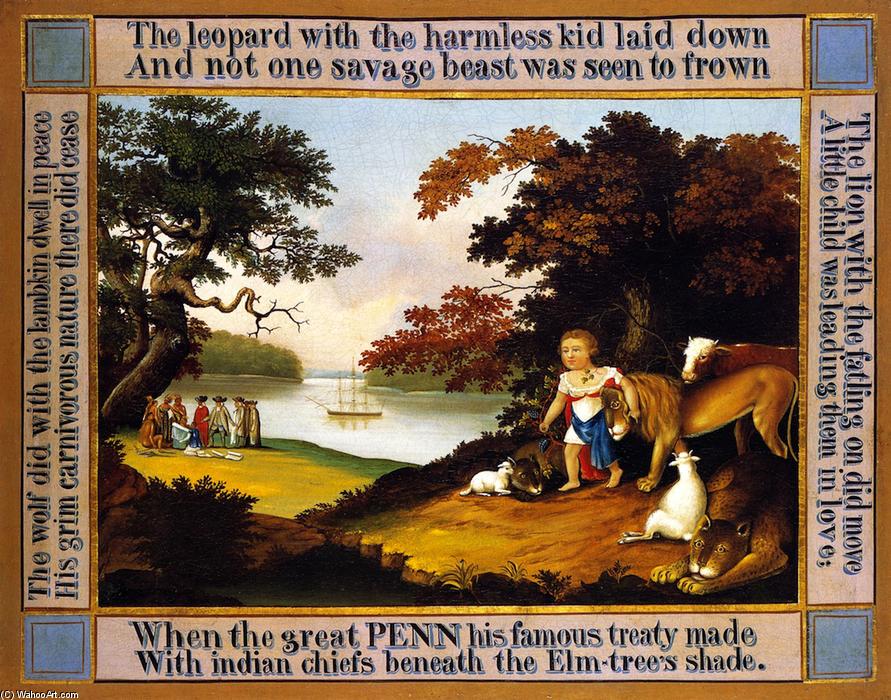
Peaceable Kingdom (22): A Quaker Vision of Harmony
Edward Hicks’ “Peaceable Kingdom (22)” transcends mere visual beauty; it embodies a profound philosophical statement rooted in the Quaker faith and meticulously executed with masterful artistic technique. Created in 1826, this monumental oil painting resides at the Philadelphia Museum of Art, serving as an enduring emblem of American folk art and its contribution to shaping national identity.The Artist and His Vision
Edward Hicks (1780-1849), born in Attleboro, Pennsylvania, was a self-taught Quaker minister whose unwavering belief in “the inner light” profoundly influenced his artistic endeavors. Initially apprenticed as a coach maker, Hicks honed his decorative painting skills—a craft considered somewhat unconventional for the time—allowing him to express his spiritual convictions through captivating imagery. His Quaker faith instilled within him a deep appreciation for simplicity and peace, values that permeate every brushstroke of his celebrated “Peaceable Kingdom” series. This particular canvas captures Hicks’s distinctive style: a blend of realism infused with symbolic representation intended to convey moral lessons about coexistence.A Detailed Examination of Composition and Technique
The painting depicts a serene tableau featuring a young boy standing before two lions and a tiger, accompanied by numerous figures engaged in various activities—a meeting place for Native Americans and settlers—and culminating in a sailboat gliding across the horizon beneath a dominant elm tree. Hicks’s meticulous attention to detail is evident throughout; the artist skillfully employs oil paint on canvas, layering glazes to achieve rich textures that bring forth an astonishing level of realism. Lighting is soft and diffused, guiding the viewer's eye through the complex spatial relationships established within the scene. Perspective leans toward a flattened style characteristic of the Dutch Golden Age, prioritizing clarity and conveying a sense of grandeur. The color palette—dominated by warm earth tones—accentuates blues and greens in the landscape, creating an atmosphere of tranquility and unity. Precise lines delineate forms, fostering order amidst the multitude of elements depicted. Organic shapes reflect the natural world at the heart of Hicks’s artistic vision.Symbolism: Lions, Tigers, and Quaker Beliefs
“Peaceable Kingdom (22)” is laden with symbolism reflecting Hicks's core Quaker convictions. The lions and tigers—typically symbols of predatory aggression—are portrayed as gentle creatures coexisting peacefully with humans, mirroring Isaiah 11:6’s prophetic vision of harmony between animals and humankind. This deliberate juxtaposition underscores the artist’s desire for universal reconciliation and embodies the Quaker belief in divine compassion. Furthermore, the inclusion of Native Americans negotiating treaties symbolizes a commitment to justice and understanding across cultures—a crucial element within Hicks's broader philosophical framework. The elm tree represents steadfastness and spiritual resilience, anchoring the scene in a landscape imbued with symbolic significance.Legacy and Enduring Inspiration
“Peaceable Kingdom (22)” continues to inspire audiences worldwide with its timeless message of peace and unity. As a handmade oil painting reproduction, it offers an opportunity to experience this iconic artwork firsthand—a testament to Edward Hicks’s artistic genius and his enduring contribution to American art history. Its serene beauty and profound symbolism resonate deeply within the viewer, prompting contemplation on themes of compassion, harmony, and the importance of fostering dialogue between diverse perspectives.Întrebări și răspunsuri
Este "Peaceable Kingdom (22)" o operă celebră de Folk Art?
În cadrul mișcării Folk Art, „Peaceable Kingdom (22)” are un nivel de popularitate Iconic.
Ce format și orientare de imprimare se recomandă pentru "Peaceable Kingdom (22)" de Edward Hicks?
Dimensiunea Large, orientarea Landscape: aceasta este configurația de imprimare recomandată pentru "Peaceable Kingdom (22)" de Edward Hicks.
Cum se îmbină stilul și epoca în "Peaceable Kingdom (22)" de Edward Hicks?
"Peaceable Kingdom (22)" de Edward Hicks face parte din mișcarea Folk Art, reprezentativă pentru epoca Secolul al XIX-lea a creatorului său.
Biografie artist
A Life Rooted in Faith and Vision
Edward Hicks, born April 4th, 1780, in the tranquil landscape of Attleboro (now Langhorne), Bucks County, Pennsylvania, was a figure uniquely positioned at the intersection of religious conviction and artistic expression. His story is not simply that of a self-taught painter, but of a dedicated Quaker minister whose spiritual journey profoundly shaped his distinctive visual language. Though born to Anglican parents, young Edward’s life took a pivotal turn when he came under the care of Matron Elizabeth Twining, a devout Quaker who instilled in him the core tenets of this faith – simplicity, peace, and an unwavering belief in the “inner light.” This early exposure would become the bedrock upon which his artistic vision was built. From the age of thirteen, Hicks apprenticed with coach makers William and Henry Tomlinson, mastering the techniques of decorative painting that would initially sustain him. However, even as he honed his skills in rendering ornate designs on carriages, a deeper calling resonated within him, one that would ultimately lead him down a path less traveled – a path where faith and artistry converged. By 1803, Hicks had fully embraced the Society of Friends, marrying Sarah Worstall and embarking on a life of itinerant preaching throughout Philadelphia, all while continuing to support his growing family through his painting skills.The Evolving Canvas: From Coachwork to Spiritual Landscapes
Hicks’s artistic development was far from conventional. He wasn't formally trained in the academic traditions of the time; instead, he cultivated a distinctly American folk art style born from observation, necessity, and deeply held beliefs. Initially, his paintings served practical purposes – house painting, coach decoration, tavern signs, and even decorative work on furniture and farm equipment. These early commissions provided financial stability but often conflicted with the Quaker emphasis on plainness and eschewal of worldly vanities. A period of hardship in 1815 saw Hicks briefly abandon ornamental painting for farming, a venture that proved unsuccessful. It was through encouragement from friends that he returned to his brushes in 1816, a turning point that allowed him to reconcile his artistic talents with his spiritual calling. He began to imbue his paintings with symbolic meaning, reflecting his Quaker worldview and personal interpretations of scripture. His canvases became vehicles for conveying messages of peace, harmony, and the promise of a divinely ordained order.The Peaceable Kingdom: A Vision of Harmony
Edward Hicks is most celebrated today for his series of paintings known collectively as *The Peaceable Kingdom*. Comprising over sixty variations created throughout his life, these works are arguably the most iconic examples of American folk art. Inspired by Isaiah 11:6-9 – a passage foretelling a time when natural predators would coexist peacefully – Hicks depicted scenes of wild animals and children living in idyllic harmony. The paintings often feature figures from colonial Pennsylvania history, such as William Penn negotiating treaties with Native Americans, further grounding the biblical vision within an American context. *The Peaceable Kingdom* is not simply a charming depiction of animal life; it’s a powerful statement about Hicks's belief that Pennsylvania represented a fulfillment of this prophetic ideal – a place where peace and justice could prevail. Each version of *The Peaceable Kingdom* possesses subtle variations in composition, color palette, and detail, reflecting Hicks’s evolving artistic sensibilities and deepening spiritual understanding. Notable examples include *Peaceable Kingdom (31)* housed at Yale University Art Gallery, and *Peaceable Kingdom (34)* which portrays Noah's Ark amidst a serene landscape.Beyond the Kingdom: A Broader Artistic Scope
While *The Peaceable Kingdom* remains his signature achievement, Edward Hicks’s artistic output extended beyond this celebrated series. He painted landscapes, portraits, and historical scenes, each imbued with his characteristic folk art style and Quaker sensibility. His *Falls of Niagara*, now at the Abby Aldrich Rockefeller Folk Art Center, demonstrates his ability to capture the grandeur of nature while maintaining a sense of simplicity and reverence. Similarly, his depiction of *George Washington crossing...* – also held at the Abby Aldrich Rockefeller Folk Art Center – offers a unique folk perspective on this iconic moment in American history. Even seemingly mundane subjects like *Grave of William Penn at Jordans in England*, reveal Hicks’s deep connection to Quaker heritage and his ability to find spiritual significance in everyday scenes. These works, taken together, demonstrate the breadth of Hicks's artistic vision and his commitment to using art as a means of expressing his faith and values.A Lasting Legacy: The Folk Art Icon
Edward Hicks passed away on August 23rd, 1849, in Newtown, Pennsylvania, leaving behind a body of work that continues to resonate with audiences today. He is now recognized as a pivotal figure in American folk art, celebrated for his distinctive style, recurring themes, and profound spiritual depth. His paintings offer invaluable insights into the beliefs and values of the Society of Friends during the 19th century, providing a visual record of their commitment to peace, simplicity, and social justice. Hicks’s unique ability to blend religious faith with artistic expression created a body of work that is both visually compelling and spiritually meaningful. He remains a testament to the power of self-taught artistry and the enduring influence of Quaker ideals on American art history. His legacy continues to inspire artists and scholars alike, ensuring that his vision of harmony—both earthly and divine—will endure for generations to come.
Edward Hicks
1780 - 1849 , Statele Unite ale Americii
Detalii rapide
- Artistic Movement Or Style: Folk Art
- Date Of Birth: April 4, 1780
- Date Of Death: August 23, 1849
- Full Name: Edward Hicks
- Nationality: American
- Notable Artworks:
- Peaceable Kingdom (31)
- Falls of Niagara
- George Washington crossing...
- Peaceable Kingdom (34)
- Place Of Birth: Langhorne, USA