Comută pe versiunea Print
 Vezi mai mult







































 Pentru opere de artă sau reproduceri care depășesc 105 cm (aproximativ 41 de inch) pe oricare dintre laturi, cadrul va fi livrat demontat, sub formă de kit. Această metodă asigură o livrare sigură și previne deteriorarea în timpul transportului.


Ibsen at the Grand Café: A Glimpse into Modernist Contemplation
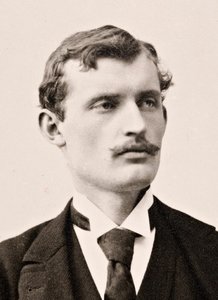
Edvard Munch's "Ibsen at the Grand Café," painted in 1902, is more than just a portrait; it’s a poignant snapshot of a pivotal moment in modernist thought and a masterful example of Expressionism. This black and white drawing captures Norwegian playwright Henrik Ibsen, a figure who revolutionized theater with his challenging plays exploring societal norms and the human condition. The artwork resides within the esteemed collection of the Art Institute of Chicago, offering viewers a chance to appreciate Munch’s unique artistic vision.
Expressionism and the Spirit of Modernity
The painting emerged during the early 20th century, a period marked by significant social and intellectual upheaval. Expressionism, as an art movement, arose in direct response to these changes, rejecting traditional realism and embracing subjective experience and emotional intensity. Artists sought to convey not just what they saw but how they *felt* about what they saw. Munch, a central figure in this movement, utilized bold lines, stark contrasts, and simplified forms to communicate profound psychological states. "Ibsen at the Grand Café" exemplifies this approach, foregoing detailed representation for an evocative portrayal of Ibsen's inner world.
Technique and Composition: A Study in Lines
The artwork’s power lies significantly in its technique. Executed as a drawing rather than a painting, "Ibsen at the Grand Café" showcases Munch’s skill with line work. The use of thick, gestural lines creates a sense of immediacy and movement, almost as if capturing a fleeting moment in time. The composition is dominated by Ibsen's figure, partially obscured by a curtain, which adds an element of mystery and introspection. The blurred cityscape in the background suggests the bustling intellectual atmosphere of Oslo’s Grand Café, a gathering place for artists and thinkers during that era. While the exact technique used isn't definitively stated, it is believed to be drypoint or etching, utilizing pressure to create lines on a plate.
Symbolism and Emotional Resonance
Beyond its aesthetic qualities, "Ibsen at the Grand Café" carries significant symbolic weight. Henrik Ibsen himself was a controversial figure, known for his plays that challenged societal conventions and explored uncomfortable truths about human relationships. Munch’s portrayal captures Ibsen in a moment of quiet contemplation, hinting at the profound thoughts and anxieties that fueled his groundbreaking work. The curtain partially concealing Ibsen's face can be interpreted as representing the hidden complexities of the human psyche or the veiled nature of artistic creation. The overall emotional impact is one of seriousness, introspection, and perhaps even melancholy – a reflection of both Ibsen’s persona and the broader anxieties of the modern age.
A Legacy of Expression
"Ibsen at the Grand Café" stands as a testament to Edvard Munch's artistic genius and his ability to capture the essence of modernist thought. It is a powerful reminder of the importance of art in exploring complex emotions and challenging societal norms. For those seeking to bring a touch of this iconic artwork into their homes or offices, high-quality reproductions are available, allowing you to experience the emotional depth and artistic brilliance of Munch’s masterpiece.
Întrebări și răspunsuri
„Ibsen at the Grand Café” are o previzualizare în realitate augmentată?
„Ibsen at the Grand Café” are o previzualizare în realitate augmentată: pagina Previzualizare în AR operei artistice o prezintă în propriul tău spațiu, pe un dispozitiv compatibil.
Ce dimensiune de reproducere se recomandă pentru "Ibsen at the Grand Café" de Edvard Munch?
Dimensiunea de imprimare recomandată pentru "Ibsen at the Grand Café" de Edvard Munch este Medium.
Cum pot descoperi opere de artă similare cu "Ibsen at the Grand Café" de Edvard Munch?
Pagina Lucrări similare pentru "Ibsen at the Grand Café" de Edvard Munch prezintă opere de artă similare.
Mai multe detalii despre această pictură
 Previzualizare
 Trimite prin felicitare
 Distribuie
 Detalii despre lucrare
 Ghid
Ghid

 Descarcă imaginea
 Produse similare
 Radiografie
 Galerie foto
 Întrebări și răspunsuri
 Statistici