- Acasă

- Imagine digitală
- Dwight William Tryon
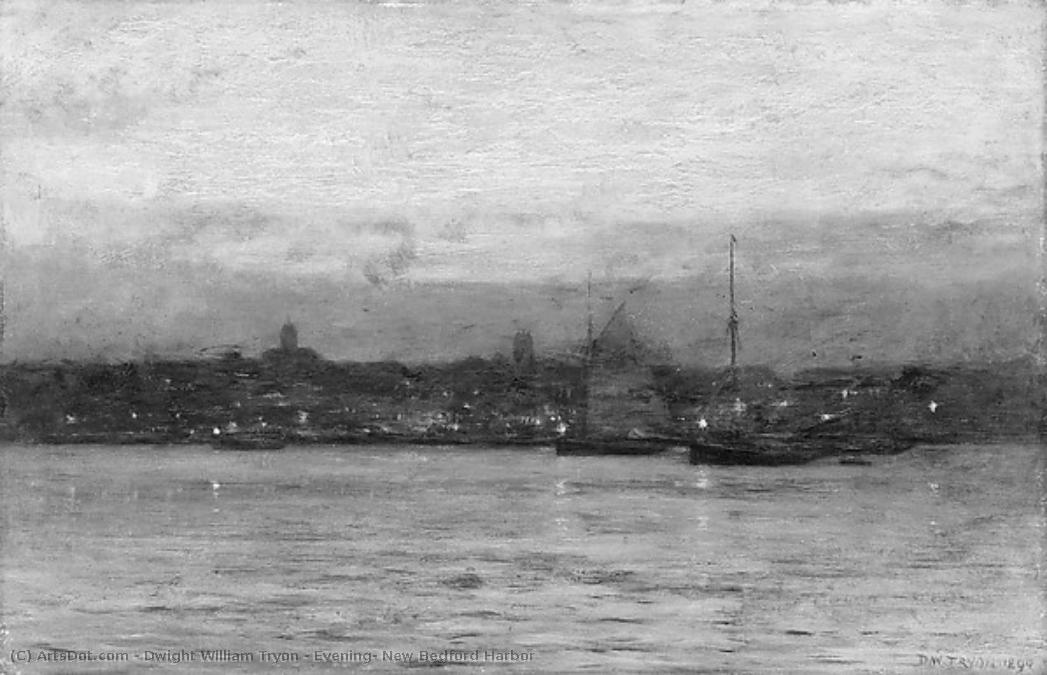
- Evening, New Bedford Harbor
 Preview
 Comandă tipăritul Comandă reproducere pictată
 Trimite
 Distribuie
 Detalii despre lucrare
 Adaugă la favorite

 Descarcă
 Similare
 Radiografie
 Diaporama
Evening, New Bedford Harbor
 Oil On Canvas
- WallArt
- Tonalist Painting
 1890
1890- 19th Century
 51.0 x 80.0 cm
 Muzeul Metropolitan de Artă
 Vezi mai mult
Achiziționați o imagine digitală îmbunătățită și de înaltă rezoluție, mult superioară previzualizării online.
Fiecare fișier este pregătit cu meticulozitate de specialiștii noștri interni, utilizând instrumente avansate și retușare manuală expertă. Ne asigurăm că fiecare imagine beneficiază de o claritate excepțională, o acuratețe precisă a culorilor și detalii fine.
Fișierul final este livrat prin e-mail în termen de 72 de ore, optimizat pentru utilizare imediată în medii profesionale, editoriale și de imprimare. Aceasta este aceeași calitate în care au încredere studiouri de design, edituri și galerii de top.
Imagine Digitală
Descărcați un fișier la rezoluție înaltă pentru afișare personală, imprimare și proiecte creative.
Inclus în fiecare comandă de imagini digitale
Livrare digitală de expertiză, garantată
Când alegeți OriginalUniqueArt.com, nu primiți doar o simplă imagine – primiți o operă de artă digitală îmbunătățită profesional, creată cu precizie și susținută de o garanție de satisfacție. Iată tot ceea ce primești odată cu comanda ta, în mod automat:

Livrare rapidă prin e-mail
Fișierul imaginii digitale la rezoluție înaltă vă va fi trimis prin e-mail în termen de 72 de ore de la finalizarea comenzii – gata pentru utilizare imediată.

Fișier digital optimizat prin IA
Opera ta de artă este optimizată profesional prin intermediul unor instrumente AI avansate și al editării manuale, asigurând un nivel maxim de detalii, claritate și acuratețe a culorilor.

Retransmitere gratuită pe viață
Ai șters sau ai pierdut din greșeală fișierul? Nu îți face griji – ți-l vom retrimite oricând, gratuit.

Fără taxe de import – Întotdeauna
Bucură-te instant de opera ta de artă, fără taxe vamale, taxe de import sau costuri de livrare – descărcările digitale sunt întotdeauna fără taxe.

Garanția acurateței culorilor
Asigurăm că imaginea ta digitală reflectă culorile originale cât mai fidel posibil, utilizând instrumente profesionale și procese de gestionare a culorii.

Garanție de satisfacție de 60 de zile
Dacă nu sunteți mulțumit de imaginea digitală achiziționată, o vom revizui sau vă vom returna 100% în termen de 60 de zile – fără nicio explicație necesară.

Garanție de returnare 100% a banilor
Nu ești mulțumit? Obține o rambursare completă în termen de 60 de zile de la primirea fișierului tău digital – fără întrebări.

Reduceri pentru comenzi multiple
Cumpără 3 imagini, economisește 10% - Cumpără 5, economisește 15% - Cumpără 10+, economisește 20%. Ideal pentru proiecte creative, galerii și agenții.
Descrierea obiectului de colecție
A Moment of Quietude: The Essence of Dwight William Tryon’s “Evening, New Bedford Harbor”
Dwight William Tryon's "Evening, New Bedford Harbor" isn’t merely a depiction of a maritime scene; it’s an immersion into a specific time and mood. Painted in 1890, this oil on wood canvas captures the profound stillness of twilight over the harbor, offering a glimpse into the lives intertwined with the sea and the quiet dignity of a fading day. The painting immediately draws the viewer in with its monochromatic palette – a carefully orchestrated dance of grays, blacks, and whites that eschews traditional color for an exploration of light, shadow, and atmosphere. It’s a testament to Tryon's mastery of tonalism, an American art movement he embraced wholeheartedly, prioritizing emotional resonance over precise representation.
The composition itself is remarkably balanced, dividing the canvas into distinct yet harmonious zones. The foreground, dominated by the dark, reflective waters of the harbor, anchors the scene and establishes a sense of depth. Beyond this lies the middle ground, populated with several ships – not rendered as individual entities but rather as suggestive forms, blending seamlessly into the hazy distance. Finally, the background reveals the faint outline of New Bedford’s cityscape, softened by atmospheric perspective and appearing almost dreamlike. This careful arrangement creates a feeling of spaciousness and invites contemplation, mirroring the quiet solitude of the scene.
The Language of Tone: Tryon's Tonalist Technique
Tryon’s technique is characterized by an exquisite sensitivity to light and texture. He achieves this through meticulous blending and layering of oil paints – a process that results in surfaces that appear incredibly smooth, almost velvety to the touch. There’s no visible brushstroke; instead, the paint seems to melt into one another, creating subtle gradations of tone that mimic the diffused light of dusk. This deliberate softness contributes significantly to the painting's overall atmosphere of tranquility and melancholy. The artist skillfully utilizes the absence of strong highlights or shadows, relying instead on the nuanced interplay of light and dark to define form and create a sense of volume.
The choice of a monochromatic palette is not arbitrary; it’s integral to Tryon's artistic vision. By stripping away color, he forces the viewer to engage with the painting on a purely sensory level – focusing on the subtle shifts in tone, the play of light and shadow, and the overall mood conveyed by the scene. This approach aligns perfectly with the principles of tonalism, which sought to capture the essence of a subject through its emotional impact rather than its literal appearance.
Symbolism and Emotional Resonance: A Portrait of a Working Harbor
“Evening, New Bedford Harbor” is more than just a landscape; it’s a poignant meditation on labor, community, and the passage of time. The scene evokes the quiet dignity of the fishermen and sailors who worked tirelessly in the harbor, their lives inextricably linked to the rhythms of the sea. The muted colors and soft lighting suggest a sense of weariness and reflection – perhaps a moment of respite before returning to the demands of the next day. The distant cityscape hints at the bustling life of New Bedford, while the vast expanse of water symbolizes both opportunity and uncertainty.
Furthermore, the painting’s overall mood is imbued with a subtle sense of nostalgia. It's as if Tryon is inviting us to step back in time and witness a moment that has long since vanished – a reminder of a bygone era when life revolved around the sea and its bounty. The piece resonates with a quiet beauty, prompting viewers to contemplate their own relationship to nature, community, and the enduring power of memory.
A Legacy of Tonalist Beauty: Tryon’s Enduring Appeal
Dwight William Tryon's "Evening, New Bedford Harbor" stands as a remarkable example of American tonalism – a testament to the artist’s skill and sensitivity. Its evocative atmosphere, meticulous technique, and subtle symbolism continue to captivate viewers today. Reproductions of this masterpiece offer a unique opportunity to bring this serene scene into your home or office, allowing you to experience its quiet beauty and emotional resonance firsthand. It's a piece that speaks volumes without uttering a single word, inviting contemplation and offering a moment of respite from the complexities of modern life.
Biografie Artist
Early Life and Artistic Beginnings
Dwight William Tryon’s story begins in the heart of Connecticut, specifically in Hartford, a city steeped in artistic tradition. Born on August 13, 1849, to Anson Tryon – a respected builder – and Delia O. Roberts, his early life was marked by both privilege and profound loss. The untimely death of his father at a young age profoundly shaped his character and instilled within him a deep appreciation for the quiet beauty of the natural world. Consequently, he spent much of his childhood on his grandparents’ farm in East Hartford, an immersion in rural landscapes that would become the bedrock of his artistic vision. This experience wasn't merely nostalgic; it ignited a nascent talent, fostering an innate ability to observe and translate the subtle nuances of light, shadow, and color onto paper. Without formal training initially, Tryon’s artistic journey began organically. He found solace and instruction in a local bookstore, not just as a customer but as an employee, meticulously studying art manuals and absorbing techniques from printed sources. This self-directed education was supplemented by countless hours spent sketching the surrounding countryside – the rolling hills, the meandering rivers, and the ever-changing skies of Connecticut. His dedication culminated in his first sale in 1870, a modest beginning that nonetheless fueled his ambition and signaled the emergence of a promising talent. Subsequent local exhibitions further validated his skill, hinting at a career destined for wider recognition. His acceptance into the National Academy of Design in 1873 marked a pivotal moment, providing him with formal training and access to a broader artistic community.European Influences and the Shaping of a Style
Driven by an unwavering desire for refined instruction, Tryon embarked on a transformative journey to France in 1876. This move represented more than just a relocation; it was a deliberate pursuit of artistic enlightenment. He enrolled at the École des Beaux-Arts in Paris, immersing himself completely within the vibrant and influential artistic currents of Europe. However, his education extended far beyond the confines of the classroom. Recognizing the value of direct experience, he actively sought guidance from some of the era’s most celebrated artists – Jacquesson de la Chevreuse, Charles-François Daubigny, Henri Harpignies, and Jean Baptiste-Antoine Guillemet. Each of these masters imparted their unique techniques and philosophies, shaping Tryon's approach to composition, color theory, and brushwork. Initially, his style leaned towards Luminism – a movement characterized by its emphasis on atmospheric effects, the delicate rendering of light, and a sense of ethereal beauty. Yet, as he spent time in France, surrounded by the burgeoning Impressionist movement, Tryon’s artistic path began to diverge. He was drawn to the principles of the Barbizon School—a revolutionary movement that prioritized direct observation of nature, eschewed artificial studio lighting, and favored a more subdued palette. The Barbizon artists sought to capture the essence of the landscape as it appeared in natural light, rejecting the idealized forms and dramatic contrasts of earlier academic painting. Tryon’s exposure to this approach proved profoundly influential, leading him to embrace a style that valued quiet contemplation, atmospheric depth, and the subtle interplay of color. The works of James McNeill Whistler, particularly his tonalist paintings, exerted a significant influence on Tryon's development, encouraging him to explore the expressive potential of tone and shade.Mature Style and Atmospheric Landscapes
By the late 1880s, Dwight William Tryon had fully realized his distinctive artistic style – a signature approach that would define his legacy as a leading American Tonalist. His canvases frequently featured a carefully orchestrated composition: a grouping or broken row of trees positioned in the middle distance, acting as a visual bridge between a luminous sky above and a foreground marsh or pasture below. This arrangement created a sense of depth and perspective while simultaneously emphasizing the relationship between earth and sky. These scenes were often imbued with autumnal hues – rich browns, deep greens, and muted yellows – evoking a profound sense of tranquility, melancholy, and the passage of time. Beyond landscapes, Tryon also excelled at capturing the beauty of the sea, utilizing pastel to create evocative depictions of water, sky, and shoreline under varying weather conditions. His mastery lay not in dramatic detail or bold color contrasts, but rather in his ability to convey atmosphere – the subtle shifts in light, the delicate play of color, and the overall mood of a scene. *Salt-Marsh, December*, which garnered first prize at the Tennessee Centennial Exposition in 1897, stands as a prime example of this skill, showcasing his talent for capturing the serene beauty of the natural world with remarkable subtlety and precision. His paintings were consistently exhibited nationally, gaining recognition at prestigious venues such as the Pennsylvania Academy of Fine Arts and the Montross Gallery, solidifying his reputation within the American art community.Patronage, Recognition, and Lasting Legacy
The trajectory of Tryon’s career was significantly enhanced by his relationship with Charles Lang Freer, a discerning collector who became his most important patron. Freer, an industrialist with a deep appreciation for art, acquired dozens of Tryon's works, providing the artist with financial security and enabling him to dedicate himself fully to his craft. This generous support allowed Tryon to continue producing at a prolific rate, resulting in a substantial body of work that continues to be admired today. Furthermore, Freer’s commitment to American art led him to donate many of Tryon's paintings to the Smithsonian Institution, where they now reside in the Freer Gallery of Art in Washington, D.C. In 1908, Tryon received the prestigious Carnegie Prize at the Carnegie Exhibition – a testament to his artistic merit and recognition by his peers. Throughout his career, he remained an active member of several prominent art organizations, including the Society of American Artists, the American Watercolor Society, and the National Institute of Arts and Letters (now the American Academy of Arts and Letters), further cementing his place within the broader artistic landscape. In 1887, Tryon established a summer home in South Dartmouth, Massachusetts – a tranquil retreat where he continued to paint and refine his technique until his death in 1925. He also dedicated himself to education, teaching painting and drawing at Smith College from 1886 to 1923, where he founded the Tryon Gallery of Art—a lasting contribution to the college’s artistic heritage. Dwight William Tryon passed away in 1925, leaving behind a rich artistic legacy defined by his profound connection to nature, his masterful manipulation of atmosphere, and his enduring influence on American Tonalism. His works continue to be celebrated for their quiet beauty, evocative mood, and the timeless appeal of the natural world.
Dwight William Tryon
1849 - 1925 , Statele Unite ale Americii
Detalii rapide
- Artistic Movement Or Style: Tonalism, Barbizon
- Artists Or Movements Influenced By This Artist: ['Impressionism']
- Artists Who Influenced This Artist:
- Daubigny
- Whistler
- Harpignies
- Date Of Birth: 13 aug. 1849
- Date Of Death: 1 iul. 1925
- Full Name: Dwight William Tryon
- Nationality: American
- Notable Artworks:
- Salt-Marsh
- Spring
- Haystacks
- Place Of Birth: Hartford, USA

