
 Previzualizare
 Trimite prin felicitare
 Distribuie
 Detalii despre lucrare
 Ghid
Ghid

 Descarcă imaginea
 Produse similare
 Radiografie
 Galerie foto
 Întrebări și răspunsuri
 Statistici
St Lucy


 Vezi mai mult
Giclée / Imprimare artistică
Printuri giclée sau pe canvas de calitate muzeală, cu proces de producție rapid și opțiuni flexibile de finisare. ( Comandă pictură realizată manual Comută pe Imagine Digitală)




P118B lei10

P118H lei10

P118W lei10

P438Z lei10

P508JH lei12

P508YH lei12

P805H lei10

P805Z lei10

P919BZ lei10

P919G lei10

P919XJ lei10

P959ZH lei10

P968JZ lei12

W106C lei8

W218G lei10

W218JH lei8

W218Y lei10

W307PJ lei10

W316G lei10

W316PJ lei8

W316Y lei10

W398PJ lei8

W4111J lei10

W500HY lei15

W500JH lei15

W692G lei12

W849H lei8

W940BG lei15

W953PJ lei8




Alegeți dintre dimensiunile noastre prestabilite, care respectă proporțiile originale ale operei de artă.

Introduceți lățimea și înălțimea necesare pentru a se potrivi ramei sau peretelui dumneavoastră. O printare poate fi doar tăiată, niciodată extinsă dincolo de dimensiunea imaginii originale, astfel încât o dimensiune cu o formă diferită va pierde o parte din imagine. Vă trimitem o simulare digitală pentru aprobare înainte de a imprima orice. Imaginea afișată pe această pagină nu prezintă tăierea reală — doar simularea arată acest lucru.
Livrare în întreaga lume () în 2 săptămâni, în loc de cele 4/5 săptămâni standard. (8 Noiembrie)

Livrare expres gratuită la nivel mondial

Pânză de in de înaltă calitate

Asigurare completă pentru transport

Garanție de rambursare a taxelor vamale

Garanția fidelității culorilor

Politica de retur în 100 de zile (doar pentru defecte de fabricație)

Garanție de rambursare 100%

Ofertă pentru comenzi multiple
 Opțiunea cu sticlă este disponibilă doar pentru dimensiuni de sub 110 cm

St Lucy
Giclée / Imprimare artistică
Dimensiune reproducere
-


Preț total calculat
lei 386
A Portrait of Mystery: Unveiling Domenico Beccafumi’s *St Lucy*
Domenico di Pace Beccafumi's 1521 painting, *St Lucy*, is not merely a portrait; it’s an enigmatic encounter. This captivating work, depicting a woman with flowing hair and a serene gaze, immediately draws the viewer into a world of quiet contemplation. The subject, identified as Saint Lucy – a figure renowned for her martyrdom and association with light and vision – presents a compelling study in restrained elegance and burgeoning Mannerist sensibilities. Beccafumi’s approach, rooted in the traditions of Siena yet infused with a distinctly personal vision, reveals a pivotal moment in the evolution of Renaissance art, bridging the stylistic shifts between High Renaissance idealism and the increasingly complex explorations of emotion and form that would characterize the later years of the 16th century.
Technical Mastery and Sienese Roots
- Oil on Panel: Executed in oil paint on a wooden panel, a technique common at the time, allows for rich color saturation and subtle gradations of tone – hallmarks of Beccafumi’s skill.
- Detailed Rendering: The artist demonstrates meticulous attention to detail, particularly evident in the rendering of the woman's hair, fabric folds, and the delicate plate she holds. This precision reflects his training with Mechero, a local Sienese artist who instilled in him a strong foundation in traditional portraiture.
- Compositional Balance: The composition is carefully balanced, utilizing the black frame as a dramatic device that not only defines the subject but also creates a sense of depth and spatial recession. This technique was influenced by developments in perspective during this period.
Symbolism and Religious Context
The identification of the sitter as Saint Lucy is crucial to understanding the painting’s deeper meaning. Lucy, a martyr who famously refused to marry and sacrificed her eyes for her faith, became associated with light, vision, and protection from evil. The plate she holds – a recurring motif in depictions of the saint – symbolizes her severed eyes, serving as a potent reminder of her unwavering devotion. The woman’s direct gaze invites the viewer into a spiritual dialogue, prompting reflection on themes of sacrifice, faith, and the pursuit of enlightenment. The overall effect is one of solemn beauty and profound religious significance.
A Bridge Between Styles
*St Lucy* exemplifies Beccafumi’s transitional style. While retaining elements of High Renaissance clarity and grace – particularly in his rendering of the figure's anatomy and drapery – he introduces a subtle distortion of form, a hallmark of Mannerism. The elongated proportions of the woman’s hands, for example, and the slightly unsettling gaze contribute to an atmosphere of psychological intensity that anticipates the stylistic innovations of artists like Pontormo and Bronzino. This blending of traditional techniques with emerging artistic trends makes *St Lucy* a significant work in its own right, offering a valuable glimpse into the evolving landscape of Italian Renaissance art.
Capturing the Essence: A Hand-Painted Reproduction
OriginalUniqueArt offers meticulously crafted hand-painted reproductions of Domenico Beccafumi’s *St Lucy*, ensuring that you possess an authentic representation of this remarkable artwork. Our skilled artisans employ traditional techniques and archival materials to faithfully recreate every detail, color nuance, and textural element of the original painting. Whether for your private collection or interior design project, a OriginalUniqueArt reproduction of *St Lucy* will bring a touch of Renaissance elegance and profound artistic contemplation to any space.
Întrebări și răspunsuri
Cum este descrisă atmosfera din "St Lucy" de Domenico Di Pace Beccafumi?
"St Lucy" emană o atmosferă Elegant.
Ce dimensiune de reproducere se recomandă pentru "St Lucy" de Domenico Di Pace Beccafumi?
Pentru "St Lucy", se recomandă o dimensiune de imprimare de Large. Sunt disponibile și alte dimensiuni, păstrând aceleași proporții.
Imaginea pentru "St Lucy" de Domenico Di Pace Beccafumi poate fi reprodusă liber?
Statusul drepturilor de autor pentru "St Lucy" de Domenico Di Pace Beccafumi: opera este în domeniul public – drepturile de autor au expirat. Acest lucru determină dacă reproducerile imaginii pot fi realizate liber.
Biografie artist
Domenico Beccafumi (1486 – May 18, 1551): A Sienese Visionary
Domenico di Pace Beccafumi stands as a singular figure in the panorama of Italian Renaissance art—a painter who stubbornly clung to traditions while simultaneously embracing innovations that would propel Mannerism into prominence. Born around 1486 in Montaperti, near Siena, his artistic journey wasn’t merely one of technical prowess; it was a profound exploration of emotion and visual experience, rooted in the distinctive spirit of his Sienese heritage yet propelled toward uncharted expressive territories. His story isn't simply about mastering technique; it’s about cultivating an individual sensibility—a sensitivity attuned to the nuances of medieval aesthetics while simultaneously absorbing the revolutionary ideas emanating from Rome.Early Influences and Artistic Training
Domenico’s formative years were marked by a grounding in Sienese artistic practices, shaped by the legacy of Fra Bartolommeo and Giovanni Battista Baldinelli Pacchiarotto—artists who championed expressive fervor and decorative richness. Lorenzo Beccafumi, recognizing his son's innate talent for drawing, took him under his wing, securing him an apprenticeship with Mechero, a local Sienese artist. This early training instilled in Domenico the foundational principles of Sienese painting—a tradition characterized by a penchant for dramatic gesture and opulent ornamentation—qualities that would permeate his subsequent oeuvre. The Sienese school’s divergence from classical ideals fostered an environment where emotional intensity and decorative detail were valued, shaping Domenico's artistic vision and informing his stylistic choices.The Roman Period: Absorbing Innovation
Around 1509, Domenico embarked on a transformative pilgrimage to Rome—a city pulsating with artistic dynamism under the patronage of Pope Julius II and Michelangelo Buonarroti. He encountered the monumental frescoes adorning St. Peter’s Basilica, immersing himself in the groundbreaking innovations championed by Raphael and Michelangelo—masterpieces that redefined composition, anatomy, and dramatic expression. Unlike many artists of his generation who sought to emulate these titans slavishly, Domenico synthesized Roman influences through his own distinctive lens. He didn't merely copy; he filtered them through a Sienese aesthetic—one imbued with a certain provincialism, an emphasis on decorative detail, and a lingering medieval sensibility. This process yielded a style that was both informed by the grandeur of Rome and resolutely rooted in Siena’s artistic traditions.Major Achievements: Frescoes and Monumental Decoration
Domenico Beccafumi's artistic reputation rests primarily upon his monumental frescoes—particularly those executed for the Duomo di Siena Cathedral between 1517 and 1544. This ambitious undertaking involved designing vast panels depicting biblical narratives—scenes from Ahab and Elijah, Melchisedec, Abraham, and Moses—a testament to Domenico’s narrative skill and expressive power. He skillfully blended Sienese decorative conventions with Mannerist stylistic features, creating images that captivated viewers with their dramatic intensity and psychological depth. Beyond the Duomo, Domenico undertook commissions for palaces and churches throughout Siena and Tuscany, demonstrating his versatility as an artist and craftsman. His work stands apart from the harmonious compositions of High Renaissance ideals, embracing instead a palpable sense of unease and emotional turbulence—a hallmark of Mannerism that distinguishes him from many of his contemporaries.Legacy: A Singular Voice Amidst Change
Domenico Beccafumi died in Siena in 1551, marking a poignant conclusion to the Sienese artistic tradition he so passionately upheld. He is rightfully recognized as the last significant representative of the Sienese school—a painter who preserved its distinctive aesthetic qualities while simultaneously anticipating the stylistic developments of Mannerism. His oeuvre embodies a singular vision—one characterized by irrationality, emotional fervor, and an arresting visual experience achieved through discordant colors and hallucinatory settings. Domenico’s legacy extends beyond his artistic achievements; he remains a compelling figure—a testament to the enduring power of individual creativity within the broader context of Renaissance art history. He challenged conventions, embraced innovation, and forged a style that continues to inspire admiration and scholarly inquiry centuries later.
Domenico Di Pace Beccafumi
1486 - 1551 , Italia
Detalii rapide
- Artistic Movement Or Style: Mannerism
- Artists Who Influenced This Artist:
- Raphael
- Michelangelo
- Date Of Birth: c. 1486
- Full Name: Domenico di Pace Beccafumi
- Nationality: Italian
- Notable Artworks:
- Trinity Triptych
- The Annunciation
- Place Of Birth: Montaperti, Italia
Articole similare

The Enduring Legacy of Fine Art Prints: Technique, History & Aesthetic Impact
Explore the rich history & techniques of fine art prints. Discover investment potential, assess authenticity, and learn how to preserve your collection with expert guidance. Trusted insights for discerning collectors.
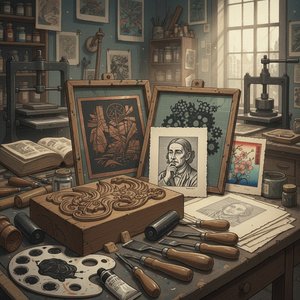
The Enduring Legacy of Printmaking: Techniques, Themes & Artistic Innovation Across Centuries
Explore the rich history of printmaking with OriginalUniqueArt. Discover techniques from intaglio to lithography, learn about collecting valuable prints & find museum-quality reproductions. Expert insights for art enthusiasts and collectors.

Golden Glow: How to Use Metallic Gold Artworks to Elevate Your Home Decor with Timeless Luxury
Discover how to elevate your home with the timeless elegance of metallic gold artworks. From sculptural metal pieces to gilded oil paintings, learn expert interior design tips for integrating luxurious gold accents into your space with sophistication and grace.

Giclée Prints: Archival Quality & Aesthetic Nuances for the Discerning Collector
Explore the world of giclée prints with OriginalUniqueArt. Learn about archival quality, aesthetic nuances & investment potential. Expert guidance for discerning art collectors seeking museum-quality reproductions and lasting value.

Echoes of Time: Exploring the Enduring Appeal & Historical Context of Vintage Art Prints
Explore the captivating world of vintage art prints! Discover their history, collecting tips & enduring appeal. Expert insights on chromolithography and building a legacy collection with OriginalUniqueArt.

