

 Previzualizare
 Trimite
 Distribuie
 Detalii despre lucrare

 Descarcă
 Produse similare
 Radiografie
 Diapozitive automate
 Statistici
Bombing Up
 Contemporary Realism
 41.0 x 51.0 cm
 Usher Gallery
 Vezi mai mult
Giclée / Imprimare artistică
Printuri giclée sau pe canvas de calitate muzeală, cu proces de producție rapid și opțiuni flexibile de finisare. ( Comandă pictură lucrată manual Comută pe Imagine Digitală)




































Alegeți dintre dimensiunile noastre prestabilite, care respectă proporțiile originale ale operei de artă.

Puteți introduce propriile dimensiuni pentru a se potrivi unui anumit cadru sau spațiu. Dacă dimensiunea selectată nu corespunde proporțiilor imaginii originale, vom decupa lucrarea de artă sau vom extinde imaginea cu margini oglindite sau cu o culoare uniformă. Un mockup digital va fi trimis pentru aprobarea dumneavoastră înainte de începerea producției.
Vă rugăm să rețineți că previzualizarea de pe ecran nu reflectă decuparea sau extinderea reală. Doar mockup-ul va arăta cu exactitate compoziția finală.
Deși dimensiunile personalizate sunt disponibile, vă recomandăm să selectați o dimensiune din lista predefinită pentru a păstra proporțiile originale.
Livrare în întreaga lume () în 2 săptămâni, în loc de cele 4/5 săptămâni standard. (10 Septembrie)

Livrare expres gratuită la nivel mondial

Pânză de in de înaltă calitate

Asigurare completă pentru transport

Garanție de rambursare a taxelor vamale

Garanția fidelității culorilor

Politica de retur de 100 de zile (doar pentru defecte)

Garanție de rambursare 100%

Ofertă pentru comenzi multiple
 Opțiunea cu sticlă este disponibilă doar pentru dimensiuni de sub 110 cm

Bombing Up
Giclée / Imprimare artistică
Dimensiune reproducere
-


Preț total calculat
$ 80
Biografie artist
David Smith: Pioneer of Geometric Abstraction
David Smith (1956 – present) stands as a towering figure in contemporary sculpture, recognized for his unwavering commitment to geometric abstraction and his profound impact on the artistic landscape of the latter half of the 20th century. Born in Sacramento, California, Smith’s early fascination with mathematics and engineering would profoundly shape his sculptural practice, propelling him toward groundbreaking explorations of form and materiality. His journey began with a formal education at Yale University School of Art, where he honed his skills under influential mentors like Josef Albers and Robert Rauschenberg, absorbing the spirit of Color Field painting and Chance Operations – movements that challenged traditional representational conventions.- Early Influences: Smith’s formative years were marked by exposure to Bauhaus principles and the burgeoning Abstract Expressionist movement, particularly the work of Mark Rothko and Clyfford Still. These artists championed large-scale canvases saturated with color as a vehicle for conveying emotion and spiritual experience, influencing Smith's initial conceptual approach to sculpture.
- The Steel Sculpture Period (1950s – 1960s): Smith’s breakthrough arrived in the mid-1950s when he began experimenting with steel fabrication techniques—a deliberate departure from traditional sculptural materials like bronze and marble. This pivotal decision resulted in a series of monumental sculptures characterized by interlocking geometric forms, often referred to as “stackings.” These works exemplify Constructivism's emphasis on industrial processes and the exploration of spatial relationships through precise calculations.
Key Sculptural Achievements & Notable Works
Smith’s oeuvre boasts an impressive array of celebrated pieces that solidified his reputation as a visionary artist. Among his most iconic creations are “Suspended Cube” (1956), “Ancient Household, (2)” (1945), and “5 ½ (Use Half Sign)” (1956). These sculptures demonstrate Smith’s masterful manipulation of steel—bending, welding, and assembling it into complex structures that defy conventional notions of balance and stability. The deliberate use of color – particularly vibrant hues like crimson and cadmium yellow – adds another layer of visual richness to his compositions. Furthermore, “Brick” (1953), a monumental assemblage incorporating bricks and steel plates, embodies Smith’s exploration of materiality and the dialogue between organic and inorganic elements.- “Suspended Cube”: This sculpture is considered one of Smith's most influential works, demonstrating his ability to transform industrial materials into evocative expressions of form and space.
- “Ancient Household, (2)”: Its textured surface and asymmetrical arrangement contribute to its contemplative mood and invite viewers to consider the interplay between solidity and emptiness.
Conceptual Framework & Artistic Legacy
Smith’s artistic philosophy revolved around a belief that sculpture could transcend mere imitation of nature, instead serving as a conduit for conveying fundamental truths about existence. He embraced Minimalism's austere aesthetic—reducing form to its essential elements—while simultaneously retaining an interest in exploring the psychological dimensions of art. Smith’s work aligns with broader trends within American art history, reflecting the anxieties and aspirations of the Cold War era and challenging viewers to confront questions of perception and representation. His influence extends far beyond his own generation, inspiring subsequent sculptors to push boundaries and reimagine sculptural possibilities. David Smith continues to create compelling artworks that solidify his place as one of the most important artists of our time.Further Exploration
To delve deeper into David Smith’s artistic journey, consider visiting resources such as:- Yale University School of Art Website: https://artgallery.yale.edu/artists/david-smith/

Detalii rapide
- Artistic Movement Or Style: Geometric Abstraction
- Artists Or Movements Influenced By This Artist: ['Minimalism']
- Artists Who Influenced This Artist:
- Sir Anthony Caro
- Cubism
- Date Of Birth: 1956
- Full Name: David Smith
- Nationality: American
- Notable Artworks:
- Suspended cube
- Ancient household, (2)
- Place Of Birth: New York City, USA
Articole similare

The Soul of Color: A Journey into the Emotional Resonance of Lyrical Abstraction
Embark on a cultural journey through Lyrical Abstraction. Explore how masters like Kandinsky used color and motion to translate emotion into visual poetry. Discover the profound beauty of abstract expressionism and learn to curate emotional resonance in your own art collection.

Cele mai importante 10 capodopere ale abstracției geometrice | Artă & Decor de lux pe OriginalUniqueArt.com
Descoperă cele mai importante 10 capodopere ale abstracției geometrice! Explorează istoria, artiștii (Mondrian, Kandinsky) și culorile vibrante care au definit arta modernă. Reproduceri de tablouri de lux pe OriginalUniqueArt.com pentru un decor interior rafinat. Explorează colecția online!

Top 10 Capodopere ale Expresionismului Abstract: Artă, Artiști și Decorațiuni de Lux | OriginalUniqueArt.ro
Descoperă Top 10 capodopere ale Expresionismului Abstract! Explorează poveștile lui Pollock, Rothko și De Kooning. Reproduceri de artă de lux & inspirație decor pe OriginalUniqueArt.ro. Găsește pictura perfectă pentru spațiul tău!

Wassily Kandinsky: Cele Mai Iconice 25 De Opere – Artă Abstractă pentru Decor Rafinat
Descoperă cele mai emblematice 25 de opere ale lui Wassily Kandinsky, pionierul artei abstracte! Explorează culorile vibrante, compozițiile unice și istoria fascinantă din spatele fiecărei picturi. Reproduceri de calitate muzeală pe OriginalUniqueArt.com – inspiră-ți decorul cu artă modernă!
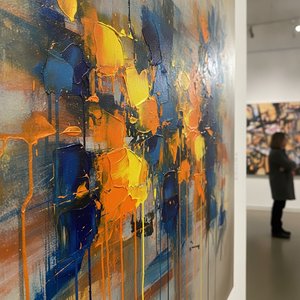
Beyond the Lines: Mastering the High-Impact World of Contemporary Abstraction
Master the high-impact world of contemporary abstraction. Discover how bold colors, textures, and modern movements like Abstract Expressionism can transform your space with premium, high-energy art curated for the design-conscious professional.