
 Previzualizare
 Trimite prin felicitare
 Distribuie
 Detalii despre lucrare
 Ghid
Ghid

 Descarcă imaginea
 Produse similare
 Radiografie
 Galerie foto
 Q&A
Q&A Statistici
Coat


 Vezi mai mult
Lucrarea de artă afișată pe această pagină este protejată de legile privind drepturile de autor, ceea ce înseamnă că nu putem crea sau vinde în mod legal o reproducere identică. Această protecție este garantată prin acorduri internaționale, precum Convenția de la Berna și de legile naționale, inclusiv cele prevăzute de Legea dreptului de autor din S.U.A. – Titlul 17. Toate drepturile rezervate. Orice reproducere neautorizată este interzisă.
Această metodă respectă pe deplin reglementările privind drepturile de autor, deoarece nu implică copierea sau duplicarea operei protejate. În schimb, este o reinterpretare creativă – o pictură nouă, influențată de original, dar care nu este identică cu acesta.
Giclée / Imprimare artistică
Printuri giclée sau pe canvas de calitate muzeală, cu proces de producție rapid și opțiuni flexibile de finisare. ( Comandă pictură realizată manual Comută pe Imagine Digitală)




P118B lei10

P118H lei10

P118W lei10

P438Z lei10

P508JH lei12

P508YH lei12

P805H lei10

P805Z lei10

P919BZ lei10

P919G lei10

P919XJ lei10

P959ZH lei10

P968JZ lei12

W106C lei8

W218G lei10

W218JH lei8

W218Y lei10

W307PJ lei10

W316G lei10

W316PJ lei8

W316Y lei10

W398PJ lei8

W4111J lei10

W500HY lei15

W500JH lei15

W692G lei12

W849H lei8

W940BG lei15

W953PJ lei8




Alegeți dintre dimensiunile noastre prestabilite, care respectă proporțiile originale ale operei de artă.

Introduceți lățimea și înălțimea necesare pentru a se potrivi ramei sau peretelui dumneavoastră. O printare poate fi doar tăiată, niciodată extinsă dincolo de dimensiunea imaginii originale, astfel încât o dimensiune cu o formă diferită va pierde o parte din imagine. Vă trimitem o simulare digitală pentru aprobare înainte de a imprima orice. Imaginea afișată pe această pagină nu prezintă tăierea reală — doar simularea arată acest lucru.
Livrare în întreaga lume () în 2 săptămâni, în loc de cele 4/5 săptămâni standard. (31 Octombrie)

Livrare expres gratuită la nivel mondial

Pânză de in de înaltă calitate

Asigurare completă pentru transport

Garanție de rambursare a taxelor vamale

Garanția fidelității culorilor

Politica de retur în 100 de zile (doar pentru defecte de fabricație)

Garanție de rambursare 100%

Ofertă pentru comenzi multiple
 Opțiunea cu sticlă este disponibilă doar pentru dimensiuni de sub 110 cm

Coat
Giclée / Imprimare artistică
Dimensiune reproducere
-


Preț total calculat
lei 379
The Sculptural Silence of Cristóbal Balenciaga’s Cocoon Coat
Cristóbal Balenciaga, often hailed as “the master of us all,” possessed an almost preternatural ability to distill fashion into its purest essence – a quiet elegance that transcended mere trend. His designs weren't flamboyant displays of ornamentation; they were meticulously crafted sculptures, imbued with a profound understanding of form and the human body. The 1966 Cocoon Coat in Ivory Worsted Wool Doublefaced Gabardine, a piece now available as a stunning hand-painted reproduction, exemplifies this philosophy perfectly. It’s not simply a coat; it's an embodiment of understated luxury, a testament to Balenciaga’s revolutionary approach to silhouette and his mastery of luxurious materials.
The coat immediately commands attention not through ostentation, but through its sheer architectural integrity. The ivory wool, exquisitely double-faced for a subtle textural interplay, drapes with an almost liquid grace. Balenciaga eschewed the rigid constraints of traditional tailoring, opting instead for a fluid, cocooning shape that subtly embraces the wearer without restricting movement. This isn’t a coat meant to be worn; it's a garment designed to be *experienced*, to feel the luxurious weight and smooth texture against the skin.
A Revolutionary Cut: Deconstructing the Silhouette
Balenciaga’s genius lay in his ability to dismantle and reconstruct familiar forms. The Cocoon Coat is a prime example of this process. Rather than emphasizing the waist – a defining feature of mid-century fashion – Balenciaga creates an illusion of volume through the generous, enveloping cut. The coat's shoulders are subtly squared, lending it a powerful yet graceful stance. Crucially, the back panel is cut from a single piece of fabric, “à même,” creating a seamless expanse that defies conventional tailoring. This technique, combined with the kimono sleeves, results in a garment that appears to float effortlessly, defying gravity and challenging the established rules of dress.
This radical departure from traditional silhouettes was directly influenced by Balenciaga’s deep engagement with modern art movements. He drew inspiration from the work of artists like Ellsworth Kelly and Daniel Buren, whose explorations of geometric abstraction and minimalist forms resonated deeply within his creative process. The clean lines, planar surfaces, and reduction to essential elements in the Cocoon Coat mirror these artistic principles, elevating it beyond a mere functional garment into a statement of sophisticated design.
The Language of Minimalism: Color and Texture
The coat’s palette – a harmonious blend of ivory and subtle grey – further reinforces its minimalist aesthetic. The choice of ivory wool speaks to an enduring sense of timeless elegance, while the muted tones allow the garment's form to take center stage. The texture is equally important; the double-faced construction adds depth and richness, creating a tactile experience that invites touch. Subtle variations in sheen and nap contribute to the coat’s visual interest without resorting to overt embellishment.
Balenciaga’s use of color was always restrained, prioritizing form over flamboyant decoration. He understood that true luxury resided not in lavish ornamentation but in the impeccable quality of materials and the precision of execution. The Cocoon Coat is a testament to this philosophy – a study in quiet sophistication, where every detail contributes to an overall sense of understated elegance.
A Legacy of Innovation
The 1966 Cocoon Coat represents a pivotal moment in Balenciaga’s career, marking a shift towards greater abstraction and architectural experimentation. It's a garment that foreshadowed the minimalist trends of the late 20th century while simultaneously retaining an enduring sense of timeless elegance. As a hand-painted reproduction, this piece offers a remarkable opportunity to bring Balenciaga’s visionary design into your home or office – a tangible reminder of his unparalleled genius and his profound impact on the world of fashion.
Întrebări și răspunsuri
„Coat” are o previzualizare în realitate augmentată?
Poți vizualiza "Coat" de Cristóbal Balenciaga Eizaguirre pe propriul tău perete folosind pagina Previzualizare în AR a operei de artă, prin intermediul realității augmentate pe un dispozitiv compatibil.
Este "Coat" una dintre cele mai populare opere ale lui Cristóbal Balenciaga Eizaguirre?
"Coat" este clasificată ca Legendar.
Imaginea pentru "Coat" de Cristóbal Balenciaga Eizaguirre poate fi reprodusă liber?
În ceea ce privește drepturile de autor, "Coat" este încă protejată de drepturile de autor.
Biografie artist
Early Life and Artistic Beginnings
Cristóbal Balenciaga Eizaguirre, a name synonymous with unparalleled elegance and revolutionary design, was born in 1895 in the picturesque fishing village of Getaria, nestled along the rugged coast of Spain’s Basque Country. This humble beginning profoundly shaped his artistic vision, imbuing it with a deep connection to nature, craftsmanship, and the traditions of his homeland. His father, José Balenciaga Basurto, was a skilled mariner, while his mother, Martina Eizaguirre Embil, possessed a remarkable talent for sewing – a skill she diligently practiced, providing young Cristóbal with his first exposure to the world of textiles and meticulous construction. Growing up amidst the sounds of the sea and the rhythmic hum of her sewing machine, he absorbed an appreciation for both raw beauty and intricate detail. At the tender age of twelve, he began his apprenticeship under the tutelage of a local tailor, laying the foundation for his future mastery of garment construction. This early training instilled in him a profound respect for materials, techniques, and the transformative power of skillful hands. The influence of his mother’s work was particularly strong, shaping his understanding of pattern making and draping – skills he would later refine to breathtaking effect.The Influences Shaping a Master
Balenciaga's artistic journey wasn't forged in isolation; it was deeply informed by the vibrant cultural landscape surrounding him. The Basque region itself, with its rich history of craftsmanship, textiles, and traditional dress, served as a constant source of inspiration. However, his exposure extended far beyond his local roots. A pivotal moment occurred when he was sent to Madrid at the age of fourteen, where he received formal training in tailoring – an opportunity afforded to him by the patronage of the Marchioness de Casa Torres, a prominent noblewoman who recognized his exceptional talent. This experience exposed him to the refined world of Spanish high society and provided him with invaluable skills. Crucially, he also encountered Coco Chanel in San Sebastián, a meeting that would prove transformative. Chanel’s radical approach to fashion – her liberation of women from restrictive garments – resonated deeply with Balenciaga's own desire to challenge conventional aesthetics. He admired her boldness and innovative spirit, recognizing her as a kindred soul pushing the boundaries of design. Furthermore, his exposure to the avant-garde art movements emerging in Europe—particularly Surrealism and Cubism—influenced his willingness to experiment with form and volume, leading him to create designs that were both sculptural and utterly unexpected.A Revolutionary Approach to Couture
Balenciaga’s rise to prominence was marked by a relentless pursuit of perfection and an unwavering commitment to the craft of couture. Unlike many of his contemporaries who relied on pre-drawn patterns and mass production techniques, Balenciaga favored a hands-on approach, meticulously constructing each garment from scratch using his own custom-made muslin templates – known as *toiles*. This painstaking process allowed him to achieve unparalleled precision and control over every detail, resulting in garments that were both exquisitely beautiful and remarkably wearable. He possessed an almost intuitive understanding of how fabrics responded to movement and form, manipulating them with a deftness rarely seen in the fashion world. His designs weren’t simply about aesthetics; they were about creating a harmonious relationship between the garment and the wearer – celebrating the female figure while simultaneously challenging conventional notions of beauty. His signature style—characterized by its dramatic silhouettes, innovative use of volume, and masterful draping—quickly garnered international acclaim, earning him the moniker "the master of us all" from Christian Dior and “the only couturier in the truest sense of the word” from Coco Chanel.Key Works and Lasting Legacy
Balenciaga’s oeuvre is a testament to his extraordinary talent and unwavering dedication. Some of his most iconic creations include the ‘Infanta’ gown, inspired by the portraits of Diego Velázquez, showcasing his ability to seamlessly blend historical references with contemporary design; the groundbreaking “jacket of light,” a dramatic evening coat that redefined the possibilities of draped fabric; and the revolutionary "sack dress," which stripped away traditional waistlines and liberated women from restrictive silhouettes. His work extended beyond clothing, encompassing accessories such as hats, gloves, and handbags – each meticulously crafted to complement his signature designs. Even after closing his couture house in 1968, Balenciaga’s influence continued to resonate throughout the fashion industry. His innovative techniques and sculptural forms inspired generations of designers, including Yves Saint Laurent, who famously declared, “Balenciaga is the master.” Today, Cristóbal Balenciaga remains an enduring icon—a testament to the power of craftsmanship, artistic vision, and a profound respect for the art of dressing the human form. The Cristóbal Balenciaga Museum in Getaria stands as a poignant tribute to his legacy, preserving and celebrating the extraordinary world of this true fashion architect.
Cristóbal Balenciaga Eizaguirre
1895 - 1972 , Spania
Detalii rapide
- Artistic Movement Or Style: Avant-garde / Surrealism
- Artists Or Movements Influenced By This Artist: ['Hubert de Givenchy']
- Artists Who Influenced This Artist:
- Christian Dior
- Coco Chanel
- Date Of Birth: 21 ianuarie 1895
- Date Of Death: 23 martie 1972
- Full Name: Cristóbal Balenciaga Eizaguirre
- Nationality: Spaniol
- Notable Artworks:
- Study 'Song of Songs IV'
- Tree Roots
- Acrobat
- Place Of Birth: Getaria, Spania
Articole similare
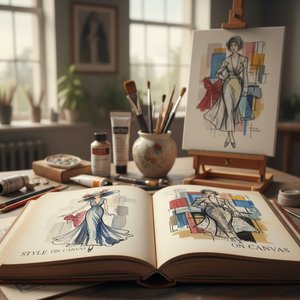
Style on Canvas: The Timeless Allure of Fashion Illustration Artworks
Discover the exquisite world of fashion illustration art. From Art Deco elegance to bespoke oil reproductions, explore how timeless sartorial beauty transforms luxury interiors through masterfully crafted canvas works and curated historical masterpieces.
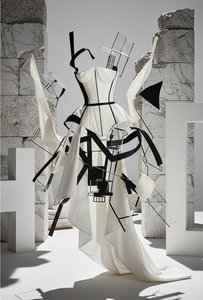
Gianfranco Ferré: Deconstructing Haute Couture – A Legacy of Architectural Form
Explore the revolutionary world of Gianfranco Ferré, 'the architect of fashion.' Discover his architectural approach to haute couture, iconic Dior designs, and lasting influence on luxury style. A deep dive for collectors & enthusiasts.

Cristóbal Balenciaga: Deconstructing Haute Couture's Architectural Legacy
Explore the revolutionary world of Cristóbal Balenciaga, the 'couturier's couturier'. Discover his architectural designs, lasting influence on haute couture, and guide to collecting rare pieces. A connoisseur’s resource.
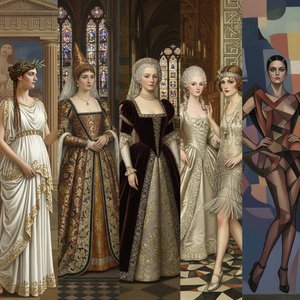
Style Through the Ages: Iconic Artworks That Defined the Evolution of Fashion Design
Explore the breathtaking intersection of fine art and high fashion. Discover how iconic masterpieces from Art Deco to Impressionism have shaped the world of luxury couture and timeless design in this curated visual journey.
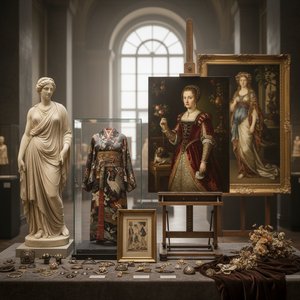
Draped Narratives: Fashion as Symbol & Subject in Historical Art
Explore the fascinating history of fashion as a symbol of power & status in art! Discover masterpieces from Gainsborough to Tissot and learn how clothing shaped societal narratives. Find museum-quality reproductions at OriginalUniqueArt.


