

 Vezi în context
 Trimite
 Distribuie
 Detalii
 Ghidul

 Descarcă
 Produse similare
 Radiografie
 Diaporama
 Statistici
Roman Ruins
 Oil
Oil- WallArt
- Dutch Golden Age
 1620
1620- Early Modern
 23.0 x 31.0 cm
 Citește mai mult
Giclée / Imprimare artistică
Printuri giclée sau pe canvas de calitate muzeală, cu proces de producție rapid și opțiuni flexibile de finisare. ( Comandă pictură realizată manual Treci la imagine digitală)




P118B lei10

P118H lei10

P118W lei10

P438Z lei10

P508JH lei12

P508YH lei12

P805H lei10

P805Z lei10

P919BZ lei10

P919G lei10

P919XJ lei10

P959ZH lei10

P968JZ lei12

W106C lei8

W218G lei10

W218JH lei8

W218Y lei10

W307PJ lei10

W316G lei10

W316PJ lei8

W316Y lei10

W398PJ lei8

W4111J lei10

W500HY lei15

W500JH lei15

W692G lei12

W849H lei8

W940BG lei15

W953PJ lei8




Alegeți dintre dimensiunile noastre prestabilite, care respectă proporțiile originale ale operei de artă.

Introduceți lățimea și înălțimea de care aveți nevoie, pentru a se potrivi ramei sau peretelui dumneavoastră. O printare poate fi doar tăiată, niciodată extinsă dincolo de dimensiunea imaginii originale, astfel încât o dimensiune cu o formă diferită va pierde o parte din imagine. Vă trimitem o simulare digitală pentru aprobare înainte de a imprima orice. Imaginea afișată pe această pagină nu prezintă tăierea reală — doar simularea arată acest lucru.
Livrare în întreaga lume () în 2 săptămâni, în loc de cele 4/5 săptămâni standard. (24 Octombrie)

Livrare expres gratuită la nivel mondial

Pânză de in premium

Asigurare completă pentru transport

Garanție de rambursare a taxelor vamale

Garanția fidelității culorilor

Politica de retur în 100 de zile (doar pentru defecte)

Garanție de rambursare 100%

Reducere pentru comenzi multiple
 Opțiunea cu sticlă este disponibilă doar pentru dimensiuni de sub 110 cm

Roman Ruins
Giclée / Imprimare artistică
Dimensiune reproducere
-


Preț total
lei 370
A Window into Antiquity: The Timeless Allure of Roman Ruins
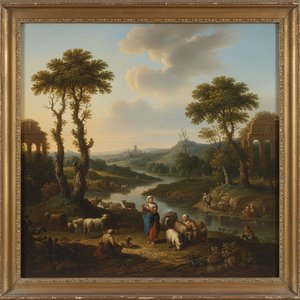
In the delicate, circular embrace of this exquisite tondo, Cornelis van Poelenburgh invites us to step through a portal into a bygone era. Painted around 1620, Roman Ruins is far more than a mere depiction of architectural decay; it is a profound meditation on the passage of time and the enduring relationship between humanity and the remnants of greatness. The composition, framed by its characteristic round format, focuses our gaze upon a landscape where the grandeur of the Roman Empire has softened into a pastoral sanctuary. Within this intimate space, the heavy stone arches and crumbling pillars serve as silent witnesses to history, now providing a backdrop for the quiet, rhythmic pulse of rural life.
The scene unfolds with a masterful use of light and shadow, reminiscent of the Dutch Golden Age's obsession with atmospheric truth. As we gaze upon the foreground, we encounter a world in gentle motion: a shepherd tending his flock, a laborer with his oxen, and figures caught in quiet contemplation. These small-scale inhabitants of the landscape bring a sense of warmth and vitality to the otherwise somber ruins. The artist employs a subtle, earthy palette—rich ochres, muted greens, and soft umbers—to weave a tapestry of textures that feels both tactile and ethereal. The hazy, overcast sky suggests the fleeting light of dawn or dusk, casting a melancholic yet peaceful glow over the entire vista, evoking a sense of nostalgia for a lost civilization.
The Mastery of the Italianate Style
Cornelis van Poelenburgh was a pivotal figure in the first generation of Dutch landscape painters who found profound inspiration in Italy. His travels to Rome allowed him to infuse his Northern training with the classical elegance of the Mediterranean. In Roman Ruins, we see this synthesis perfected. The technique is characterized by an incredible attention to detail; every crack in the ancient masonry and every distant bird in flight is rendered with a precision that draws the viewer deeper into the frame. This meticulousness does not feel clinical, however, but rather serves to enhance the three-dimensional depth of the scene, making the archway feel like a real threshold through which one might walk.
For the discerning collector or interior designer, this piece offers a unique emotional resonance. It possesses a "Caravaggesque" drama tempered by a serene, pastoral tranquility. The symbolism of the ruins—representing the inevitable cycle of rise and fall—is balanced by the resilience of the natural world and the simplicity of the human spirit. Such a work is an ideal centerpiece for a sophisticated interior, providing a conversational focal point that inspires reflection. Whether placed in a sunlit study or a grand gallery, this reproduction captures a moment of eternal stillness, offering any space it inhabits a touch of historical majesty and poetic grace.
Întrebări și răspunsuri
Cine a creat "Roman Ruins" și în ce an?
„Roman Ruins” a fost creat de Cornelis Van Poelenburch în 1620.
Ce reprezintă "Roman Ruins" de Cornelis Van Poelenburch?
Temele prezente în "Roman Ruins" de Cornelis Van Poelenburch includ figures, sheep, cow, archway, ruins, trees, birds, earth tones. Împreună, acestea rezumă subiectul întregii opere de artă.
Cât de intense sunt culorile din "Roman Ruins"?
Culorile din "Roman Ruins" de Cornelis Van Poelenburch prezintă o saturație de Muted cu o intensitate de Balanced.
Biografie artist
primii ani și formarea artistică
cornelis van poelenburgh, un pictor de peisaje olandez de o notorietate remarcabilă, s-a născut în utrecht, nederland, în anul 1594. Întrucât căutarea sa artistică a început sub îndrumarea lui abraham bloemaert, un artist celebru al epocii, această formare fundamentală a pus bazele succesului său viitor.cariera artistică și influențele
călătoriile lui van poelenburch către rome, la începutul secolului al xvii-lea, i-au modelat profund viziunea, transformându-l într-un reprezentant de prim rang al primei generații de pictori olandezi de peisaje activi în italia. lucrările sale de mic format, care adesea prezintă peisaje italianizante animate de figuri minuscule ce pun în scenă episoade biblice sau mitologice, au reușit să demonstreze un stil absolut unic. lucrări remarcabile:- satyrs spying on nymphs (după 1627), un exemplu caracteristic al creației lui van poelenburch, ce surprinde peisaje arhaice cu figuri în proces de scăldare. (vezi pe OriginalUniqueArt)
- council of the gods (aprox. 1630), o pictură ce ilustrează peisajul colinar idealizat al lui van poelenburch și zeițele inspirate de cultura romană, păstrată astăzi în mauritshuis (the hague, netherlands). (vezi pe OriginalUniqueArt)
moștenirea și ultimii ani
opera lui van poelenburch a fost extrem de apreciată de contemporanii săi, inclusiv de marea ducă de toscana și de stadholderul olandez. ulterior, artistul s-a întors la utrecht, unde și a trecut în neființă în anul 1667, la doar câțiva ani după mentorul său, abraham bloemaert. puncte cheie:- născut în utrecht, nederland, în 1594
- format sub îndrumarea lui abraham bloemaert
- influențat profund de perioada petrecută în rome
- cunoscut pentru peisajele italianizante de mic format, populate cu figuri
- decedat în utrecht, în 1667 vezi operele lui cornelis van poelenburch pe OriginalUniqueArt află mai multe despre cornelis van poelenburgh pe wikipedia

Cornelis Van Poelenburch
1594 - 1667 , Țările de Jos
Informații rapide
- Artistic Movement Or Style: Peisaj Olandez, Romanat
- Artists Or Movements Influenced By This Artist: ['Claude Lorraine']
- Artists Who Influenced This Artist: ['Abraham Bloemaert']
- Date Of Birth: 1594, Utrecht, Țările de Jos
- Date Of Death: 1667, Utrecht, Țările de Jos
- Full Name: Cornelis van Poelenburgh
- Nationality: Olandez
- Notable Artworks:
- Satiroli spionând nimfele
- Consiliul zeilor
- Place Of Birth: Utrecht, Țările de Jos
Articole conexe

Golden Light & Dutch Skies: The Timeless Magic of Dutch Golden Age Landscapes
Discover the breathtaking beauty of Dutch Golden Age landscapes. Explore the mastery of light, chiaroscuro, and 17th-century realism through an expert art history lens, celebrating the enduring legacy of the Dutch Masters for discerning collectors and art lovers.

Golden Age Reflections: Dutch Baroque Painting & Cultural Innovation
Explore the Dutch Golden Age of painting! Discover key artists like Vermeer & ter Borch, their innovative techniques, and the rich cultural context behind these Baroque masterpieces. Learn about collecting & appreciating this iconic art period.

Mastering Light & Shadow: A Journey Through the Dutch Golden Age's Luminous Legacy
Embark on a cultural journey through the Dutch Golden Age. Explore the masterful interplay of light and shadow in 17th-century masterpieces, from Rembrandt to Vermeer, and discover how this era of profound realism continues to inspire fine art collectors today.

Epoca de Aur Olandeză: 10 Capodopere Care Au Definit Arta și Decorațiunea Interioară
Descoperiți Epoca de Aur Olandeză prin 10 capodopere Rembrandt, Vermeer și alți pictori olandezi. Aflați poveștile din spatele acestor tablouri baroce iconice și inspirați-vă pentru decorațiuni interioare unice. Explorează colecția completă pe OriginalUniqueArt.com!
Nicolaes Berchem: Dutch Golden Age Pastoralism & the Evolution of Landscape Painting
Explore the captivating world of Nicolaes Berchem, a leading Dutch Golden Age painter. Discover his idyllic landscapes, masterful technique & lasting influence on art history. Learn more at OriginalUniqueArt.