

 Previzualizare
 Trimite
 Distribuie
 Detalii despre lucrare

 Descarcă
 Produse similare
 Radiografie
 Diapozitive automate
St Pancras, Cleaning Yard
 Abstract Expressionism
 1945
1945 46.0 x 72.0 cm
 Vezi mai mult
Giclée / Imprimare artistică
Printuri giclée sau pe canvas de calitate muzeală, cu proces de producție rapid și opțiuni flexibile de finisare. ( Comandă pictură lucrată manual Cumpără imaginea)




































Alegeți dintre dimensiunile noastre prestabilite, care respectă proporțiile originale ale operei de artă.

Puteți introduce propriile dimensiuni pentru a se potrivi unui anumit cadru sau spațiu. Dacă dimensiunea selectată nu corespunde proporțiilor imaginii originale, vom decupa lucrarea de artă sau vom extinde imaginea cu margini oglindite sau cu o culoare uniformă. Un mockup digital va fi trimis pentru aprobarea dumneavoastră înainte de începerea producției.
Vă rugăm să rețineți că previzualizarea de pe ecran nu reflectă decuparea sau extinderea reală. Doar mockup-ul va arăta cu exactitate compoziția finală.
Deși dimensiunile personalizate sunt disponibile, vă recomandăm să selectați o dimensiune din lista predefinită pentru a păstra proporțiile originale.
Livrare în întreaga lume () în 2 săptămâni, în loc de cele 4/5 săptămâni standard. (17 August)

Livrare expres gratuită la nivel mondial

Pânză de in de înaltă calitate

Asigurare completă pentru transport

Garanție de rambursare a taxelor vamale

Garanția fidelității culorilor

Politica de retur în 60 de zile (doar pentru defecte)

Garanție de rambursare 100%

Ofertă pentru comenzi multiple
 Opțiunea cu sticlă este disponibilă doar pentru dimensiuni de sub 110 cm

St Pancras, Cleaning Yard
Giclée / Imprimare artistică
Dimensiune reproducere
-


Preț total calculat
$ 80
Biografie artist
The Visionary of the Working Class: The Life and Legacy of Cliff Rowe
Born in the heart of Wimbledon, South London, to working-class parents, Clifford Rowe’s life was a profound tapestry woven from threads of social conviction and artistic mastery. His early years were defined by a dual education: the formal training at the Wimbledon School of Art and the Royal College of Art, which sharpened his technical draughtsmanship, and the raw, lived experience of London’s streets, which forged his political soul. This unique intersection of modernist experimentation and Marxist ideology would become the hallmark of his career, allowing him to bridge the gap between avant-garde aesthetics and the urgent realities of the common man.
The 1920s served as a crucible for Rowe’s developing worldview. As he navigated the turbulent economic landscapes marked by hunger marches and the global tremors of the Wall Street Crash, his art began to find its political voice. A pivotal moment occurred in 1930 when he traveled to the Soviet Union. Staying for eighteen months, Rowe immersed himself in a society that viewed art as a vital instrument of the state and the people. While he eventually returned to England, driven by the realization that the class struggle was equally potent on home soil, his time abroad left an indelible mark on his technique, introducing him to a sense of scale and purpose that would define his later compositions.
A Canvas of Social Transformation
Rowe’s artistic output was never merely decorative; it was deeply communicative. As a founding member of the Artists International Association (AIA) in 1933, he championed the idea that art should be accessible to the masses rather than sequestered in elite galleries. His work often blended the sharp, angular influences of Cubism with a gritty, grounded realism—a style some have described as a meeting point between Socialist Realism and New Realism. Whether through his evocative oil paintings or his prolific work as an illustrator, Rowe sought to capture the dignity of labor without falling into the trap of sentimentalism.
His versatility allowed him to move seamlessly between different mediums and commissions:
- Illustrative Mastery: He produced striking dust jacket designs for books and worked extensively on political publications, using imagery to disseminate progressive ideals.
- Public Commemorations: His talent was recognized on a national stage through his promotional commissions for the Attlee Labour government and his contributions to the iconic 1951 Festival of Britain.
- Graphic Activism: Through the AIA, he designed posters, banners, and placards that became the visual language of contemporary social demonstrations and trade union movements.
Symbolism and the Human Condition
In his more introspective works, Rowe explored the psychological weight of modernity. Paintings such as Man and Microscope utilize Cubist-influenced forms to examine the detachment between humanity and advancing technology, using muted tones to evoke a sense of clinical isolation. Similarly, Operating Theatre Nurse presents an unsettling, geometric depiction of clinical detachment, showcasing his ability to use abstraction to convey profound emotional states. Even in his more representational scenes of London life—from the bustling atmosphere of fish shops to the industrial grit of factories—there is an underlying tension, a careful balance between the physical reality of the subject and the symbolic weight of their social position.
The historical significance of Cliff Rowe lies in his refusal to separate the artist from the citizen. His legacy is preserved not only in the prestigious collections of the Tate and The People’s History Museum but also in the very fabric of British social history. He remains a vital figure for those studying the intersection of art and politics, reminding us that the brush can be as powerful a tool for change as any political manifesto. Through his eyes, we see a London that is both a place of struggle and a landscape of immense, quiet beauty.

cliff rowe
1904 - 1988
Detalii rapide
- Artistic Movement Or Style: Socialist Realism; New Realism
- Artists Or Movements Influenced By This Artist: ['Popular Front']
- Artists Who Influenced This Artist: ['John Reed']
- Date Of Birth: 1904
- Date Of Death: 1988
- Full Name: Clifford Rowe
- Nationality: British
- Notable Artworks:
- Cleaning Gas Retorts, St Pancras
- St Pancras, Cleaning Yard
- Place Of Birth: Wimbledon, South London
Articole similare

Top 10 Capodopere ale Expresionismului Abstract: Artă, Artiști și Decorațiuni de Lux | OriginalUniqueArt.ro
Descoperă Top 10 capodopere ale Expresionismului Abstract! Explorează poveștile lui Pollock, Rothko și De Kooning. Reproduceri de artă de lux & inspirație decor pe OriginalUniqueArt.ro. Găsește pictura perfectă pentru spațiul tău!

Wassily Kandinsky: Cele Mai Iconice 25 De Opere – Artă Abstractă pentru Decor Rafinat
Descoperă cele mai emblematice 25 de opere ale lui Wassily Kandinsky, pionierul artei abstracte! Explorează culorile vibrante, compozițiile unice și istoria fascinantă din spatele fiecărei picturi. Reproduceri de calitate muzeală pe OriginalUniqueArt.com – inspiră-ți decorul cu artă modernă!

Cele mai importante 10 capodopere ale abstracției geometrice | Artă & Decor de lux pe OriginalUniqueArt.com
Descoperă cele mai importante 10 capodopere ale abstracției geometrice! Explorează istoria, artiștii (Mondrian, Kandinsky) și culorile vibrante care au definit arta modernă. Reproduceri de tablouri de lux pe OriginalUniqueArt.com pentru un decor interior rafinat. Explorează colecția online!
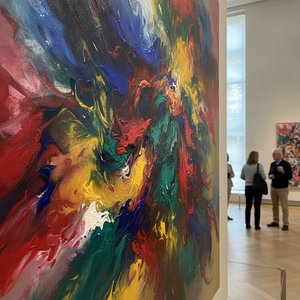
Lyrical Abstraction: The Emotional Power of Color and Form in Modern Art History
Explore the profound emotional depth of Lyrical Abstraction. Discover how masters like Raymond Parker used color and form to bridge Impressionism and Abstract Expressionism. Learn about this pivotal movement through our expert-led art history guide.
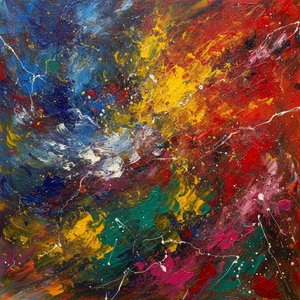
Pure Chaos & Color: The High-Voltage World of Abstract Expressionism
Dive into the high-voltage world of Abstract Expressionism. Explore the raw energy of Action Painting and the legendary masters of the New York School through a visual journey of pure chaos and color. Discover how to bring bold, high-impact abstract art into your modern space.

