Comută pe versiunea Print
 Vezi mai mult







































 Pentru opere de artă sau reproduceri care depășesc 105 cm (aproximativ 41 de inch) pe oricare dintre laturi, cadrul va fi livrat demontat, sub formă de kit. Această metodă asigură o livrare sigură și previne deteriorarea în timpul transportului.


The Studio Boat: A Glimpse into Monet's Artistic Process
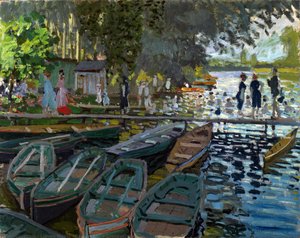
Claude Monet’s "The Studio Boat" (1874) offers more than just a picturesque scene; it provides an intimate look into the artist's working life and embodies the core principles of Impressionism. This oil-on-canvas painting, currently residing at the Kröller-Müller Museum in Otterlo, Netherlands, captures a moment of tranquility on the Seine River while simultaneously showcasing Monet’s innovative approach to art.
Subject and Composition
The artwork depicts a small houseboat or cabin cruiser gently floating on the water. Two figures are present – one near the center and another towards the right side of the composition. The boat itself is painted in a distinctive green hue, contrasting beautifully with the surrounding natural elements. A backdrop of trees adds depth and serenity to the scene. The focus isn't solely on the boat; it’s about capturing the fleeting effects of light and atmosphere upon the water and landscape.
Impressionistic Technique and Style
“The Studio Boat” exemplifies Monet’s Impressionist style, characterized by loose brushstrokes, a vibrant color palette, and an emphasis on capturing the immediate sensory experience. Rather than meticulously detailing every element, Monet prioritized conveying the *impression* of light and movement. The visible brushwork contributes to a sense of spontaneity and immediacy, inviting viewers to share in the artist’s direct observation of nature.
- Plein Air Painting: Monet embraced painting outdoors ("en plein air"), directly observing and capturing the changing conditions of light and weather.
- Broken Color: He employed a technique called "broken color," applying small strokes of pure, unmixed colors side-by-side, allowing the viewer's eye to blend them optically.
- Emphasis on Light: The painting’s success lies in its masterful depiction of light reflecting off the water and illuminating the surrounding foliage.
Historical Context and Symbolism
Painted during a period of significant artistic innovation, "The Studio Boat" reflects the Impressionist movement's rejection of traditional academic styles. Monet purchased the studio boat around 1873, following the example of his friend Charles-François Daubigny. This mobile workspace allowed him unprecedented freedom to observe and paint from various vantage points on the Seine. The boat itself symbolizes artistic independence and a commitment to capturing nature directly.
Emotional Impact and Legacy
The painting evokes a sense of peace, tranquility, and harmony with nature. It invites viewers to escape into a serene world where time seems to slow down. "The Studio Boat" is not just a representation of a scene; it's an embodiment of Monet’s artistic philosophy – to capture the ephemeral beauty of the natural world through light and color. As one of Monet’s series paintings, alongside his renowned Haystacks, Water Lilies, and Rouen Cathedrals, "The Studio Boat" stands as a testament to his dedication to exploring a single subject under varying conditions, solidifying his place as a pioneer of modern art.
Întrebări și răspunsuri
Culorile din "Barca de Studio" par intense sau delicate?
Intensitatea culorilor din "Barca de Studio" este Monocromatic. Această intensitate descrie cât de puternice par a fi culorile.
Ce stare și ce emoție se regăsesc în "Barca de Studio"?
În "Barca de Studio", o atmosferă Serenitate însoțește o emoție Tranchil.
În ce perioadă și în ce stil a fost creat(ă) "Barca de Studio" de Claude Monet?
„Barca de Studio” a fost creat în 1874, făcând parte din mișcarea Impresionismul.
Mai multe detalii despre această pictură
 Previzualizare
 Trimite prin felicitare
 Distribuie
 Detalii despre lucrare
 Ghid
Ghid

 Descarcă imaginea
 Produse similare
 Radiografie
 Galerie foto
 Întrebări și răspunsuri
 Statistici