
 Previzualizare
 Trimite prin felicitare
 Distribuie
 Detalii despre lucrare
 Ghid
Ghid

 Descarcă imaginea
 Produse similare
 Radiografie
 Galerie foto
 Întrebări și răspunsuri
 Statistici
Virgin and Child

 Vezi mai mult
Giclée / Imprimare artistică
Printuri giclée sau pe canvas de calitate muzeală, cu proces de producție rapid și opțiuni flexibile de finisare. ( Comandă pictură realizată manual Comută pe Imagine Digitală)




P118B lei10

P118H lei10

P118W lei10

P438Z lei10

P508JH lei12

P508YH lei12

P805H lei10

P805Z lei10

P919BZ lei10

P919G lei10

P919XJ lei10

P959ZH lei10

P968JZ lei12

W106C lei8

W218G lei10

W218JH lei8

W218Y lei10

W307PJ lei10

W316G lei10

W316PJ lei8

W316Y lei10

W398PJ lei8

W4111J lei10

W500HY lei15

W500JH lei15

W692G lei12

W849H lei8

W940BG lei15

W953PJ lei8




Alegeți dintre dimensiunile noastre prestabilite, care respectă proporțiile originale ale operei de artă.

Introduceți lățimea și înălțimea necesare pentru a se potrivi ramei sau peretelui dumneavoastră. O printare poate fi doar tăiată, niciodată extinsă dincolo de dimensiunea imaginii originale, astfel încât o dimensiune cu o formă diferită va pierde o parte din imagine. Vă trimitem o simulare digitală pentru aprobare înainte de a imprima orice. Imaginea afișată pe această pagină nu prezintă tăierea reală — doar simularea arată acest lucru.
Livrare în întreaga lume () în 2 săptămâni, în loc de cele 4/5 săptămâni standard. (4 Noiembrie)

Livrare expres gratuită la nivel mondial

Pânză de in de înaltă calitate

Asigurare completă pentru transport

Garanție de rambursare a taxelor vamale

Garanția fidelității culorilor

Politica de retur în 100 de zile (doar pentru defecte de fabricație)

Garanție de rambursare 100%

Ofertă pentru comenzi multiple
 Opțiunea cu sticlă este disponibilă doar pentru dimensiuni de sub 110 cm

Virgin and Child
Giclée / Imprimare artistică
Dimensiune reproducere
-


Preț total calculat
lei 385
A Dawn of Byzantine Grace: Exploring Cimabue’s Virgin and Child
Giovanni Cimabue (c. 1240 – 1302), often hailed as “the Florentine Dawn,” stands as an undeniable cornerstone in the transition from the opulent grandeur of Byzantium to the burgeoning artistic fervor that would herald the Renaissance. While Vasari's biographical accounts romanticize his life—painting him as a rebellious visionary—scholarly research confirms Cimabue’s profound influence on subsequent generations of artists, marking him as a pivotal figure who subtly challenged established conventions and paved the way for monumental breakthroughs in Western art. His nickname, “bull-headed,” speaks volumes about his tenacity – a characteristic evident in his courageous experimentation with form and expression, a daring step away from the rigid stylistic norms prevalent at the time. Cimabue’s legacy isn't merely one of artistic innovation; it represents a fundamental shift toward portraying religious subjects with greater emotional depth and humanist sensibilities.The Byzantine Echoes: Style and Technique
Cimabue’s Virgin and Child exemplifies the enduring impact of Byzantine iconography on Florentine art during his lifetime. Drawing heavily from imperial precedents, particularly those found in churches throughout Constantinople, Cimabue adopted a flattened perspective—a hallmark of Byzantine painting—where figures appear to float against a luminous background rather than occupying realistic space. This technique prioritizes spiritual contemplation over meticulous anatomical accuracy, focusing instead on conveying divine grace and serenity. The artist skillfully utilized tempera paint on panel, applying thin layers of pigment meticulously blended to achieve remarkable luminosity and tonal gradation. These subtle nuances contribute significantly to the painting’s ethereal atmosphere—a deliberate choice designed to evoke feelings of reverence and devotion. Cimabue's mastery of color palettes – dominated by cool blues and golds – further reinforces this Byzantine aesthetic, mirroring the opulent hues favored in imperial churches.A Symbol of Divine Maternity: Iconographic Significance
The Virgin Mary depicted in Cimabue’s masterpiece embodies the central tenets of Christian theology—specifically, divine motherhood. The crown adorning her head symbolizes her regal status as Queen of Heaven, reflecting the Byzantine tradition of portraying Mary as a celestial figure elevated above earthly concerns. Her serene gaze and gentle posture convey compassion and humility – qualities considered paramount in representing the Virgin’s role as intermediary between God and humanity. The infant Jesus cradled in her arms represents Christ incarnate—the divine Logos made flesh—and symbolizes redemption and salvation. These symbolic elements resonate deeply within the viewer, prompting reflection on themes of faith, purity, and grace—concepts central to Byzantine spirituality.Historical Context: Florence Embraces Innovation
Cimabue’s work emerged during a period of significant artistic transformation in Florence. While Byzantine influence remained strong throughout the city's artistic landscape, Cimabue’s daring stylistic choices signaled a nascent desire for greater naturalism and expressive dynamism—traits that would soon characterize the burgeoning Renaissance movement. His paintings served as inspiration for younger artists like Giotto di Bondone, who skillfully incorporated Byzantine techniques into his own compositions while simultaneously striving to depict human figures with unprecedented realism. Cimabue’s legacy extends beyond stylistic imitation; he fostered a spirit of experimentation and encouraged artists to push boundaries—a crucial catalyst in shaping the artistic trajectory of Florence and ultimately influencing the entire European art world.Emotional Resonance: Capturing Sacred Beauty
Ultimately, Cimabue's Virgin and Child transcends mere visual representation, achieving profound emotional resonance. The painting’s luminous colors, delicate brushstrokes, and harmonious composition evoke a sense of tranquility and spiritual contemplation—capturing the essence of Byzantine piety. It speaks to the viewer’s deepest aspirations for beauty, goodness, and divine grace—a testament to Cimabue's ability to translate theological concepts into compelling artistic expression. Reproductions of this iconic artwork continue to inspire artists and collectors alike, ensuring that Cimabue’s contribution to Western art history remains vividly alive for generations to come.Întrebări și răspunsuri
Ce culoare domină compoziția lucrării "Virgin and Child" de Cimabue?
Culoarea dominantă a operei "Virgin and Child" de Cimabue este Black (#0e0d0f).
Care este situația drepturilor de autor pentru "Virgin and Child" de Cimabue?
"Virgin and Child" de Cimabue este în domeniul public – drepturile de autor au expirat. Durata protecției drepturilor de autor se calculează de la data decesului artistului, survenit în anul 1302.
Cine a creat "Virgin and Child" și în ce stil este realizată?
Cimabue a creat "Virgin and Child", parte a mișcării Byzantine Revival.
Biografie artist
The Florentine Dawn: Cimabue and the Transition from Byzantium
Giovanni Cimabue, born Cenni di Pepo around 1240 in Florence, stands as a monumental figure—a bridge between the established artistic traditions of the Byzantine world and the burgeoning innovations that would define the Italian Renaissance. His life, though partially obscured by time and romanticized accounts – most notably those penned by Giorgio Vasari centuries later – marks an undeniable turning point in Western art history. Cimabue wasn’t simply a painter; he was a courageous innovator who dared to subtly challenge artistic conventions, laying the groundwork for the revolutionary changes that would soon sweep across Italy. Even his nickname, believed to mean “bull-headed,” hints at a strong will and perhaps a rebellious spirit—qualities demonstrably present in his willingness to experiment with form and expression. He represents a crucial moment where art began to shift from being solely devotional imagery towards something more humanistic and emotionally resonant.Early Influences and Artistic Development
Initially immersed in the Italo-Byzantine style prevalent throughout Florence, Cimabue’s early work adhered closely to established aesthetic principles: flattened figures adorned with shimmering gold leaf, symbolic rather than realistic depictions of space, and a profound focus on religious iconography. These were the hallmarks of Byzantine art, deeply ingrained in the artistic landscape of Italy during his formative years. However, even within these constraints, a nascent desire for naturalism began to emerge. He wasn’t content merely replicating existing forms; he sought to imbue his paintings with a greater sense of life and emotional depth. The influence of Giunta Pisano, a Florentine painter who had worked on Byzantine mosaics in Pisa, is often cited as a key factor in this shift. Cimabue also studied the works of Coppo di Marcovaldo, another prominent artist of the time. While the precise nature of his early training remains debated, it’s likely he honed his skills within Florentine workshops, absorbing the techniques and influences of the time while simultaneously developing his own unique artistic voice. The Byzantine style, characterized by its formality and spiritual focus, provided him with a solid foundation, but Cimabue began to subtly introduce elements that would foreshadow the coming Renaissance—a greater attention to volume, more expressive facial features, and a nascent understanding of spatial relationships. This wasn’t a sudden break from tradition, but rather a gradual evolution, a delicate balancing act between honoring the past and embracing new possibilities.Masterpieces and Artistic Innovations
Cimabue's legacy is cemented through a series of breathtaking works that showcase his evolving style. The *Maestà* (Louvre), originally created for the Church of San Francesco in Pisa, stands as one of his most celebrated masterpieces. This monumental altarpiece exemplifies his mastery of composition and use of color, while simultaneously hinting at the shift away from rigid Byzantine conventions. The figures, though still possessing a degree of formality, exhibit a newfound sense of volume and presence. The *Crucifixion* (San Domenico, Arezzo), dating around 1270, is particularly significant as an early demonstration of his departure from strict Byzantine norms. Here, the proportions are more realistic, and the emotional weight of the scene is palpable—a stark contrast to the often-distant depictions found in earlier religious art. Further evidence of Cimabue’s innovative spirit can be seen in works like the *Flagellation of Christ* (Frick Collection), generally attributed to his workshop. This complex composition reveals an evolving understanding of perspective and spatial relationships, showcasing a growing interest in creating more immersive and believable scenes. His contributions weren't limited to panel paintings; Cimabue also excelled as a mosaicist, contributing significantly to the decoration of the Baptistery of Florence—though these mosaics have unfortunately suffered from deterioration over time.A Pivotal Teacher: Giotto and Beyond
Perhaps Cimabue’s most enduring legacy lies in his role as the teacher of Giotto di Bondone. While historical accounts vary regarding the exact nature of their relationship, it is widely accepted that Giotto received crucial training under Cimabue's guidance. However, Giotto would ultimately surpass his master, revolutionizing Italian painting with an even more radical embrace of naturalism and emotional realism. It’s a testament to Cimabue’s skill as a teacher that he fostered such talent, even knowing it might eclipse his own achievements. The story, often recounted by Vasari, of Giotto playfully painting a fly on Cimabue's face speaks volumes about the dynamic between master and pupil—a playful rivalry that ultimately pushed both artists to greater heights. Cimabue’s influence extended beyond Giotto, impacting numerous other artists of the period. He challenged the artistic norms of his time, demonstrating that art could be more than just religious symbolism; it could also reflect human emotion and experience. His willingness to experiment with form, proportion, and expression paved the way for the innovations of the Renaissance, establishing him as a crucial transitional figure in the history of Western art.Enduring Significance
Cimabue passed away in 1302 in Pisa, leaving behind a body of work that continues to captivate and inspire. Despite his significant contributions, details surrounding his later life remain scarce. However, his artistic legacy resonates powerfully through the works of his students and the evolution of Italian art. He represents a crucial step in the development of Western painting, moving away from the stylized conventions of the Byzantine era towards a more humanistic and naturalistic approach. His paintings are not merely historical artifacts; they are windows into a pivotal moment in artistic history—a time when artists began to question established norms and explore new possibilities. He was a pioneer, a visionary who dared to challenge the status quo and lay the foundations for the artistic brilliance that would define the Renaissance.
Cimabue
1240 - 1302 , Italia
Detalii rapide
- Artistic Movement Or Style: Bizantino & Renasc.
- Artists Or Movements Influenced By This Artist:
- Giotto
- Duccio
- Artists Who Influenced This Artist:
- Giunta Pisano
- Coppo
- Date Of Birth: c. 1240
- Date Of Death: 1302
- Full Name: Giovanni Cimabue
- Nationality: Italian
- Notable Artworks:
- Maestà
- Crucif.
- Flagel.
- Place Of Birth: Florence, Italia
Articole similare

Giotto di Bondone: Cele Mai Remarcabile 25 de Capodopere – Artă, Istorie și Decorațiuni Interioare
Descoperă cele mai frumoase 25 de opere ale lui Giotto di Bondone! Explorează frescele Renașterii timpurii, picturile iconice și poveștile din spatele capodoperelor. Găsește inspirație pentru decorul casei tale cu OriginalUniqueArt.com – artă clasică de calitate muzeală.
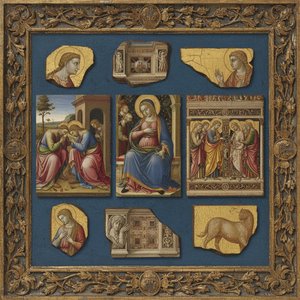
Proto-Renaissance: 10 Capodopere Esențiale pentru Decorul Cult și Inspirație Artistică
Descoperă 10 capodopere Proto-Renaștere de la Giotto la Duccio! Explorează istoria artei, tehnicile picturii italiene și inspirația din frescele medievale. Reproduceri tablouri de calitate muzeală pe OriginalUniqueArt.com – pentru un decor artistic unic.
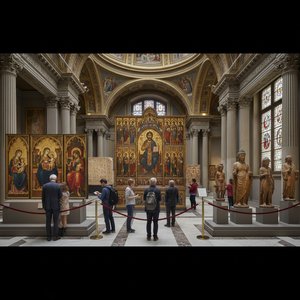
Sacred Narratives Embodied: A Comprehensive Exploration of Religious Iconography in Art History
Explore the rich history of religious iconography in art! Discover symbolism, movements & masterpieces from Byzantine to Renaissance periods. Expert insights for collectors and enthusiasts at OriginalUniqueArt.
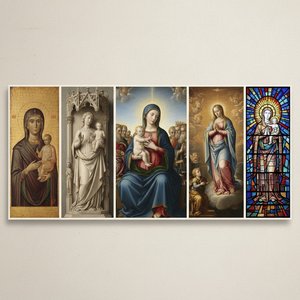
Divine Grace: A Journey Through the Most Iconic Depictions of the Virgin Mary in Art History
Embark on a profound journey through art history with our exploration of the most iconic depictions of the Virgin Mary. Discover the divine grace, symbolism, and masterful techniques found in Renaissance masterpieces and sacred iconography.
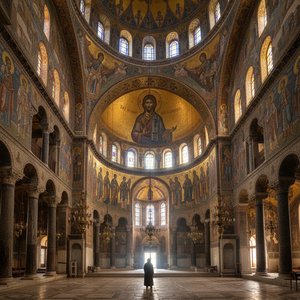
Illuminating Eternity: A Comprehensive Exploration of Byzantine Art's Legacy
Explore the rich history & stunning artistry of the Byzantine Empire! Discover iconic mosaics, profound symbolism, and lasting influence on Western art. A comprehensive guide for history lovers.


