

 Vezi în context
 Trimite
 Distribuie
 Detalii
 Ghidul

 Descarcă
 Produse similare
 Radiografie
 Diaporama
 Statistici
Untitled (958)

 Citește mai mult
Giclée / Imprimare artistică
Printuri giclée sau pe canvas de calitate muzeală, cu proces de producție rapid și opțiuni flexibile de finisare. ( Comandă pictură realizată manual Treci la imagine digitală)




































Alegeți dintre dimensiunile noastre prestabilite, care respectă proporțiile originale ale operei de artă.

Puteți introduce propriile dimensiuni pentru a se potrivi unui anumit cadru sau spațiu. Dacă dimensiunea selectată nu corespunde proporțiilor imaginii originale, vom decupa lucrarea de artă sau vom extinde imaginea cu margini oglindite sau cu o culoare uniformă. Un mockup digital va fi trimis pentru aprobarea dumneavoastră înainte de începerea producției.
Vă rugăm să rețineți că previzualizarea de pe ecran nu reflectă decuparea sau extinderea reală. Doar mockup-ul va arăta cu exactitate compoziția finală.
Deși dimensiunile personalizate sunt disponibile, vă recomandăm să selectați o dimensiune din lista predefinită pentru a păstra proporțiile originale.
Livrare în întreaga lume () în 2 săptămâni, în loc de cele 4/5 săptămâni standard. (26 Septembrie)

Livrare expres gratuită la nivel mondial

Pânză de in premium

Asigurare completă pentru transport

Garanție de rambursare a taxelor vamale

Garanția fidelității culorilor

Politica de retur în 100 de zile (doar pentru defecte)

Garanție de rambursare 100%

Reducere pentru comenzi multiple
 Opțiunea cu sticlă este disponibilă doar pentru dimensiuni de sub 110 cm

Untitled (958)
Giclée / Imprimare artistică
Dimensiune reproducere
-


Preț total
$ 80
A Delicate Bloom: Exploring Mackintosh's "Untitled (958)"
This captivating artwork, currently known as “Untitled (958),” offers a glimpse into the refined aesthetic of Charles Rennie Mackintosh, a pivotal figure in the Glasgow Style movement. While lacking a formal title from the artist’s hand, its visual impact speaks volumes about his mastery of decorative arts and his unique approach to floral representation. The painting presents a close-up study of pink flowers interwoven with lush green foliage, creating an intimate and visually rich composition. The presence of three small white dots adds a subtle layer of intrigue – perhaps representing dewdrops or simply serving as delicate accents within the overall design.Style & Technique: Echoes of Art Nouveau
Mackintosh’s style is instantly recognizable, firmly rooted in the Art Nouveau movement but infused with his distinct Scottish sensibility. Unlike the more overtly ornate and flowing forms often associated with Art Nouveau, Mackintosh favored a restrained elegance characterized by geometric precision and simplified lines. This piece exemplifies this approach; while depicting natural forms – flowers and leaves – they are rendered with a clarity and linearity that borders on abstraction. The technique appears to be executed in oil paint, allowing for subtle gradations of color within the petals and leaves, creating depth and texture despite the relatively flat perspective. The close cropping of the subject matter is also characteristic of his work, focusing attention entirely on the beauty of the floral arrangement.Historical Context & The Glasgow Style
Created during Mackintosh’s prolific period (likely around the turn of the 20th century), “Untitled (958)” reflects the burgeoning artistic scene in Glasgow. The "Glasgow Style" was a unique blend of Art Nouveau, Celtic Revival influences, and Scottish vernacular architecture and design. Mackintosh spearheaded this movement, leaving an indelible mark on interior design, furniture making, and decorative arts. His work aimed to create harmonious environments – total works of art encompassing architecture, furnishings, and decorative elements. This painting can be seen as a smaller-scale manifestation of that holistic vision, demonstrating his ability to translate the principles of good design into a captivating floral study. His collaborations with his wife, Margaret Macdonald Mackintosh, were also crucial in shaping this distinctive style; her own symbolic and often mystical imagery frequently complemented his architectural designs.Symbolism & Emotional Impact
While seemingly straightforward in its depiction of flowers, the painting likely carries deeper symbolic weight within the context of Mackintosh’s broader artistic philosophy. Flowers often represent themes of growth, beauty, and transience – concepts that resonate with the Art Nouveau fascination with nature. The restrained palette of pinks and greens evokes a sense of tranquility and understated elegance. The overall effect is one of quiet contemplation; the viewer is invited to appreciate the delicate details and subtle harmonies within this miniature floral world. It’s a piece that inspires serenity and offers a moment of respite from the complexities of modern life, embodying Mackintosh's desire to create spaces and objects that nurture the soul.Biografie artist
A Scottish Visionary: The Life and Art of Charles Rennie Mackintosh
Charles Rennie Mackintosh, born in Glasgow on June 7, 1868, was more than an architect; he was a philosophical artist who sought to harmonize every aspect of the built environment. From the grandest structures to the smallest details of furniture and ornamentation, his vision aimed for a holistic aesthetic experience—a distinctly Scottish interpretation of the burgeoning Art Nouveau movement. Growing up as one of eleven children in a family where his father served as a police superintendent, Mackintosh’s early life offered little indication of the artistic revolution he would ignite. His education at Reid's Public School and Allan Glen's Institution revealed an aptitude for art but also hinted at challenges with traditional academic disciplines, possibly indicative of dyslexia. This divergence from conventional learning may have fostered his unique perspective, allowing him to approach design unbound by established norms. His formative years were significantly shaped by his apprenticeship under architect John Hutchison, coupled with evening classes at the Glasgow School of Art—a crucible where he forged crucial relationships with fellow students Herbert McNair, Margaret Macdonald, and Frances Macdonald, collectively known as “The Four.” These connections weren’t merely professional; they were deeply collaborative, influencing each other's artistic trajectories and forming the core of what would become the Glasgow Style.Forging a New Aesthetic: The Glasgow Style and Architectural Masterpieces
By the 1890s, Mackintosh had emerged as a leading figure in the “Glasgow Style,” an Art Nouveau variant infused with Celtic symbolism, Japanese aesthetics, and the principles of the Arts and Crafts movement. This wasn’t simply about applying decorative motifs; it was about creating a total work of art—where architecture, furniture, interiors, and even textiles were conceived as interconnected elements of a unified design. His architectural philosophy revolved around rejecting Victorian grandeur in favor of simplicity and elegance, prioritizing natural materials and organic forms. He championed the use of steel framing to maximize light and space – a radical departure from prevailing construction techniques – believing that buildings should inspire contemplation and delight the senses. The Glasgow School of Art building stands as testament to this conviction, embodying Mackintosh’s vision for educational spaces as places of beauty and innovation. Its undulating façade, reminiscent of Celtic spirals, and its expansive interior halls bathed in sunlight exemplify his commitment to creating environments that fostered creativity and intellectual curiosity. Beyond the school itself, Mackintosh undertook ambitious projects like Windyhill, Kilmacolm – a country house designed to blend seamlessly with its surroundings – Hill House, Helensburgh – renowned for its haunting atmosphere and masterful use of light – Queen’s Cross Church – demonstrating his ability to synthesize architectural grandeur with spiritual contemplation – and Scotland Street School Museum of Education – reflecting his belief in the transformative power of design on young minds.The Four: Collaboration and Artistic Influence
Mackintosh's artistic journey was inextricably linked to his partnership with Margaret Macdonald Mackintosh, whom he married in 1900. Together, they formed “The Four,” alongside Herbert McNair and Frances MacDonald – a collective that profoundly shaped the Glasgow Style and established itself as one of Scotland’s most influential design groups. Their collaborative spirit extended beyond mere professional association; it represented a shared aesthetic sensibility rooted in Celtic mythology and Japanese art—influences that permeated their designs and infused them with a distinctive emotional depth. The Four rejected academic conventions, prioritizing intuition and experimentation over rigid rules. They sought to express ideas through visual language – employing geometric patterns, stylized floral motifs, and subtle color palettes – creating artworks that resonated with both intellectual rigor and sensual beauty. Their work served as inspiration for subsequent generations of artists and designers, cementing Mackintosh’s legacy as a pioneer of modern aesthetic thought.A Period of Transition and Artistic Exploration
The First World War brought significant upheaval to Mackintosh's life and career. Faced with dwindling commissions and the shifting tastes of the era—away from Mackintosh’s distinctive style towards more conventional forms—he relocated to Walberswick, Suffolk, seeking solace in rural tranquility. Despite these challenges, Mackintosh continued to pursue his artistic passions, focusing on watercolor painting – a medium that allowed him to capture the ethereal beauty of Scottish landscapes and flowers with remarkable sensitivity. His watercolors reveal a quieter side of Mackintosh’s artistry—a contemplative engagement with nature that nonetheless retained the hallmarks of his unique vision. These paintings demonstrate his ability to distill complex emotions into simple forms, conveying a profound appreciation for the natural world and its rhythms.Legacy and Rediscovery: An Enduring Influence
Charles Rennie Mackintosh died in London on December 10, 1928, leaving behind an artistic legacy that would endure beyond his lifetime. Initially overshadowed by prevailing architectural trends, Mackintosh’s work experienced a resurgence of interest in the mid-20th century—fueled by a renewed appreciation for Art Nouveau and early modernist aesthetics. Scholars recognized his groundbreaking contributions to design, acknowledging his pioneering use of space, light, and materials as precursors to movements like Bauhaus and Scandinavian Modernism. Today, Mackintosh is celebrated as one of Scotland’s most important architects and designers – an artist whose visionary aesthetic continues to inspire creativity and innovation across disciplines. His buildings stand as enduring monuments to his genius—a testament to the transformative power of artistic imagination and a celebration of beauty rooted in simplicity and harmony.
Charles Rennie Mackintosh
1868 - 1928 , Scoția
Informații rapide
- Artistic Movement Or Style: Art Nouveau, Glasgow Style
- Artists Or Movements Influenced By This Artist: ["Georgie O'Keeffe"]
- Date Of Birth: June 7, 1868
- Date Of Death: December 10, 1928
- Full Name: Charles Rennie Mackintosh
- Nationality: Scoțian
- Notable Artworks:
- Untitled (958)
- Untitled (592)
- Glasgow School of Art
- Place Of Birth: Glasgow City, Scoția
Articole conexe
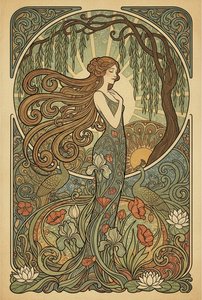
The Flowing Line & Flourishing Form: Exploring Art Nouveau's Aesthetic Legacy
Explore the captivating world of Art Nouveau! Discover its origins, key artists like Horta & Mucha, regional styles, innovative techniques, and lasting influence on architecture & design. A comprehensive guide for art enthusiasts.
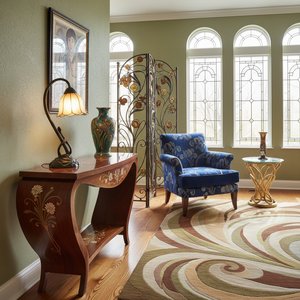
Top 10 Capodopere Art Nouveau: Frumusețe, Inspirație și Decor Excepțional
Descoperă Top 10 capodopere Art Nouveau! Alphonse Mucha, Gustav Klimt și alți maeștri îți dezvăluie frumusețea stilului floral și a liniilor sinuoase. Reproduceri de artă excepționale pentru un decor rafinat pe OriginalUniqueArt.com
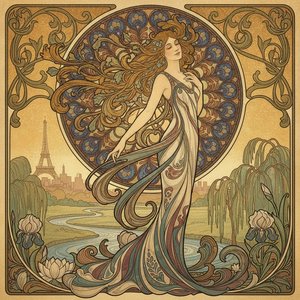
The Elegance of Art Nouveau: Embracing Nature's Fluid Beauty and the Belle Époque Spirit
Discover the enchanting world of Art Nouveau. Explore the organic beauty, flowing lines, and Belle Époque elegance that defined an era of unparalleled craftsmanship and natural inspiration.
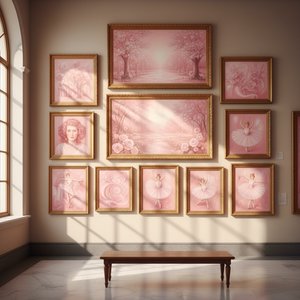
Top 10 Tablouri Celebre Îmbălsămate în Nuanțe de Roz Palid | Artă & Decor
Descoperă top 10 tablouri celebre îmbibate în nuanțe delicate de roz palid! De la Monet și Renoir la opere romantice, explorează istoria artei și găsește inspirație pentru decorul tău. Reproduceri de calitate muzeală pe OriginalUniqueArt.com.
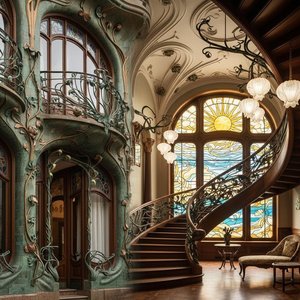
Art Nouveau: The Elegant Fusion of Nature and Design – A Journey Through Organic Sophistication
Discover the exquisite world of Art Nouveau. Explore the elegant fusion of nature and design through architectural masterpieces, organic forms, and the legendary masters of the Belle Époque. Immerse yourself in a journey of timeless sophistication and ornamental beauty.