Rococo · 1736
Bear Hunt (Charles André van Loo, 1736)
Charles André van Loo (1705–1765) a realizat Bear Hunt. Data sa este din 1736. Face parte din mișcarea Rococo. Este realizată în Oil On Canvas. Este păstrat la Musée de Picardie în Amiens, Franța. Dimensiunile sunt 184 × 129 cm.
- 1736
- Oil On Canvas
- 184 × 129 cm
- Musée de Picardie, Amiens

 Previzualizare

 Tablou în ulei pictat manual
 Trimite prin felicitare
 Distribuie
 Fișă informativă


 Descarcă imaginea
 Produse similare
 Radiografie
 Galerie foto
 Întrebări și răspunsuri

 Statistici
Bear Hunt, pe scurt
- Titlu
- Bear Hunt
- Artist
- Charles André van Loo (1705–1765)
- Artist născut în
- Nisa, Franța
- Date
- 1736
- Medium
- Oil On Canvas
- Dimensiuni
- 184 × 129 cm
- Unde poate fi vizualizată
- Musée de Picardie, Amiens, Franța
- Mișcare
- Rococo
- Perioadă
- Early Modern
- Subiect
- people, bears, dogs, horses, guns, rocks
Ce reprezintă Bear Hunt?
Identification of the Artwork and Artist
The oil on canvas titled Bear Hunt was painted by Charles-André van Loo in 1736. This work emerged from the hand of an artist born in Nice, France, in 1705. He belonged to a successful dynasty of Dutch painters, a lineage of creators who shaped the visual language of their era. His life spanned the decades between his birth and his death in 1765.
Charles-André van Loo brought a specific precision to this scene. The canvas captures a moment of movement within the wilderness. It is a piece from a period of significant activity for the artist. His brushwork defines the tension of the chase. The light falls upon the figures and the animals in the landscape.
The work remains a specific record of a hunt. It carries the weight of the artist's early career. A quiet stillness exists beneath the action of the hunt. The shadows of the trees stretch across the ground.
Visual Composition and Subject Matter
This large oil on canvas captures a moment of sudden movement in the wild. Near a cluster of jagged rocks, the landscape opens into a rugged wilderness. Several men grip guns, their bodies poised for the chase. Dogs weave through the brush, their instincts driving them toward the scent of the prey. Horses stand nearby, silent witnesses to the exertion, ready to carry the hunters across the uneven ground.
The bears are scattered throughout the scene, some looming in the foreground and others fading into the distant greenery. The composition relies on this distribution of weight to create a sense of scale. There is a palpable tension in the air, a rush of adrenaline that defines the hunt. The great outdoors provides a chaotic, unscripted stage for this encounter. The hunt moves with a sudden, sharp energy.
Related Works by the Same Artist
The artist’s hand moved through many realms, from the quietude of a Self Portrait to the grand scale of mythological drama. In Venus and Amor, held at the Kunsthalle Bremen, the brush captures a different kind of grace. He explored the tension of legend in Jupiter and Antiope and rendered the myth of Perseus and Andromeda in multiple versions. These figures exist alongside the courtly presence of the Portrait of Marie Leszczynska, Queen of France. A smaller, focused study of Mademoiselle Clairon as Medea appeared in 1760.
The hunt remains a recurring pulse in his oeuvre. He captured aristocratic leisure in Halt of the Hunt, a work now held at The Metropolitan Museum of Art. This interest in the chase extends to the overdoor paintings created for the petits appartements of Louis XV at Versailles. Such works reflect a life spent navigating the precise requirements of royal patronage and the fluid movement of the Rococo style. The paint dries on the canvas, leaving only the shadow of the chase.
În ce muzeu se află Bear Hunt?
Musée de Picardie
Amiens, Franța
Un Sanctuar al Timpului: Sufletul Muzeului de Picardie Situat în inima istorică a orașului Amiens, din Franța, Musée de Picardie se ridică ca o mărturie profundă a dialogului neîncetat dintre umanitate și impulsurile sale creative. A păși prin ușile sale înseamnă a intra într-un tărâm în care granițele timpului se dizolvă, asemenea luminii care dansează prin sălile sale grandioase și aerisite. Însăși structura muzeului, o capodoperă a erei celui de-al Doilea Imperiu, creată de arhitecții Henri Parent și Arthur-Stanislas Diet, servește drept un narator tăcut al ascensiunii culturale a Franței.


Imagini la înaltă rezoluție ale lui Bear Hunt
Domeniu public: artistul a decedat în 1765.
Charles André van Loo, Bear Hunt (1736), Musée de Picardie. Domeniu public
Întrebări despre Bear Hunt, răspunsuri
În ce muzeu se află originalul "Bear Hunt"?
Puteți vedea originalul "Bear Hunt" la Musée de Picardie, Amiens, Franța.
În ce an a fost creată "Bear Hunt" de Charles André van Loo?
Opera "Bear Hunt" de Charles André van Loo a fost creată în 1736.
Ce tehnică a fost utilizată pentru "Bear Hunt" de Charles André van Loo?
"Bear Hunt" este realizat în Oil On Canvas."
Ce dimensiuni are "Bear Hunt" de Charles André van Loo în realitate?
Lucrarea originală "Bear Hunt" de Charles André van Loo are dimensiunile de 184 x 129 cm.
Ce reprezintă "Bear Hunt" de Charles André van Loo?
Subiectele din "Bear Hunt" sunt people, bears, dogs, horses, guns, rocks, wilderness.
"Bear Hunt" de Charles André van Loo face parte din domeniul public?
Statusul drepturilor de autor pentru "Bear Hunt" de Charles André van Loo: opera este în domeniul public – drepturile de autor au expirat. Acest lucru determină dacă reproducerile imaginii pot fi realizate liber.
Cine a creat "Bear Hunt"?
„Bear Hunt” este atribuit lui Charles André van Loo.
Din ce curent artistic face parte "Bear Hunt" de Charles André van Loo?
Mișcarea asociată cu "Bear Hunt" de Charles André van Loo este Rococo. Această clasificare plasează lucrarea printre artiști și opere de artă conexe.
În ce etapă a evoluției lui Charles André van Loo se încadrează „Bear Hunt”?
„Bear Hunt” aparține perioadei Mature Period din cariera lui Charles André van Loo. Această clasificare corelează opera cu evoluția artistului.
Despre artistul Charles André van Loo
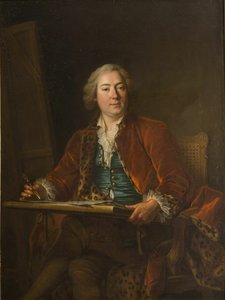
1705–1765, Franța
Charles André van Loo
Early Life and Training Charles André van Loo, born February 15, 1705, in Nice, France, was the youngest son of Louis-Abraham van Loo, a celebrated Dutch painter who had established himself in France during the Baroque era. His elder brother, Jean Baptiste van Loo, equally accomplished and influential, nurtured his artistic talent from an early age, shaping him into one of the foremost figures of the Rococo movement. The family’s lineage traced back to Jacob van Loo, a Flemish artist who had emigrated to Amsterdam in the seventeenth century, marking them as inheritors of a rich artistic tradition. Initially trained in Turin under Benedetto Luti—a renowned sculptor and teacher—van Loo continued his studies in Rome during 1712-1714, immersing himself in the vibrant intellectual and artistic atmosphere of the papal city.
Despre Charles André van Loo Lucrări remarcabile ale lui Charles André van Loo
Alte lucrări ale lui Charles André van Loo
 Spanish Concert (Spanish Сonversation)1754
 Aeneas Carrying Anchises1729
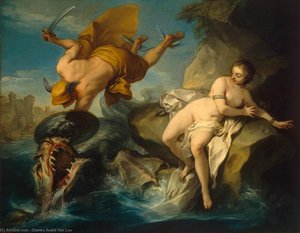 Perseus and Andromeda1735
 The sultana1747
Eseuri despre Bear Hunt
 Charles-André van Loo: A Study in Rococo Portraiture & the French Court's Artistic DynamicsExplore the elegant world of Charles-André van Loo, a master of Rococo portraiture at the French court. Discover his life, techniques, and …
 16th century Flemish paintersMasterpieces by Bruegel and Jan Brueghel define 16th century Flemish art. Explore the full collection online at OriginalUniqueArt.com.
 17th century Flemish paintersMasterpieces by Van Dyck and Teniers define Flemish Baroque. Explore museum-quality reproductions on OriginalUniqueArt.com.