

 Vezi în context
 Trimite
 Distribuie
 Detalii
 Ghidul

 Descarcă
 Produse similare
 Radiografie
 Diaporama
 Statistici
Aeneas Carrying Anchises
 Oil On Canvas
- WallArt
- Rococo
 1729
1729 110.0 x 105.0 cm
 Muzeul Luvru
 Citește mai mult
Giclée / Imprimare artistică
Printuri giclée sau pe canvas de calitate muzeală, cu proces de producție rapid și opțiuni flexibile de finisare. ( Comandă pictură realizată manual Treci la imagine digitală)




P118B lei10

P118H lei10

P118W lei10

P438Z lei10

P508JH lei12

P508YH lei12

P805H lei10

P805Z lei10

P919BZ lei10

P919G lei10

P919XJ lei10

P959ZH lei10

P968JZ lei12

W106C lei8

W218G lei10

W218JH lei8

W218Y lei10

W307PJ lei10

W316G lei10

W316PJ lei8

W316Y lei10

W398PJ lei8

W4111J lei10

W500HY lei15

W500JH lei15

W692G lei12

W849H lei8

W940BG lei15

W953PJ lei8




Alegeți dintre dimensiunile noastre prestabilite, care respectă proporțiile originale ale operei de artă.

Introduceți lățimea și înălțimea de care aveți nevoie, pentru a se potrivi ramei sau peretelui dumneavoastră. O printare poate fi doar tăiată, niciodată extinsă dincolo de dimensiunea imaginii originale, astfel încât o dimensiune cu o formă diferită va pierde o parte din imagine. Vă trimitem o simulare digitală pentru aprobare înainte de a imprima orice. Imaginea afișată pe această pagină nu prezintă tăierea reală — doar simularea arată acest lucru.
Livrare în întreaga lume () în 2 săptămâni, în loc de cele 4/5 săptămâni standard. (21 Octombrie)

Livrare expres gratuită la nivel mondial

Pânză de in premium

Asigurare completă pentru transport

Garanție de rambursare a taxelor vamale

Garanția fidelității culorilor

Politica de retur în 100 de zile (doar pentru defecte)

Garanție de rambursare 100%

Reducere pentru comenzi multiple
 Opțiunea cu sticlă este disponibilă doar pentru dimensiuni de sub 110 cm

Aeneas Carrying Anchises
Giclée / Imprimare artistică
Dimensiune reproducere
-


Preț total
lei 367
Aeneas Carrying Anchises: A Testament to Roman Heroism and Rococo Elegance
Charles-André van Loo’s “Aeneas Carrying Anchises,” painted in 1729, is more than just a depiction of a pivotal moment from Virgil's *Aeneid*; it’s a masterful distillation of the Rococo style, imbued with a profound sense of drama and classical gravitas. This artwork, now meticulously reproduced on hand-painted canvas by OriginalUniqueArt, offers a captivating glimpse into 18th-century French artistic sensibilities – a world where mythological narratives intertwined seamlessly with aristocratic life and an exquisite attention to detail reigned supreme.
The scene unfolds within a classically inspired architectural setting, reminiscent of the Temple of Venus or perhaps even the Parthenon, lending an air of timeless grandeur. Van Loo skillfully employs atmospheric perspective – the subtle blurring of details in the background – to draw the viewer’s eye towards the central figures: Aeneas, the Trojan hero, and his aged father, Anchises. The composition is carefully balanced, utilizing a pyramidal structure that reinforces the importance of these two patriarchs. Note the deliberate use of light; it illuminates Aeneas's determined face and the weight of responsibility he carries, while casting a softer glow upon Anchises, suggesting both vulnerability and profound wisdom.
The Rococo Palette: Color, Texture, and Ornamentation
As a leading figure in the Rococo movement, Van Loo’s signature style is immediately recognizable. The painting bursts with rich, layered colors – deep reds, blues, and golds dominate the palette, creating an opulent and luxurious atmosphere. The artist's meticulous brushwork reveals a remarkable attention to texture; from the folds of Aeneas’s cloak to the weathered skin of Anchises, every surface is rendered with incredible realism. Observe how he uses shimmering highlights to capture the light reflecting off polished marble columns and the fabric of their garments – a hallmark of Rococo technique.
The decorative elements are equally noteworthy. The architectural details, while rooted in classical forms, are embellished with intricate moldings, garlands, and subtle flourishes characteristic of the era. Van Loo’s mastery extends to portraying the human form; Aeneas and Anchises are depicted with a graceful elegance that reflects the ideals of beauty prevalent during the Rococo period. The inclusion of other figures in the background – soldiers, attendants, and perhaps even a veiled woman – adds depth and narrative complexity to the scene, hinting at the broader context of the Trojan War and its aftermath.
Symbolism and Narrative Resonance
Beyond its aesthetic beauty, “Aeneas Carrying Anchises” is rich in symbolic meaning. The act of Aeneas carrying his father represents not only filial devotion but also the burden of leadership and the transmission of legacy. Anchises, a descendant of Aeneas and the rightful heir to Troy, embodies the continuity of Roman civilization. The setting itself – a temple or monumental structure – elevates the scene to a realm of mythic importance, suggesting that Aeneas’s journey is not merely a personal quest but a destiny ordained by the gods.
Furthermore, the presence of the woman in the background has been interpreted as representing Fides (Faith) or perhaps even Venus herself, subtly reinforcing the themes of duty, honor, and divine guidance. The painting's overall mood is one of solemn determination tempered with a poignant sense of loss – a reminder of the sacrifices required to fulfill a noble purpose. OriginalUniqueArt’s faithful reproduction captures this nuanced emotional depth, allowing viewers to fully appreciate the artistry and storytelling embedded within Van Loo’s masterpiece.
Bringing “Aeneas Carrying Anchises” Home
Whether you're an art enthusiast, a collector seeking to enrich your collection, or simply someone looking for a stunning addition to your interior décor, OriginalUniqueArt’s hand-painted reproduction of “Aeneas Carrying Anchises” offers the perfect opportunity to own a piece of 18th-century artistic history. The meticulous detail and vibrant colors faithfully recreate Van Loo's original vision, while the canvas medium provides a timeless quality that will endure for generations to come. Explore our selection of sizes and framing options to find the ideal representation for your space – and experience the enduring power of this iconic artwork.
Întrebări și răspunsuri
Unde pot găsi opere de artă similare cu "Aeneas Carrying Anchises" de Charles André van Loo?
Pagina Lucrări similare pentru "Aeneas Carrying Anchises" de Charles André van Loo prezintă opere de artă similare.
Cum se încadrează „Aeneas Carrying Anchises” în temele și stilul lui Charles André van Loo?
"Aeneas Carrying Anchises" face parte din opera de Rococo a lui Charles André van Loo, ale cărei teme recurente includ italian baroque influence, mythological, roman themes, courtly patronage, luxury, dynasty’s artistic legacy, classical narrative depiction.
Ce ton emoțional însoțește stilul Rococo din "Aeneas Carrying Anchises"?
"Aeneas Carrying Anchises" transmite o Melancholic notă emoțională în cadrul mișcării Rococo.
Biografie artist
Early Life and Training
Charles André van Loo, born February 15, 1705, in Nice, France, was the youngest son of Louis-Abraham van Loo, a celebrated Dutch painter who had established himself in France during the Baroque era. His elder brother, Jean Baptiste van Loo, equally accomplished and influential, nurtured his artistic talent from an early age, shaping him into one of the foremost figures of the Rococo movement. The family’s lineage traced back to Jacob van Loo, a Flemish artist who had emigrated to Amsterdam in the seventeenth century, marking them as inheritors of a rich artistic tradition. Initially trained in Turin under Benedetto Luti—a renowned sculptor and teacher—van Loo continued his studies in Rome during 1712-1714, immersing himself in the vibrant intellectual and artistic atmosphere of the papal city. He benefited immensely from the tutelage of Pierre Legros, a master of disegno (drawing) who instilled in him meticulous observation skills and an unwavering commitment to classical principles. These formative years laid the groundwork for his distinctive style—characterized by elegance, grace, and painstaking detail—which would define his entire artistic career. Returning to Paris in 1723, van Loo swiftly ascended the ranks of the Académie royale de peinture et de sculpture, securing first prize for drawing—a prestigious honor that signaled his prodigious talent. This achievement cemented his position as one of the academy’s brightest pupils and foreshadowed his future success as a historical painter. The Académie's curriculum emphasized humanist ideals and artistic virtuosity, fostering a generation of artists dedicated to elevating art as a reflection of human intellect and beauty.Artistic Career and Notable Works
Charles André van Loo quickly established himself as a prolific artist, tackling diverse subjects with unwavering dedication—portraits, mythological scenes, historical narratives, allegories, and genre depictions—all rendered in the opulent style emblematic of Rococo. His artistic vision was profoundly influenced by his father’s legacy, particularly Jean Baptiste’s masterful handling of light and color, as well as his brother’s profound understanding of composition and theatricality. Among van Loo's most celebrated achievements are monumental canvases that capture pivotal moments in European history—most notably *Halt of the Hunt*, commissioned by King Louis XV to commemorate a royal hunt, which exemplifies the grandeur and dynamism characteristic of the Rococo aesthetic. Equally impressive is his depiction of Marie Leszczynska, Queen of France, portraying her with regal dignity and capturing the subtleties of aristocratic portraiture. Furthermore, he produced breathtaking mythological paintings—such as *Jupiter and Antiope*, demonstrating an exceptional grasp of classical iconography and artistic technique—and captivating genre scenes that offer glimpses into everyday life amidst lavish ornamentation. His oeuvre includes masterpieces like *Venus and Amor*, a sensual portrayal of divine love executed with exquisite delicacy and color harmony; *Perseus and Andromeda*, illustrating the heroic tale of Perseus slaying Medusa to rescue Andromeda from sea monsters, showcasing his skill in conveying narrative emotion through visual imagery; and *Mademoiselle Clairon as Medea*, a miniature portrait imbued with dramatic intensity—a testament to van Loo’s ability to distill complex emotions into compact compositions. Moreover, he achieved international renown for his engravings—particularly *The Rape of Proserpine*, which became one of the most popular prints of its time and solidified his reputation as a master printmaker. His artistic versatility extended beyond painting and engraving; he designed elaborate decorations for royal palaces and contributed significantly to the embellishment of Parisian interiors, shaping the visual landscape of the Enlightenment era.Patronage and Royal Recognition
Charles André van Loo enjoyed considerable patronage from influential figures—including Madame de Pompadour, Louis XV’s mistress—who recognized his artistic genius and commissioned him to undertake ambitious projects. This royal favor elevated his social standing and ensured that his work would be showcased in the most prestigious venues of the court. In 1762, he was appointed First Painter to King Louis XV—a position of immense prestige and responsibility—reflecting the monarchy’s unwavering faith in his artistic talent and securing him a prominent place among the leading artists of his time. His dedication to duty and excellence earned him the Order of Saint Michael—a symbol of royal honor—affirming his contribution to French culture and acknowledging his unwavering commitment to upholding artistic standards. Throughout his life, van Loo remained steadfast in his pursuit of artistic perfection, producing a vast body of work that continues to inspire admiration for its beauty and technical mastery.Influences and Legacy
Van Loo’s artistic sensibilities were shaped by the prevailing intellectual currents of his era—particularly the humanist philosophy championed by Descartes and Leibniz—which emphasized reason and observation as pathways to understanding the natural world. He drew inspiration from classical art and literature, adopting techniques honed by Michelangelo Buonarroti and Raphael Sanzio—masters who had established new paradigms for artistic expression. Despite facing competition from fellow Rococo artists like François Boucher—who possessed a distinctive style characterized by softer brushstrokes and pastel hues—van Loo maintained his own unwavering aesthetic vision. His meticulous attention to detail, combined with an innate understanding of composition and theatricality, profoundly influenced the modern French school of painting—establishing him as one of its foremost proponents and securing his enduring legacy as a pivotal figure in European art history.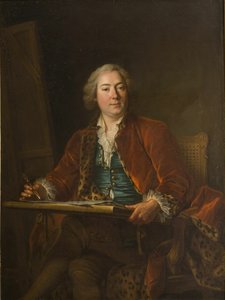
Charles André van Loo
1705 - 1765 , Franța
Informații rapide
- Artistic Movement Or Style: Rococo painting
- Artists Or Movements Influenced By This Artist: ['Modern French school']
- Artists Who Influenced This Artist:
- Benedetto Luti
- Pierre Le Gros
- Date Of Birth: Feb 15, 1705
- Full Name: Charles-André van Loo
- Nationality: French
- Notable Artworks:
- Venus and Amor
- Halt of the Hunt
- Portrait of Marie Leszczynska
- Jupiter and Antiope
- Self Portrait
- Place Of Birth: Nice, France
Articole conexe

Top 10 Capodopere Rococo: Arta, Istorie și Decor Excepțional | OriginalUniqueArt.ro
Descoperă top 10 capodopere Rococo de la Fragonard, Boucher și Watteau! Explorează istoria artei, tehnicile și culorile vibrante ale stilului Rococo. Reproduceri de artă excepționale pentru decorul perfect pe OriginalUniqueArt.ro.

Renașterea Netherlandeză Timpurie: 10 Capodopere Esențiale pentru Decorul de Lux
Descoperiți 10 capodopere ale Renașterii Netherlandeze timpurii! Jan van Eyck, Robert Campin și alți maeștri. Reproduceri de tablouri de lux pentru un decor artistic unic. Explorează colecția completă pe OriginalUniqueArt.com

Charles-André van Loo: A Study in Rococo Portraiture & the French Court's Artistic Dynamics
Explore the elegant world of Charles-André van Loo, a master of Rococo portraiture at the French court. Discover his life, techniques, and enduring influence on 18th-century art. Hand-painted reproductions available.

Top 10 Capodopere ale Picturii Netherlandeze Timpurii: Frumusețe și Simbolism pentru Decorul Tău
Descoperă top 10 capodopere ale picturii netherlandeze timpurii! Jan van Eyck, Robert Campin și alți maeștri renascentiști. Află poveștile din spatele simbolismului bogat și tehnicilor inovatoare. Reproduceri de artă de calitate muzeală pe OriginalUniqueArt.com.

Rembrandt van Rijn: Cele Mai Frumoase 25 de Capodopere – Artă, Istorie și Decorațiuni Interioare
Descoperă cele mai frumoase 25 de picturi ale lui Rembrandt van Rijn! Explorează capodopere baroce, portrete emoționante și peisaje iconice. Reproduceri de artă de calitate muzeală pentru un design interior rafinat. Descoperă toate operele pe OriginalUniqueArt.com!


