
 Previzualizare
 Trimite prin felicitare
 Distribuie
 Detalii despre lucrare
 Ghid
Ghid

 Descarcă imaginea
 Produse similare
 Radiografie
 Galerie foto
 Statistici
Winter
 Oil On Canvas
- WallArt
- Dutch Golden Age
 1646
1646- Early Modern
 97.0 x 81.0 cm
 Rijksmuseum
 Vezi mai mult
Achiziționați o imagine digitală de înaltă rezoluție, îmbunătățită, mult superioară previzualizării online.
Fiecare fișier este pregătit cu meticulozitate de specialiștii noștri interni, utilizând instrumente avansate și retușare manuală expertă. Ne asigurăm că fiecare imagine beneficiază de o claritate excepțională, o acuratețe precisă a culorilor și detalii fine.
Fișierul final este livrat prin e-mail în termen de 72 de ore, optimizat pentru utilizare imediată în medii profesionale, editoriale și de imprimare. Aceasta este aceeași calitate în care au încredere studiouri de design, edituri și galerii de top.
Imagine Digitală
Descărcați un fișier la rezoluție înaltă pentru afișare personală, imprimare și proiecte creative. ( Comută pe versiunea Print Comandă pictură realizată manual)
Inclus în fiecare comandă de imagini digitale
Livrare digitală de expertiză, garantată
Când alegeți OriginalUniqueArt.com, nu primiți doar o simplă imagine – primiți o operă de artă digitală îmbunătățită profesional, creată cu precizie și susținută de o garanție de satisfacție. Iată tot ceea ce primești odată cu comanda ta, în mod automat:

Livrare rapidă prin e-mail
Fișierul imaginii digitale la rezoluție înaltă vă va fi trimis prin e-mail în termen de 72 de ore de la finalizarea comenzii – gata pentru utilizare imediată.

Fișier digital optimizat prin IA
Opera ta de artă este optimizată profesional prin intermediul unor instrumente AI avansate și al editării manuale, asigurând un nivel maxim de detalii, claritate și acuratețe a culorilor.

Retransmitere gratuită pe viață
Ai șters sau ai pierdut din greșeală fișierul? Nu îți face griji – ți-l vom retrimite oricând, gratuit.

Fără taxe de import – Întotdeauna
Bucură-te instant de noua ta operă de artă, fără taxe vamale, taxe de import sau costuri de livrare – descărcările digitale sunt întotdeauna fără taxe.

Garanția acurateții culorilor
Asigurăm o reflectare cât mai fidelă a culorilor originale în imaginea ta digitală, prin utilizarea unor instrumente profesionale și a proceselor de gestionare a culorii.

Garanție de satisfacție de 100 de zile
Dacă nu sunteți mulțumit de imaginea digitală achiziționată, o vom revizui sau vă vom returna 100% în termen de 100 de zile – fără nicio întrebare.

Garanție de returnare 100% a banilor
Nu ești mulțumit? Primești rambursarea integrală în termen de 100 de zile de la primirea fișierului digital – fără nicio întrebare.

Reduceri pentru comenzi în volum
Cumpără 3 imagini, economisește 10% - Cumpără 5, economisește 15% - Cumpără 10+, economisește 20%. Ideal pentru proiecte creative, galerii și agenții.
A Whisper of Winter's Stillness
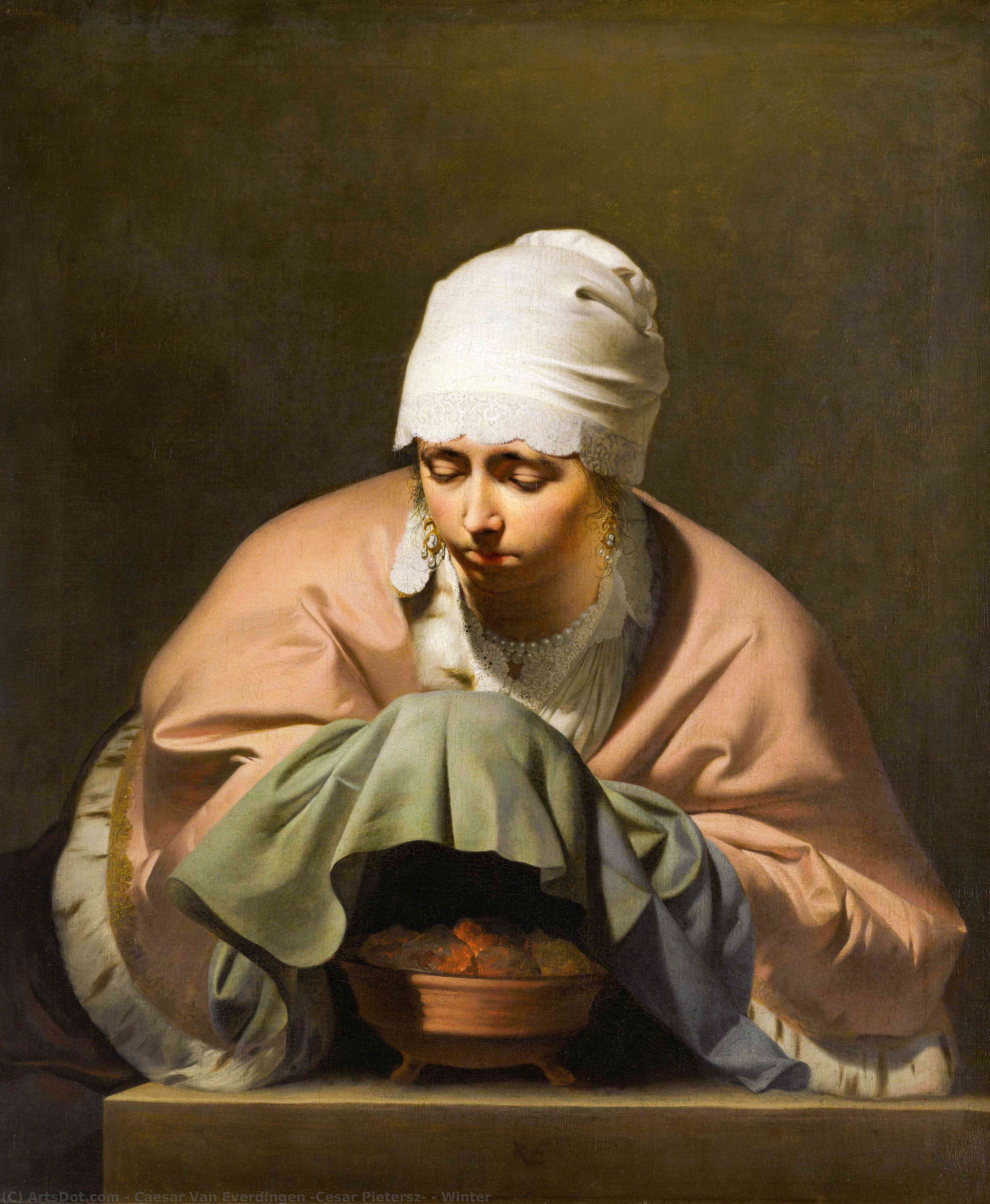
To gaze upon Caesar Van Everdingen’s Winter is to step directly into the hushed, contemplative atmosphere of the Dutch Golden Age. This painting, executed in 1646, transcends a mere depiction of a season; it captures an ephemeral moment—a pause in the rhythm of daily life under the soft dominion of winter's breath. The composition immediately draws the eye to the central figure: a young woman whose presence is both delicate and profound. Clad in attire that speaks of quiet dignity, she holds forth a bowl, suggesting sustenance or perhaps a symbolic offering. The entire scene is imbued with a sense of gentle melancholy, inviting the viewer to slow their own hurried pace and simply observe.
Mastery of Light and Domestic Intimacy
Technically, the work showcases Van Everdingen’s remarkable skill in handling oil on canvas. While the subject matter hints at elements of still life—the bowl, the table setting—the narrative weight is carried by the human element. Notice how the artist employs light not just to illuminate, but to sculpt. The background recedes into a rich, dark depth, allowing the illuminated figures and objects in the foreground to emerge with startling clarity. This dramatic interplay of chiaroscuro, so characteristic of the period, gives the painting an almost three-dimensional presence. It is a masterclass in rendering texture—from the soft drape of the white veil to the implied smoothness of the table cloth.
Symbolism Woven into the Scene
The symbolism within Winter is rich and layered, inviting endless scholarly contemplation. The season itself often represents dormancy, reflection, or a necessary period of rest before renewal. Paired with the domestic setting and the offering in the bowl, one might interpret this as a meditation on provision, endurance, or perhaps even the passage of time itself. The young woman acts as a conduit for these deeper themes; her quiet demeanor suggests an inner life unfolding against the backdrop of seasonal change. For the collector or decorator, this depth means the piece offers more than mere decoration—it offers conversation.
Echoes of Dutch Golden Age Grandeur
Caesar Pietersz van Everdingen was a painter deeply rooted in the traditions and advancements of his time. His ability to blend historical narrative with intimate genre scenes marks him as a significant figure. Owning a reproduction of Winter allows one to bring the sophisticated aesthetic of 17th-century Dutch art into a contemporary space. It speaks to an appreciation for meticulous detail, skilled craftsmanship, and the profound humanism that defined the Golden Age. Whether placed in a formal drawing-room or a thoughtfully curated study, this artwork promises an immediate elevation of ambiance, wrapping any room in a cloak of timeless, artistic elegance.
Întrebări și răspunsuri
Din ce curent artistic face parte "Winter" de Caesar Van Everdingen?
"Winter" de Caesar Van Everdingen face parte din mișcarea Dutch Golden Age. Acest curent oferă contextul stilistic al operei.
La ce vârstă a creat Caesar Van Everdingen opera „Winter”?
Caesar Van Everdingen a creat "Winter" la vârsta de 30. Artistul s-a născut în 1616, iar lucrarea datează din 1646.
În ce an și în cadrul cărui curent artistic a fost creată „Winter”?
„Winter” a fost creat în 1646, fiind o operă a mișcării Dutch Golden Age. Data și stilul ancorează lucrarea în istoria artei.
Biografie artist
O moștenire a luminii și a liniei: Viața lui Caesar van Everdingen
În epoca de aur a picturii olandeze, unde jocul dintre lumină și umbră definițea identitatea vizuală a unei națiuni, Caesar van Everdingen a apărut ca un maestru al emoției subtile și al profunzimii atmosferice. Născut în jurul anului 1616 în orașul istoric Alkmaar, din Ținuturile Olandeze, călătoria sa artistică a fost profund împletită cu linia prestigioasă a familiei sale. Deși este adesea discutat alături de frații săi celebrați, Allart și Jan, Caesar și-a cucerit un spațiu distinct în cadrul Epocii de Aur olandeze. Formarea sa timpurie sub îndrumarea estimatului Jan Gerritsz van Bronckhorst, la Utrecht, i-a oferit o bază riguroasă în estetica clasică, insuflându-i o precizie care îi va permite ulterior să transcendea simpla abilitate tehnică și să atingă o adevărată viziune artistică.
Ascensiunea sa profesională a început cu adevărat în 1632, când s-a alăturat oficial breaului din Alkmaar. În acești ani formativi, repertoriul său a fost caracterizat prin portrete meticuloase și scene de gen evocate, opere care cereau o observație intensă a condiției uitate a omului. Totuși, pe măsură ce talentul său maturiza, așa făcea și ambiția sa. El a depășit limitele reprezentării literale, dezvoltând o capacitate unică de a manipula pensula pentru a surprinde nuanțele trecătoare ale luminii și greutatea atmosferei. Această evoluție a marcat tranziția sa de la un artizan priceput la un pictor vizionar, capabil să insufleze viață pânzei.
Anii din Haarlem și marile ambiții
Un capitol crucial în viața lui Van Everdingen s-a desfășurat în 1648, când s-a mutat în orașul vibrant și cultural bogat Haarlem. Această mutare a fost mai mult decât o schimbare de peisaj; a fost o imersie în inima lumii de artă olandeză. Alăturându-se prestigioasei Breau de la Haarlem, Sfântul Luca, și devenind activ în cadrul schutterij (garda civică), Caesar s-a integrat în însăși țesătura elitei sociale și politice a orașului. Aceste conexiuni s-au dovedit esențiale în obținerea unor comenzi care îi vor defini semnificația istorică.
Poate cea mai uluitoare realizare a carierei sale a fost implicarea sa în decorarea Oranje Zaal (Sala Portocalie) din cadrul palatului Huis ten Bosch. Această întreprindere monumentală a necesitat o măiestrie în pictura istorică de mari dimensiuni, un gen care cerea atât complexitate narativă, cât și o scară grandioasă. În acest context, Caesar și-a demonstrat priceperea în compunerea scenelor epice, îmbinând gravitatea istorică cu o atingere delicată. Opera sa din această perioadă a evidențiat o capacitate înfloritoare de a gestiona compoziții complexe, asigurându-se că numele său va rămâne gravat în istoria arhitecturală a Nederlandelor.
Maturitatea artistică și influența durabilă
În anii săi din urmă, Caesar s-a întors la rădăcinile sale din Alkmaar, înființând un atelier care a devenit un sanctuar pentru instruirea artistică. Această perioadă a vieții sale a fost marcată de o dedicare profundă rafinării artei sale și de mentoratul unei noi generații de pictori. Ultimele sale lucrări reflectă o viață de înțelepciune acumulată, caracterizată printr-o fascinație recurentă pentru temele cerești și eterice. A devenit renumit în special pentru reprezentările sale ale figurilor înaripate — îngeri și ființe divine — realizate cu o blândețe care sugera prezența sublimului.
Semnificația lui Caesar van Everdingen rezidă nu doar în capodoperele sale individuale, ci și în rolul său de punte între tradițiile riguroase ale începutului de secol al XVII-lea și stilurile mai emoționante și atmosferice care au urmat. Capacitatea sa de a îmbina precizia portretului olandez cu măreția narațiunii istorice rămâne o dovadă a versatilității sale. Astăzi, operele sale servesc drept ferestre vitale către sufletul Epocii de Aur olandeze, amintindu-ne de o vreme în care fiecare pensulată era o încercare de a surprinde eternul în cadrul efemerului.

Caesar Van Everdingen
1616 - 1678
Detalii rapide
- Artistic Movement Or Style: Portret & Istorie
- Artists Who Influenced This Artist: ['Jan Gerritsz van Bronckhorst']
- Date Of Birth: 1616/17
- Date Of Death: 1678
- Full Name: Cesar Pietersz van Everdingen
- Nationality: Olandez
- Notable Artworks:
- Vertumnus și Pomona
- Femeie tânără încălzindu-și mâinile
- Place Of Birth: Alkmaar, Țările de Jos