- Acasă

- Reproducere Tablou în Ulei
- bob brighton
- Small Squares 3

 Comandă tipăritul Cumpără imaginea
 Trimite
 Distribuie
 Detalii despre lucrare
 Adaugă la favorite

 Descarcă
 Similare
 Radiografie
 Diaporama
Small Squares 3
 Abstract Art
 2009
2009- Contemporary
 66.0 x 62.0 cm
 Sheffield Central Library
 Vezi mai mult
Reproducere manuală în ulei
Pictură în ulei pe pânză, pictată manual, la dimensiunea și ramele dorite de dumneavoastră, realizată la comandă de artiștii noștri.




































Alegeți dintre dimensiunile noastre prestabilite, care respectă proporțiile originale ale operei de artă.

Puteți introduce propriile dimensiuni pentru a se potrivi unui anumit cadru sau spațiu. Dacă dimensiunea selectată nu corespunde proporțiilor imaginii originale, vom decupa opera de artă sau vom extinde pictura cu elemente suplimentare pictate manual. O simulare digitală vă va fi trimisă pentru aprobare înainte de începerea producției.
Vă rugăm să rețineți că previzualizarea de pe ecran nu reflectă decuparea sau extinderea reală. Doar macheta va arăta cu exactitate compoziția finală.
Deși sunt disponibile dimensiuni personalizate, vă recomandăm să selectați o dimensiune din lista predefinită pentru a păstra proporțiile originale.
După plasarea comenzii, echipa OriginalUniqueArt.com va trimite clientului instrucțiuni prin e-mail și îi va furniza o previzualizare a machetei
Livrare în întreaga lume () în 3/4 săptămâni, în loc de cele 5 săptămâni standard. (22 Iulie). Fără compromisuri în ceea ce privește calitatea.

Livrare expres gratuită la nivel mondial

Pânză de in de înaltă calitate

Asigurare completă pentru transport

Garanție de rambursare a taxelor vamale

Garanția fidelității culorilor

Politica de retur de 60 de zile (doar pentru defecte)

Garanție 100% de rambursare

Reducere la comenzi multiple
 Opțiunea cu sticlă este disponibilă doar pentru dimensiuni de sub 110 cm

Small Squares 3
Tehnică de reproducere
Dimensiune reproducere
-


Preț total calculat
-
Descriere operă de artă
The Rhythmic Geometry of Bob Brighton
In the quiet intersection of structural precision and chromatic vitality lies Small Squares 3, a mesmerizing exploration of form by the late British master Bob Brighton. To encounter this piece is to step into a world where chaos is meticulously tamed through the language of geometry. Created in 2009, this work serves as a profound testament to Brighton’s lifelong pursuit of visual rhythm. The painting does not merely present shapes; it orchestrates them, inviting the viewer to lose themselves in a mosaic of color that feels both infinitely complex and soothingly ordered. Each small square acts as a window into a different emotive state, contributing to a larger, breathing tapestry of light and shadow.
The soul of this composition is deeply rooted in Brighton’s unique history. Having trained in the disciplined craft of carpentry under his father, Brighton brought a builder's sensibility to the canvas. This foundational understanding of structure and interlocking parts is palpable in Small Squares 3. There is an architectural integrity to the way the squares are arranged, suggesting a deliberate construction that mirrors the precision of fine woodworking. His transition from collage to pure abstraction allowed him to strip away the unnecessary, leaving behind only the essential dialogue between color and shape. In this work, we see the culmination of decades spent refining the ability to impose a sense of peace through mathematical arrangement.
A Symphony of Color and Texture
Technically, the piece is a masterclass in the use of color fields to create depth without the need for traditional perspective. The artist utilizes a vibrant palette where each distinct square serves as a rhythmic beat in a visual melody. Some squares appear dense and saturated, pulling the eye inward, while others possess a lighter, more ethereal quality that seems to float atop the surface. This interplay creates a dynamic tension, a sense of movement that prevents the geometric pattern from becoming static or repetitive. For the discerning collector or interior designer, this piece offers a rare versatility; it possesses enough visual weight to serve as a focal point in a minimalist gallery setting, yet its playful energy can breathe life into a contemporary living space.
Beyond its aesthetic appeal, Small Squares 3 evokes a profound emotional resonance. There is a meditative quality to the repetition, a hypnotic effect that encourages slow contemplation. It speaks to the human desire for order and the beauty found in small, interconnected parts making up a greater whole. As an investment in a high-quality reproduction, this artwork offers more than just decoration; it provides a window into the "geometric soul" of an artist who found transcendence in the simplest of forms. Whether placed in a professional studio or a private sanctuary, Brighton’s work remains a timeless celebration of balance, color, and the enduring power of abstract thought.
Biografie artist
The Geometric Soul of Bob Brighton
Bob Brighton, a name now synonymous with the captivating world of geometric squares and abstract color fields, wasn’t initially destined for the art world. Born in 1936 in Hastings, East Sussex, his early life was rooted in the practicalities of carpentry – a trade he learned from his father, a skilled craftsman. This foundational experience, working with wood and understanding its inherent structure, would profoundly influence his later artistic explorations. Brighton’s journey into art began somewhat unexpectedly, driven by a desire to create order out of chaos, a need to impose visual rhythm on the seemingly random. He initially experimented with collage techniques, but it wasn't until he discovered the power of simple geometric forms – primarily squares – that his unique style truly emerged. This shift represents a deliberate move away from representational art and towards an intensely focused exploration of color, shape, and composition.Early Influences and Artistic Evolution
Brighton’s artistic development wasn't entirely solitary; he drew inspiration from a diverse range of sources. The reductive aesthetic of Piet Mondrian, with its emphasis on primary colors and orthogonal lines, undoubtedly played a significant role in shaping his approach to composition. However, Brighton’s work transcends mere mimicry. He developed a distinctly personal vocabulary within this framework, prioritizing the interplay of color and the dynamic tension between positive and negative space. The influence of Josef Albers' "Homage to the Square" is also evident – Albers’ exploration of how colors interact when placed adjacent to each other served as a crucial guide for Brighton, demonstrating that the meaning of a color isn’t inherent but rather emerges from its relationship with others. Furthermore, his background in carpentry instilled an appreciation for structure and precision, which he translated into the deliberate arrangement of his squares. Early works often featured muted palettes and subtle variations in tone, gradually evolving towards bolder, more saturated colors as his style matured.The Rise of the Squares: Technique and Process
Brighton’s technique was remarkably consistent yet subtly nuanced. He typically began with a large sheet of paper – often watercolor paper – and would meticulously draw a grid of squares using a ruler and pencil. The size, spacing, and orientation of these squares were determined intuitively, reflecting his subconscious state at the time. He then applied acrylic paint directly to the surface, building up layers of color through a process of controlled layering and blending. Crucially, he avoided brushes, preferring instead to use sponges, rags, and other tools to manipulate the paint and create textures and variations in tone. This hands-on approach resulted in a tactile quality to his work – a sense that the paintings are not merely flat surfaces but rather three-dimensional entities. The repetition of squares creates a mesmerizing visual rhythm, while the subtle shifts in color and value maintain a dynamic tension within each composition. His process was deeply meditative; he often worked for extended periods, losing himself in the act of creation.Themes and Interpretations
While Brighton resisted offering definitive interpretations of his work, it’s clear that his paintings explore fundamental concepts such as order, chaos, balance, and harmony. The squares themselves can be seen as symbols of stability and structure, while the vibrant colors evoke a sense of energy and vitality. Critics have noted parallels between his work and Zen Buddhist philosophy, suggesting that he sought to capture the essence of emptiness – the space between things – through the repetition of simple forms. The paintings are not about depicting anything specific but rather about creating an experience—a visual meditation for the viewer. The seemingly random arrangement of squares can be interpreted as a reflection of the complexities and uncertainties of life, while the bold colors represent the potential for joy and beauty.Legacy and Recognition
Bob Brighton’s work gained significant recognition in the late 1980s and early 1990s, establishing him as a leading figure in British abstract art. His paintings have been exhibited widely throughout the UK and internationally, and are held in numerous public collections, including those of the Tate Gallery, Sheffield City Council, and Brighton & Hove Museums. He continued to paint until his death in 2017, consistently refining his style and exploring new approaches to color and composition. Despite eschewing overt self-promotion, Brighton’s influence on contemporary abstract artists is undeniable. His dedication to simplicity, his masterful control of color, and his profound understanding of visual rhythm have left an enduring legacy—a testament to the power of geometric abstraction to evoke emotion and stimulate contemplation. His work remains a vibrant reminder that beauty can be found in the most unexpected places, even within the repetition of squares.
bob brighton
1936 - 2017
Detalii rapide
- Artistic Movement Or Style: Geometric squares
- Artists Or Movements Influenced By This Artist: ['None known']
- Artists Who Influenced This Artist:
- Minimalist Art
- Color Field Painting
- Date Of Birth: 1936
- Date Of Death: 2017
- Full Name: Bob Brighton
- Nationality: British
- Notable Artworks:
- Four
- Purple Squares
- Yellow Blue 1
- Small Squares 1
- Place Of Birth: WahooArt, UK
Articole conexe

Cele mai importante 10 capodopere ale abstracției geometrice | Artă & Decor de lux pe OriginalUniqueArt.com
Descoperă cele mai importante 10 capodopere ale abstracției geometrice! Explorează istoria, artiștii (Mondrian, Kandinsky) și culorile vibrante care au definit arta modernă. Reproduceri de tablouri de lux pe OriginalUniqueArt.com pentru un decor interior rafinat. Explorează colecția online!

Wassily Kandinsky: Cele Mai Iconice 25 De Opere – Artă Abstractă pentru Decor Rafinat
Descoperă cele mai emblematice 25 de opere ale lui Wassily Kandinsky, pionierul artei abstracte! Explorează culorile vibrante, compozițiile unice și istoria fascinantă din spatele fiecărei picturi. Reproduceri de calitate muzeală pe OriginalUniqueArt.com – inspiră-ți decorul cu artă modernă!
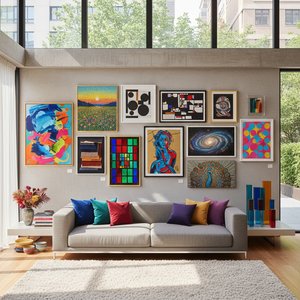
Culorile Maestrilor: Top 10 Opere de Artă și Inspirație pentru Decor
Descoperă top 10 opere de artă care celebrează puterea culorilor! De la Van Gogh la Matisse, explorează poveștile artiștilor și semnificația fiecărei palete. Găsește inspirație pentru decorul tău și reproduceri de calitate muzeală pe OriginalUniqueArt.com.
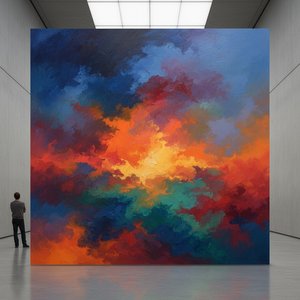
Chromatic Atmospheres: Exploring the Philosophical Foundations of Color Field Painting
Explore the philosophical and aesthetic foundations of Color Field painting with OriginalUniqueArt. Discover key artists like Rothko & Newman, its spiritual influences, and lasting impact on modern art. Expert insights for collectors.
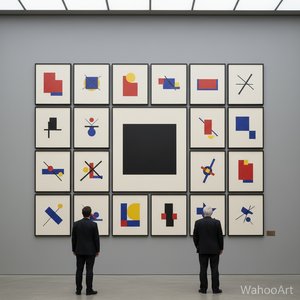
Kazimir Malevich: Cele Mai Iconice 25 De Opere – Artă Abstractă pentru Decor Rafinat
Descoperă cele mai importante 25 de opere ale lui Kazimir Malevich, pionierul Suprematismului! Explorează istoria picturilor abstracte iconice precum 'Black Square' și 'White on White'. Găsește reproduceri artă de calitate muzeală pentru un decor rafinat pe OriginalUniqueArt.com.

