
 Previzualizare
 Trimite prin felicitare
 Distribuie
 Detalii despre lucrare
 Ghid
Ghid

 Descarcă imaginea
 Produse similare
 Radiografie
 Galerie foto
 Întrebări și răspunsuri
 Statistici
Rhea's Ray

- 21.0 x 15.0 cm

 Vezi mai mult
Lucrarea de artă afișată pe această pagină este protejată de legile privind drepturile de autor, ceea ce înseamnă că nu putem crea sau vinde în mod legal o reproducere identică. Această protecție este garantată prin acorduri internaționale, precum Convenția de la Berna și de legile naționale, inclusiv cele prevăzute de Legea dreptului de autor din S.U.A. – Titlul 17. Toate drepturile rezervate. Orice reproducere neautorizată este interzisă.
Această metodă respectă pe deplin reglementările privind drepturile de autor, deoarece nu implică copierea sau duplicarea operei protejate. În schimb, este o reinterpretare creativă – o pictură nouă, influențată de original, dar care nu este identică cu acesta.
Giclée / Imprimare artistică
Printuri giclée sau pe canvas de calitate muzeală, cu proces de producție rapid și opțiuni flexibile de finisare. ( Comandă pictură realizată manual Comută pe Imagine Digitală)




































Alegeți dintre dimensiunile noastre prestabilite, care respectă proporțiile originale ale operei de artă.

Introduceți lățimea și înălțimea necesare pentru a se potrivi ramei sau peretelui dumneavoastră. O printare poate fi doar tăiată, niciodată extinsă dincolo de dimensiunea imaginii originale, astfel încât o dimensiune cu o formă diferită va pierde o parte din imagine. Vă trimitem o simulare digitală pentru aprobare înainte de a imprima orice. Imaginea afișată pe această pagină nu prezintă tăierea reală — doar simularea arată acest lucru.
Livrare în întreaga lume () în 2 săptămâni, în loc de cele 4/5 săptămâni standard. (3 Noiembrie)

Livrare expres gratuită la nivel mondial

Pânză de in de înaltă calitate

Asigurare completă pentru transport

Garanție de rambursare a taxelor vamale

Garanția fidelității culorilor

Politica de retur în 100 de zile (doar pentru defecte de fabricație)

Garanție de rambursare 100%

Ofertă pentru comenzi multiple
 Opțiunea cu sticlă este disponibilă doar pentru dimensiuni de sub 110 cm

Rhea's Ray
Giclée / Imprimare artistică
Dimensiune reproducere
-


Preț total calculat
lei 385
Introduction to the Artist and the Painting
Bernie Casey was an American artist, and 'Rhea's Ray' is one of his notable works, created in 1968. The painting measures 21 x 15 cm and is made on canvas. It is currently housed at the Smithsonian American Art Museum in the United States. This museum is renowned for its extensive collection of American art, making it an ideal location for 'Rhea's Ray' to be showcased.Key Elements and Interpretation
The painting 'Rhea's Ray' features a sun with a face, symbolizing warmth and energy. The presence of two individuals in the painting adds a sense of human connection and community. A clock at the bottom right corner of the image introduces an element of time, possibly hinting at the fleeting nature of moments. These elements combined create a vibrant scene that invites viewers to ponder the deeper meaning behind the artwork. Some notable aspects of 'Rhea's Ray' include:- The use of color to evoke emotions and convey messages.
- The incorporation of everyday objects, like the clock, to add depth and symbolism.
- The depiction of human figures, which may represent relationships or interactions.
Conclusion and Further Exploration
'Rhea's Ray' by Bernie Casey is a captivating piece that offers much to explore and interpret. For those interested in learning more about American art and the Smithsonian American Art Museum, visiting /art/list/?Filter=AQTURA-Bernie-Casey-Rhea-s-Ray can provide valuable insights and resources. Additionally, the Smithsonian Institution website offers a wealth of information on art collections and exhibitions, including details about the Smithsonian American Art Museum.The world of art is vast and diverse, with each piece telling its unique story. 'Rhea's Ray' by Bernie Casey is a testament to the power of art to inspire, provoke thought, and bring people together.
Întrebări și răspunsuri
Ce paletă și ce culoare dominantă definesc "Rhea's Ray"?
"Rhea's Ray" de Bernie Casey utilizează o paletă de culori Neutrals, având culoarea Espresso (#495d4a) ca nuanță dominantă.
"Rhea's Ray" de Bernie Casey este o operă de artă luminoasă sau întunecată?
"Rhea's Ray" de Bernie Casey este înregistrat cu o bright, având o luminanță de Gentle Luminance.
Ce vârstă avea Bernie Casey când a creat "Rhea's Ray" în 1968?
Bernie Casey avea 29 ani când a creat "Rhea's Ray" în 1968. Vârsta este calculată pe baza anului nașterii artistului, 1939.
Biografie artist
A Symphony of Motion and Color
Bernie Casey’s life was a remarkable tapestry woven from the threads of physical prowess and profound creativity. Before he became a celebrated figure in the world of fine art, his presence was felt on the gridiron of the National Football League, where he played with legendary intensity for the Detroit Lions, San Francisco 49ers, and Los Angeles Rams. This early chapter of his life, defined by the rhythmic collision of athletes and the strategic dance of professional football, provided a unique foundation for his later artistic endeavors. The physicality of the sport—the explosive energy, the precision of movement, and the sheer stamina required—deeply informed his approach to the canvas. For Casey, painting was not merely a departure from his athletic career but an evolution of it, translating the kinetic energy of the field into the expressive gestures of Abstract Expressionism.The Language of the Inner Landscape
As his creative journey unfolded during the mid-to-late 1960s, Casey emerged as a compelling voice within the movements of Abstract Expressionism and Lyrical Abstraction. Drawing inspiration from titans such as Jackson Pollock and Willem de Kooning, he embraced a technique that prioritized raw emotion over representational accuracy. His canvases became vibrant arenas where thick impasto and spontaneous brushstrokes collided with a palette often dominated by striking blues, reds, and yellows. In seminal works like The Afterthought of Dante’s Inferno, one can witness the palpable texture of his process, where layers of paint create a sense of psychological depth and movement. He sought to move beyond the literal, using geometric shapes and swirling forms to map out inner landscapes that spoke to universal human experiences.His artistic vocabulary was built upon several key elements:
- Dynamic Texture: The use of heavy impasto to create a three-dimensional, tactile experience on the canvas.
- Emotional Color Palettes: A deliberate use of high-contrast hues to evoke feelings ranging from tranquility to intense passion.
- Spontaneous Gesture: A commitment to the improvisational spirit, allowing the movement of the hand to dictate the composition.
Legacy and Social Resonance
Beyond the aesthetic allure of his work lies a profound social significance. Navigating the complexities of the Civil Rights era as an African American icon, Casey utilized his art to explore themes of love, peace, nature, and justice. His paintings served as windows into a broader struggle for human dignity, reflecting the tensions and triumphs of his time. While he simultaneously achieved fame as an actor in the 1970s blaxploitation genre, his commitment to the canvas remained a constant pursuit of truth. Through his ability to transcend the boundaries of race and physicality through abstraction, Bernie Casey left behind a legacy that continues to resonate, reminding us that art is a powerful medium for communicating the unspoken truths of the human spirit.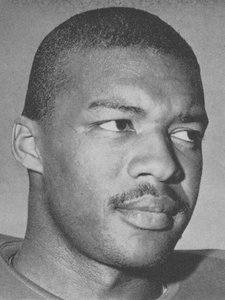
Bernie Casey
1939 - 2017
Detalii rapide
- Full Name: Bernie Casey
- Nationality: American
- Date Of Birth: 1939
- Date Of Death: 2017
- Place Of Birth: Detroit, Michigan
- Notable Artworks:
- Afterthought of Dante’s Inferno
- Memory From Another Time, A
- White Daisy Land
- Artistic Movement Or Style: Abstract Expressionism
- Artists Who Influenced This Artist:
- Jackson Pollock
- Mark Rothko
- Artists Or Movements Influenced By This Artist: ['Neoexpressionism']