
 Previzualizare
 Trimite prin felicitare
 Distribuie
 Detalii despre lucrare
 Ghid
Ghid

 Descarcă imaginea
 Produse similare
 Radiografie
 Galerie foto
 Statistici
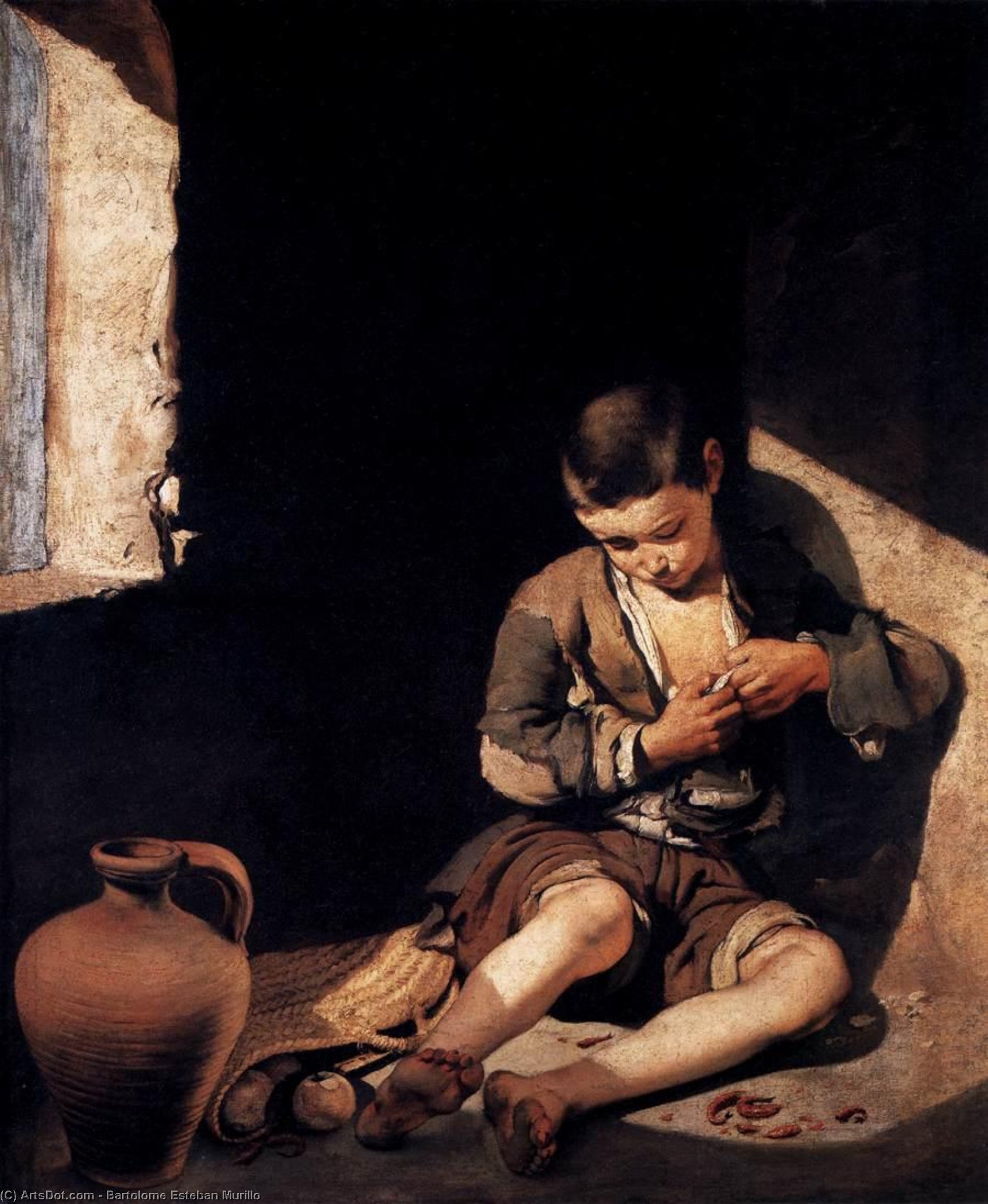
The Young Beggar
 Oil On Canvas
- WallArt
- Baroque
 1650
1650- Early Modern
 134.0 x 100.0 cm
 Vezi mai mult
Obțineți un fișier gata de imprimare care depășește cu mult previzualizarea web. Fiecare imagine digitală pe care o vindem provine dintr-un master de înaltă rezoluție din baza noastră de date — de obicei între 5.000 și 15.000 de pixeli lățime — astfel încât să puteți printa în format mare, să decupați strâns sau să reproduceți detalii fine cu încredere.
Niciun fișier nu părăsește studioul nostru fără să fie tratat. Un expert digital verifică nuanțele de culoare în raport cu pictura originală și le corectează acolo unde este necesar, apoi îmbunătățește claritatea și detaliile folosind instrumente profesionale de retușare — rămânând întotdeauna fidel picturii și stilului artistului. Rezultatul este o imagine care seamănă cu tabloul propriu-zis, nu cu o scanare filtrată.
Aprobați înainte de finalizare: expertul nostru vă trimite imaginea prin e-mail în termen de 72 de ore pentru revizuire. Nu sunteți mulțumit? Solicitați îmbunătățiri sau corecturi, ori cereți o restituire a plății dacă calitatea nu este pe măsura așteptărilor.
Aceasta este calitatea pe care se bazează editori, studiouri de design, galerii și tipării.
Imagine Digitală
Descărcați un fișier la rezoluție înaltă pentru afișare personală, imprimare și proiecte creative. ( Comută pe versiunea Print Comandă pictură realizată manual)
Inclus în fiecare comandă de imagini digitale
Livrare digitală de expertiză, garantată
Când alegeți OriginalUniqueArt.com, nu primiți doar o simplă imagine – primiți o operă de artă digitală îmbunătățită profesional, creată cu precizie și susținută de o garanție de satisfacție. Iată tot ceea ce primești odată cu comanda ta, în mod automat:

Livrare rapidă prin e-mail
Fișierul imaginii digitale la rezoluție înaltă vă va fi trimis prin e-mail în termen de 72 de ore de la finalizarea comenzii – gata pentru utilizare imediată.

Fișier digital optimizat prin IA
Opera ta de artă este optimizată profesional prin intermediul unor instrumente AI avansate și al editării manuale, asigurând un nivel maxim de detalii, claritate și acuratețe a culorilor.

Retransmitere gratuită pe viață
Ai șters sau ai pierdut din greșeală fișierul? Nu îți face griji – ți-l vom retrimite oricând, gratuit.

Fără taxe de import – Întotdeauna
Bucură-te instant de noua ta operă de artă, fără taxe vamale, taxe de import sau costuri de livrare – descărcările digitale sunt întotdeauna fără taxe.

Garanția acurateții culorilor
Asigurăm o reflectare cât mai fidelă a culorilor originale în imaginea ta digitală, prin utilizarea unor instrumente profesionale și a proceselor de gestionare a culorii.

Garanție de satisfacție de 100 de zile
Dacă nu sunteți mulțumit de imaginea digitală achiziționată, o vom revizui sau vă vom returna 100% în termen de 100 de zile – fără nicio întrebare.

Garanție de returnare 100% a banilor
Nu ești mulțumit? Primești rambursarea integrală în termen de 100 de zile de la primirea fișierului digital – fără nicio întrebare.

Reduceri pentru comenzi în volum
Cumpără 3 imagini, economisește 10% - Cumpără 5, economisește 15% - Cumpără 10+, economisește 20%. Ideal pentru proiecte creative, galerii și agenții.
A Boy in the Shadows
A single light source falls from above and to the right, striking the skin of a young boy seated on the ground. He occupies a dimly lit interior, his small frame positioned slightly off-center within the frame. His hands are occupied with a quiet, focused task: searching for and removing lice from his clothing. This act of self-grooming occurs amidst the debris of survival. To his left, a large earthenware jug provides a heavy, cylindrical weight to the composition. Nearby, a basket spills apples onto the floor, and the remains of a prawn or crab lie scattered near his bare, dirty feet. The room is filled with earthy tones—browns, tans, and muted reds—that settle into the deep shadows cast against the wall.
The Weight of Seville
The year is 1650, and the streets of Seville hold many such orphaned children. This painting captures a moment of survival in seventeenth-century Spain, where poverty was a constant presence. The boy's clothes are torn and patched with scraps of other rags, reflecting the harsh reality of life for the street urchins of the era. Through the use of chiaroscuro, the artist creates a sharp contrast between the bright highlights on the boy's shirt and the heavy darkness of the background. The technique involves layering thin glazes of oil paint to achieve soft, naturalistic skin tones and the rough texture of the ceramic pot. There is a quiet dignity in his posture, even as he attends to the pests clinging to his body. A heavy silence rests upon the room.
Întrebări și răspunsuri
Din ce țară provine lucrarea de Baroque „The Young Beggar”?
"The Young Beggar" a fost creat de Bartolome Esteban Murillo, născut în Spania, în cadrul mișcării Baroque. Originea artistului leagă această operă de Baroque, așa cum este practicat de artiștii din Spania.
Ce dimensiune de reproducere se recomandă pentru "The Young Beggar" de Bartolome Esteban Murillo?
Pentru "The Young Beggar" de Bartolome Esteban Murillo, recomandăm o reproducere de dimensiunea Large. Dimensiunea poate fi ajustată păstrând proporțiile intacte.
În ce etapă a carierei lui Bartolome Esteban Murillo se încadrează "The Young Beggar", având în vedere data sa de execuție?
Având în vedere data de 1650, „The Young Beggar” aparține perioadei Baroque a lui Bartolome Esteban Murillo.
Biografie artist
A Life Bathed in Andalusian Light
Bartolomé Esteban Murillo, a name inextricably linked to the golden age of Spanish Baroque painting, emerged from the sun-drenched heart of Seville in 1618. His life, though punctuated by profound personal loss and shifting societal currents, blossomed into an artistic career that masterfully captured the spirit of his time—a period brimming with fervent religious belief, transformative social change, and a burgeoning wave of artistic innovation. Born to Gaspar Esteban, a skilled barber-surgeon, and María Pérez Murillo, within a large family of fourteen children, young Bartolomé’s early years were shadowed by tragedy; the untimely deaths of both his parents left him under the care of his sister’s husband, Juan Agustín Lagares—a figure who would subtly guide his nascent artistic path. Murillo's initial training commenced with Juan del Castillo, a local artist and distant relative through his mother, providing him with a foundational understanding of Seville’s established realist traditions, absorbing influences from masters like Zurbarán, Ribera, and Cano – artists renowned for their stark realism and dramatic intensity. However, Murillo’s true genius lay not in mere imitation but in transforming these foundations into something altogether softer, more luminous, and profoundly imbued with human emotion.From Realism to Radiant Grace
Murillo's artistic journey wasn’t a sudden explosion of fame; rather, it was an evolution characterized by distinct phases. His early works, firmly rooted in the austere realism prevalent in Seville, showcased meticulous detail and a predominantly somber palette. *Young Man with a Basket of Fruit (Personification of Summer)*, created around 1640-50, serves as a prime example of this period—a grounded depiction of everyday life rendered with remarkable precision. Yet, even within these early pieces, subtle hints of the tenderness and emotional depth that would define his mature style began to emerge. The *Young Beggar*, painted circa 1645, powerfully demonstrates a growing sensitivity towards human suffering, echoing the influence of Velázquez’s masterful portrayals of ordinary people. As Murillo matured, his artistic approach underwent a remarkable transformation. He deliberately moved away from the stark realism of his predecessors, embracing a more polished and refined aesthetic that resonated with the tastes of Seville's increasingly affluent bourgeois and aristocratic classes. This stylistic shift was particularly evident in his religious paintings, where he infused traditional iconography with an unprecedented sense of warmth, grace, and emotional accessibility. *St. Jerome*, painted between 1650-52, stands as a testament to this evolved style—a softly luminous depiction radiating serenity and devotion. The use of light and shadow became more subtle, creating a dreamlike atmosphere that drew viewers into the scene.A Master of Religious Sentiment and Genre Scenes
Murillo’s artistic output was remarkably diverse, encompassing religious paintings, genre scenes, portraits, and mythological subjects. However, he is most celebrated for his depictions of the Immaculate Conception—a subject that captivated him throughout his career and resulted in numerous variations, each imbued with a unique sense of ethereal beauty. These works, characterized by their delicate brushwork, luminous colors, and graceful compositions, quickly became immensely popular and firmly established Murillo as the preeminent painter of religious imagery in Spain. Beyond his sacred subjects, Murillo also excelled at capturing the essence of everyday life. His genre scenes—paintings depicting flower girls, street urchins, and beggars—offer a poignant and intimate glimpse into the social realities of 17th-century Seville. These paintings are not merely observational studies; they are deeply imbued with empathy and compassion, elevating the humble subjects to a level of dignity and grace. He possessed an extraordinary ability to capture the innocence of childhood, portraying young children with remarkable realism and tenderness—a skill that cemented his reputation as one of Spain’s most beloved artists.Influences and Artistic Development
Murillo's artistic development was shaped by a confluence of influences. Initially, he absorbed the realist traditions of Seville, drawing inspiration from masters like Zurbarán and Cano. However, his style underwent a significant transformation after a visit to Madrid in the 1650s, where he encountered the works of Titian, Peter Paul Rubens, and Anthony van Dyck in the royal collections. These encounters profoundly impacted his approach, leading him to embrace richer colors, looser brushwork, and a more dynamic composition—elements that would characterize his mature style. The influence of Venetian painting is particularly evident in his later works, such as *The Immaculate Conception*, where he skillfully blended religious iconography with a sensual and luminous quality. Furthermore, Murillo’s apprenticeship under Juan del Castillo provided him with a solid foundation in traditional techniques, while his exposure to the artistic circles of Seville fostered a spirit of experimentation and innovation.Legacy and Enduring Influence
Bartolomé Esteban Murillo's impact on the course of Spanish art—and indeed, European painting—is undeniable. He established a distinctive style that seamlessly blended religious devotion with humanistic sentiment, creating works that resonated deeply with audiences across social strata. His influence extended far beyond his native Spain, inspiring generations of artists throughout Europe. Artists such as Gainsborough and Greuze acknowledged their debt to Murillo’s luminous style and sensitive portrayals of human emotion. He trained numerous pupils in his Seville workshop, ensuring the continuation of his artistic legacy. His paintings are now housed in prestigious museums worldwide—including the Museo del Prado in Madrid, the Hermitage Museum in Saint Petersburg, the Wallace Collection in London, and the Timken Museum of Art in San Diego—testaments to his enduring appeal and historical significance. Murillo’s art continues to captivate viewers with its beauty, grace, and profound humanity, solidifying his place as one of the most beloved and influential painters of the Spanish Baroque period. His ability to infuse religious imagery with emotional depth and portray everyday life with empathy ensures that his work remains relevant and inspiring centuries after his death in 1682.
Bartolome Esteban Murillo
1618 - 1682 , Spania
Detalii rapide
- Artistic Movement Or Style: Baroc spaniol
- Artists Or Movements Influenced By This Artist:
- Gainsborough
- Greuze
- Artists Who Influenced This Artist:
- Zurbarán
- Ribera
- Date Of Birth: 1 ianuarie 1618
- Date Of Death: 3 aprilie 1682
- Full Name: Bartolomé Esteban Murillo
- Nationality: Spaniol
- Notable Artworks:
- Imaculata Innoată
- Copil sărac
- Sf. Ieremia
- Place Of Birth: Sevilla, Spania