

 Previzualizare
 Trimite prin felicitare
 Distribuie
 Detalii despre lucrare
 Ghid
Ghid

 Descarcă imaginea
 Produse similare
 Radiografie
 Galerie foto
 Statistici
The Annunciation
 Oil On Canvas
- WallArt
 1670
1670- Late Medieval
 187.0 x 134.0 cm
 Muzeul Wallace
 Vezi mai mult
Giclée / Imprimare artistică
Printuri giclée sau pe canvas de calitate muzeală, cu proces de producție rapid și opțiuni flexibile de finisare. ( Comandă pictură realizată manual Comută pe Imagine Digitală)




P118B lei10

P118H lei10

P118W lei10

P438Z lei10

P508JH lei12

P508YH lei12

P805H lei10

P805Z lei10

P919BZ lei10

P919G lei10

P919XJ lei10

P959ZH lei10

P968JZ lei12

W106C lei8

W218G lei10

W218JH lei8

W218Y lei10

W307PJ lei10

W316G lei10

W316PJ lei8

W316Y lei10

W398PJ lei8

W4111J lei10

W500HY lei15

W500JH lei15

W692G lei12

W849H lei8

W940BG lei15

W953PJ lei8




Alegeți dintre dimensiunile noastre prestabilite, care respectă proporțiile originale ale operei de artă.

Introduceți lățimea și înălțimea necesare pentru a se potrivi ramei sau peretelui dumneavoastră. O printare poate fi doar tăiată, niciodată extinsă dincolo de dimensiunea imaginii originale, astfel încât o dimensiune cu o formă diferită va pierde o parte din imagine. Vă trimitem o simulare digitală pentru aprobare înainte de a imprima orice. Imaginea afișată pe această pagină nu prezintă tăierea reală — doar simularea arată acest lucru.
Livrare în întreaga lume () în 2 săptămâni, în loc de cele 4/5 săptămâni standard. (26 Octombrie)

Livrare expres gratuită la nivel mondial

Pânză de in de înaltă calitate

Asigurare completă pentru transport

Garanție de rambursare a taxelor vamale

Garanția fidelității culorilor

Politica de retur în 100 de zile (doar pentru defecte de fabricație)

Garanție de rambursare 100%

Ofertă pentru comenzi multiple
 Opțiunea cu sticlă este disponibilă doar pentru dimensiuni de sub 110 cm

The Annunciation
Giclée / Imprimare artistică
Dimensiune reproducere
-


Preț total calculat
lei 370
Bartolomé Esteban Murillo’s Divine Encounter
Bartolomé Esteban Murillo's “The Annunciation,” completed in 1670 and currently residing within the Wallace Collection in London, is more than simply a depiction of a pivotal biblical moment; it’s a profound meditation on grace, humility, and the transformative power of faith. Murillo, born into a family marked by early tragedy in Seville, Spain, possessed an extraordinary ability to imbue his subjects with a palpable sense of humanity—a characteristic that distinguishes his work from the more austere styles prevalent at the time. This particular painting captures a moment of exquisite serenity and spiritual revelation, rendered with the luminous quality for which Murillo would become renowned.
The composition immediately draws the eye to the kneeling young woman, dressed in a vibrant red robe—a color traditionally associated with Mary’s purity and royalty. Her posture is one of profound reverence, her hands clasped together as if in prayer or deep contemplation. Above her, the angel Gabriel, rendered with delicate wings and an expression of gentle authority, extends his hand to present a lily – a potent symbol of innocence, chastity, and divine grace. The lighting within the scene is masterful; Murillo employs chiaroscuro—the dramatic contrast between light and shadow—to sculpt the figures and create a sense of depth, drawing the viewer into this intimate dialogue between heaven and earth.
Baroque Sensibilities and Andalusian Light
“The Annunciation” firmly establishes itself within the Baroque artistic tradition. While influenced by earlier masters like Zurbarán and Ribera—particularly in its realistic portrayal of figures and use of tenebrism—Murillo developed a distinctly personal style, characterized by a softer palette, an emphasis on idealized beauty, and a remarkable ability to capture fleeting expressions of emotion. The painting’s background, subtly receding into a hazy blue, contributes to the overall sense of ethereal serenity, while the three cherubs floating above, holding musical instruments, evoke the celestial harmony of the event being depicted. These figures aren't merely decorative; they represent the divine orchestration underpinning the miraculous encounter.
Murillo’s background in Seville profoundly shaped his artistic vision. The city’s rich cultural heritage—its vibrant religious traditions and its connection to the New World trade routes—provided a fertile ground for his creativity. His work often reflects this Andalusian sensibility, imbued with warmth, color, and a deep appreciation for everyday life. This is evident in the careful attention to detail – from the folds of the woman’s robe to the delicate petals of the lily – demonstrating Murillo's meticulous approach to capturing both spiritual and material reality.
Symbolism and Emotional Resonance
Beyond its formal beauty, “The Annunciation” is rich in symbolic meaning. The lily, as mentioned, represents purity and divine grace, while the open book suggests Mary’s receptive state—her willingness to accept God's will. The angel’s gesture signifies not just the announcement of a miraculous event but also an invitation to faith and devotion. Murillo masterfully conveys the emotional impact of this encounter through subtle gestures and expressions: the woman’s serene acceptance, the angel’s gentle authority, and the overall atmosphere of quiet reverence. The painting speaks to the profound mystery of human existence—the intersection of the divine and the earthly—and invites viewers to contemplate their own relationship with faith and grace.
Reproductions of “The Annunciation” by OriginalUniqueArt offer a remarkable opportunity to experience this masterpiece in exquisite detail, capturing Murillo’s luminous style and profound emotional depth. Whether adorning a grand salon or a more intimate space, this iconic painting continues to inspire awe and contemplation, reminding us of the enduring power of faith and beauty.
Întrebări și răspunsuri
Ce nivel de luminozitate are "The Annunciation" de Bartolome Esteban Murillo?
Culorile din "The Annunciation" prezintă o luminanță Gentle Luminance.
"The Annunciation" de Bartolome Esteban Murillo este o compoziție de tip portret, peisaj sau pătrată?
"The Annunciation" de Bartolome Esteban Murillo este o compoziție de tip Portrait. Proporțiile merită verificate înainte de a alege dimensiunea printului.
Ce armonie de culori prezintă "The Annunciation" de Bartolome Esteban Murillo?
Culorile din "The Annunciation" de Bartolome Esteban Murillo prezintă o armonie Strong Color Unity. Armonia descrie modul în care culorile interacționează între ele.
Biografie artist
A Life Bathed in Andalusian Light
Bartolomé Esteban Murillo, a name inextricably linked to the golden age of Spanish Baroque painting, emerged from the sun-drenched heart of Seville in 1618. His life, though punctuated by profound personal loss and shifting societal currents, blossomed into an artistic career that masterfully captured the spirit of his time—a period brimming with fervent religious belief, transformative social change, and a burgeoning wave of artistic innovation. Born to Gaspar Esteban, a skilled barber-surgeon, and María Pérez Murillo, within a large family of fourteen children, young Bartolomé’s early years were shadowed by tragedy; the untimely deaths of both his parents left him under the care of his sister’s husband, Juan Agustín Lagares—a figure who would subtly guide his nascent artistic path. Murillo's initial training commenced with Juan del Castillo, a local artist and distant relative through his mother, providing him with a foundational understanding of Seville’s established realist traditions, absorbing influences from masters like Zurbarán, Ribera, and Cano – artists renowned for their stark realism and dramatic intensity. However, Murillo’s true genius lay not in mere imitation but in transforming these foundations into something altogether softer, more luminous, and profoundly imbued with human emotion.From Realism to Radiant Grace
Murillo's artistic journey wasn’t a sudden explosion of fame; rather, it was an evolution characterized by distinct phases. His early works, firmly rooted in the austere realism prevalent in Seville, showcased meticulous detail and a predominantly somber palette. *Young Man with a Basket of Fruit (Personification of Summer)*, created around 1640-50, serves as a prime example of this period—a grounded depiction of everyday life rendered with remarkable precision. Yet, even within these early pieces, subtle hints of the tenderness and emotional depth that would define his mature style began to emerge. The *Young Beggar*, painted circa 1645, powerfully demonstrates a growing sensitivity towards human suffering, echoing the influence of Velázquez’s masterful portrayals of ordinary people. As Murillo matured, his artistic approach underwent a remarkable transformation. He deliberately moved away from the stark realism of his predecessors, embracing a more polished and refined aesthetic that resonated with the tastes of Seville's increasingly affluent bourgeois and aristocratic classes. This stylistic shift was particularly evident in his religious paintings, where he infused traditional iconography with an unprecedented sense of warmth, grace, and emotional accessibility. *St. Jerome*, painted between 1650-52, stands as a testament to this evolved style—a softly luminous depiction radiating serenity and devotion. The use of light and shadow became more subtle, creating a dreamlike atmosphere that drew viewers into the scene.A Master of Religious Sentiment and Genre Scenes
Murillo’s artistic output was remarkably diverse, encompassing religious paintings, genre scenes, portraits, and mythological subjects. However, he is most celebrated for his depictions of the Immaculate Conception—a subject that captivated him throughout his career and resulted in numerous variations, each imbued with a unique sense of ethereal beauty. These works, characterized by their delicate brushwork, luminous colors, and graceful compositions, quickly became immensely popular and firmly established Murillo as the preeminent painter of religious imagery in Spain. Beyond his sacred subjects, Murillo also excelled at capturing the essence of everyday life. His genre scenes—paintings depicting flower girls, street urchins, and beggars—offer a poignant and intimate glimpse into the social realities of 17th-century Seville. These paintings are not merely observational studies; they are deeply imbued with empathy and compassion, elevating the humble subjects to a level of dignity and grace. He possessed an extraordinary ability to capture the innocence of childhood, portraying young children with remarkable realism and tenderness—a skill that cemented his reputation as one of Spain’s most beloved artists.Influences and Artistic Development
Murillo's artistic development was shaped by a confluence of influences. Initially, he absorbed the realist traditions of Seville, drawing inspiration from masters like Zurbarán and Cano. However, his style underwent a significant transformation after a visit to Madrid in the 1650s, where he encountered the works of Titian, Peter Paul Rubens, and Anthony van Dyck in the royal collections. These encounters profoundly impacted his approach, leading him to embrace richer colors, looser brushwork, and a more dynamic composition—elements that would characterize his mature style. The influence of Venetian painting is particularly evident in his later works, such as *The Immaculate Conception*, where he skillfully blended religious iconography with a sensual and luminous quality. Furthermore, Murillo’s apprenticeship under Juan del Castillo provided him with a solid foundation in traditional techniques, while his exposure to the artistic circles of Seville fostered a spirit of experimentation and innovation.Legacy and Enduring Influence
Bartolomé Esteban Murillo's impact on the course of Spanish art—and indeed, European painting—is undeniable. He established a distinctive style that seamlessly blended religious devotion with humanistic sentiment, creating works that resonated deeply with audiences across social strata. His influence extended far beyond his native Spain, inspiring generations of artists throughout Europe. Artists such as Gainsborough and Greuze acknowledged their debt to Murillo’s luminous style and sensitive portrayals of human emotion. He trained numerous pupils in his Seville workshop, ensuring the continuation of his artistic legacy. His paintings are now housed in prestigious museums worldwide—including the Museo del Prado in Madrid, the Hermitage Museum in Saint Petersburg, the Wallace Collection in London, and the Timken Museum of Art in San Diego—testaments to his enduring appeal and historical significance. Murillo’s art continues to captivate viewers with its beauty, grace, and profound humanity, solidifying his place as one of the most beloved and influential painters of the Spanish Baroque period. His ability to infuse religious imagery with emotional depth and portray everyday life with empathy ensures that his work remains relevant and inspiring centuries after his death in 1682.
Bartolome Esteban Murillo
1618 - 1682 , Spania
Detalii rapide
- Artistic Movement Or Style: Baroc spaniol
- Artists Or Movements Influenced By This Artist:
- Gainsborough
- Greuze
- Artists Who Influenced This Artist:
- Zurbarán
- Ribera
- Date Of Birth: 1 ianuarie 1618
- Date Of Death: 3 aprilie 1682
- Full Name: Bartolomé Esteban Murillo
- Nationality: Spaniol
- Notable Artworks:
- Imaculata Innoată
- Copil sărac
- Sf. Ieremia
- Place Of Birth: Sevilla, Spania
Articole similare

The Dramatic Flourish: Exploring the Baroque Movement's Enduring Legacy in Art History
Explore the dramatic world of Baroque art! Discover iconic artists like Caravaggio & Rubens, defining techniques, and its lasting impact on art history. Expert insights for collectors & enthusiasts at OriginalUniqueArt.
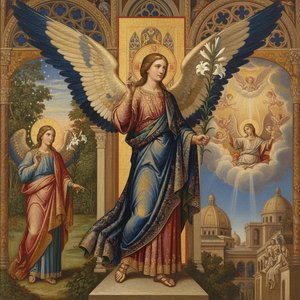
Divine Messengers: A Curated Guide to the Iconography of Angel Gabriel in Art History
Explore the profound beauty of Angel Gabriel in art history. From Renaissance masterpieces to Baroque splendor, our expert guide delves into the sacred iconography and timeless techniques of these divine messengers for the discerning art enthusiast.

Celestial Messengers: Angels in Painting – A Historical & Artistic Exploration
Explore the captivating history of angels in painting! Discover symbolism, iconic Renaissance & Byzantine masterpieces, and renowned artists. Expert insights for art lovers & collectors at OriginalUniqueArt.

Dante Gabriel Rossetti: Cele Mai Frumoase 25 de Capodopere – Artă, Decorațiuni și Inspirație
Descoperă cele mai frumoase 25 de picturi ale lui Dante Gabriel Rossetti! Explorează arta prerafaelită, simbolismul romantic și portretele feminine iconice. Reproduceri artă de calitate muzeală & inspirație decorativă pe OriginalUniqueArt.com.

Celestial Messengers: A Comprehensive Exploration of Angelic Representation in Art History
Explore the captivating history of angels in art! Discover symbolism, iconic Renaissance masterpieces & renowned artists. Expert insights for art lovers & collectors at OriginalUniqueArt.