Meniu
CONSULTAȚIE GRATUITĂ DE ARTĂ
PrevizualizarePrevizualizare Previzualizare ARPrevizualizare AR Comandă printul Comandă printulCumpără imaginea Cumpără imaginea TrimiteTrimite
Detalii despre lucrareDetalii despre lucrare Adaugă la favorite Adaugă la favorite DescarcăDescarcă Produse similareProduse similare RadiografieRadiografie Diapozitive automateDiapozitive automate

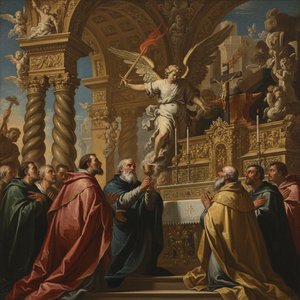
Saint Francis Receiving the Stigmata

Explore Bartolomé Esteban Murillo's masterpiece 'Saint Francis Receiving the Stigmata,' a luminous depiction of Saint Francis accepting Jesus’ wounds, housed at The Wellington Collection in London.

Bartolome Esteban Murillo (1618-1682) a fost un pictor spaniol de renume, renumit pentru scene religioase luminoase, portrete delicate și reprezentări ale vieții cotidiene din Sevilla.

Reproducere pictată manual în ulei

Pictură în ulei pe pânză, realizată manual de artiștii noștri la dimensiunea și ramele dorite de dumneavoastră, pe comandă. (Comandă printul Comandă printulCumpără imaginea Cumpără imaginea)

P118B $10
P118H $10
P118W $10
P438Z $10
P508JH $12
P508YH $12
P805H $10
P805Z $10
P919BZ $10
P919G $10
P919XJ $10
P959ZH $10
P968JZ $12
W106C $8
W218G $10
W218JH $8
W218Y $10
W307PJ $10
W316G $10
W316PJ $8
W316Y $10
W398PJ $8
W4111J $10
W500HY $15
W500JH $15
W692G $12
W849H $8
W940BG $15
W953PJ $8

Standard
custom
CM
INCH

Alegeți dintre dimensiunile noastre prestabilite, care respectă proporțiile originale ale operei de artă.

lățime
înălțime

Puteți introduce propriile dimensiuni pentru a se potrivi unui anumit cadru sau spațiu. Dacă dimensiunea selectată nu corespunde proporțiilor imaginii originale, vom decupa opera de artă sau vom extinde pictura cu elemente suplimentare pictate manual. O simulare digitală vă va fi trimisă pentru aprobare înainte de începerea producției.
Vă rugăm să rețineți că previzualizarea de pe ecran nu reflectă decuparea sau extinderea reală. Doar macheta va arăta cu exactitate compoziția finală.
Deși sunt disponibile dimensiuni personalizate, vă recomandăm să selectați o dimensiune din lista predefinită pentru a păstra proporțiile originale.

Exemple de elemente ce pot fi personalizate: Înlocuiți fața cu fotografia clientului; Adăugați un animal de companie (de exemplu, înlocuiți pisica cu un câine); Includeți un mesaj ascuns în fundal; Schimbați peisajul sau elementele din fundal.
După plasarea comenzii, echipa OriginalUniqueArt.com va contacta clientul prin e-mail pentru instrucțiuni și îi va furniza o previzualizare a machetei

Livrare în întreaga lume () în 3-4 săptămâni, în loc de cele 5 săptămâni standard. (18 August). Fără compromisuri în ceea ce privește calitatea.

why_choose_icon
Livrare expres gratuită la nivel mondial
why_choose_icon
Pânză de in de înaltă calitate
why_choose_icon
Asigurare completă pentru transport
why_choose_icon
Garanție de rambursare a taxelor vamale
why_choose_icon
Garanția fidelității culorilor
why_choose_icon
Politica de retur în 60 de zile (doar pentru defecte)
why_choose_icon
Garanție de rambursare 100%
why_choose_icon
Ofertă pentru comenzi multiple

Preț total

$ 300

reproduction

Saint Francis Receiving the Stigmata

Tehnică de reproducere

Dimensiune reproducere

-

Preț total calculat

$ 300

Informații rapide

  • Location: English Heritage, London
  • Artist: Bartolomé Esteban Murillo
  • Year: 1650
  • Movement: Baroque
  • Title: Saint Francis Receiving the Stigmata
  • Medium: Oil on canvas
  • Artistic style: Spanish Baroque

Test de cultură artistică

Fiecare întrebare are un singur răspuns corect.

Întrebare 1:
Who is the central figure depicted in the painting 'Saint Francis Receiving the Stigmata'?
Întrebare 2:
In what year was Bartolomé Esteban Murillo's painting 'Saint Francis Receiving the Stigmata' created?
Întrebare 3:
What medium was used for the creation of this artwork?
Întrebare 4:
The scene depicts Saint Francis receiving wounds symbolizing the suffering of whom?
Întrebare 5:
Where is the painting 'Saint Francis Receiving the Stigmata' currently housed?

Descriere operă de artă

The Divine Embrace: Saint Francis Receiving the Stigmata

To gaze upon Bartolomé Esteban Murillo's depiction of Saint Francis Receiving the Stigmata is to step directly into the heart of Spanish Baroque piety. This masterful oil painting, executed in 1650, transcends mere portraiture; it is a profound meditation on sacrifice, divine connection, and spiritual ecstasy. The central figure, Saint Francis of Assisi, is captured in a moment of breathtaking vulnerability and ultimate grace. His outstretched arms seem not merely posed, but reaching out to accept the weight of Christ's suffering—the stigmata itself. Murillo has imbued this canvas with an almost palpable sense of sacred drama, inviting the viewer into the hushed reverence of that pivotal spiritual encounter.

A Tapestry of Baroque Devotion and Light

Murillo, a master whose career blossomed in the vibrant crucible of Seville, was renowned for his ability to infuse religious subjects with an astonishing naturalism. His technique here is exemplary; observe how the light seems to emanate from within the scene itself, illuminating Saint Francis's robes and highlighting the wounds that mark his devotion. The composition is richly balanced, drawing the eye inevitably toward the central act of reception. Beyond the saint himself, Murillo thoughtfully includes elements of nature—the serene tree and the watchful bird in the background. These natural details are not mere decoration; they serve as silent witnesses to the sacred event, grounding the miraculous within an earthly, yet divinely blessed, setting.

Symbolism Woven into Canvas

The symbolism at play is deep and resonant. Saint Francis’s embrace of the stigmata represents the ultimate identification with Christ's Passion—a voluntary assumption of suffering for the sake of humanity. The natural elements surrounding him speak to his calling as an ascetic who found divinity in the wilderness. For the collector or decorator, this piece offers more than just aesthetic beauty; it is a potent talisman of faith and enduring spiritual commitment. It speaks to a yearning for transcendence amidst the clamor of daily life.

Bringing Sacred Drama Home

Measuring 56 x 48 cm, this work possesses an intimate scale that allows its emotional weight to settle gently within any space. Whether adorning a chapel niche or serving as a focal point in a richly decorated drawing-room, the presence of Murillo’s hand is unmistakable. Owning a reproduction of this painting means curating not just art, but a piece of history steeped in Andalusian light and Baroque fervor. It offers an immediate connection to the golden age of Spanish art, allowing the viewer to contemplate profound themes of sacrifice and grace every time their eye meets its divine embrace.


Biografie artist

A Life Bathed in Andalusian Light

Bartolomé Esteban Murillo, a name inextricably linked to the golden age of Spanish Baroque painting, emerged from the sun-drenched heart of Seville in 1618. His life, though punctuated by profound personal loss and shifting societal currents, blossomed into an artistic career that masterfully captured the spirit of his time—a period brimming with fervent religious belief, transformative social change, and a burgeoning wave of artistic innovation. Born to Gaspar Esteban, a skilled barber-surgeon, and María Pérez Murillo, within a large family of fourteen children, young Bartolomé’s early years were shadowed by tragedy; the untimely deaths of both his parents left him under the care of his sister’s husband, Juan Agustín Lagares—a figure who would subtly guide his nascent artistic path. Murillo's initial training commenced with Juan del Castillo, a local artist and distant relative through his mother, providing him with a foundational understanding of Seville’s established realist traditions, absorbing influences from masters like Zurbarán, Ribera, and Cano – artists renowned for their stark realism and dramatic intensity. However, Murillo’s true genius lay not in mere imitation but in transforming these foundations into something altogether softer, more luminous, and profoundly imbued with human emotion.

From Realism to Radiant Grace

Murillo's artistic journey wasn’t a sudden explosion of fame; rather, it was an evolution characterized by distinct phases. His early works, firmly rooted in the austere realism prevalent in Seville, showcased meticulous detail and a predominantly somber palette. *Young Man with a Basket of Fruit (Personification of Summer)*, created around 1640-50, serves as a prime example of this period—a grounded depiction of everyday life rendered with remarkable precision. Yet, even within these early pieces, subtle hints of the tenderness and emotional depth that would define his mature style began to emerge. The *Young Beggar*, painted circa 1645, powerfully demonstrates a growing sensitivity towards human suffering, echoing the influence of Velázquez’s masterful portrayals of ordinary people. As Murillo matured, his artistic approach underwent a remarkable transformation. He deliberately moved away from the stark realism of his predecessors, embracing a more polished and refined aesthetic that resonated with the tastes of Seville's increasingly affluent bourgeois and aristocratic classes. This stylistic shift was particularly evident in his religious paintings, where he infused traditional iconography with an unprecedented sense of warmth, grace, and emotional accessibility. *St. Jerome*, painted between 1650-52, stands as a testament to this evolved style—a softly luminous depiction radiating serenity and devotion. The use of light and shadow became more subtle, creating a dreamlike atmosphere that drew viewers into the scene.

A Master of Religious Sentiment and Genre Scenes

Murillo’s artistic output was remarkably diverse, encompassing religious paintings, genre scenes, portraits, and mythological subjects. However, he is most celebrated for his depictions of the Immaculate Conception—a subject that captivated him throughout his career and resulted in numerous variations, each imbued with a unique sense of ethereal beauty. These works, characterized by their delicate brushwork, luminous colors, and graceful compositions, quickly became immensely popular and firmly established Murillo as the preeminent painter of religious imagery in Spain. Beyond his sacred subjects, Murillo also excelled at capturing the essence of everyday life. His genre scenes—paintings depicting flower girls, street urchins, and beggars—offer a poignant and intimate glimpse into the social realities of 17th-century Seville. These paintings are not merely observational studies; they are deeply imbued with empathy and compassion, elevating the humble subjects to a level of dignity and grace. He possessed an extraordinary ability to capture the innocence of childhood, portraying young children with remarkable realism and tenderness—a skill that cemented his reputation as one of Spain’s most beloved artists.

Influences and Artistic Development

Murillo's artistic development was shaped by a confluence of influences. Initially, he absorbed the realist traditions of Seville, drawing inspiration from masters like Zurbarán and Cano. However, his style underwent a significant transformation after a visit to Madrid in the 1650s, where he encountered the works of Titian, Peter Paul Rubens, and Anthony van Dyck in the royal collections. These encounters profoundly impacted his approach, leading him to embrace richer colors, looser brushwork, and a more dynamic composition—elements that would characterize his mature style. The influence of Venetian painting is particularly evident in his later works, such as *The Immaculate Conception*, where he skillfully blended religious iconography with a sensual and luminous quality. Furthermore, Murillo’s apprenticeship under Juan del Castillo provided him with a solid foundation in traditional techniques, while his exposure to the artistic circles of Seville fostered a spirit of experimentation and innovation.

Legacy and Enduring Influence

Bartolomé Esteban Murillo's impact on the course of Spanish art—and indeed, European painting—is undeniable. He established a distinctive style that seamlessly blended religious devotion with humanistic sentiment, creating works that resonated deeply with audiences across social strata. His influence extended far beyond his native Spain, inspiring generations of artists throughout Europe. Artists such as Gainsborough and Greuze acknowledged their debt to Murillo’s luminous style and sensitive portrayals of human emotion. He trained numerous pupils in his Seville workshop, ensuring the continuation of his artistic legacy. His paintings are now housed in prestigious museums worldwide—including the Museo del Prado in Madrid, the Hermitage Museum in Saint Petersburg, the Wallace Collection in London, and the Timken Museum of Art in San Diego—testaments to his enduring appeal and historical significance. Murillo’s art continues to captivate viewers with its beauty, grace, and profound humanity, solidifying his place as one of the most beloved and influential painters of the Spanish Baroque period. His ability to infuse religious imagery with emotional depth and portray everyday life with empathy ensures that his work remains relevant and inspiring centuries after his death in 1682.
Bartolome Esteban Murillo

Bartolome Esteban Murillo

1618 - 1682 , Spania

Detalii rapide

  • Artistic Movement Or Style: Baroc spaniol
  • Artists Or Movements Influenced By This Artist:
    • Gainsborough
    • Greuze
  • Artists Who Influenced This Artist:
    • Zurbarán
    • Ribera
  • Date Of Birth: 1 ianuarie 1618
  • Date Of Death: 3 aprilie 1682
  • Full Name: Bartolomé Esteban Murillo
  • Nationality: Spaniol
  • Notable Artworks:
    • Imaculata Innoată
    • Copil sărac
    • Sf. Ieremia
  • Place Of Birth: Sevilla, Spania