
 Previzualizare
 Trimite
 Distribuie
 Detalii despre lucrare

 Descarcă
 Produse similare
 Radiografie
 Diapozitive automate
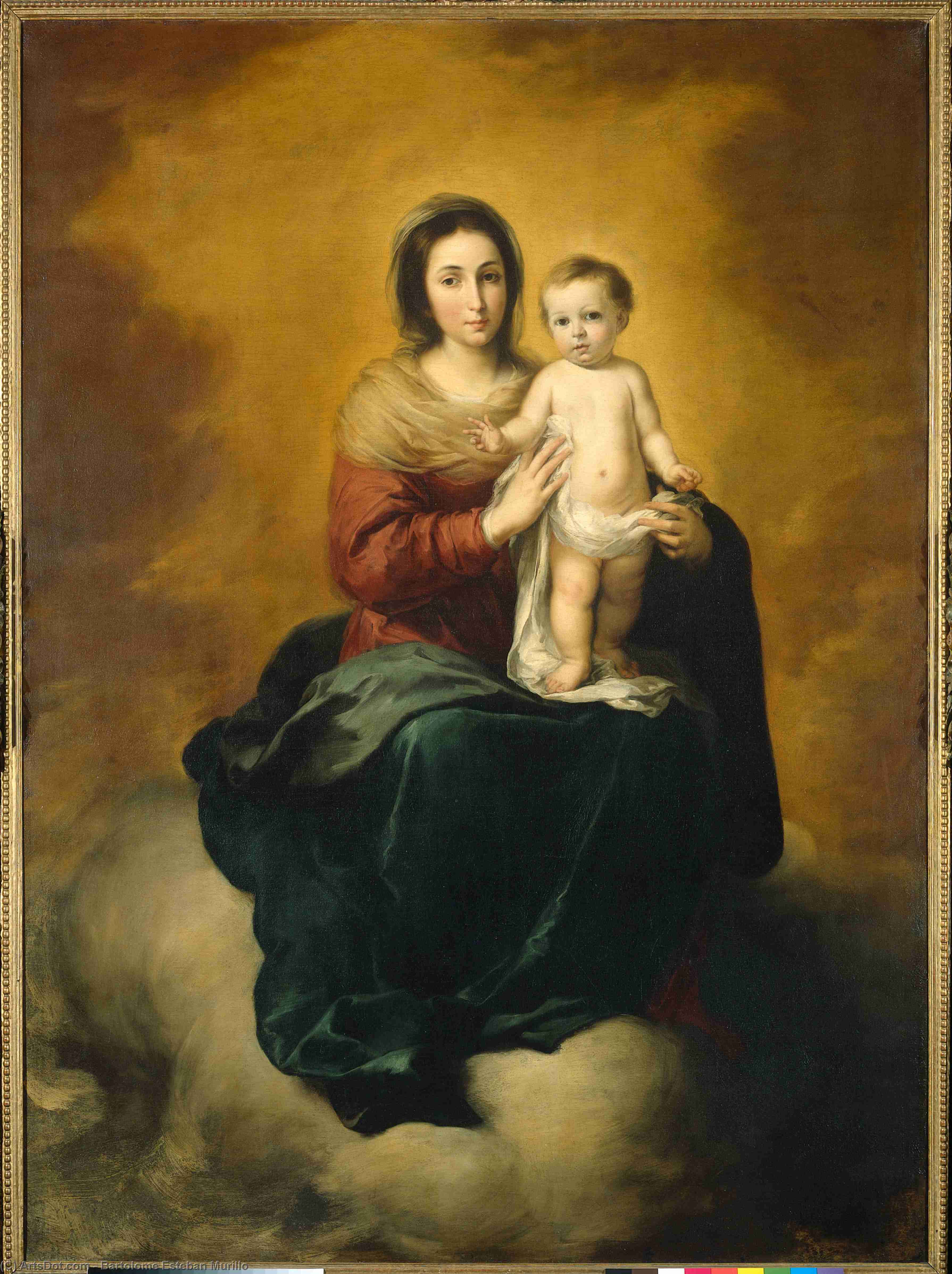
Madonna in the Clouds
 Oil On Canvas
- WallArt
- Baroque
 1660
1660- Early Modern
 190.0 x 137.0 cm
 Vezi mai mult
Giclée / Imprimare artistică
Printuri giclée sau pe canvas de calitate muzeală, cu proces de producție rapid și opțiuni flexibile de finisare. ( Cumpără pictură lucrată manual Cumpără imagine)




P118B $10

P118H $10

P118W $10

P438Z $10

P508JH $12

P508YH $12

P805H $10

P805Z $10

P919BZ $10

P919G $10

P919XJ $10

P959ZH $10

P968JZ $12

W106C $8

W218G $10

W218JH $8

W218Y $10

W307PJ $10

W316G $10

W316PJ $8

W316Y $10

W398PJ $8

W4111J $10

W500HY $15

W500JH $15

W692G $12

W849H $8

W940BG $15

W953PJ $8




Alegeți dintre dimensiunile noastre prestabilite, care respectă proporțiile originale ale operei de artă.

Puteți introduce propriile dimensiuni pentru a se potrivi unui anumit cadru sau spațiu. Dacă dimensiunea selectată nu corespunde proporțiilor imaginii originale, vom decupa lucrarea de artă sau vom extinde imaginea cu margini oglindite sau cu o culoare uniformă. Un mockup digital va fi trimis pentru aprobarea dumneavoastră înainte de începerea producției.
Vă rugăm să rețineți că previzualizarea de pe ecran nu reflectă decuparea sau extinderea reală. Doar mockup-ul va arăta cu exactitate compoziția finală.
Deși dimensiunile personalizate sunt disponibile, vă recomandăm să selectați o dimensiune din lista predefinită pentru a păstra proporțiile originale.
Livrare în întreaga lume () în 2 săptămâni, în loc de cele 4/5 săptămâni standard. (13 August)

Livrare expres gratuită la nivel mondial

Pânză de in de înaltă calitate

Asigurare completă pentru transport

Garanție de rambursare a taxelor vamale

Garanția fidelității culorilor

Politica de retur în 60 de zile (doar pentru defecte)

Garanție de rambursare 100%

Ofertă pentru comenzi multiple
 Opțiunea cu sticlă este disponibilă doar pentru dimensiuni de sub 110 cm

Madonna in the Clouds
Giclée / Imprimare artistică
Dimensiune reproducere
-


Preț total calculat
$ 80
Descriere obiect de colecție
A Celestial Embrace: The Divine Tenderness of Murillo
In the vast, swirling expanse of the Spanish Baroque, few images capture the profound intimacy of the divine as gracefully as Bartolomé Esteban Murillo’s Madonna in the Clouds. Created around 1660, this masterpiece transcends a mere religious portrait to become an emotional experience. The painting presents the Virgin Mary not as a distant, untouchable icon, but as a nurturing mother, cradling the Christ child with a tenderness that feels deeply human. As she gazes down at her son, her eyes reflect a quiet, contemplative love that draws the viewer into her sacred orbit. The composition is anchored by this central bond, yet it is elevated by a celestial atmosphere where soft, billowing clouds create a sense of infinite depth, suggesting that this moment of maternal affection is occurring in a realm beyond our earthly grasp.
The technical mastery of Murillo is on full display through his signature use of light and texture. A true master of the Andalusian school, he employs a technique that allows light to seem as though it is emanating from within the subjects themselves. The rich, vibrant blues of Mary’s gown contrast beautifully with the luminous white of her collar, while the subtle play of shadows across the infant's skin lends a breathtaking realism to the scene. His brushwork, though precise enough to define the delicate features of the Madonna’s crown, possesses a soft, painterly quality that allows the edges of the clouds to melt into the background. This creates a dreamlike, ethereal effect, making the figures appear as if they are emerging from a heavenly mist, a hallmark of the Baroque desire to blur the line between the physical and the spiritual.
Symbolism and the Golden Age of Seville
Every element within this work serves a higher symbolic purpose, designed to evoke both awe and piety. The crown adorning the Virgin’s head is not merely an ornament of status; it is a theological statement of her role as the Queen of Heaven. Yet, Murillo balances this regal iconography with the profound simplicity of the maternal bond. The way the baby is held close to her chest symbolizes the protection and sanctity of the Incarnation. For the contemporary viewer, particularly collectors and interior designers, this piece offers a sophisticated interplay of themes: the grandeur of royalty meeting the intimacy of family. It is a painting that commands attention through its scale—measuring an impressive 190 x 137 cm—yet invites quiet reflection through its gentle subject matter.
For those seeking to integrate fine art into a curated space, a high-quality reproduction of this work provides more than just decoration; it introduces a sense of historical weight and emotional serenity. Whether placed in a grand salon or a quiet study, the Madonna in the Clouds acts as a focal point of grace. The rich color palette and the dramatic, atmospheric background offer a timeless elegance that complements both classical and contemporary interiors, bringing the luminous spirit of 17th-century Seville into the modern home.
Biografie artist
A Life Bathed in Andalusian Light
Bartolomé Esteban Murillo, a name inextricably linked to the golden age of Spanish Baroque painting, emerged from the sun-drenched heart of Seville in 1618. His life, though punctuated by profound personal loss and shifting societal currents, blossomed into an artistic career that masterfully captured the spirit of his time—a period brimming with fervent religious belief, transformative social change, and a burgeoning wave of artistic innovation. Born to Gaspar Esteban, a skilled barber-surgeon, and María Pérez Murillo, within a large family of fourteen children, young Bartolomé’s early years were shadowed by tragedy; the untimely deaths of both his parents left him under the care of his sister’s husband, Juan Agustín Lagares—a figure who would subtly guide his nascent artistic path. Murillo's initial training commenced with Juan del Castillo, a local artist and distant relative through his mother, providing him with a foundational understanding of Seville’s established realist traditions, absorbing influences from masters like Zurbarán, Ribera, and Cano – artists renowned for their stark realism and dramatic intensity. However, Murillo’s true genius lay not in mere imitation but in transforming these foundations into something altogether softer, more luminous, and profoundly imbued with human emotion.From Realism to Radiant Grace
Murillo's artistic journey wasn’t a sudden explosion of fame; rather, it was an evolution characterized by distinct phases. His early works, firmly rooted in the austere realism prevalent in Seville, showcased meticulous detail and a predominantly somber palette. *Young Man with a Basket of Fruit (Personification of Summer)*, created around 1640-50, serves as a prime example of this period—a grounded depiction of everyday life rendered with remarkable precision. Yet, even within these early pieces, subtle hints of the tenderness and emotional depth that would define his mature style began to emerge. The *Young Beggar*, painted circa 1645, powerfully demonstrates a growing sensitivity towards human suffering, echoing the influence of Velázquez’s masterful portrayals of ordinary people. As Murillo matured, his artistic approach underwent a remarkable transformation. He deliberately moved away from the stark realism of his predecessors, embracing a more polished and refined aesthetic that resonated with the tastes of Seville's increasingly affluent bourgeois and aristocratic classes. This stylistic shift was particularly evident in his religious paintings, where he infused traditional iconography with an unprecedented sense of warmth, grace, and emotional accessibility. *St. Jerome*, painted between 1650-52, stands as a testament to this evolved style—a softly luminous depiction radiating serenity and devotion. The use of light and shadow became more subtle, creating a dreamlike atmosphere that drew viewers into the scene.A Master of Religious Sentiment and Genre Scenes
Murillo’s artistic output was remarkably diverse, encompassing religious paintings, genre scenes, portraits, and mythological subjects. However, he is most celebrated for his depictions of the Immaculate Conception—a subject that captivated him throughout his career and resulted in numerous variations, each imbued with a unique sense of ethereal beauty. These works, characterized by their delicate brushwork, luminous colors, and graceful compositions, quickly became immensely popular and firmly established Murillo as the preeminent painter of religious imagery in Spain. Beyond his sacred subjects, Murillo also excelled at capturing the essence of everyday life. His genre scenes—paintings depicting flower girls, street urchins, and beggars—offer a poignant and intimate glimpse into the social realities of 17th-century Seville. These paintings are not merely observational studies; they are deeply imbued with empathy and compassion, elevating the humble subjects to a level of dignity and grace. He possessed an extraordinary ability to capture the innocence of childhood, portraying young children with remarkable realism and tenderness—a skill that cemented his reputation as one of Spain’s most beloved artists.Influences and Artistic Development
Murillo's artistic development was shaped by a confluence of influences. Initially, he absorbed the realist traditions of Seville, drawing inspiration from masters like Zurbarán and Cano. However, his style underwent a significant transformation after a visit to Madrid in the 1650s, where he encountered the works of Titian, Peter Paul Rubens, and Anthony van Dyck in the royal collections. These encounters profoundly impacted his approach, leading him to embrace richer colors, looser brushwork, and a more dynamic composition—elements that would characterize his mature style. The influence of Venetian painting is particularly evident in his later works, such as *The Immaculate Conception*, where he skillfully blended religious iconography with a sensual and luminous quality. Furthermore, Murillo’s apprenticeship under Juan del Castillo provided him with a solid foundation in traditional techniques, while his exposure to the artistic circles of Seville fostered a spirit of experimentation and innovation.Legacy and Enduring Influence
Bartolomé Esteban Murillo's impact on the course of Spanish art—and indeed, European painting—is undeniable. He established a distinctive style that seamlessly blended religious devotion with humanistic sentiment, creating works that resonated deeply with audiences across social strata. His influence extended far beyond his native Spain, inspiring generations of artists throughout Europe. Artists such as Gainsborough and Greuze acknowledged their debt to Murillo’s luminous style and sensitive portrayals of human emotion. He trained numerous pupils in his Seville workshop, ensuring the continuation of his artistic legacy. His paintings are now housed in prestigious museums worldwide—including the Museo del Prado in Madrid, the Hermitage Museum in Saint Petersburg, the Wallace Collection in London, and the Timken Museum of Art in San Diego—testaments to his enduring appeal and historical significance. Murillo’s art continues to captivate viewers with its beauty, grace, and profound humanity, solidifying his place as one of the most beloved and influential painters of the Spanish Baroque period. His ability to infuse religious imagery with emotional depth and portray everyday life with empathy ensures that his work remains relevant and inspiring centuries after his death in 1682.
Bartolome Esteban Murillo
1618 - 1682 , Spania
Detalii rapide
- Artistic Movement Or Style: Baroc spaniol
- Artists Or Movements Influenced By This Artist:
- Gainsborough
- Greuze
- Artists Who Influenced This Artist:
- Zurbarán
- Ribera
- Date Of Birth: 1 ianuarie 1618
- Date Of Death: 3 aprilie 1682
- Full Name: Bartolomé Esteban Murillo
- Nationality: Spaniol
- Notable Artworks:
- Imaculata Innoată
- Copil sărac
- Sf. Ieremia
- Place Of Birth: Sevilla, Spania
Articole similare

Top 10 Capodopere Alb-Negru: Frumusețe Atemporală în Artă | OriginalUniqueArt.ro
Descoperă top 10 picturi celebre dominate de alb, de la Monet la Kandinsky! Explorează istoria artei, tehnicile artistice și frumusețea atemporală a capodoperelor clasice. Reproduceri de calitate muzeală pe OriginalUniqueArt.com – inspiră-ți decorul!

Top 10 Capodopere Albastre: Picturi Celebre și Inspirație pentru Decor
Descoperă top 10 picturi celebre dominate de nuanțe subtile de albastru! Explorează poveștile din spatele capodoperelor Monet, Renoir și Van Gogh. Inspirație decor interior & reproducere tablouri pe OriginalUniqueArt.com

The Golden Age Reforged: Dramatic Realism & Religious Zeal in Spanish Baroque Art
Explore the dramatic world of Spanish Baroque art! Discover masters like Zurbarán & the powerful influence of religious zeal on painting techniques – a guide for collectors and enthusiasts.
The Allure of Azure: Exploring the Symbolic & Aesthetic Depths of Blue in Art History
Explore the rich history of blue in art! Discover its symbolism, from ancient pigments to modern masterpieces by Kandinsky & Seurat. Uncover the psychological impact and cultural meanings behind this captivating hue.

The Dramatic Flourish: Exploring the Baroque Movement's Enduring Legacy in Art History
Explore the dramatic world of Baroque art! Discover iconic artists like Caravaggio & Rubens, defining techniques, and its lasting impact on art history. Expert insights for collectors & enthusiasts at OriginalUniqueArt.

