

 Previzualizare
 Trimite
 Distribuie
 Detalii despre lucrare

 Descarcă
 Produse similare
 Radiografie
 Diapozitive automate
 Statistici
Chancellor Leonhard von Eck (1480–1550)
 Acrylic On Canvas
- WallArt
- German Renaissance Printmaking Tradition
 1527
1527 56.0 x 38.0 cm
 Muzeul Metropolitan de Artă
 Vezi mai mult
Reproducere pictată manual în ulei
Pictură în ulei pe pânză, realizată manual de artiștii noștri la dimensiunea și ramele dorite de dumneavoastră, pe comandă. ( Comută pe Print Comută pe Imagine Digitală)




P118B $10

P118H $10

P118W $10

P438Z $10

P508JH $12

P508YH $12

P805H $10

P805Z $10

P919BZ $10

P919G $10

P919XJ $10

P959ZH $10

P968JZ $12

W106C $8

W218G $10

W218JH $8

W218Y $10

W307PJ $10

W316G $10

W316PJ $8

W316Y $10

W398PJ $8

W4111J $10

W500HY $15

W500JH $15

W692G $12

W849H $8

W940BG $15

W953PJ $8




Alegeți dintre dimensiunile noastre prestabilite, care respectă proporțiile originale ale operei de artă.

Puteți introduce propriile dimensiuni pentru a se potrivi unui anumit cadru sau spațiu. Dacă dimensiunea selectată nu corespunde proporțiilor imaginii originale, vom decupa opera de artă sau vom extinde pictura cu elemente suplimentare pictate manual. O simulare digitală vă va fi trimisă pentru aprobare înainte de începerea producției.
Vă rugăm să rețineți că previzualizarea de pe ecran nu reflectă decuparea sau extinderea reală. Doar macheta va arăta cu exactitate compoziția finală.
Deși sunt disponibile dimensiuni personalizate, vă recomandăm să selectați o dimensiune din lista predefinită pentru a păstra proporțiile originale.
După plasarea comenzii, echipa OriginalUniqueArt.com va contacta clientul prin e-mail pentru instrucțiuni și îi va furniza o previzualizare a machetei
Livrare în întreaga lume () în 3-4 săptămâni, în loc de cele 5 săptămâni standard. (11 Septembrie). Fără compromisuri în ceea ce privește calitatea.

Livrare expres gratuită la nivel mondial

Pânză de in de înaltă calitate

Asigurare completă pentru transport

Garanție de rambursare a taxelor vamale

Garanția fidelității culorilor

Politica de retur de 100 de zile (doar pentru defecte)

Garanție de rambursare 100%

Ofertă pentru comenzi multiple
 Opțiunea cu sticlă este disponibilă doar pentru dimensiuni de sub 110 cm

Chancellor Leonhard von Eck (1480–1550)
Tehnică de reproducere
Dimensiune reproducere
-


Preț total calculat
$ 300
A Portrait Steeped in Faith and Power: Barthel Beham’s Chancellor Leonhard von Eck
Barthel Beham (1502–1540) stands as a pivotal figure in the German Renaissance printmaking tradition, earning him the moniker “Little Master” – a testament to his extraordinary skill and meticulous detail. Born in Nuremberg, Germany, he was steeped in artistic heritage from birth, inheriting talent from his elder brother Hans Sebald Beham and absorbing invaluable lessons from Albrecht Dürer himself. This formative influence shaped his distinctive style and propelled him to become one of the most celebrated engravers of his era. Early Life & Training: Barthel’s artistic journey commenced under the tutelage of Hans Sebald, who instilled in him a profound understanding of engraving techniques – a craft that would define Beham's career. Dürer’s workshop served as another crucible for innovation and stylistic refinement, fostering Beham’s fascination with realism and compositional complexity. He diligently honed his skills alongside his brother, absorbing the principles of masterful draughtsmanship and mastering the intricacies of copperplate engraving, techniques that would become synonymous with Beham's oeuvre. Engraving Mastery: Beham quickly established himself as a prodigious engraver, surpassing many of his contemporaries in precision and artistic vision. His ability to capture subtle nuances of expression and drapery was unparalleled, mirroring Dürer’s own dedication to anatomical accuracy and textural detail. Unlike the looser brushstrokes favored by some artists of the time, Beham achieved breathtaking realism through painstaking etching and engraving processes—a testament to his unwavering commitment to technical excellence. The resulting prints possessed an astonishing level of clarity and tonal gradation, conveying a palpable sense of presence and capturing the very essence of his subjects. Historical Context & Significance: This portrait of Chancellor Leonhard von Eck encapsulates the anxieties and aspirations of Nuremberg during the turbulent years leading up to the Reformation. Eck was a staunch defender of papal authority and Catholic dogma, representing the conservative forces battling against the burgeoning Protestant movement. Beham’s depiction reflects this ideological divide, portraying Eck with solemn dignity and conveying an aura of intellectual conviction—a visual embodiment of the spiritual battles shaping Europe at the time. The engraving itself served as a powerful propaganda tool, disseminating Eck's image throughout Bavaria and reinforcing the legitimacy of the ducal court. Symbolism & Artistic Style: Beham’s stylistic choices contribute significantly to the portrait’s emotive impact. The deliberate use of chiaroscuro—the dramatic interplay between light and shadow—creates depth and emphasizes Eck’s facial features, highlighting his gaze with an intensity that commands attention. The crimson robe symbolizes royal authority and piety, mirroring Eck's role as a trusted advisor to William IV. Furthermore, the feather adorning Eck’s hat represents nobility and spiritual aspiration – visual cues reinforcing his status as a prominent figure within the Catholic hierarchy. Beham’s meticulous rendering of fabric folds and drapery demonstrates an astonishing mastery of technique, elevating the portrait beyond mere likeness into a profound meditation on faith, power, and artistic accomplishment. Conclusion: Barthel Beham's Chancellor Leonhard von Eck remains a remarkable achievement in German Renaissance printmaking—a testament to his unparalleled skill and unwavering dedication to capturing both visual beauty and intellectual conviction. Its enduring appeal lies not only in its technical brilliance but also in its ability to convey the complexities of religious and political life during a pivotal moment in European history. The portrait continues to inspire admiration for its masterful execution and serves as a poignant reminder of the artistic legacy of Nuremberg’s “Little Master.”Biografie artist
Barthel Beham (1502–1540): The Little Master of Nuremberg
Barthel Beham (1502–1540) stands as a pivotal figure in the German Renaissance printmaking tradition, earning him the moniker “Little Master” – a testament to his extraordinary skill and meticulous detail. Born in Nuremberg, Germany, he was steeped in artistic heritage from birth, inheriting talent from his elder brother Hans Sebald Beham and absorbing invaluable lessons from Albrecht Dürer himself. This formative influence shaped his distinctive style and propelled him to become one of the most celebrated engravers of his era.- Early Life & Training: Barthel’s artistic journey commenced under the tutelage of Hans Sebald, who instilled in him a profound understanding of engraving techniques – a craft that would define Beham's career. Dürer’s workshop served as another crucible for innovation and stylistic refinement, fostering Beham’s fascination with realism and compositional complexity.
- Engraving Mastery: Beham quickly established himself as a prodigious engraver, producing stunningly precise miniature prints that captivated audiences across Europe. His output during the 1520s exemplifies the “Little Masters” school – characterized by unparalleled accuracy and artistic ambition. Subjects ranged from biblical narratives to portraits of noblemen and humanist scholars, demonstrating his versatility and technical prowess.
- The Godless Painters & Exile: Beham’s unwavering skepticism regarding Lutheran dogma led to his expulsion from Nuremberg in 1525 alongside Hans Sebald and Georg Pencz – a controversial decision that nonetheless spurred him toward intellectual exploration and artistic experimentation. This exile fostered connections with humanist circles and broadened his horizons beyond the confines of Nuremberg’s religious conservatism.
- Munich & Patronage: Following papal pardon, Beham relocated to Munich where he found favor with Duke William IV and Ludwig X – securing lucrative commissions that allowed him to hone his artistic skills further. He became renowned for his portraiture, capturing the dignity and grandeur of Bavarian royalty with remarkable sensitivity and detail.
- Legacy & Influence: Barthel Beham died in Italy during a diplomatic mission under the patronage of William IV, marking the end of an illustrious career. His work continues to inspire admiration for its technical brilliance and humanist vision—a lasting contribution to German art history and a cornerstone of Renaissance printmaking.
Notable Works & Artistic Style
Beham’s artistic style is instantly recognizable by its meticulous realism, achieved through painstaking engraving processes. He prioritized capturing subtle nuances of expression and anatomical accuracy—a hallmark of Dürer's influence. His prints often incorporated complex compositions and dramatic lighting effects, elevating them beyond mere reproductions to become independent works of art. Consider his depiction of Chancellor Leonhard von Eck (1480–1550), a masterpiece showcasing the artist’s ability to convey psychological depth through portraiture. Similarly, “Portrait of a Man” exemplifies Beham's dedication to capturing human form with unparalleled precision and artistic sensitivity.Connections & Collaborations
Barthel Beham benefited greatly from collaborations with prominent artists of his time, notably Marcantonio Raimondi—with whom he worked in Bologna and Rome during the early 1530s. These partnerships exposed him to innovative techniques and broadened his artistic repertoire. Furthermore, his brother Hans Sebald’s involvement ensured a shared artistic vision and fostered a dynamic creative environment within Nuremberg's artistic community.
barthel beham
1502 - 1540 , Germany
Detalii rapide
- Artistic Movement Or Style: Little Masters
- Artists Or Movements Influenced By This Artist: ['Marcantonio Raimondi']
- Artists Who Influenced This Artist: ['Albrecht Dürer']
- Date Of Birth: 1502
- Full Name: Barthel Beham
- Nationality: German
- Notable Artworks:
- Portrait of a Man
- Portrait of Duke Ludwig X of Bavaria
- Place Of Birth: Nuremberg, Germany
Articole similare

The Intricate World of Engraving: A Historical Survey of Technique, Artistic Expression & Enduring Legacy
Explore the rich history of engraving with OriginalUniqueArt. Discover techniques, iconic artists like Dürer & Callot, collecting tips, and expert guidance for preserving your art investment. Learn about intaglio printing & more!

Engraving: A Historical Survey of Technique, Artistic Expression & Enduring Legacy
Explore the rich history of engraving with OriginalUniqueArt. Discover techniques, iconic artists like Dürer & Callot, collecting tips, and expert guidance for preserving your art investment. Learn about intaglio printing & more!

Top 10 Gravuri Legendare care au Schimbat Arta pentru Totdeauna | OriginalUniqueArt.com
Descoperă Top 10 gravuri legendare de la Dürer, Rembrandt și Goya! Explorează istoria artei, tehnicile maeștrilor și impactul lor asupra culturii. Reproduceri artă de calitate muzeală pentru un decor rafinat pe OriginalUniqueArt.com
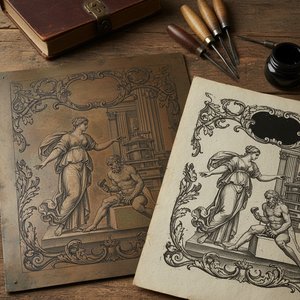
The Art of Engraving: Mastering Precision and Detail in the Intaglio Tradition
Explore the profound mastery of engraving and intaglio printmaking. Delve into the rich history, technical precision of the burin, and the enduring legacy of fine art techniques that shaped the world's most iconic masterpieces.
The Precision of the Burin: An Expert Guide to the High-Impact World of Masterful Engraving Art
Discover the sharp, high-impact world of engraving art. Our expert guide explores intaglio techniques, the mastery of the burin, and how collectors can appreciate the precision and enduring legacy of this profound graphic art form.