- Acasă

- Imagine digitală
- Balcomb Greene
- Way Down Blue

 Previzualizare
 Trimite
 Distribuie
 Detalii despre lucrare

 Descarcă
 Similare
 Radiografie
 Diaporama
Way Down Blue
 1945
1945 51.0 x 76.0 cm
 Vezi mai mult
Achiziționați o imagine digitală îmbunătățită și de înaltă rezoluție, mult superioară previzualizării online.
Fiecare fișier este pregătit cu meticulozitate de specialiștii noștri interni, utilizând instrumente avansate și retușare manuală expertă. Ne asigurăm că fiecare imagine beneficiază de o claritate excepțională, o acuratețe precisă a culorilor și detalii fine.
Fișierul final este livrat prin e-mail în termen de 72 de ore, optimizat pentru utilizare imediată în medii profesionale, editoriale și de imprimare. Aceasta este aceeași calitate în care au încredere studiouri de design, edituri și galerii de top.
Imagine Digitală
Descărcați un fișier la rezoluție înaltă pentru afișare personală, imprimare și proiecte creative. ( Comandă versiunea tipărită Comandă pictură realizată manual)
Inclus în fiecare comandă de imagini digitale
Livrare digitală de expertiză, garantată
Când alegeți OriginalUniqueArt.com, nu primiți doar o simplă imagine – primiți o operă de artă digitală îmbunătățită profesional, creată cu precizie și susținută de o garanție de satisfacție. Iată tot ceea ce primești odată cu comanda ta, în mod automat:

Livrare rapidă prin e-mail
Fișierul imaginii digitale la rezoluție înaltă vă va fi trimis prin e-mail în termen de 72 de ore de la finalizarea comenzii – gata pentru utilizare imediată.

Fișier digital optimizat prin IA
Opera ta de artă este optimizată profesional prin intermediul unor instrumente AI avansate și al editării manuale, asigurând un nivel maxim de detalii, claritate și acuratețe a culorilor.

Retransmitere gratuită pe viață
Ai șters sau ai pierdut din greșeală fișierul? Nu îți face griji – ți-l vom retrimite oricând, gratuit.

Fără taxe de import – Întotdeauna
Bucură-te instant de opera ta de artă, fără taxe vamale, taxe de import sau costuri de livrare – descărcările digitale sunt întotdeauna fără taxe.

Garanția acurateței culorilor
Asigurăm că imaginea ta digitală reflectă culorile originale cât mai fidel posibil, utilizând instrumente profesionale și procese de gestionare a culorii.

Garanție de satisfacție de 60 de zile
Dacă nu sunteți mulțumit de imaginea digitală achiziționată, o vom revizui sau vă vom returna 100% în termen de 60 de zile – fără nicio explicație necesară.

Garanție de returnare 100% a banilor
Nu ești mulțumit? Obține o rambursare completă în termen de 60 de zile de la primirea fișierului tău digital – fără întrebări.

Reduceri pentru comenzi multiple
Cumpără 3 imagini, economisește 10% - Cumpără 5, economisește 15% - Cumpără 10+, economisește 20%. Ideal pentru proiecte creative, galerii și agenții.
Descrierea obiectului de colecție
Artistic Style and Influences
Balcomb Greene's artistic style is characterized by his use of bold colors and geometric shapes, which are evident in Way Down Blue. The painting features two women standing in front of each other, with their faces obscured, adding an air of mystery to the piece. The dominant blue hue gives the artwork a sense of melancholy, while the red and black clothing of the women adds a touch of vibrancy. Key elements of the painting include:- The use of oil on canvas, which allows for rich textures and bold colors
- The geometric shapes and abstract forms that add depth and complexity to the composition
- The emotional intensity conveyed through the facial expressions and body language of the women
Artist Background and Legacy
Balcomb Greene was an American artist known for his contributions to the development of modern art. Along with his wife, Gertrude Glass Greene, he was involved in various artistic and political movements, including the American Abstract Artists group. To learn more about the artist's life and work, visit the OriginalUniqueArt.com website, which features a comprehensive collection of his artworks.The Way Down Blue painting is a testament to Balcomb Greene's innovative approach to art, which continues to inspire artists and art enthusiasts today. For those interested in owning a piece of art history, OriginalUniqueArt.com offers handmade oil painting reproductions of Way Down Blue, allowing collectors to appreciate the beauty and significance of this iconic artwork.
Biografie Artist
A Life Dedicated to the Evolving Language of Abstraction
Balcomb Greene, born John Wesley Greene in 1904 in Millville, New York, embarked on a remarkable artistic journey that mirrored the seismic shifts occurring within the American art world throughout the 20th century. Initially steered toward a religious path by his father, a Methodist minister, Greene’s intellectual curiosity led him to Syracuse University where he immersed himself in philosophy and psychology. This early exploration of the human condition, of thought and perception, would subtly inform his later artistic endeavors, even as he moved decisively away from representational forms. A pivotal moment arrived with his marriage to fellow artist Gertrude Glass Greene in 1926, a partnership that proved not only personally fulfilling but also creatively catalytic. Together, they ventured to Paris in 1931, a city then pulsating with avant-garde energy, and it was there, amidst the ferment of modernism, that Greene truly discovered his calling as a painter. The influence of pioneers like Juan Gris, Piet Mondrian, Pablo Picasso, and Henri Matisse became apparent, yet Greene wasn’t content to merely emulate; he sought to forge his own distinct visual vocabulary.From Geometric Precision to Expressive Figuration
Greene's early work was characterized by a rigorous commitment to non-objective abstraction – geometric planes interlocking and overlapping in carefully considered compositions. These weren’t simply aesthetic exercises, however; they were explorations of spatial relationships, of color as an independent force, and of the fundamental building blocks of visual experience. He became a central figure in the burgeoning American abstract art movement, co-founding and serving as the first chairman of *American Abstract Artists* (AAA) in 1936. This organization was crucial in advocating for the acceptance of abstraction at a time when it faced considerable resistance from both critics and the public. Simultaneously, Greene engaged with socially conscious art through his work with the Works Progress Administration (WPA), creating significant murals for the Williamsburg Houses and the 1939 New York World’s Fair – early examples of abstract art integrated into public spaces. However, the 1940s witnessed a profound shift in Greene's artistic approach. While remaining deeply committed to formal concerns, he began to reintroduce the human figure into his compositions. This wasn’t a rejection of abstraction but rather an expansion of its possibilities. He explored themes of light and shadow with increasing intensity, imbuing his figures with a sense of psychological depth and emotional resonance. His work became more expressive, less concerned with pure geometry and more focused on conveying the “intuitive spirit” of man.Recognition and Enduring Legacy
Throughout his career, Balcomb Greene exhibited extensively, showcasing his evolving style at prestigious galleries such as Bertha Schaefer Gallery in New York, Feingarten Gallery in Los Angeles, and Saidenberg Gallery in New York. A significant milestone was the retrospective exhibition held at the Whitney Museum of American Art in 1961, a testament to the breadth and depth of his artistic achievement. In 1972, he was elected as an Associate member of the National Academy of Design, further solidifying his standing within the American art establishment. Beyond these accolades, Greene’s lasting impact lies in his role as a tireless advocate for abstract art and his willingness to challenge conventional boundaries. He bridged the gap between pure abstraction and expressive figuration, demonstrating that these seemingly disparate approaches could coexist and enrich one another. His murals remain important examples of early abstract public art, while his paintings continue to captivate viewers with their subtle complexities and emotional power.A Voice for Modernism
Balcomb Greene’s historical significance extends beyond his individual artistic contributions. He was a crucial voice in promoting modernism during a period when it was often misunderstood or dismissed. Through his involvement with the AAA, his writings, and his teaching – he held positions at Carnegie Institute of Technology and Black Mountain College – he helped to cultivate a more receptive audience for abstract art. His commitment to an independent artistic vision, often diverging from prevailing trends, established him as a unique and influential figure in American modernist art. He wasn’t simply following a prescribed path; he was actively shaping the discourse around abstraction, pushing its boundaries, and exploring its potential to express profound human experiences. His work serves as a reminder that true artistic innovation requires both technical mastery and an unwavering dedication to one's own creative impulses.Key Characteristics of His Work
- Early Abstraction: Geometric forms, interlocking planes, non-representational compositions.
- Shift to Figuration: Incorporation of the human figure in the 1940s, exploring light and shadow.
- Influences: Cubism, Neo-Plasticism, Surrealism, but maintaining a distinct individual style.
- WPA Murals: Significant examples of early abstract public art at Williamsburg Houses and the 1939 World’s Fair.
- Advocacy for Abstraction: Founding member and first chairman of American Abstract Artists (AAA).
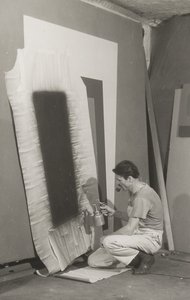
Balcomb Greene
1904 - 1990 , United States of America
Detalii rapide
- Artistic Movement Or Style: Abstract Expressionism
- Artists Or Movements Influenced By This Artist: American Abstract Artists
- Artists Who Influenced This Artist:
- Juan Gris
- Piet Mondrian
- Pablo Picasso
- Henri Matisse
- Date Of Birth: May 22, 1904
- Date Of Death: Nov 12, 1990
- Full Name: Balcomb Greene
- Nationality: American
- Notable Artworks:
- Untitled (39 03)
- Untitled (34 8)
- Way Down Blue
- Place Of Birth: Millville, USA

