
 Previzualizare
 Trimite prin felicitare
 Distribuie
 Detalii despre lucrare
 Ghid
Ghid

 Descarcă imaginea
 Produse similare
 Radiografie
 Galerie foto
 Întrebări și răspunsuri
 Statistici
Woman in park

- 38.0 x 23.0 cm


 Vezi mai mult
Obțineți un fișier gata de imprimare care depășește cu mult calitatea previzualizării web. Fiecare imagine digitală pe care o vindem provine dintr-un master de înaltă rezoluție din baza noastră de date — având, de regulă, o lățime între 5.000 și 15.000 de pixeli — astfel încât să puteți printa în format mare, să decupați strâns sau să reproduceți detalii fine cu încredere.
Niciun fișier nu părăsește studioul nostru fără să fie tratat. Un expert digital verifică nuanțele de culoare în raport cu pictura originală și le corectează acolo unde este necesar, apoi îmbunătățește claritatea și detaliile folosind instrumente profesionale de retușare — rămânând întotdeauna fidel gestului pictural și stilului artistului. Rezultatul este o imagine care seamănă cu tabloul propriu-zis, nu cu o scanare filtrată.
Aprobați înainte de finalizare: expertul nostru vă va trimite imaginea prin e-mail în termen de 72 de ore pentru revizuire. Nu sunteți mulțumit? Solicitați îmbunătățiri sau corecturi, ori cereți o restituire a plății dacă calitatea nu este pe măsura așteptărilor.
Aceasta este calitatea pe care se bazează editorii, studiourile de design, galeriile și tipăriturile.
Imagine Digitală
Descărcați un fișier la rezoluție înaltă pentru afișare personală, imprimare și proiecte creative. ( Comută pe versiunea Print Comandă pictură realizată manual)
Inclus în fiecare comandă de imagini digitale
Livrare digitală de expertiză, garantată
Când alegeți OriginalUniqueArt.com, nu primiți doar o simplă imagine – primiți o operă de artă digitală îmbunătățită profesional, creată cu precizie și susținută de o garanție de satisfacție. Iată tot ceea ce primești odată cu comanda ta, în mod automat:

Livrare rapidă prin e-mail
Fișierul imaginii digitale la rezoluție înaltă vă va fi trimis prin e-mail în termen de 72 de ore de la finalizarea comenzii – gata pentru utilizare imediată.

Fișier digital optimizat prin IA
Opera ta de artă este optimizată profesional prin intermediul unor instrumente AI avansate și al editării manuale, asigurând un nivel maxim de detalii, claritate și acuratețe a culorilor.

Retransmitere gratuită pe viață
Ai șters sau ai pierdut din greșeală fișierul? Nu îți face griji – ți-l vom retrimite oricând, gratuit.

Fără taxe de import – Întotdeauna
Bucură-te instant de noua ta operă de artă, fără taxe vamale, taxe de import sau costuri de livrare – descărcările digitale sunt întotdeauna fără taxe.

Garanția acurateții culorilor
Asigurăm o reflectare cât mai fidelă a culorilor originale în imaginea ta digitală, prin utilizarea unor instrumente profesionale și a proceselor de gestionare a culorii.

Garanție de satisfacție de 100 de zile
Dacă nu sunteți mulțumit de imaginea digitală achiziționată, o vom revizui sau vă vom returna 100% în termen de 100 de zile – fără nicio întrebare.

Garanție de returnare 100% a banilor
Nu ești mulțumit? Primești rambursarea integrală în termen de 100 de zile de la primirea fișierului digital – fără nicio întrebare.

Reduceri pentru comenzi în volum
Cumpără 3 imagini, economisește 10% - Cumpără 5, economisește 15% - Cumpără 10+, economisește 20%. Ideal pentru proiecte creative, galerii și agenții.
A Moment Frozen in Crimson: The Luminous World of August Macke
In the fleeting moments before the shadows of the Great War descended upon Europe, August Macke captured a vision of serenity that remains as vibrant today as it was in 1914. "Woman in Park" is not merely a depiction of a stroll through nature; it is a poignant fragment of an idealized world, rendered with a sensitivity to light and color that borders on the poetic. As one gazes upon the striking figure of the woman, draped in a bold, crimson dress, there is an immediate sense of being transported to a sun-drenched afternoon where time seems to hold its breath. The painting serves as a masterful bridge between the observational grace of Impressionism and the emotive power of German Expressionism, offering a window into a period of profound artistic transformation.
The composition is a delicate dance of balance and movement. The central figure, walking with an air of quiet composure and hands clasped behind her back, acts as the anchor for the entire scene. Around her, the lush greenery of the park unfolds in a tapestry of dappled light and rhythmic brushstrokes. Macke’s genius lies in his ability to weave life into the landscape; two birds—one perched high in the foliage and another caught in mid-flight—infuse the stillness with a sense of spontaneous vitality. These small, natural details act as symbols of harmony and freedom, suggesting a world where humanity and nature exist in perfect, unblemed synchronicity.
Technique and the Language of Color
To study Macke’s technique is to witness the evolution of a modern master. While his roots are deeply embedded in the Impressionist tradition—evident in the way he utilizes broken brushstrokes to capture the flickering quality of sunlight—his palette reveals a much deeper, more psychological intent. The brilliant red of the woman's attire is not just a visual focal point; it is a deliberate emotional pulse set against the muted, earthy tones of the park’s path and trees. This juxtaposition creates a dynamic tension, a hallmark of the Der Blaue Reiter movement, where color is used to convey internal feeling rather than mere external reality.
For the discerning collector or interior designer, this piece offers an unparalleled opportunity to introduce a sense of sophisticated energy into a space. The painting’s ability to command attention through its primary color contrasts, while maintaining a soothing, pastoral atmosphere, makes it a versatile masterpiece for high-end decor. Whether placed in a contemporary gallery setting or a classic study, the artwork provides a focal point that invites contemplation and evokes a sense of timeless elegance.
A Legacy of Light and Loss
There is an inherent melancholy woven into the beauty of "Woman in Park." Knowing that Macke’s life and career were tragically cut short by the First World War lends the work a haunting, nostalgic quality. It stands as a testament to a lost era of optimism—a "fragment of idealism," as many historians suggest. The painting captures the very essence of what was at stake: the beauty of modern life, the joy of simple observation, and the harmony of the natural world. Owning a reproduction of this work is more than an aesthetic choice; it is an act of preserving a luminous moment of peace from the brink of history.
Întrebări și răspunsuri
Ce dimensiune de imprimare este recomandată pentru "Woman in park"?
Dimensiunea de imprimare recomandată pentru "Woman in park" de August Macke este Small.
Ce nuanță dominantă străbate întregul "Woman in park" de August Macke?
"Woman in park" tinde spre o nuanță de Amber to Saffron.
Ce subiect și ce atmosferă surprinde "Woman in park" de August Macke?
"Woman in park" de August Macke înfățișează woman, portrait, landscape, birds, red dress, trees, elegant style, într-o atmosferă Elegant. Subiectul și atmosfera definesc împreună opera.
Biografie artist
A Life Cut Short: The Vibrant World of August Macke
August Robert Ludwig Macke, a name now inextricably linked to the brief but intensely vibrant flowering of German Expressionism, lived a life tragically curtailed by the horrors of the First World War. Born in 1887 in Meschede, a small town nestled within the Westphalian countryside, his artistic journey was one of rapid evolution and profound exploration – a relentless pursuit of capturing not just what he *saw*, but how he *felt* about it. Macke’s early years were marked by a restless spirit and an insatiable curiosity, shaping him into the artist he would become. His upbringing in Bonn, followed by moves to Cologne and then back to Bonn, provided fertile ground for his artistic development, exposing him to diverse influences and fostering a deep connection with the natural world. Though formally trained at the Düsseldorf Art Academy from 1904-1906 under Adolf Maennchen, it was through independent study, travel, and a passionate engagement with contemporary art that Macke truly discovered his unique voice. These formative years were characterized by an absorption of Impressionist and Post-Impressionist techniques – not as mere imitation, but as a foundation upon which he would build his own distinctive style. He supplemented his income with stage design work, honing his compositional skills and developing a keen eye for color and form, skills that would prove invaluable in his later paintings.Influences and Artistic Development
Macke’s artistic trajectory was profoundly shaped by encounters with the most innovative and influential artists of the early 20th century. A pivotal moment arrived in Paris in 1912, where he met Robert Delaunay, a leading proponent of Orphism – a branch of Cubism that focused on pure abstraction and the ecstatic harmony of color. This encounter proved transformative, introducing Macke to the concept of simultaneous contrast – the idea that colors can evoke emotions independently of their visual relationships – and profoundly influencing his work towards a more dynamic and non-representational approach. He began experimenting with broken planes of color, simplified forms, and an increasingly expressive use of line, seeking to convey not just what he saw, but how he *felt* about it. Simultaneously, his close friendship with Franz Marc, a fellow artist and member of the influential group Der Blaue Reiter (The Blue Rider), drew him into the orbit of Wassily Kandinsky and other avant-garde thinkers. While Macke’s style remained distinct from Kandinsky's more purely abstract explorations – he retained a strong connection to the natural world – he embraced the group’s spirit of artistic freedom, spiritual inquiry, and their belief in art as a means of expressing profound emotions. The influence of Matisse also played a crucial role; Macke was deeply moved by the Fauves’ bold use of color and their rejection of traditional academic conventions. He began to incorporate brighter, more saturated hues into his paintings, creating works that were both visually arresting and emotionally charged.The Blue Rider and Beyond: A Unique Expressionist Vision
As an integral member of Der Blaue Reiter, Macke contributed significantly to the group’s exhibitions and publications, helping to disseminate its radical ideas about art and spirituality. However, he wasn't simply a follower; he forged his own unique path within the movement. Unlike some of his colleagues who leaned towards darker, more angst-ridden themes – often reflecting the anxieties of the time – Macke consistently sought to portray beauty and harmony in the world around him. His paintings, such as Bathing Girls with Town in the Background, exemplify this approach – vibrant colors, simplified forms, and a sense of idyllic tranquility characterize his work. He masterfully blended elements of Fauvism, Cubism, and Futurism into a distinctly personal style, creating compositions that are both visually striking and emotionally resonant. Woman in a Green Jacket, painted in 1913, is another prime example – a portrait radiating warmth and vitality through its bold color palette and confident brushwork. His later works, like Türkisches Café, demonstrate his luminist approach, capturing the play of light and shadow with remarkable sensitivity. The influence of Tunisia, where Macke travelled in 1914, is also evident in these paintings – the warm colors, exotic motifs, and sense of timelessness reflecting the profound impact of that experience on his artistic vision.Major Achievements and Artistic Style
Macke’s artistic style evolved rapidly throughout his short career, reflecting his constant experimentation and his desire to capture the essence of modern life. Initially influenced by Impressionism and Post-Impressionism, he gradually developed a more expressive and abstract approach, incorporating elements of Cubism, Fauvism, and Orphism. His paintings are characterized by their bold colors, simplified forms, dynamic compositions, and a strong sense of emotion. He was particularly adept at capturing the fleeting moments of everyday life – children playing in the streets, women bathing in the countryside, couples strolling through town squares – imbuing these scenes with a sense of joy, vitality, and optimism. His use of color was often unconventional, employing bright, saturated hues to evoke specific emotions and create visual impact. He also made extensive use of line, creating strong outlines that defined forms and added dynamism to his compositions. Notable works include Bathing Girls with Town in the Background (1913), a vibrant depiction of women enjoying a summer afternoon; Landscape with Cows (1912), a serene portrayal of rural life; and Türkisches Café (1914), a luminous scene capturing the atmosphere of a Turkish coffeehouse.A Tragic End and Lasting Legacy
The outbreak of World War I brought a sudden and devastating end to Macke’s promising career. Driven by patriotic fervor, he volunteered for military service in 1914 and was tragically killed in action on September 26th, near Champagne, France, at the young age of 27. His final painting, Farewell, poignantly captures the somber mood that descended upon Europe as war engulfed the continent. Despite his untimely death, Macke’s legacy endures. He is now recognized as one of the most important pioneers of German Expressionism and a significant figure in the history of modern art. His paintings continue to captivate viewers with their vibrant colors, dynamic compositions, and optimistic vision – a testament to his extraordinary talent and his brief but brilliant career. His works are held in prominent collections worldwide, offering visitors a chance to experience the power of his art firsthand. Exploring Macke’s world through museums like the Staatsgalerie Moderner Kunst in Munich and the Kunstmuseum Bonn provides invaluable insights into the life and work of this remarkable artist.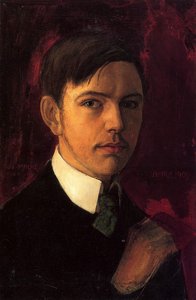
August Macke
1887 - 1914 , Germania
Detalii rapide
- Artistic Movement Or Style: Expresionism
- Artists Or Movements Influenced By This Artist: ['Der Blaue Reiter']
- Artists Who Influenced This Artist:
- Robert Delaunay
- Franz Marc
- Date Of Birth: 3 ianuarie 1887
- Date Of Death: 26 septembrie 1914
- Full Name: August Robert Ludwig Macke
- Nationality: German
- Notable Artworks:
- Femei în costum
- Fete cu apă
- Café turc
- Place Of Birth: Meschede, Germania