Expressionism · 1914
Tightrope walker (August Macke, 1914)
August Macke (1887–1914) a realizat Tightrope walker. Data sa este din 1914. Face parte din mișcarea Expressionism. Este realizată în Acrylic On Canvas. Este păstrat la Kunstmuseum Bonn în Bonn, Germania. Dimensiunile sunt 82 × 60 cm.
- 1914
- Acrylic On Canvas
- 82 × 60 cm
- Kunstmuseum Bonn

 Previzualizare

 Tablou în ulei pictat manual
 Trimite prin felicitare
 Distribuie
 Fișă informativă


 Descarcă imaginea
 Produse similare
 Radiografie
 Galerie foto
 Întrebări și răspunsuri

 Statistici
Tightrope walker, pe scurt
- Titlu
- Tightrope walker
- Artist
- August Macke (1887–1914)
- Artist născut în
- Meschede, Germania
- Date
- 1914
- Medium
- Acrylic On Canvas
- Dimensiuni
- 82 × 60 cm
- Unde poate fi vizualizată
- Kunstmuseum Bonn, Bonn, Germania
- Mișcare
- Expressionism
- Subiect
- circus, performance, tightrope, color, harmony, landscape
Ce reprezintă Tightrope walker?
August Macke: A Symphony of Color Amidst Modern Anxiety
August Robert Ludwig Macke (1887-1914), a name etched in the annals of German Expressionism, embodies the poignant beauty born from fleeting moments and shadowed realities. His tragically premature demise during World War I robbed the art world of a prodigious talent—one who relentlessly pursued new artistic horizons while simultaneously grappling with profound existential questions. Macke’s journey began in Meschede, Westphalia, where he absorbed the influences of Impressionism and Post-Impressionism before decisively embracing Fauvist color palettes and Orphic abstraction, cementing his place as a pivotal figure within Der Blaue Reiter—a revolutionary artistic collective dedicated to exploring psychological landscapes and challenging conventional aesthetic norms.- Subject Matter: Macke’s canvases frequently depict scenes of rural life – farmers tending their fields, children playing outdoors – yet these seemingly idyllic subjects are imbued with an underlying tension reflecting the anxieties of a rapidly changing era. The tightrope walker embodies this duality; he performs his task with grace and precision against a backdrop of towering buildings, symbolizing humanity's precarious balance between tradition and progress.
- Style: Macke’s distinctive style is characterized by bold simplification and flattened perspective—techniques borrowed from Fauvist painters like Matisse. He eschewed meticulous detail in favor of expressive brushstrokes that prioritize color and tonal harmony, creating images brimming with vitality and emotional resonance.
Technique: Bold Color & Textured Surfaces
Macke’s masterful manipulation of pigment is central to his artistic vision. Utilizing thick impasto—a technique involving applying paint in textured layers—he achieved remarkable depth and luminosity, capturing the physicality of the subject matter with palpable immediacy. His color choices are deliberately vibrant and unrestrained, eschewing naturalistic hues for emotionally charged shades that convey mood and atmosphere. The use of complementary colors – blues against reds, yellows against greens – intensifies visual impact and contributes to the overall dynamism of his compositions.- Color Palette: Macke’s palette leans heavily into warm tones—ochres, reds, yellows—contrasting sharply with cooler blues and greens. This deliberate juxtaposition underscores the tension between stability and disruption inherent in the depicted environment.
- Brushwork: Macke's brushstrokes are loose and energetic, conveying movement and spontaneity. He employed a technique known as “Alla Prima,” applying paint directly onto the canvas without underpainting—a bold decision that maximized textural richness and expressive potential.
Historical Context & Symbolism: Facing Uncertainty
Macke’s artistic output coincided with the turbulent years leading up to World War I, a period marked by social unrest and intellectual ferment. The Expressionist movement sought to articulate the psychological realities of the time—the anxieties surrounding impending conflict, the disillusionment following Nietzschean philosophy—and Macke's work reflects this preoccupation. The tightrope walker itself serves as a potent symbol: representing precariousness, balance, and the constant struggle for survival amidst overwhelming forces. It speaks to the human condition – vulnerable yet striving for mastery – mirroring the broader anxieties of a society grappling with profound transformations.Emotional Impact & Legacy
“Tightrope walker” transcends mere visual representation; it resonates deeply with viewers through its evocative color palette and expressive brushwork. Macke’s ability to convey emotion—a palpable sense of tension mingled with beauty—solidifies his position as one of the most influential artists of his generation. His legacy continues to inspire contemporary painters and designers who appreciate the power of bold color and textural innovation, reminding us that art can illuminate not only what we see but also what we feel – a testament to Macke’s enduring artistic brilliance.În ce muzeu se află Tightrope walker?
Kunstmuseum Bonn
Bonn, Germania
Un Sanctuar al Expresionismului: Sufletul Kunstmuseum Bonn Așezat în inima istorică a orașului Bonn, un oraș în care ecourile compozițiilor lui Beethoven încă plutesc în aer, se află Kunstmuseum Bonn —un sanctuar profund pentru cei care caută puterea brută și emoționantă a modernismului. A păși în această instituție înseamnă a porni într-o călătorie prin psihicul turbulent, dar frumos, al secolului al XX-lea. Născut din necesitatea de a reconstrui nu doar ziduri, ci și o identitate culturală în timpul erei transformative a reconstrucției postbelice, muzeul a evoluat de atunci într-un far global pentru Expresionismul Renan .

Imagini la înaltă rezoluție ale lui Tightrope walker

Domeniu public: artistul a decedat în 1914.
Alte dimensiuni, cadrări și citări →August Macke, Tightrope walker (1914), Kunstmuseum Bonn. Domeniu public
Întrebări despre Tightrope walker, răspunsuri
Unde poate fi vizualizată astăzi opera "Tightrope walker" de August Macke?
"Tightrope walker" de August Macke este expusă la Kunstmuseum Bonn, Bonn, Germania. Mențiunea muzeului se referă la lucrarea originală, nu la reproduceri.
În ce an a fost creată „Tightrope walker”?
"Tightrope walker" de August Macke a fost creat(ă) în 1914.
În ce tehnică este realizată lucrarea "Tightrope walker" de August Macke?
Tehnica utilizată pentru "Tightrope walker" de August Macke este Acrylic On Canvas, iar reproducerile urmăresc să reducă aspectul acestei tehnici.
Ce dimensiuni are "Tightrope walker" de August Macke în realitate?
Lucrarea originală "Tightrope walker" de August Macke are dimensiunile de 82 x 60 cm.
Ce subiecte sunt reprezentate în "Tightrope walker" de August Macke?
Subiectele din "Tightrope walker" sunt circus, performance, tightrope, color, harmony, landscape, people.
Imaginea pentru "Tightrope walker" de August Macke poate fi reprodusă liber?
În ceea ce privește drepturile de autor, "Tightrope walker" este în domeniul public – drepturile de autor au expirat.
Cine este artistul din spatele "Tightrope walker"?
„Tightrope walker” este atribuit lui August Macke.
Din ce curent artistic face parte "Tightrope walker" de August Macke?
Mișcarea asociată cu "Tightrope walker" de August Macke este Expressionism. Această clasificare plasează lucrarea printre artiști și opere de artă conexe.
În ce perioadă a carierei lui August Macke se încadrează "Tightrope walker"?
"Tightrope walker" reprezintă perioada Mature Period a lui August Macke.
Despre artistul August Macke
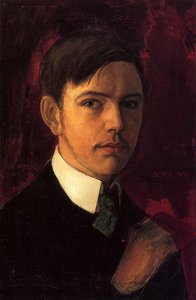
1887–1914, Germania
August Macke
Tinerețe, Familie și Formare Povestea lui August Macke începe în orășelul Meschede, din Germania, unde s-a născut pe 3 ianuarie 1887. El a fost singurul fiu al lui August Friedrich Hermann Macke, un antreprenor în construcții și artist amator, și al Mariei Florentine. Copilăria sa a fost modelată de fluctuațiile noroase ale afacerii tatălui său, care a dus familia în Koln și, ulterior, la Bonn. Încă de la vârsta de copil, atracția către expresia vizuală era evidentă; și-a petrecut primii ani schițând și concepând decoruri pentru piesele de teatru școlare, găsind o cale de a traduce mediul înconjurător pe hârtie mult înainte de a păși într-o academie oficială.
Despre August Macke Lucrări remarcabile ale lui August Macke
Alte lucrări ale lui August Macke
 Femeia în cămașă verde1913
 Bathing girls with town in the background1913
 Hat Shop1913
 Portrait of the Artist's Wife with Hat1909
Eseuri despre Tightrope walker
 The Magic of Impasto: Capturing Light and Tactile Depth in Impressionist MasterpiecesDiscover the breathtaking beauty of impasto. Explore how Impressionist masters used thick, textured brushstrokes to capture light and emoti…
 Fauvism vs German Expressionism: Distinguishing Color and EmotionMaster the differences between Fauvism and German Expressionism through expert analysis. Learn to decode the emotion behind the color today.
 August Macke: Expressionist Visions of Harmony & Modern LifeExplore the vibrant Expressionist paintings of August Macke (1887-1914). Discover his key role in Der Blaue Reiter, Fauvist influences, and…