

 Vezi în context
 Trimite
 Distribuie
 Detalii
 Ghidul

 Descarcă
 Produse similare
 Radiografie
 Diaporama
 Statistici
Little Walter
 Tempera
- WallArt
- German Expressionism
 1912
1912- Modern
 60.0 x 50.0 cm
 Muzeul Städel
 Citește mai mult
Giclée / Imprimare artistică
Printuri giclée sau pe canvas de calitate muzeală, cu proces de producție rapid și opțiuni flexibile de finisare. ( Comandă pictură realizată manual Treci la imagine digitală)




P118B lei10

P118H lei10

P118W lei10

P438Z lei10

P508JH lei12

P508YH lei12

P805H lei10

P805Z lei10

P919BZ lei10

P919G lei10

P919XJ lei10

P959ZH lei10

P968JZ lei12

W106C lei8

W218G lei10

W218JH lei8

W218Y lei10

W307PJ lei10

W316G lei10

W316PJ lei8

W316Y lei10

W398PJ lei8

W4111J lei10

W500HY lei15

W500JH lei15

W692G lei12

W849H lei8

W940BG lei15

W953PJ lei8




Alegeți dintre dimensiunile noastre prestabilite, care respectă proporțiile originale ale operei de artă.

Introduceți lățimea și înălțimea de care aveți nevoie, pentru a se potrivi ramei sau peretelui dumneavoastră. O printare poate fi doar tăiată, niciodată extinsă dincolo de dimensiunea imaginii originale, astfel încât o dimensiune cu o formă diferită va pierde o parte din imagine. Vă trimitem o simulare digitală pentru aprobare înainte de a imprima orice. Imaginea afișată pe această pagină nu prezintă tăierea reală — doar simularea arată acest lucru.
Livrare în întreaga lume () în 2 săptămâni, în loc de cele 4/5 săptămâni standard. (21 Octombrie)

Livrare expres gratuită la nivel mondial

Pânză de in premium

Asigurare completă pentru transport

Garanție de rambursare a taxelor vamale

Garanția fidelității culorilor

Politica de retur în 100 de zile (doar pentru defecte)

Garanție de rambursare 100%

Reducere pentru comenzi multiple
 Opțiunea cu sticlă este disponibilă doar pentru dimensiuni de sub 110 cm

Little Walter
Giclée / Imprimare artistică
Dimensiune reproducere
-


Preț total
lei 367
A Symphony of Color and Childhood Innocence
In the vibrant tapestry of early 20th-century German art, few works capture the delicate equilibrium between tranquility and energy quite like August Macke’s “Little Walter.” Painted in 1912, this masterpiece serves as a breathtaking distillation of Impressionistic light married to the burgeoning, raw fervor of Expressionism. The canvas invites the viewer into a pastoral sanctuary, where a woman sits in quiet contemplation beside a potted plant laden with scarlet berries. Her gaze, fixed intently upon two small animals—perhaps rabbits or playful dogs—nestled within the foliage, creates an immediate sense of intimacy and connection to the natural world. A bowl of fruit rests subtly in the composition, acting as a silent symbol of domestic nourishment and the peaceful rhythms of life.
The emotional resonance of the piece lies in its ability to evoke a sense of nostalgic wonder. There is a profound stillness in the subject's focus, yet the painting vibrates with an underlying vitality. For the collector or interior designer, this work offers more than mere decoration; it provides a window into a moment of pure, unadulterated innocence, making it an ideal centerpiece for spaces designed to inspire calm, joy, and reflection.
The Language of Color and Technique
To gaze upon “Little Walter” is to experience the transformative power of color. Macke’s approach aligns closely with Fauvist tendencies, where pigment is not merely used to describe form but serves as the primary vehicle for emotional expression. He deliberately eschewed the subtle, fleeting light effects of the Impressionists in favor of bold, saturated hues. The striking interplay between the warmth of the reds and yellows against the cool, grounding blues creates a rhythmic visual tension that keeps the eye dancing across the canvas.
Executed using tempera on canvas, the artwork possesses a unique luminosity and a matte, velvety texture that enhances its dreamlike quality. Macke’s brushstrokes are loose and remarkably expressive, conveying a sense of spontaneity as if the scene were captured in a single, breathless moment. This technique allows the colors to blend into harmonious tonal relationships, ensuring that while the forms are simplified, the visual impact remains incredibly sophisticated and layered.
A Legacy of the Blue Rider
The historical significance of this work is deeply intertwined with the Der Blaue Reiter (The Blue Rider) movement, a pivotal collective in the history of modern art led by visionaries like Franz Marc and Wassily Kandinsky. Created during an era of intense artistic experimentation, “Little Walter” embodies the group's quest to explore spiritual truths through abstraction and symbolism. Macke’s ability to integrate avant-garde elements—such as simplified shapes and non-naturalistic color—into a recognizable, emotive scene marks him as a master of modernizing the classical pastoral tradition.
For those seeking to adorn a curated collection or a sophisticated interior, this reproduction offers a profound connection to the golden age of German Expressionism. It stands as a testament to a period of immense creativity that was tragically interrupted by the First World War, preserving forever the vibrant, sun-drenched spirit of Macke’s vision.
Întrebări și răspunsuri
În ce etapă a evoluției lui August Macke se încadrează „Little Walter”?
În cariera lui August Macke, „Little Walter” aparține perioadei Blue Rider Movement. Această etapă facilitează compararea sa cu celelalte opere ale artistului.
În ce etapă a carierei lui August Macke se încadrează "Little Walter", având în vedere data sa de execuție?
Data din 1912 plasează "Little Walter" în Blue Rider Movement dezvoltării lui August Macke.
Cum se combină tehnica și mișcarea în "Little Walter"?
"Little Walter" de August Macke combină tehnica Tempera cu stilul German Expressionism. Tehnica și mișcarea descriu modul de execuție și stilul operei.
Biografie artist
A Life Cut Short: The Vibrant World of August Macke
August Robert Ludwig Macke, a name now inextricably linked to the brief but intensely vibrant flowering of German Expressionism, lived a life tragically curtailed by the horrors of the First World War. Born in 1887 in Meschede, a small town nestled within the Westphalian countryside, his artistic journey was one of rapid evolution and profound exploration – a relentless pursuit of capturing not just what he *saw*, but how he *felt* about it. Macke’s early years were marked by a restless spirit and an insatiable curiosity, shaping him into the artist he would become. His upbringing in Bonn, followed by moves to Cologne and then back to Bonn, provided fertile ground for his artistic development, exposing him to diverse influences and fostering a deep connection with the natural world. Though formally trained at the Düsseldorf Art Academy from 1904-1906 under Adolf Maennchen, it was through independent study, travel, and a passionate engagement with contemporary art that Macke truly discovered his unique voice. These formative years were characterized by an absorption of Impressionist and Post-Impressionist techniques – not as mere imitation, but as a foundation upon which he would build his own distinctive style. He supplemented his income with stage design work, honing his compositional skills and developing a keen eye for color and form, skills that would prove invaluable in his later paintings.Influences and Artistic Development
Macke’s artistic trajectory was profoundly shaped by encounters with the most innovative and influential artists of the early 20th century. A pivotal moment arrived in Paris in 1912, where he met Robert Delaunay, a leading proponent of Orphism – a branch of Cubism that focused on pure abstraction and the ecstatic harmony of color. This encounter proved transformative, introducing Macke to the concept of simultaneous contrast – the idea that colors can evoke emotions independently of their visual relationships – and profoundly influencing his work towards a more dynamic and non-representational approach. He began experimenting with broken planes of color, simplified forms, and an increasingly expressive use of line, seeking to convey not just what he saw, but how he *felt* about it. Simultaneously, his close friendship with Franz Marc, a fellow artist and member of the influential group Der Blaue Reiter (The Blue Rider), drew him into the orbit of Wassily Kandinsky and other avant-garde thinkers. While Macke’s style remained distinct from Kandinsky's more purely abstract explorations – he retained a strong connection to the natural world – he embraced the group’s spirit of artistic freedom, spiritual inquiry, and their belief in art as a means of expressing profound emotions. The influence of Matisse also played a crucial role; Macke was deeply moved by the Fauves’ bold use of color and their rejection of traditional academic conventions. He began to incorporate brighter, more saturated hues into his paintings, creating works that were both visually arresting and emotionally charged.The Blue Rider and Beyond: A Unique Expressionist Vision
As an integral member of Der Blaue Reiter, Macke contributed significantly to the group’s exhibitions and publications, helping to disseminate its radical ideas about art and spirituality. However, he wasn't simply a follower; he forged his own unique path within the movement. Unlike some of his colleagues who leaned towards darker, more angst-ridden themes – often reflecting the anxieties of the time – Macke consistently sought to portray beauty and harmony in the world around him. His paintings, such as Bathing Girls with Town in the Background, exemplify this approach – vibrant colors, simplified forms, and a sense of idyllic tranquility characterize his work. He masterfully blended elements of Fauvism, Cubism, and Futurism into a distinctly personal style, creating compositions that are both visually striking and emotionally resonant. Woman in a Green Jacket, painted in 1913, is another prime example – a portrait radiating warmth and vitality through its bold color palette and confident brushwork. His later works, like Türkisches Café, demonstrate his luminist approach, capturing the play of light and shadow with remarkable sensitivity. The influence of Tunisia, where Macke travelled in 1914, is also evident in these paintings – the warm colors, exotic motifs, and sense of timelessness reflecting the profound impact of that experience on his artistic vision.Major Achievements and Artistic Style
Macke’s artistic style evolved rapidly throughout his short career, reflecting his constant experimentation and his desire to capture the essence of modern life. Initially influenced by Impressionism and Post-Impressionism, he gradually developed a more expressive and abstract approach, incorporating elements of Cubism, Fauvism, and Orphism. His paintings are characterized by their bold colors, simplified forms, dynamic compositions, and a strong sense of emotion. He was particularly adept at capturing the fleeting moments of everyday life – children playing in the streets, women bathing in the countryside, couples strolling through town squares – imbuing these scenes with a sense of joy, vitality, and optimism. His use of color was often unconventional, employing bright, saturated hues to evoke specific emotions and create visual impact. He also made extensive use of line, creating strong outlines that defined forms and added dynamism to his compositions. Notable works include Bathing Girls with Town in the Background (1913), a vibrant depiction of women enjoying a summer afternoon; Landscape with Cows (1912), a serene portrayal of rural life; and Türkisches Café (1914), a luminous scene capturing the atmosphere of a Turkish coffeehouse.A Tragic End and Lasting Legacy
The outbreak of World War I brought a sudden and devastating end to Macke’s promising career. Driven by patriotic fervor, he volunteered for military service in 1914 and was tragically killed in action on September 26th, near Champagne, France, at the young age of 27. His final painting, Farewell, poignantly captures the somber mood that descended upon Europe as war engulfed the continent. Despite his untimely death, Macke’s legacy endures. He is now recognized as one of the most important pioneers of German Expressionism and a significant figure in the history of modern art. His paintings continue to captivate viewers with their vibrant colors, dynamic compositions, and optimistic vision – a testament to his extraordinary talent and his brief but brilliant career. His works are held in prominent collections worldwide, offering visitors a chance to experience the power of his art firsthand. Exploring Macke’s world through museums like the Staatsgalerie Moderner Kunst in Munich and the Kunstmuseum Bonn provides invaluable insights into the life and work of this remarkable artist.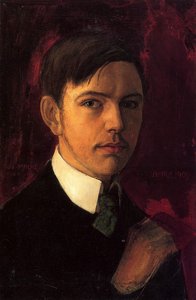
August Macke
1887 - 1914 , Germania
Informații rapide
- Artistic Movement Or Style: Expresionism
- Artists Or Movements Influenced By This Artist: ['Der Blaue Reiter']
- Artists Who Influenced This Artist:
- Robert Delaunay
- Franz Marc
- Date Of Birth: 3 ianuarie 1887
- Date Of Death: 26 septembrie 1914
- Full Name: August Robert Ludwig Macke
- Nationality: German
- Notable Artworks:
- Femei în costum
- Fete cu apă
- Café turc
- Place Of Birth: Meschede, Germania
Articole conexe
The Raw Emotion of Expressionism: A Deep Dive into its History, Characteristics & Enduring Influence
Explore the raw emotion of Expressionism with OriginalUniqueArt. Discover its history, key artists like Kirchner & Munch, and lasting influence on modern art. Expert insights for collectors & enthusiasts.
Renoir: Cele Mai Iconice Capodopere – Artă, Frumusețe și Decorațiuni de Lux
Descoperă cele mai frumoase 25 de picturi Renoir! Explorează capodoperele impresionismului, culorile vibrante și poveștile din spatele fiecărei opere. Reproduceri artă de lux pe OriginalUniqueArt.com – adaugă eleganță locuinței tale!
Expresionismul în Artă: Cele Mai Reprezentative 10 Capodopere | OriginalUniqueArt.ro
Descoperă cele mai importante 10 capodopere ale expresionismului! Explorează poveștile lui Munch, Van Gogh și Kandinsky. Reproduceri de artă de calitate muzeală pentru un decor interior unic. OriginalUniqueArt.ro
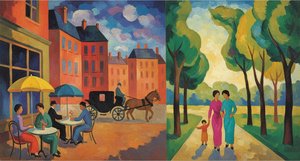
August Macke: Expressionist Visions of Harmony & Modern Life
Explore the vibrant Expressionist paintings of August Macke (1887-1914). Discover his key role in Der Blaue Reiter, Fauvist influences, and captivating depictions of modern life. A comprehensive guide for art enthusiasts & collectors.

Expresionismul German: 10 Capodopere Iconice pentru Decoruri de Artă
Descoperă cele mai importante 10 capodopere ale Expresionismului German! Explorează poveștile din spatele picturilor Kandinsky, Munch și Kirchner. Reproduceri de artă premium pentru un decor unic pe OriginalUniqueArt.com


