

 Vezi în context
 Trimite
 Distribuie
 Detalii
 Guide
Guide

 Descarcă
 Produse similare
 Radiografie
 Diaporama
 Statistici
Sunlight (Cutting on a hot road)
 Oil On Canvas
- WallArt
- Australian Impressionism
 1895
1895- 19th Century
 458.0 x 305.0 cm
 National Gallery of Australia
 Citește mai mult
Reproducere pictată manual în ulei
Pictură în ulei pe pânză, realizată manual de artiștii noștri la dimensiunea și ramele dorite de dumneavoastră, pe comandă. ( Comută pe versiunea Print Treci la imagine digitală)




P118B $10

P118H $10

P118W $10

P438Z $10

P508JH $12

P508YH $12

P805H $10

P805Z $10

P919BZ $10

P919G $10

P919XJ $10

P959ZH $10

P968JZ $12

W106C $8

W218G $10

W218JH $8

W218Y $10

W307PJ $10

W316G $10

W316PJ $8

W316Y $10

W398PJ $8

W4111J $10

W500HY $15

W500JH $15

W692G $12

W849H $8

W940BG $15

W953PJ $8




Alegeți dintre dimensiunile noastre prestabilite, care respectă proporțiile originale ale operei de artă.

Puteți introduce propriile dimensiuni pentru a se potrivi unui anumit cadru sau spațiu. Dacă dimensiunea selectată nu corespunde proporțiilor imaginii originale, vom decupa opera de artă sau vom extinde pictura cu elemente suplimentare pictate manual. O simulare digitală vă va fi trimisă pentru aprobare înainte de începerea producției.
Vă rugăm să rețineți că previzualizarea de pe ecran nu reflectă decuparea sau extinderea reală. Doar macheta va arăta cu exactitate compoziția finală.
Deși sunt disponibile dimensiuni personalizate, vă recomandăm să selectați o dimensiune din lista predefinită pentru a păstra proporțiile originale.
După plasarea comenzii, echipa OriginalUniqueArt.com va contacta clientul prin e-mail pentru instrucțiuni și îi va furniza o previzualizare a machetei
Livrare în întreaga lume () în 3-4 săptămâni, în loc de cele 5 săptămâni standard. (21 Septembrie). Fără compromisuri în ceea ce privește calitatea.

Livrare expres gratuită la nivel mondial

Pânză de in premium

Asigurare completă pentru transport

Garanție de rambursare a taxelor vamale

Garanția fidelității culorilor

Politica de retur în 100 de zile (doar pentru defecte)

Garanție de rambursare 100%

Reducere pentru comenzi multiple
 Opțiunea cu sticlă este disponibilă doar pentru dimensiuni de sub 110 cm

Sunlight (Cutting on a hot road)
Tip de reproducere
Dimensiune reproducere
-


Preț total
$ 300
The Radiance of an Australian Afternoon
In the masterwork Sunlight (Cutting on a hot road), Arthur Streeton invites the viewer to step into a moment suspended in time, where the heat of the midday sun meets the gentle rustle of eucalyptus leaves. Painted in 1895, this expansive landscape is far more than a mere depiction of a roadside; it is a profound sensory experience. The composition captures a specific, shimmering atmosphere—the "cutting" of light through a dense canopy onto a parched, dusty path. As the eye wanders across the canvas, one encounters a rhythmic arrangement of figures, nine souls in total, scattered along the road. Some linger in the shade of the trees, while others traverse the sun-drenched stretches, their presence adding a layer of human narrative to the vast, breathing landscape. This interplay between the enduring natural world and the fleeting movements of people creates a sense of profound tranquility, making the painting an evocative window into a bygone era of Australian life.
Streeton, a titan of the Heidelberg School, utilizes a technique that defines the very essence of Australian Impressionism. Rather than relying on heavy, opaque layers, he employs a luminous approach to color and light, capturing the way heat distorts the air and how sunlight filters through foliage to create dancing patterns of shadow. The palette is a sophisticated study in warmth—golden ochres, dusty ambers, and brilliant whites that suggest the intense glare of a summer day. His brushwork is confident and fluid, characteristic of the plein air tradition, where the artist works directly from nature to seize the ephemeral qualities of light before they shift. For the discerning collector or interior designer, this technique offers a remarkable depth; when rendered as a high-quality reproduction, the painting retains its ability to breathe, casting a warm, sun-kissed glow upon any room it inhabits.
Beyond its technical brilliance, the painting serves as a symbolic bridge to Australia's burgeoning national identity. During the late 19th century, artists like Streeton were moving away from European stylistic conventions to find a visual language that could truly represent the unique, harsh, yet beautiful Australian bush. The "hot road" becomes a metaphor for progress and the journey of a young nation, while the dappled light represents the discovery of beauty within a rugged environment. There is an inherent nostalgia in the scene, a longing for a simpler, slower pace of life that resonates deeply with modern viewers seeking solace from the digital age. To possess such a piece is to hold a fragment of history—a serene, sun-drenched sanctuary that brings both prestige and a sense of peacefulness to a curated space.
Biografie artist
A Pioneer of the Australian Light: The Life and Art of Arthur Streeton
Arthur Ernest Streeton, affectionately known as “Smike” to his contemporaries, stands as a monumental figure in Australian art history. Born on April 8, 1867, at Mount Duneed, Victoria, his life was inextricably linked to the evolving identity of a nation finding its voice through landscape painting. From humble beginnings – his parents were English migrants who met during their voyage to Australia – Streeton’s artistic journey began with studies at the National Gallery School in Melbourne from 1882 to 1887, laying the groundwork for a career that would define Australian Impressionism and the Heidelberg School. These early years weren't merely about technical skill; they were about discovering a way to capture the unique quality of light and atmosphere that characterized the Australian bush – a light unlike anything seen in Europe, and a challenge that captivated Streeton throughout his life. He supplemented his formal training with apprenticeships as a lithographer, experiences which undoubtedly informed his understanding of composition and tonal values.The Heidelberg School and the Eaglemont Camp
Streeton’s artistic maturation coincided with the burgeoning of the Heidelberg School, a group of artists determined to forge an authentically Australian style. His friendships with Tom Roberts and Frederick McCubbin were pivotal; together they embarked on *plein air* painting excursions, seeking to represent the landscape directly from nature. This commitment to working outdoors, inspired by French Impressionism but adapted to the distinctly Australian context, became a hallmark of their work. The establishment of the Eaglemont Camp in 1888 marked a turning point. Sharing a farmhouse on the outskirts of Melbourne with fellow artists, Streeton entered a period of intense creativity. It was here that he produced some of his most iconic works, including *Golden Summer, Eaglemont* (1889) and *Still glides the stream, and shall for ever glide* (1890). These paintings weren’t simply depictions of scenery; they were evocations of a feeling – the heat haze shimmering over golden fields, the stillness of a summer afternoon. The camp fostered an environment of shared experimentation and mutual encouragement, solidifying the Heidelberg School's reputation as a force to be reckoned with in the Australian art world. The group’s bold approach culminated in the controversial “9 by 5 Impression Exhibition” in 1889, showcasing small, rapidly executed paintings that challenged conventional artistic norms.Seeking Recognition and Returning Home
Driven by ambition and a desire for wider recognition, Streeton sailed for London on the *Polynesien* in 1897. While he achieved some success exhibiting at the Royal Academy, including representation in 1900, he found it difficult to replicate the acclaim he had enjoyed in Australia. The European art scene was crowded and competitive, and his distinctly Australian vision didn’t always resonate with established tastes. He continued to paint, exploring different subjects – Venetian scenes like *Palazzo Labia, Venice* (1908) demonstrate a shift in focus but retain his characteristic sensitivity to light and color. The outbreak of World War I saw Streeton attempting to contribute through service as an orderly with the Royal Army Medical Corps, later becoming an official war artist in 1918. His wartime paintings, while documenting the devastation of the Western Front, often focused on the landscape itself, reflecting his enduring fascination with the natural world. He returned to Australia in 1923 a celebrated figure, knighted in 1937 for his contributions to art.Legacy and Lasting Influence
Arthur Streeton’s legacy extends far beyond his individual paintings. He played a crucial role in establishing a uniquely Australian artistic identity, one that celebrated the beauty and vastness of the continent. His work helped to define how Australians saw themselves and their land. His influence can be seen in generations of landscape painters who followed, inspired by his ability to capture the essence of the Australian light and atmosphere. He was a prolific writer and art critic, further shaping the discourse around Australian art. Though he experienced periods of frustration and self-doubt, Streeton remained committed to his artistic vision until his death on September 1, 1943, at Olinda, Victoria. His paintings continue to captivate audiences today, offering a timeless glimpse into the heart and soul of Australia.Key Works & Themes
- Golden Summer, Eaglemont (1889): Perhaps his most famous work, embodying the heat and light of an Australian summer.
- Still glides the stream, and shall for ever glide (1890): A lyrical depiction of the Yarra River, showcasing his mastery of atmospheric perspective.
- Fire’s on (1891): A powerful representation of the Australian bushfire landscape, capturing both its beauty and danger.
- Palazzo Labia, Venice (1908): Demonstrates his ability to adapt his Impressionistic style to European subjects.
- Egyptian Drink Vendor (1897): A vibrant scene reflecting his travels and exploration of different cultures.

Arthur Streeton
1867 - 1943 , Australia
Informații rapide
- Artistic Movement Or Style: Impressionism, Heidelberg
- Artists Or Movements Influenced By This Artist: ['Heidelberg School']
- Artists Who Influenced This Artist:
- Buvelot
- Turner
- Date Of Birth: 8 aprilie 1867
- Date Of Death: 1 septembrie 1943
- Full Name: Arthur Ernest Streeton
- Nationality: Australian
- Notable Artworks:
- Golden Summer
- Still glides
- Palazzo Labia
- Place Of Birth: Mount Duneed, Australia
Articole conexe

Impressionism vs. Post-Impressionism: A Masterclass in the Revolution of Light, Color, and Emotion
Master the nuances of Impressionism vs. Post-Impressionism with our expert guide. Explore the revolutionary shift from Monet’s fleeting light to Van Gogh’s emotional depth. Discover how these iconic movements continue to inspire fine art collectors and modern interiors today.

Impressionism: Cele Mai Frumoase Opere de Artă și Inspirație pentru Decorul Casei
Descoperă cele mai frumoase 10 opere impresioniste de la Monet, Renoir și Degas! Explorează istoria, tehnicile și culorile vibrante ale acestui stil revoluționar. Găsește inspirație pentru decorul casei tale cu reproduceri de artă de calitate muzeală pe OriginalUniqueArt.com.

Paul Cézanne: Cele Mai Reprezentative 25 De Capodopere – Artă, Istorie și Decorațiuni Interioare
Descoperă cele mai frumoase 25 de capodopere Paul Cézanne! Explorează istoria, tehnicile și semnificația picturilor impresioniste iconice. Reproduceri artă de calitate muzeală & inspirație decor interioară pe OriginalUniqueArt.com.

Dincolo de Lumină și Culoare: Impresionismul vs. Postimpresionismul pentru Colecționarul Exigent
Descoperiți diferențele subtile dintre impresionism și postimpresionism. Ghid expert pentru colecționari exigenți, cu sfaturi despre investiții, valoare și proveniență.
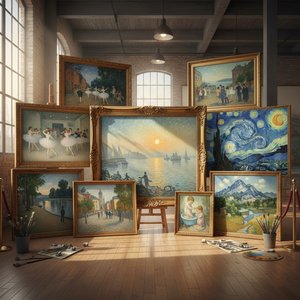
Top 10 Capodopere Impresioniste: Arta care a Schimbat Decorul și Istoria
Descoperă top 10 capodopere impresioniste de la Monet, Renoir și Degas! Explorează istoria artei impresioniste, culorile vibrante și tehnicile inovatoare. Reproduceri tablouri de calitate muzeală pe OriginalUniqueArt.com.

