

 Vezi în context
 Trimite
 Distribuie
 Detalii
 Ghidul

 Descarcă
 Produse similare
 Radiografie
 Diaporama
 Statistici
Centaur at the Village Blacksmith's Shop
 Oil On Canvas
- WallArt
- Symbolist Painting
 1888
1888- 19th Century
 100.0 x 80.0 cm
 Muzeul de Artă Fine din Budapesta
 Citește mai mult
Giclée / Imprimare artistică
Printuri giclée sau pe canvas de calitate muzeală, cu proces de producție rapid și opțiuni flexibile de finisare. ( Comandă pictură realizată manual Treci la imagine digitală)




P118B $10

P118H $10

P118W $10

P438Z $10

P508JH $12

P508YH $12

P805H $10

P805Z $10

P919BZ $10

P919G $10

P919XJ $10

P959ZH $10

P968JZ $12

W106C $8

W218G $10

W218JH $8

W218Y $10

W307PJ $10

W316G $10

W316PJ $8

W316Y $10

W398PJ $8

W4111J $10

W500HY $15

W500JH $15

W692G $12

W849H $8

W940BG $15

W953PJ $8




Alegeți dintre dimensiunile noastre prestabilite, care respectă proporțiile originale ale operei de artă.

Puteți introduce propriile dimensiuni pentru a se potrivi unui anumit cadru sau spațiu. Dacă dimensiunea selectată nu corespunde proporțiilor imaginii originale, vom decupa lucrarea de artă sau vom extinde imaginea cu margini oglindite sau cu o culoare uniformă. Un mockup digital va fi trimis pentru aprobarea dumneavoastră înainte de începerea producției.
Vă rugăm să rețineți că previzualizarea de pe ecran nu reflectă decuparea sau extinderea reală. Doar mockup-ul va arăta cu exactitate compoziția finală.
Deși dimensiunile personalizate sunt disponibile, vă recomandăm să selectați o dimensiune din lista predefinită pentru a păstra proporțiile originale.
Livrare în întreaga lume () în 2 săptămâni, în loc de cele 4/5 săptămâni standard. (26 Septembrie)

Livrare expres gratuită la nivel mondial

Pânză de in premium

Asigurare completă pentru transport

Garanție de rambursare a taxelor vamale

Garanția fidelității culorilor

Politica de retur în 100 de zile (doar pentru defecte)

Garanție de rambursare 100%

Reducere pentru comenzi multiple
 Opțiunea cu sticlă este disponibilă doar pentru dimensiuni de sub 110 cm

Centaur at the Village Blacksmith's Shop
Giclée / Imprimare artistică
Dimensiune reproducere
-


Preț total
$ 80
A Moment Frozen in Mythic Time
In the quietude of Arnold Böcklin’s 1888 masterpiece, “Centaur at the Village Blacksmith's Shop,” the boundaries between the mundane and the miraculous dissolve into a single, haunting tableau. As a cornerstone of the Symbolist movement, this work transcends mere representation to explore the profound psychological depths of the human condition. The scene presents a striking juxtaposition: the rhythmic, grounded labor of a village blacksmith’s forge set against the presence of a solitary centaur. This half-man, half-horse figure, engaged in the seemingly ordinary task of shoeing a horse, introduces an unsettling tension into the rural tranquility. Böcklin masterfully uses a palette of muted browns, greys, and earthy tones to create an atmosphere of palpable stillness, inviting the viewer to step into a world where the echoes of classical antiquity still resonate within the heart of modern civilization.
The technical brilliance of the piece lies in Böcklin’s command of chiaroscuro, the dramatic interplay between light and shadow that breathes life into the textures of the blacksmith's shop. Every detail—from the solidity of the forge to the heavy, weathered tools—is rendered with a meticulousness that emphasizes the permanence of human industry. Yet, this stability is interrupted by the centaur’s gaze, which pierces through the canvas to meet the viewer directly. This connection is laden with melancholy, hinting at a hidden narrative of lost innocence and the struggle between primal instinct and civilized intellect. For the discerning collector or interior designer, the painting offers more than just visual beauty; it provides a window into the duality of existence, making it a profound focal point for any space dedicated to contemplation and intellectual depth.
Symbolism and the Echoes of Antiquity
To gaze upon this artwork is to engage in a dialogue with the very essence of myth. Böcklin draws heavily from classical mythology to weave a complex tapestry of meaning, utilizing the centaur as a potent symbol of untamed nature and raw, instinctual knowledge. In the context of the blacksmith's shop—a symbol of human reason, artistry, and the established order—the centaur represents the enduring power of our primal origins that refuses to be fully tamed by progress. This tension between the wild and the civilized is what gives the painting its enduring emotional resonance.
For those seeking to infuse their homes with art that tells a story, this reproduction serves as an evocative piece of decor. It captures a sense of nostalgia for a perceived era of simplicity while simultaneously challenging the viewer with its mythological complexity. Whether placed in a grand library or a quiet study, the painting’s ability to evoke both peace and profound inquiry makes it an incomparable addition to a curated collection. It is not merely a depiction of a scene, but an invitation to explore the complexities of our own nature through the lens of a master who understood the silent language of symbols.
Biografie artist
Early Life and Training
Arnold Böcklin, a name synonymous with haunting beauty and profound melancholy, was born on October 16, 1827, in Basel, Switzerland—a city steeped in history and artistic tradition. His lineage traced back to an old family of Schaffhausen, connected to the silk trade through his father, Christian Frederick Böcklin. Ursula Lippe, Arnold’s mother, hailed from the same city as well. From a young age, he displayed a keen interest in art, enrolling at the Düsseldorf Academy under the tutelage of Johann Wilhelm Schirmer, a renowned landscape painter. This formative period was marked by a close friendship with Anselm Feuerbach, a fellow student whose philosophical leanings would subtly influence Böcklin’s artistic vision. The Düsseldorf School of Painting—known for its emphasis on realism and dramatic lighting—provided him with a solid foundation in technique, but it was also within this environment that he began to explore the darker corners of the human experience, foreshadowing the themes that would dominate his mature work.Artistic Career and Symbolism
Böcklin’s artistic journey took him beyond the confines of Düsseldorf, leading him through vibrant cities like Paris and Rome—each leaving an indelible mark on his style and sensibility. In Paris, he found employment at the Louvre, immersing himself in the masterpieces of the Old Masters, while Rome exposed him to the grandeur of classical antiquity and the evocative beauty of the Italian landscape. This exposure profoundly shaped his artistic approach, leading him to incorporate allegorical and mythological figures into his compositions, often set against the backdrop of classical architecture. His early works, such as *Great Park* (1857), showcased ancient mythology with a dramatic intensity, while pieces like *Nymph and Satyr* (1858) and *Sappho* (1859) demonstrated a burgeoning talent for capturing ethereal beauty and unsettling moods. Notably, his self-portrait, *Portrait of Myself, with Death Playing a Violin* (1872), stands as a poignant example of his unique style—a masterful blend of realism and symbolism that explored themes of mortality and the human condition.The Isle of the Dead and Legacy
Perhaps Böcklin’s most enduring legacy is found in his five versions of *The Isle of the Dead* (1880-1886). Inspired by the English cemetery in Florence, where his daughter was buried, these monumental works evoke a sense of profound sadness and timelessness. The imagery—a desolate island shrouded in mist, populated by spectral figures—became an instant sensation, captivating audiences and influencing generations of artists. This series cemented Böcklin’s place as a key figure in the Symbolist movement, a reaction against the materialism and superficiality of the preceding era. His work resonated with a growing interest in dreams, mysticism, and the subconscious—themes that would become central to artistic expression in the 20th century. The influence of *The Isle of the Dead* extended far beyond the art world, inspiring composers like Sergey Rachmaninoff, who drew upon its evocative imagery for his symphonic poem of the same name.Museums and Recognition
Böcklin’s profound impact on European art is reflected in the preservation of his works within prestigious museums across Switzerland and beyond. His paintings are proudly displayed at:- Öffentliche Kunstsammlung (Basel, Switzerland)
- Kunstmuseum Basel (Switzerland)
- Museum Kunsthaus Zürich (Zürich, Switzerland)
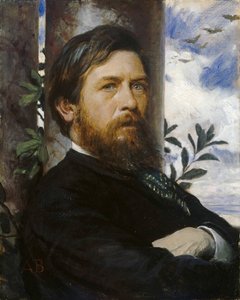
Arnold Böcklin
1827 - 1901 , Elveția
Informații rapide
- Artistic Movement Or Style: Simbolism
- Artists Or Movements Influenced By This Artist:
- Hans Thoma
- Pre-Raphaeliti
- Artists Who Influenced This Artist:
- Schirmer
- Feuerbach
- Date Of Birth: 16 oct. 1827
- Date Of Death: 16 ian. 1901
- Full Name: Arnold Böcklin
- Nationality: Swiss
- Notable Artworks:
- Insula Morții
- Nimpă și Satir
- Sappho
- Place Of Birth: Basel, Elveția
Articole conexe
Evoking Arcadia: A Historical & Aesthetic Exploration of Rural Landscape Art
Explore the rich history of pastoral landscape art, from classical Arcadia to Impressionism & beyond. Discover key artists, movements, and how to collect serene rural scenes for your home. Expert insights at OriginalUniqueArt.

Cultivating Visions: A Historical Journey Through Rural Landscapes in Art
Explore the rich history of rural landscape painting with OriginalUniqueArt. Discover Impressionist masterpieces, key artists & movements. Find your perfect serene artwork and bring nature's beauty home.

Evocations of Place: A Historical Journey Through Landscape Art
Explore the rich history of landscape art with OriginalUniqueArt. Discover renowned artists, movements like Impressionism & Romanticism, and expert guidance for collecting timeless pieces. Find your perfect serene escape today!

John Constable: Cele Mai Frumoase 25 de Capodopere – Artă Clasică pentru Decorul Casei Tale
Descoperă cele mai frumoase 25 de picturi ale lui John Constable, maestru al peisajului englezesc! Explorează stilul romantic, Dedham Vale și capodopere precum The Hay Wain. Reproduceri artă clasică pentru decorul casei tale – OriginalUniqueArt.com.

Peisaje Romantice Iconice: 10 Capodopere Artistice pentru Decorul de Lux
Descoperă 10 capodopere romantice iconice de Caspar David Friedrich, Turner și alți maeștri. Explorează istoria artei, emoțiile din peisaje și găsește tablouri canvas perfecte pentru decorul tău pe OriginalUniqueArt.com!
