Comută pe versiunea Print
 Vezi mai mult







































 Pentru opere de artă sau reproduceri care depășesc 105 cm (aproximativ 41 de inch) pe oricare dintre laturi, cadrul va fi livrat demontat, sub formă de kit. Această metodă asigură o livrare sigură și previne deteriorarea în timpul transportului.


A Gaze from the Wild: The Soul of Antonio Laccabue’s Lion
In the quiet intensity of Antonio Laccabue’s 1935 masterpiece, Lion, we are invited into a moment of profound stillness. This evocative oil on canvas captures more than just a predator in repose; it captures a psychological depth rarely seen in the realm of naïve art. The lion sits nestled within the verdant textures of the grass, its head turned away from the viewer as if caught in a private moment of contemplation or perhaps alerted by a distant, unseen movement. There is an undeniable tension held within this stillness—a sense that the natural world is breathing alongside the observer. For collectors and decorators alike, this piece offers a window into a primal, undisturbed wilderness, making it a captivating focal point for any space seeking to evoke strength and tranquility.
The technique employed by Laccabue demonstrates a remarkable command over the medium of oil, even within his characteristic outsider style. The artist utilizes the inherent depth of oil paint to build layers of texture, allowing the blades of grass and the surrounding foliage to feel tactile and alive. This layering creates a lush, immersive environment where the subject does not merely sit upon the canvas but emerges from it. The interplay of light and shadow across the lion's mane and features provides a sculptural quality that lends weight to the animal’s presence. Such craftsmanship ensures that a high-quality reproduction retains the visceral, earthy essence of the original, offering a rich sensory experience for those who appreciate the nuances of fine art.
The Weight of History and Symbolism
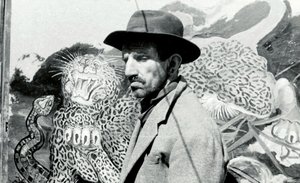
Beyond its aesthetic beauty, the painting carries a heavy emotional resonance rooted in the artist's own turbulent biography. Born in Zurich and shaped by profound personal tragedies—including the devastating loss of his mother and brothers to food poisoning in 1913—Laccabue, often known as Antonio Ligabue, channeled his internal struggles into vivid, animalistic depictions. In this work, the lion serves as a powerful symbol of both majesty and solitude. It is a creature that embodies the duality of the artist's spirit: the fierce strength required to survive hardship and the quiet isolation of a soul often misunderstood by the world.
To gaze upon this lion is to confront a primal force, a biological manifestation of sovereignty that has transcended mere biology to become a profound cultural archetype. In the lexicon of art history, the lion serves as a silent yet thunderous herald of authority and courage. By placing this regal subject within a naturalistic, almost intimate setting, Laccabue bridges the gap between the mythic and the real, allowing the viewer to connect with the raw vitality of nature. For the discerning interior designer, integrating such a piece into a curated collection provides an opportunity to introduce narrative depth and a sense of timelessness to a room.
Întrebări și răspunsuri
Ce dimensiune și orientare sunt recomandate pentru o printare a lucrării "Lion" de Antonio Laccabue?
Pentru "Lion", dimensiunea de imprimare recomandată este Small, cu orientarea Square.
În ce an a fost creată „Lion”?
Opera "Lion" de Antonio Laccabue a fost creată în 1935.
Imaginea pentru "Lion" de Antonio Laccabue poate fi reprodusă liber?
Statusul drepturilor de autor pentru "Lion" de Antonio Laccabue: opera este încă protejată de drepturile de autor. Acest lucru determină dacă reproducerile imaginii pot fi realizate liber.
Mai multe detalii despre această pictură
 Previzualizare
 Trimite prin felicitare
 Distribuie
 Detalii despre lucrare
 Ghid
Ghid

 Descarcă imaginea
 Produse similare
 Radiografie
 Galerie foto
 Întrebări și răspunsuri
 Statistici