School of Paris · 1928
Rita van Leer (André Derain, 1928)
André Derain (1880–1954) a realizat Rita van Leer. Data sa este din 1928. Face parte din mișcarea School of Paris. Este realizată în Oil On Panel. Dimensiunile sunt 41 × 34 cm.
- 1928
- Oil On Panel
- 41 × 34 cm

 Previzualizare

 Tablou în ulei pictat manual
 Trimite prin felicitare
 Distribuie
 Fișă informativă


 Descarcă imaginea
 Produse similare
 Radiografie
 Galerie foto
 Întrebări și răspunsuri

 Statistici
Rita van Leer, pe scurt
- Titlu
- Rita van Leer
- Artist
- André Derain (1880–1954)
- Artist născut în
- Chatou, Franța
- Date
- 1928
- Medium
- Oil On Panel
- Dimensiuni
- 41 × 34 cm
- Mișcare
- School of Paris
- Perioadă
- Modern
- Subiect
- woman, portrait, face, shoulders, gray, black
Ce reprezintă Rita van Leer?
The Portrait of Rita van Leer
In this intimate portrait, André Derain turns his attention to Rita van Leer. Created about 1928, the work moves away from the loud colorism of his earlier years, focusing instead on the quiet presence of the sitter. There is a certain stillness here, a moment captured in a way that prioritizes her character over a mere photographic likeness. She meets the viewer with a directness that feels both personal and somewhat guarded.
André Derain captures the subject with an expressive likeness, favoring the essence of her personality over rigid, academic precision. The portrait focuses on the head and shoulders, stripping away unnecessary distractions to ensure the viewer's attention remains fixed upon her gaze. It is a study of a person rather than a mere likeness, offering a glimpse into a specific, fleeting moment of her life.
Composition and Visual Elements
The composition is centered entirely upon the woman’s face, which occupies the majority of the frame. Presented in a close-up view, the subject's head and shoulders emerge from a dark, minimalist background. This lack of environmental detail ensures that the viewer's attention remains fixed on the sitter. Her head is slightly tilted, a subtle movement that introduces a sense of dynamism to an otherwise still moment.
There is a directness in her gaze, as she looks straight toward the viewer. This connection is established through the careful placement of her features and the use of tonal variations rather than sharp, photographic lines. Light and shadow work together to define the contours of her face, creating a sense of three-dimensionality through the layering of different shades.
Technique and Artistic Style
The work is characteristic of early modern art, leaning into the expressive possibilities of Fauvism and Expressionism. Rather than seeking photographic accuracy, the artist employs a loose and gestural application of paint to capture the sitter. There is a palpable sense of immediacy here, driven by the visible brushstrokes that define the form. This approach prioritizes the emotional essence of the subject over a strictly realistic representation.
One notices how the artist uses short, choppy strokes to build up the features of the face and the contours of the hair. This method creates a textured, almost rugged surface. The use of thick impasto is particularly evident, providing a physical depth that makes the paint feel sculptural. These heavy applications of pigment allow the light to catch the ridges of the brushwork, adding a sense of movement to the portrait.
Materials and Physical Properties
This work is executed in oil paint, applied with a deliberate and textured hand. The artist has worked upon a surface of either canvas or panel, a choice that supports the heavy impasto visible throughout the piece. Such tactile application allows the paint to hold its form, creating a physical presence that catches the light in subtle ways. The dimensions of the work are 41 x 34 cm, a scale that invites a close, intimate inspection of the surface.
The palette is notably restrained, eschewing the riotous color often associated with the artist's earlier years. Instead, we find a monochromatic arrangement of gray, black, and white. These tones are layered to build depth and define the contours of the subject. The interplay of light and shadow is achieved through these varying shades, providing a sense of volume without the need for chromatic intensity. It is a quiet, disciplined approach to the medium.
Imagini la înaltă rezoluție ale lui Rita van Leer
Domeniu public: artistul a decedat în 1954.
André Derain, Rita van Leer (1928). Domeniu public
Întrebări despre Rita van Leer, răspunsuri
În ce an a fost creat "Rita van Leer" de André Derain?
Opera "Rita van Leer" de André Derain a fost creată în 1928.
În ce tehnică este realizată lucrarea "Rita van Leer" de André Derain?
Tehnica utilizată pentru "Rita van Leer" de André Derain este Oil On Panel, iar reproducerile urmăresc să reducă aspectul acestei tehnici.
Care sunt dimensiunile originalului "Rita van Leer" de André Derain?
Dimensiunile înregistrate pentru "Rita van Leer" de André Derain sunt 41 x 34 cm. Reproducerile pot fi comandate în alte dimensiuni, păstrând aceleași proporții.
Ce reprezintă "Rita van Leer" de André Derain?
Subiectele din "Rita van Leer" sunt woman, portrait, face, shoulders, gray, black, white.
Este "Rita van Leer" în domeniul public?
Statusul drepturilor de autor pentru "Rita van Leer" de André Derain: opera este în domeniul public – drepturile de autor au expirat. Acest lucru determină dacă reproducerile imaginii pot fi realizate liber.
Cine a creat "Rita van Leer"?
Artistul din spatele operei „Rita van Leer” este André Derain. Lucrarea este catalogată sub numele lui André Derain.
Din ce curent artistic face parte "Rita van Leer" de André Derain?
Mișcarea asociată cu "Rita van Leer" de André Derain este School of Paris. Această clasificare plasează lucrarea printre artiști și opere de artă conexe.
În ce perioadă a carierei lui André Derain se încadrează "Rita van Leer"?
"Rita van Leer" reprezintă perioada Late Period a lui André Derain.
Ce vârstă avea André Derain când a fost creat "Rita van Leer"?
André Derain a creat "Rita van Leer" la vârsta de 48. Artistul s-a născut în 1880, iar lucrarea datează din 1928.
Despre artistul André Derain
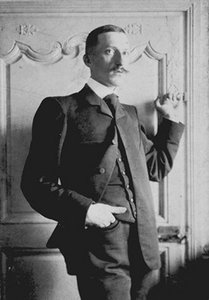
1880–1954, Franța
André Derain
Tinerețe, Familie și Formare În anul 1880, André Derain a păşit pe lume în Chatou, un orășel pitoresc situat în regiunea Yvelines, din Franța. Primii săi ani au fost modelați de peisajele liniștite din Île-de-France, unde o curiozitate naturală pentru mediul înconjurător a început să prindă rădăcini. Până în 1895, acesta începuse deja să studieze pe cont propriu, căutând să înțeleagă lumea vizuală prin propriile sale ochi, mai degrabă decât prin instruirea formală. Această perioadă de explorare autodidactă i-a permis să își dezvolte un mod personal de a vedea, înainte ca rigoarea unei academii să îi poată impune propria voință.
Despre André Derain Lucrări remarcabile ale lui André Derain
Alte lucrări ale lui André Derain
 bătrânate1907
 London Bridge1906
 Charing Cross from sw1906
 Landscape at L'Estaque1906
Eseuri despre Rita van Leer
 Fauvism vs German Expressionism: Distinguishing Color and EmotionMaster the differences between Fauvism and German Expressionism through expert analysis. Learn to decode the emotion behind the color today.
 Dutch artworks of the 1860s1860s Dutch masterpieces by Vincent van Gogh, Gerard Bilders, and August Allebé. View the full collection online at OriginalUniqueArt.com.
 The Silent Dialogue: Examining Intimacy and Psychological Depth in Classical PortraitureExplore the psychological depth of classical portraiture through masters like Rembrandt and Vermeer. Discover the power of the gaze today.