
 Previzualizare
 Trimite prin felicitare
 Distribuie
 Detalii despre lucrare
 Ghid
Ghid

 Descarcă imaginea
 Produse similare
 Radiografie
 Galerie foto
 Întrebări și răspunsuri
 Statistici
Two Quinces

- 41.0 x 51.0 cm


 Vezi mai mult
Lucrarea de artă afișată pe această pagină este protejată de legile privind drepturile de autor, ceea ce înseamnă că nu putem crea sau vinde în mod legal o reproducere identică. Această protecție este garantată prin acorduri internaționale, precum Convenția de la Berna și de legile naționale, inclusiv cele prevăzute de Legea dreptului de autor din S.U.A. – Titlul 17. Toate drepturile rezervate. Orice reproducere neautorizată este interzisă.
Această metodă respectă pe deplin reglementările privind drepturile de autor, deoarece nu implică copierea sau duplicarea operei protejate. În schimb, este o reinterpretare creativă – o pictură nouă, influențată de original, dar care nu este identică cu acesta.
Giclée / Imprimare artistică
Printuri giclée sau pe canvas de calitate muzeală, cu proces de producție rapid și opțiuni flexibile de finisare. ( Comandă pictură realizată manual Comută pe Imagine Digitală)




P118B lei10

P118H lei10

P118W lei10

P438Z lei10

P508JH lei12

P508YH lei12

P805H lei10

P805Z lei10

P919BZ lei10

P919G lei10

P919XJ lei10

P959ZH lei10

P968JZ lei12

W106C lei8

W218G lei10

W218JH lei8

W218Y lei10

W307PJ lei10

W316G lei10

W316PJ lei8

W316Y lei10

W398PJ lei8

W4111J lei10

W500HY lei15

W500JH lei15

W692G lei12

W849H lei8

W940BG lei15

W953PJ lei8




Alegeți dintre dimensiunile noastre prestabilite, care respectă proporțiile originale ale operei de artă.

Introduceți lățimea și înălțimea necesare pentru a se potrivi ramei sau peretelui dumneavoastră. O printare poate fi doar tăiată, niciodată extinsă dincolo de dimensiunea imaginii originale, astfel încât o dimensiune cu o formă diferită va pierde o parte din imagine. Vă trimitem o simulare digitală pentru aprobare înainte de a imprima orice. Imaginea afișată pe această pagină nu prezintă tăierea reală — doar simularea arată acest lucru.
Livrare în întreaga lume () în 2 săptămâni, în loc de cele 4/5 săptămâni standard. (3 Noiembrie)

Livrare expres gratuită la nivel mondial

Pânză de in de înaltă calitate

Asigurare completă pentru transport

Garanție de rambursare a taxelor vamale

Garanția fidelității culorilor

Politica de retur în 100 de zile (doar pentru defecte de fabricație)

Garanție de rambursare 100%

Ofertă pentru comenzi multiple
 Opțiunea cu sticlă este disponibilă doar pentru dimensiuni de sub 110 cm

Two Quinces
Giclée / Imprimare artistică
Dimensiune reproducere
-


Preț total calculat
lei 385
A Study in Simplicity: The Quiet Radiance of Two Quinces
In the vast landscape of late twentieth-century Lithuanian art, few works capture the profound beauty of the mundane as intimately as Algimantas Švėgžda’s Two Quinces. Created in 1991, a period of immense transition and reflection, this still life serves as a masterclass in minimalist observation. At first glance, the composition appears deceptively simple: two ripe fruits resting against an ethereal, neutral backdrop. Yet, beneath this surface lies a sophisticated dialogue between light, form, and color. Švėgžda invites the viewer into a meditative space where the distractions of the modern world fall away, leaving only the tactile presence of nature’s bounty.
The technique employed in this piece reflects the artist's unique ability to blend elements of Pop Art clarity with a delicate, almost pointillist sensitivity. The vibrant, warm hues of the quinces—ranging from deep golds to soft ochres—create a striking visual tension against the stark, clean white background. This deliberate use of negative space is not merely an absence of subject, but a structural element that pushes the fruit forward, making the textures feel almost palpable. One can almost sense the weight and the slightly textured skin of the fruit, a testament to Švėgžda’s mastery over light and shadow.
Symbolism and the Essence of Existence
Beyond its aesthetic appeal, Two Quinces carries a deeper emotional resonance rooted in the artist's biography. Growing up in Kelmė, shaped by a father who understood the theatricality of scenery and a mother who valued the precision of teaching, Švėgžda developed an eye for the essential. The quince, often a symbol of fertility, longevity, and the sweetness of life, acts here as a vessel for memory and permanence. In a world characterized by rapid socio-political change, this painting offers a sanctuary of stillness. The placement of the two fruits—one slightly elevated above the other—creates a subtle rhythmic movement that guides the eye in a gentle loop, mirroring the cyclical nature of life and the seasons.
For the discerning collector or interior designer, this artwork represents more than just a decorative element; it is an anchor of tranquility. The painting’s ability to harmonize with diverse environments makes it a versatile choice for modern, minimalist, or classical interiors alike. Whether placed in a sun-drenched breakfast nook or a sophisticated gallery-style living room, the piece brings a sense of organic warmth and intellectual depth. It serves as a reminder that true elegance is often found in the most understated moments, making this reproduction an exquisite investment for those who seek to surround themselves with art that speaks of quiet strength and timeless beauty.
Întrebări și răspunsuri
La ce vârstă a creat Algimantas Svegzda opera „Two Quinces”?
Algimantas Svegzda avea 50 ani când a creat "Two Quinces" în 1991. Vârsta este calculată pe baza anului nașterii artistului, 1941.
Sub ce alte nume sau pseudonime este cunoscut Algimantas Svegzda?
Algimantas Svegzda este cunoscut și sub numele de Algimantas Švėgžda, A. Švėgžda.
Cum poate fi integrată "Two Quinces" de Algimantas Svegzda în decorul casei?
"Two Quinces" de Algimantas Svegzda este recomandată pentru Neutral, ideal într-un Dining Room. Combinația dintre utilizare și spațiu oferă îndrumări despre unde se potrivește o reproducere.
Biografie artist
A Life Rooted in Lithuanian Soil: The Art of Algimantas Švėgžda
Algimantas Švėgžda, born in 1941 in the small town of Kelmė, Lithuania, emerged as a significant figure in the landscape of post-war Lithuanian art. His life and work were deeply intertwined with the socio-political currents of his time, evolving from early explorations influenced by Western European movements to a uniquely personal expression rooted in minimalist observation and a profound connection to nature. Švėgžda’s journey wasn't one of immediate acclaim but rather a gradual unfolding of artistic vision, marked by periods of experimentation, teaching, and ultimately, a quiet dedication to capturing the essence of existence through his art. His mother’s profession as a teacher instilled in him a value for learning and observation, while his father, a scenic designer, sparked an early appreciation for visual aesthetics. These formative influences laid the groundwork for a career that would span painting, graphic arts, and drawing, all unified by a distinctive sensibility.Early Influences and Artistic Development
Švėgžda’s formal artistic training began at the Lithuanian State Institute of Art in Vilnius from 1961 to 1967, where he studied under Antanas Gudaitis and Vladas Karatajus. This period was crucial in shaping his technical skills and introducing him to a broader range of artistic possibilities. However, it was during the 1970s that Švėgžda truly began to find his voice, becoming associated with an informal group known as “Ketverti” – alongside artists D. Dereškevičius, A. Kuras, and A. Šaltenis. This collective challenged the established norms of Lithuanian art, pushing boundaries and experimenting with new forms of expression. He was also among the first to embrace photographic realism in Lithuania, a technique that demanded meticulous attention to detail and a keen eye for capturing objective reality. His early work reflected the impact of Pop Art and Pointillism, movements that were gaining prominence internationally, but Švėgžda never simply replicated these styles; he adapted them, infusing them with his own unique perspective and a distinctly Lithuanian sensibility.A Shift Towards Minimalism and Nature
The 1980s marked a turning point in Švėgžda’s artistic trajectory. Due to health concerns, he relocated to Berlin, Germany, a move that profoundly influenced his work. While maintaining strong ties with Lithuania through frequent returns and cultural exchanges, his time in Germany led him towards a more minimalist aesthetic. He increasingly focused on natural forms – trees, branches, leaves, berries – rendered with painstaking detail and an almost meditative quality. This wasn’t merely representation; it was an attempt to understand the underlying structure of life itself. His drawings, often executed in colored pencil, became particularly significant during this period, serving as a means of both observation and contemplation. He saw plants and humans as interconnected, sharing experiences of growth, maturity, and aging. This pantheistic worldview permeated his art, imbuing it with a sense of transcendence.Teaching and Legacy
Beyond his own artistic practice, Švėgžda dedicated himself to education, teaching drawing at the Lithuanian State Institute of Art from 1978 to 1981. He later influenced generations of artists as a professor at the Vilnius Academy of Fine Arts. His impact extended beyond the classroom; he also worked with young students at the Vilnius Children's Art School (now the J. Vienožinskis Art School). Švėgžda’s generosity and dedication to fostering artistic talent left an indelible mark on the Lithuanian art community. Upon his death in 1996, he bequeathed his entire creative legacy to Lithuanian museums and the Academy, ensuring that his work would continue to inspire future generations.Historical Significance and Enduring Appeal
Algimantas Švėgžda’s historical significance lies in his ability to navigate complex artistic currents while remaining true to his own vision. He bridged the gap between Western European influences and a distinctly Lithuanian aesthetic, challenging conventional norms and paving the way for new forms of expression. His work is characterized by its meticulous detail, minimalist sensibility, and profound connection to nature. His drawings, in particular, stand as testaments to his unwavering dedication to observation and contemplation. Today, Švėgžda’s art continues to resonate with audiences, offering a quiet yet powerful reflection on the beauty and fragility of life. He is remembered not only as a skilled artist but also as a dedicated teacher and a generous mentor who helped shape the landscape of contemporary Lithuanian art. His paintings offer more than just visual representations; they invite viewers to slow down, observe closely, and connect with the natural world on a deeper level.
Algimantas Svegzda
1941 - 1996 , Lithuania
Detalii rapide
- Full Name: Algimantas Švėgžda
- Nationality: Lithuanian
- Date Of Birth: 1941
- Date Of Death: 1996
- Place Of Birth: Kelmė, Lithuania
- Artistic Movement Or Style: Pop Art, Minimalism
Articole similare
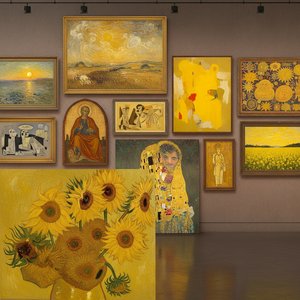
Top 10 Capodopere Picturale Dominate de Galben Crom: Artă, Istorie și Decor
Descoperă top 10 tablouri celebre dominate de galben crom! Van Gogh, Monet și alți maeștri ai impresionismului. Istorie, tehnică și inspirație pentru decorul casei tale. Reproduceri de artă de calitate muzeală pe OriginalUniqueArt.com

Top 10 Capodopere Alb-Negru: Frumusețe Atemporală în Artă | OriginalUniqueArt.ro
Descoperă top 10 picturi celebre dominate de alb, de la Monet la Kandinsky! Explorează istoria artei, tehnicile artistice și frumusețea atemporală a capodoperelor clasice. Reproduceri de calitate muzeală pe OriginalUniqueArt.com – inspiră-ți decorul!
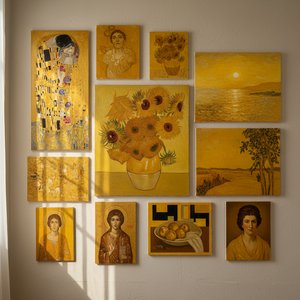
Top 10 Capodopere Pictate în Nuanțe de Ocră Galben: Artă și Decor Inspirat
Descoperă top 10 picturi celebre dominate de nuanțe calde de ocră galben! Explorează poveștile lui Van Gogh, Monet și Rembrandt. Găsește inspirație pentru decorul tău cu reproduceri artă de calitate muzeală pe OriginalUniqueArt.com

The Bountiful Still Life: Symbolism & Artistic Representation of Fruit Across Art History
Explore the rich history of still life painting & the symbolism of fruit across art movements. Discover masterpieces from Caravaggio to Cézanne with OriginalUniqueArt – expert guidance & museum-quality reproductions.

Paul Cézanne: Cele Mai Reprezentative 25 De Capodopere – Artă, Istorie și Decorațiuni Interioare
Descoperă cele mai frumoase 25 de capodopere Paul Cézanne! Explorează istoria, tehnicile și semnificația picturilor impresioniste iconice. Reproduceri artă de calitate muzeală & inspirație decor interioară pe OriginalUniqueArt.com.