

 Vezi în context
 Trimite
 Distribuie
 Detalii
 Ghidul

 Descarcă
 Produse similare
 Radiografie
 Diaporama
 Statistici
Autumn Flowers


 Citește mai mult
Giclée / Imprimare artistică
Printuri giclée sau pe canvas de calitate muzeală, cu proces de producție rapid și opțiuni flexibile de finisare. ( Comandă pictură realizată manual Treci la imagine digitală)




P118B lei10

P118H lei10

P118W lei10

P438Z lei10

P508JH lei12

P508YH lei12

P805H lei10

P805Z lei10

P919BZ lei10

P919G lei10

P919XJ lei10

P959ZH lei10

P968JZ lei12

W106C lei8

W218G lei10

W218JH lei8

W218Y lei10

W307PJ lei10

W316G lei10

W316PJ lei8

W316Y lei10

W398PJ lei8

W4111J lei10

W500HY lei15

W500JH lei15

W692G lei12

W849H lei8

W940BG lei15

W953PJ lei8




Alegeți dintre dimensiunile noastre prestabilite, care respectă proporțiile originale ale operei de artă.

Puteți introduce propriile dimensiuni pentru a se potrivi unui anumit cadru sau spațiu. Dacă dimensiunea selectată nu corespunde proporțiilor imaginii originale, vom decupa lucrarea de artă sau vom extinde imaginea cu margini oglindite sau cu o culoare uniformă. Un mockup digital va fi trimis pentru aprobarea dumneavoastră înainte de începerea producției.
Vă rugăm să rețineți că previzualizarea de pe ecran nu reflectă decuparea sau extinderea reală. Doar mockup-ul va arăta cu exactitate compoziția finală.
Deși dimensiunile personalizate sunt disponibile, vă recomandăm să selectați o dimensiune din lista predefinită pentru a păstra proporțiile originale.
Livrare în întreaga lume () în 2 săptămâni, în loc de cele 4/5 săptămâni standard. (3 Octombrie)

Livrare expres gratuită la nivel mondial

Pânză de in premium

Asigurare completă pentru transport

Garanție de rambursare a taxelor vamale

Garanția fidelității culorilor

Politica de retur în 100 de zile (doar pentru defecte)

Garanție de rambursare 100%

Reducere pentru comenzi multiple
 Opțiunea cu sticlă este disponibilă doar pentru dimensiuni de sub 110 cm

Autumn Flowers
Giclée / Imprimare artistică
Dimensiune reproducere
-


Preț total
lei 362
A Portrait of a Moment: The Enigmatic Beauty of *Autumn Flowers*
Alfred Stevens’s *Autumn Flowers*, painted in 1867, isn't merely a depiction of a woman amidst flowers; it’s an exquisitely crafted meditation on stillness, light, and the subtle poetry of everyday life. At first glance, the painting presents a seemingly simple arrangement: a seated lady, her posture suggesting quiet contemplation, surrounded by a still-life tableau of fabrics, blossoms, and a delicately rendered table. Yet, beneath this surface lies a profound exploration of form, color, and the very essence of observation – a hallmark of Stevens’s unique artistic vision.
Stevens, a pivotal figure in 19th-century Belgian art, deliberately eschewed the prevailing trends of his time. Rejecting the fleeting effects of Impressionism's vibrant light and atmosphere, he instead focused on capturing an immutable quality – the frozen gesture, the fixed expression, the enduring presence of the subject. This deliberate choice is powerfully evident in *Autumn Flowers*. The woman’s hand, poised as if about to touch a flower, isn’t caught in motion; it's suspended, imbued with a sense of timelessness. Her gaze, directed slightly off-canvas, invites us into her private world, suggesting an inner life beyond the immediate scene.
The Language of Color and Texture: Stevens’s Masterful Technique
What immediately draws the eye is Stevens's extraordinary command of color and texture. He employs a remarkably restrained palette – primarily shades of grey, black, and muted browns – punctuated by flashes of pastel pink, chestnut brown, and the glossy sheen of the table cover. This deliberate limitation isn’t a sign of restraint but rather a strategic choice to emphasize form and light. The artist masterfully utilizes chiaroscuro, creating dramatic contrasts between light and shadow that sculpt the figures and objects with remarkable precision. Notice how the highlights on the woman's chignon and the delicate folds of her dress draw our attention while simultaneously deepening the shadows around her face, lending a sense of mystery and depth.
Stevens’s technique is equally noteworthy for its meticulous detail. He employs a smooth, almost polished surface – reminiscent of 17th-century Dutch masters like Rembrandt and Vermeer – achieved through careful layering of paint and the use of a knife to blend colors seamlessly. This creates an illusion of tactile reality, inviting us to reach out and touch the fabrics, feel the texture of the flowers, and appreciate the subtle variations in color and tone. The artist’s attention to detail extends beyond mere representation; it's a deliberate attempt to capture the *essence* of each element within the composition.
Symbolism and the Portrait of Modernity
Beyond its technical brilliance, *Autumn Flowers* is rich in symbolic meaning. The woman herself represents a type of modern femininity – poised, elegant, and seemingly detached from the bustle of Parisian life. Her attire, with its jet frills and flounces, speaks to the fashionable trends of the era while simultaneously conveying a sense of quiet dignity. The surrounding still-life elements—the fabrics, flowers, and table—are not merely decorative; they function as a carefully constructed visual language, hinting at themes of luxury, domesticity, and the fleeting beauty of life.
Stevens’s comparison to Gustave Vanzype – that the painting is a still life composed of the fabrics in which she is dressed and the things around her – reveals a deeper intention. He wasn't simply depicting a woman; he was creating a miniature world, a carefully orchestrated tableau that captures a specific moment in time and reflects the values and aesthetics of his era. The reference to Whistler’s ambition to “use colours to compete with the musician who uses sounds” underscores Stevens’s own desire to elevate color from mere decoration to an expressive element within the painting.
A Legacy of Stillness: Stevens's Enduring Appeal
*Autumn Flowers* stands as a testament to Alfred Stevens’s singular artistic vision. It is a painting that rewards careful observation, inviting us to linger and contemplate its subtle nuances. Its enduring appeal lies not in dramatic gestures or fleeting effects but in its quiet beauty, its masterful technique, and its profound exploration of the human condition. Reproductions of this captivating work offer a window into a bygone era, capturing the elegance and sophistication of 19th-century Parisian life while simultaneously reminding us of the timeless power of stillness and observation.
Întrebări și răspunsuri
Pot vedea "Autumn Flowers" de Alfred Stevens pe propriul meu perete înainte de achiziție?
„Autumn Flowers” are o previzualizare în realitate augmentată: pagina Previzualizare AR a operei artistice o prezintă în propriul tău spațiu, pe un dispozitiv compatibil.
Ce vârstă avea Alfred Stevens când a creat "Autumn Flowers" în 1867?
Alfred Stevens avea 44 ani când a creat "Autumn Flowers" în 1867. Vârsta este calculată pe baza anului nașterii artistului, 1823.
Cum echilibrează "Autumn Flowers" lumina și întunericul?
"Autumn Flowers" de Alfred Stevens este înregistrat cu o deep_shadow, având o luminanță de Dark.
Cine este artistul din spatele "Autumn Flowers"?
Artistul din spatele operei „Autumn Flowers” este Alfred Stevens. Lucrarea este catalogată sub numele lui Alfred Stevens.
În ce an a fost creată "Autumn Flowers" de Alfred Stevens?
"Autumn Flowers" de Alfred Stevens a fost creat(ă) în 1867.
"Autumn Flowers" de Alfred Stevens este o compoziție de tip portret, peisaj sau pătrată?
"Autumn Flowers" de Alfred Stevens este o compoziție de tip Portrait. Proporțiile merită verificate înainte de a alege dimensiunea printului.
Există lucrări similare cu "Autumn Flowers"?
Lucrările similare cu „Autumn Flowers” sunt enumerate în pagina Lucrări similare a operei de artă.
Biografie artist
primii ani și formarea artistică
alfred émile léopold stevens, un pictor belgian de renume, s-a născut pe 11 mai 1823, la brussels. familia sa era profund înrădăcinată în artele vizuale, având în frații săi pe joseph (1816–1892) și pe fiul său léopold (1866–1935) pictori, în timp ce un alt frate, arthur (1825–99), era negustor de artă și critic.cariera artistică
călătoria sa artistică a început la académie royale des beaux-arts din brussels, unde a studiat sub îndrumarea lui françois navez, un pictor neoclasic. în anul 1843, s-a mutat la paris, alăturându-se fratelui său joseph, și a fost admis la école des beaux-arts. deși este dezbatut dacă a fost elevul lui jean auguste dominique ingres, primele lucrări ale lui stevens, precum the pardon or absolution (hermitage, st. petersburg), semnată și datată 1849, demonstrează măiestria sa în stilul naturalistic convențional, influențat de pictura de gen olandeză din secolul al xvii-lea.ascensiunea spre celebritate
opera lui stevens a fost expusă public pentru prima dată în 1851 la salonul din brussels, aducându-i o medalie de clasa a treia la salonul de la paris în 1853 și o medalie de clasa a doua la expoziția universală de la paris în 1855. pictura sa ce qu'on appelle le vagabondage (musée d'orsay, paris) a atras atenția lui napoleon iii, ducând la o schimbare semnificativă în tratamentul săracilor.lucrări remarcabile și moștenire
- la dame en rose sau woman in pink (musées royaux des beaux-arts de belgique, brussels), pictată în 1866, exemplifică munca lui stevens din această perioadă, combinând o femeie îmbrăcată la modă cu o examinare detaliată a obiectelor japoneze.
- stevens a primit ordinul legion of honor (chevalier) de la guvernul francez în 1863 și a fost promovat la rangul de ofițer al legion of honor în 1867.

Alfred Stevens
1823 - 1906 , Belgia
Informații rapide
- Artistic Movement Or Style: Realism Academic
- Artists Who Influenced This Artist:
- Jean Auguste Dominique Ingres
- Maestrii Olandezi
- Date Of Birth: 11 mai 1823
- Date Of Death: 1906
- Full Name: Alfred Émile Léopold Stevens
- Nationality: Belgian
- Notable Artworks:
- La Dame en Rose
- Vizită la atelier
- Desen preparator pentru 'Panorama secolului', 'Împărăteasa Joséphine și curtea sa'
- Place Of Birth: Bruxelles, Belgia
Articole conexe

Sir Alfred James Munnings: Cele Mai Iubite 25 de Capodopere – Artă Excepțională pentru Decorul Casei Tale
Descoperă cele mai frumoase 25 de picturi ale lui Alfred James Munnings! Explorează capodoperele impresionismului britanic, scene rurale vibrante și arta ecvestră. Reproduceri de artă de calitate muzeală pentru decorul casei tale pe OriginalUniqueArt.com

Alfred Stevens: Capturing Parisian Life with Intimate Realism & Symbolist Flair
Explore the captivating world of Alfred Stevens, a pioneer of intimate realism & Symbolist painting. Discover his elegant portraits of Parisian women and learn about his Dutch influences & lasting legacy. Art history insights at OriginalUniqueArt.
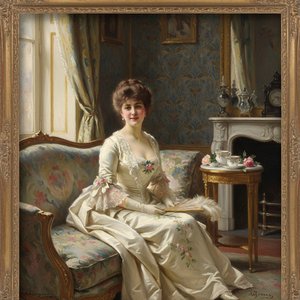
Alfred Stevens: Capturing Parisian Elegance & Fin-de-Siècle Intimacy
Discover the captivating world of Alfred Stevens, master of Parisian elegance & intimate portraiture. Explore his techniques, influences, and legacy – a prized collection for discerning art enthusiasts.

Romantic Realism's Finest: 10 Masterpieces for Your Home | OriginalUniqueArt
Explore 10 defining masterpieces of Romantic Realism! Discover Courbet, Millet & Daumier's powerful paintings—capturing emotion and social realities. Find museum-quality reproductions for your home at OriginalUniqueArt.com.
Realism în Artă: Top 10 Capodopere Care Reflectă Viața Așa Cum Este
Descoperă top 10 capodopere realism! Explorează picturi iconice de Courbet, Manet și alți artiști celebri. Află poveștile din spatele fiecărei opere și găsește inspirație pentru decorațiuni interioare elegante pe OriginalUniqueArt.com.