

 Vezi în context
 Trimite
 Distribuie
 Detalii
 Ghidul

 Descarcă
 Produse similare
 Radiografie
 Diaporama
 Statistici
Violin
 Screenprint
 1960
1960- Modern
 55.0 x 75.0 cm
 Citește mai mult
Giclée / Imprimare artistică
Printuri giclée sau pe canvas de calitate muzeală, cu proces de producție rapid și opțiuni flexibile de finisare. ( Comandă pictură realizată manual Treci la imagine digitală)




P118B lei10

P118H lei10

P118W lei10

P438Z lei10

P508JH lei12

P508YH lei12

P805H lei10

P805Z lei10

P919BZ lei10

P919G lei10

P919XJ lei10

P959ZH lei10

P968JZ lei12

W106C lei8

W218G lei10

W218JH lei8

W218Y lei10

W307PJ lei10

W316G lei10

W316PJ lei8

W316Y lei10

W398PJ lei8

W4111J lei10

W500HY lei15

W500JH lei15

W692G lei12

W849H lei8

W940BG lei15

W953PJ lei8




Alegeți dintre dimensiunile noastre prestabilite, care respectă proporțiile originale ale operei de artă.

Puteți introduce propriile dimensiuni pentru a se potrivi unui anumit cadru sau spațiu. Dacă dimensiunea selectată nu corespunde proporțiilor imaginii originale, vom decupa lucrarea de artă sau vom extinde imaginea cu margini oglindite sau cu o culoare uniformă. Un mockup digital va fi trimis pentru aprobarea dumneavoastră înainte de începerea producției.
Vă rugăm să rețineți că previzualizarea de pe ecran nu reflectă decuparea sau extinderea reală. Doar mockup-ul va arăta cu exactitate compoziția finală.
Deși dimensiunile personalizate sunt disponibile, vă recomandăm să selectați o dimensiune din lista predefinită pentru a păstra proporțiile originale.
Livrare în întreaga lume () în 2 săptămâni, în loc de cele 4/5 săptămâni standard. (4 Octombrie)

Livrare expres gratuită la nivel mondial

Pânză de in premium

Asigurare completă pentru transport

Garanție de rambursare a taxelor vamale

Garanția fidelității culorilor

Politica de retur în 100 de zile (doar pentru defecte)

Garanție de rambursare 100%

Reducere pentru comenzi multiple
 Opțiunea cu sticlă este disponibilă doar pentru dimensiuni de sub 110 cm

Violin
Giclée / Imprimare artistică
Dimensiune reproducere
-


Preț total
lei 362
A Symphony of Line and Color
In the evocative realm of mid-century graphic expression, Alexander Milne Calder’s "Violin" emerges as a mesmerizing dialogue between form and abstraction. Created in 1960, this striking screenprint transcends the mere depiction of a musical instrument, transforming it into a rhythmic dance of geometry and hue. The composition is anchored by a bold, monochromatic foundation of black and white, yet it is the sudden, spirited interventions of red and yellow accents that breathe life into the piece. These vibrant splashes act as visual crescendos, much like the sharp notes of a violin solo, cutting through the starkness to create an eye-catching tension that commands the viewer's attention.
The true magic of this work lies in its intricate ornamentation. Rather than adhering to the traditional wood grain of a classical instrument, Calder introduces a hypnotic spiral pattern that winds across the body of the violin. This swirling motif suggests movement and sound made visible, inviting the eye to follow a melodic path through the paper's surface. The interplay between the structured silhouette of the instrument and the fluid, organic energy of the spirals creates a sense of kinetic beauty, making the artwork feel as though it is vibrating with an unheard melody.
A Legacy of Sculptural Precision
To understand the depth of "Violin," one must look toward the illustrious lineage of its creator. Alexander Milne Calder was a master of form, a Scottish-American sculptor whose monumental contributions to architectural sculpture—most notably his Herculean work on Philadelphia City Hall—defined an era of grandeur. While he is celebrated for his ability to manipulate heavy marble and bronze, "Violin" reveals a different facet of his genius: the ability to translate sculptural weight into the delicate medium of paper. This screenprint demonstrates a profound experimentation with technique, where the artist moves away from the permanence of stone toward the graphic immediacy of printmaking.
This piece serves as a fascinating bridge between generations of artistic mastery, connecting the classical training of the 19th-century tradition with the experimental spirit of the 20th century. For collectors and enthusiasts, owning a reproduction of this work is not merely about acquiring a beautiful image; it is about possessing a fragment of an artistic dynasty that includes his son, Alexander Stirling Calder, and his grandson, the legendary Alexander "Sandy" Calder. The painting carries with it the DNA of movement and structural innovation that would eventually reshape modern art.
An Essential Element for Modern Interiors
For the discerning interior designer or the passionate art collector, "Violin" offers unparalleled versatility. Its sophisticated palette of black, white, red, and yellow allows it to serve as a powerful focal point in a variety of contemporary settings. In a minimalist gallery-style room, its graphic intensity provides much-needed character; in a more eclectic, maximalist space, its rhythmic patterns harmonize beautifully with layered textures and bold decor. The work possesses a rare ability to evoke both nostalgia for the mid-century era and a forward-looking sense of modern abstraction.
Integrating a high-quality oil painting reproduction of this piece into a home or professional space brings an atmosphere of cultured elegance and intellectual curiosity. It is a conversation starter that invites guests to linger, to trace the spirals with their eyes, and to contemplate the intersection of music, mathematics, and motion. As a testament to Calder's ability to find extraordinary beauty within a singular subject, "Violin" remains a timeless masterpiece, offering an emotional resonance that continues to captivate the soul long after the first glance.
Întrebări și răspunsuri
Unde pot cumpăra o reproducere pictată manual a operei "Violin" de Alexandru Milne Calder?
"Violin" este disponibil sub formă de o reproducere pictată manual în ulei pe pânză de in. Comanda poate fi plasată pe această pagină, având la dispoziție mai multe dimensiuni.
Pot vedea o imagine cu raze X a lucrării "Violin" de Alexandru Milne Calder?
Pagina Raze X a operei "Violin" de Alexandru Milne Calder este un vizualizator interactiv care vă permite să parcurgeți onze straturi optice ale imaginii lucrării, inclusiv o perspectivă de tip radiografie.
Care este nuanța dominantă în "Violin" de Alexandru Milne Calder?
Culoarea dominantă a operei "Violin" de Alexandru Milne Calder este Ochre to Sepia. Această nuanță reprezintă tonul de bază al paletei cromatice.
Cine este artistul din spatele "Violin"?
„Violin” este atribuit lui Alexandru Milne Calder.
Ce explică situația drepturilor de autor pentru "Violin" de Alexandru Milne Calder?
„Violin” de Alexandru Milne Calder este în încă protejată de drepturile de autor. Termenii de drept de autor se calculează de la data decesului artistului, iar Alexandru Milne Calder a decedat în 1976.
La ce vârstă a creat Alexandru Milne Calder opera „Violin”?
Alexandru Milne Calder a creat "Violin" la vârsta de 62. Artistul s-a născut în 1898, iar lucrarea datează din 1960.
Care este data creației pentru "Violin" de Alexandru Milne Calder?
"Violin" de Alexandru Milne Calder a fost creat(ă) în 1960.
Biografie artist
Introduction to Alexander Milne Calder
Alexander Milne Calder (MILL-nee) was a Scottish American sculptor born in Aberdeen, Scotland, on August 23, 1846. He is best known for his architectural sculpture of Philadelphia City Hall and both his son, Alexander Stirling Calder, and grandson, Alexander ‘Sandy’ Calder, became significant sculptors in the 20th century. His artistic journey began with a formative influence from his father, John Rhind, a sculptor who instilled in him an early appreciation for stone carving during his childhood years. Calder attended the Royal Academy in Edinburgh where he honed his skills and studied alongside fellow artists, shaping his understanding of classical sculpture traditions. He subsequently moved to London and collaborated on monumental projects like the Albert Memorial, demonstrating his versatility and ambition as a craftsman.- Early Life and Education: Calder’s upbringing in Aberdeen exposed him to the craft of stone carving from a young age, profoundly impacting his artistic sensibilities.
- Royal Academy Training: His studies at the Royal Academy provided foundational knowledge in sculpture techniques and broadened his artistic horizons.
- London Collaborations: Calder’s involvement with the Albert Memorial showcased his ability to execute large-scale architectural sculptures, cementing his reputation as a skilled artist.
Career Highlights
Calder's professional life unfolded in stages marked by pivotal commissions and collaborations. He secured a prominent role on the construction of Philadelphia City Hall, undertaking an ambitious project that demanded meticulous attention to detail and involved crafting over 250 pieces—primarily marble and bronze—spanning two decades. This monumental endeavor solidified his position as one of Scotland’s foremost sculptors. Furthermore, he was entrusted with creating William Penn, a colossal statue honoring Pennsylvania's founder atop City Hall’s tower, showcasing his mastery of sculptural form and symbolism. Calder’s artistic vision extended beyond architectural projects; he produced striking sculptures like *Indian Figure*, reflecting his engagement with indigenous cultures and artistic experimentation.- Philadelphia City Hall Commission: Calder’s dedication to this project resulted in a masterpiece of architectural sculpture, demonstrating his commitment to ambitious artistic endeavors.
- William Penn Statue: The creation of William Penn exemplifies Calder's ability to convey historical significance through monumental sculptural representations.
- *Indian Figure*: This sculpture embodies Calder’s exploration of cultural influences and innovative artistic techniques.
Notable Sculptures
Calder’s oeuvre encompasses a diverse range of artworks characterized by both static and kinetic forms. Among his most celebrated creations are the illuminated portals of Philadelphia City Hall, adorned with colored lights—a testament to Calder's meticulous craftsmanship and artistic flair. He also produced *Spirale*, a towering sculpture commissioned for UNESCO headquarters in Paris, reflecting his engagement with contemporary art trends and architectural innovation. His final masterpiece, *Flamingo*, stands proudly at Chicago’s Federal Center Plaza, symbolizing Calder’s enduring legacy as one of America's most influential sculptors.- Philadelphia City Hall Portals: Calder’s incorporation of colored lights into these portals exemplifies his artistic attention to detail and visual impact.
- *Spirale*: This monumental sculpture commissioned for UNESCO headquarters demonstrates Calder’s ability to create impactful artworks that resonate with global audiences.
- *Flamingo*: Calder's final sculpture at Chicago’s Federal Center Plaza represents his enduring contribution to American art history.
Legacy and Influence
Alexander Milne Calder’s impact on the artistic landscape extends beyond his own creations. His son, Alexander Stirling Calder, and grandson, Alexander ‘Sandy’ Calder, followed in his footsteps as sculptors, perpetuating a lineage of artistic excellence. Calder's pioneering approach to sculpture—particularly his exploration of kinetic art and chance—inspired generations of artists and continues to influence contemporary sculptural practices. He remains revered for his unwavering dedication to artistic innovation and his profound contribution to the visual arts. “Theories may be all very well for the artist himself, but they shouldn't be broadcast to other people.”
Alexandru Milne Calder
1898 - 1976 , Regatul Unit
Informații rapide
- Artistic Movement Or Style: Architectural sculpture
- Artists Who Influenced This Artist: ['John Rhind']
- Date Of Birth: August 23, 1846
- Date Of Death: June 14, 1923
- Full Name: Alexander Milne Calder
- Nationality: Scottish-American
- Notable Artworks:
- Philadelphia City Hall
- William Penn statue
- Place Of Birth: Aberdeen, United Kingdom
Articole conexe

Top 10 Capodopere ale Expresionismului Abstract: Artă, Artiști și Decorațiuni de Lux | OriginalUniqueArt.ro
Descoperă Top 10 capodopere ale Expresionismului Abstract! Explorează poveștile lui Pollock, Rothko și De Kooning. Reproduceri de artă de lux & inspirație decor pe OriginalUniqueArt.ro. Găsește pictura perfectă pentru spațiul tău!
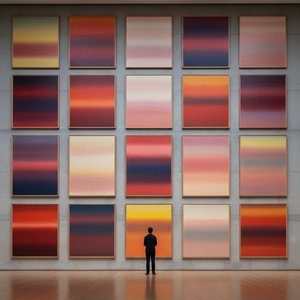
Mark Rothko: Cele Mai Iconice 25 De Capodopere – Artă Abstractă pentru Decor Rafinat
Descoperă cele mai iconice 25 de picturi abstracte ale lui Mark Rothko! Explorează istoria, culorile și emoțiile din spatele fiecărei capodopere. Reproduceri artă de calitate muzeală & inspirație decor pe OriginalUniqueArt.com.

Top 10 Tablouri Celebre Dominante de Negru: Artă, Istorie și Decor Rafinat
Descoperă Top 10 tablouri celebre dominate de negru! Explorează istoria, simbolismul și tehnicile artistice ale unor opere iconice de Rembrandt, Goya și alți maeștri. Reproduceri de artă de calitate muzeală pe OriginalUniqueArt.com – inspiră-ți decorul!

Wassily Kandinsky: Cele Mai Iconice 25 De Opere – Artă Abstractă pentru Decor Rafinat
Descoperă cele mai emblematice 25 de opere ale lui Wassily Kandinsky, pionierul artei abstracte! Explorează culorile vibrante, compozițiile unice și istoria fascinantă din spatele fiecărei picturi. Reproduceri de calitate muzeală pe OriginalUniqueArt.com – inspiră-ți decorul cu artă modernă!

Top 10 Capodopere Alb-Negru: Frumusețe Atemporală în Artă | OriginalUniqueArt.ro
Descoperă top 10 picturi celebre dominate de alb, de la Monet la Kandinsky! Explorează istoria artei, tehnicile artistice și frumusețea atemporală a capodoperelor clasice. Reproduceri de calitate muzeală pe OriginalUniqueArt.com – inspiră-ți decorul!
