

 Previzualizare
 Trimite
 Distribuie
 Detalii despre lucrare

 Descarcă
 Produse similare
 Radiografie
 Diapozitive automate
The Lamentation


 Vezi mai mult
Achiziționați o imagine digitală de înaltă rezoluție, îmbunătățită, mult superioară previzualizării online.
Fiecare fișier este pregătit cu meticulozitate de specialiștii noștri interni, utilizând instrumente avansate și retușare manuală expertă. Ne asigurăm că fiecare imagine beneficiază de o claritate excepțională, o acuratețe precisă a culorilor și detalii fine.
Fișierul final este livrat prin e-mail în termen de 72 de ore, optimizat pentru utilizare imediată în medii profesionale, editoriale și de imprimare. Aceasta este aceeași calitate în care au încredere studiouri de design, edituri și galerii de top.
Imagine Digitală
Descărcați un fișier la rezoluție înaltă pentru afișare personală, imprimare și proiecte creative. ( Comandă printul Comandă pictură lucrată manual)
Inclus în fiecare comandă de imagini digitale
Livrare digitală de expertiză, garantată
Când alegeți OriginalUniqueArt.com, nu primiți doar o simplă imagine – primiți o operă de artă digitală îmbunătățită profesional, creată cu precizie și susținută de o garanție de satisfacție. Iată tot ceea ce primești odată cu comanda ta, în mod automat:

Livrare rapidă prin e-mail
Fișierul imaginii digitale la rezoluție înaltă vă va fi trimis prin e-mail în termen de 72 de ore de la finalizarea comenzii – gata pentru utilizare imediată.

Fișier digital optimizat prin IA
Opera ta de artă este optimizată profesional prin intermediul unor instrumente AI avansate și al editării manuale, asigurând un nivel maxim de detalii, claritate și acuratețe a culorilor.

Retransmitere gratuită pe viață
Ai șters sau ai pierdut din greșeală fișierul? Nu îți face griji – ți-l vom retrimite oricând, gratuit.

Fără taxe de import – Întotdeauna
Bucură-te instant de noua ta operă de artă, fără taxe vamale, taxe de import sau costuri de livrare – descărcările digitale sunt întotdeauna fără taxe.

Garanția acurateții culorilor
Asigurăm o reflectare cât mai fidelă a culorilor originale în imaginea ta digitală, prin utilizarea unor instrumente profesionale și a proceselor de gestionare a culorii.

Garanție de satisfacție de 60 de zile
Dacă nu sunteți mulțumit de imaginea digitală achiziționată, o vom revizui sau vă vom returna 100% în termen de 60 de zile – fără nicio explicație necesară.

Garanție de returnare 100% a banilor
Nu ești mulțumit? Obține o rambursare completă în termen de 60 de zile de la primirea fișierului tău digital – fără întrebări.

Reduceri pentru comenzi în volum
Cumpără 3 imagini, economisește 10% - Cumpără 5, economisește 15% - Cumpără 10+, economisește 20%. Ideal pentru proiecte creative, galerii și agenții.
The Lamentation: A Northern Renaissance Masterpiece
Albrecht Dürer’s “The Lamentation” is not merely an engraving; it's a visceral plunge into the heart of human grief, a testament to the profound sorrow surrounding the death of Christ. Executed in meticulous black and white around 1504, this work embodies the pinnacle of Northern Renaissance printmaking – a style defined by its obsessive detail, dramatic chiaroscuro, and an unparalleled command of line. The image depicts the agonizing scene following Jesus’s crucifixion, with figures clustered around his lifeless body, their faces etched with despair and anguish. Dürer's masterful use of hatching and cross-hatching creates a remarkable illusion of volume and texture, from the rough linen of the mourners’ garments to the smooth, polished surface of the wooden cross itself. The composition is intensely focused, drawing the viewer into the claustrophobic space of mourning, dominated by the central figure of Christ and surrounded by a chorus of grieving relatives and disciples.
Technique and Materials: A Dance of Burins
- Engraving Process: Dürer’s technique is rooted in the painstaking process of engraving. He began with a copper or iron plate, meticulously incising lines using specialized tools known as burins – small hand-held chisels. Each line was carefully planned and executed, demanding immense patience and precision.
- Chiaroscuro Mastery: The dramatic effect achieved through the manipulation of light and shadow—chiaroscuro—is central to the work’s power. Dürer skillfully varied the pressure applied by the burin to create a range of line densities, resulting in deep blacks and subtle gradations that define form and texture.
- Materials: The creation of “The Lamentation” relied on a combination of high-quality materials: a durable metal plate (typically copper or iron), an array of precisely crafted burins, rich black ink, and finally, heavy weight paper to capture the intricate details of the engraving.
Symbolism and Emotional Resonance
Beyond its technical brilliance, “The Lamentation” is profoundly symbolic. The cross, a ubiquitous emblem of Christianity, represents sacrifice and redemption, while the figures themselves embody universal themes of grief, loss, and compassion. Dürer’s deliberate arrangement—with Christ at the center, surrounded by those who loved him—amplifies the emotional intensity of the scene. The crowded composition creates a sense of collective mourning, inviting viewers to contemplate their own mortality and the enduring nature of sorrow. The figures' anguished expressions – despair, anguish, and profound grief – are rendered with an almost unbearable realism, tapping into deep-seated human emotions.
Historical Context and Artistic Influence
Created during Dürer’s peak creative period, “The Lamentation” exemplifies the Northern Renaissance style, a movement that flourished in Germany and surrounding regions. Influenced by Italian Renaissance ideals but distinctly rooted in its own regional traditions, this engraving showcases a heightened emphasis on realism, emotional expression, and meticulous detail – characteristics that set it apart from its Italian counterparts. Dürer’s work profoundly influenced generations of printmakers, establishing him as one of the most important artists of his time and solidifying his legacy as a master of engraving and a pivotal figure in the development of Northern Renaissance art. This piece remains a powerful meditation on faith, suffering, and the enduring human capacity for grief.
Biografie artist
A Life Forged in Nuremberg: The Early Years and Apprenticeship
Albrecht Dürer, a name synonymous with the German Renaissance, emerged from the bustling artisan city of Nuremberg in 1471. His father, Albrecht Dürer the Elder, was a successful goldsmith who had immigrated from Hungary, bringing with him a lineage steeped in craftsmanship. It was within this environment—the scent of metal and the meticulous precision of handiwork—that young Albrecht’s artistic inclinations first took root. Though his father envisioned a similar path for him, apprenticing him initially in the family trade, it soon became undeniable that Albrecht possessed an exceptional gift for drawing. At thirteen, he transitioned to the workshop of Michael Wolgemut, Nuremberg's leading artist at the time. This was no mere technical training; it was immersion into a world of illuminated manuscripts, painted panels, and—crucially—the burgeoning art of woodcut illustration. The sheer volume of work produced by Wolgemut’s workshop, including the extensive illustrations for the *Nuremberg Chronicle*, provided Dürer with an unparalleled foundation in design, composition, and the mechanics of image-making. A remarkable silverpoint self-portrait from 1484, created when he was barely a teenager, stands as astonishing evidence of his precocious talent—a testament to a burgeoning artistic identity already taking shape. The early years were marked by intense study and observation, absorbing the techniques and traditions of his master while simultaneously developing his own unique style.The Italian Influence and Artistic Maturation
Dürer’s ambition extended far beyond the confines of Nuremberg. Driven by an insatiable curiosity and a desire to master the art of painting, he embarked on his first journey to Italy in 1494. This was not simply a sightseeing trip; it was a pilgrimage to the heart of the Renaissance. He encountered the works of masters like Raphael, Giovanni Bellini, and Leonardo da Vinci—artists who were redefining the possibilities of form, perspective, and human expression. The impact of this exposure was profound. Dürer absorbed the classical motifs, harmonious compositions, and subtle sfumato techniques that characterized Italian art, yet he never abandoned his Northern European sensibility for meticulous detail and symbolic depth. He meticulously studied the works of Botticelli, Donatello, and Masaccio, noting their innovative use of perspective and their focus on human anatomy. The vibrant colors and dynamic movement of Venetian painting particularly captivated him, influencing his later palette and compositional choices. A second sojourn to Italy between 1505 and 1507 further solidified these influences, allowing him to study ancient Roman ruins and refine his understanding of anatomy and proportion. This synthesis of Northern precision and Italian grace became the hallmark of Dürer’s unique artistic style—a testament to his ability to synthesize diverse traditions into a cohesive and powerfully expressive vision.Mastering the Mediums: Painting, Engraving, and Woodcut
Dürer was a master of multiple mediums, each offering him distinct avenues for creative expression. His paintings, though fewer in number than his prints, demonstrate a remarkable command of oil paint and an ability to capture both physical likeness and psychological depth. Works like the *Feast of the Rose Garlands* (1507) reveal a vibrant palette influenced by Venetian colorism, while *Adoration of the Magi* showcases his growing mastery of composition and narrative storytelling. However, it was in the realm of printmaking—particularly engraving and woodcut—that Dürer truly revolutionized artistic practice. He elevated these techniques from mere reproductive methods to independent art forms, capable of conveying complex narratives and profound emotions. The *Apocalypse* series (1498), a collection of fourteen woodcuts illustrating the Book of Revelation, showcased his mastery of this medium despite its inherent limitations—he skillfully employed hatching and cross-hatching to create nuanced tonal effects. Later engravings like *Melencolia I* (1514) and *Saint Jerome in His Study* (1514) are testaments to his unparalleled skill—intricate compositions filled with symbolic meaning and executed with breathtaking precision. He didn’t just depict reality; he imbued it with layers of intellectual and spiritual significance, transforming the printed image into a powerful vehicle for artistic expression.A Theorist and Innovator: The Legacy of Albrecht Dürer
Dürer was not merely an artist; he was a scholar, a theorist, and an innovator who sought to understand the underlying principles governing artistic creation. He believed in the mathematical foundations of art and dedicated himself to establishing a scientific approach to representation. His treatises on geometry, proportion, and human anatomy—most notably *Four Books of Human Proportion* (1528)—were groundbreaking for their time, demonstrating his commitment to rigorous observation and rational analysis. These writings were not simply academic exercises; they were intended to elevate the status of artists from mere craftsmen to intellectual practitioners. Dürer’s meticulous studies of human anatomy, informed by both artistic observation and scientific inquiry, revolutionized the depiction of the human form in Northern art. He developed a sophisticated system for measuring proportions based on mathematical ratios, which he applied to his paintings and prints. His theoretical work influenced generations of artists and scholars, shaping the development of Renaissance art and contributing to the rise of visual culture. Dürer’s legacy extends far beyond his individual artworks. He bridged the gap between Northern European traditions and Italian Renaissance ideals, introducing classical motifs into Northern art while maintaining its distinctive character. His theoretical contributions helped establish a new framework for artistic practice, inspiring artists with his technical skill, innovative spirit, and profound vision. He remains, to this day, one of the most important figures in the history of Western art.Influences and Enduring Impact
- Michael Wolgemut: Dürer’s initial mentor, providing foundational skills in drawing, painting, and woodcut techniques.
- Leonardo da Vinci: Inspired Dürer's exploration of anatomy, perspective, and sfumato—the subtle blending of tones.
- Raphael: Influenced Dürer’s compositional harmony and idealized forms.
- Giovanni Bellini: Contributed to Dürer's understanding of color and Venetian painting traditions.
Dürer’s influence reverberates through centuries of art history. His meticulous realism, his innovative use of printmaking, and his theoretical writings continue to inspire artists and scholars alike. He demonstrated that art could be both technically masterful and intellectually rigorous—a legacy that continues to shape the artistic landscape today. His work stands as a testament to the power of observation, the pursuit of knowledge, and the enduring human desire to create beauty and meaning.
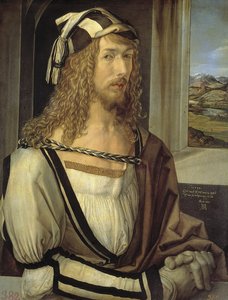
Albrecht Dürer
1471 - 1528 , Germania
Detalii rapide
- Artistic Movement Or Style: Renașterea Germană
- Artists Or Movements Influenced By This Artist: ['Renașterea Nordică']
- Artists Who Influenced This Artist:
- Leonardo da Vinci
- Raphael
- Giovanni Bellini
- Date Of Birth: 21 mai 1471
- Date Of Death: 6 aprilie 1528
- Full Name: Albrecht Dürer
- Nationality: German
- Notable Artworks:
- Apocalipsa
- Melencolia I
- Sf. Ioan în studiul său
- Place Of Birth: Nuremberg, Italia

