Previzualizare
 Trimite prin felicitare
 Distribuie
 Detalii despre lucrare
 Ghid
Ghid

 Descarcă imaginea
 Produse similare
 Radiografie
 Galerie foto
 Q&A
Q&A Statistici
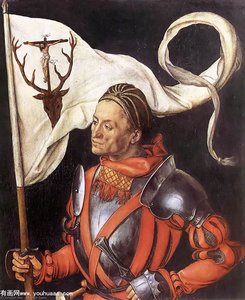
Crucifixion

- 133.0 x 98.0 cm


 Vezi mai mult
Giclée / Imprimare artistică
Printuri giclée sau pe canvas de calitate muzeală, cu proces de producție rapid și opțiuni flexibile de finisare. ( Comandă pictură realizată manual Comută pe Imagine Digitală)




P118B lei10

P118H lei10

P118W lei10

P438Z lei10

P508JH lei12

P508YH lei12

P805H lei10

P805Z lei10

P919BZ lei10

P919G lei10

P919XJ lei10

P959ZH lei10

P968JZ lei12

W106C lei8

W218G lei10

W218JH lei8

W218Y lei10

W307PJ lei10

W316G lei10

W316PJ lei8

W316Y lei10

W398PJ lei8

W4111J lei10

W500HY lei15

W500JH lei15

W692G lei12

W849H lei8

W940BG lei15

W953PJ lei8




Alegeți dintre dimensiunile noastre prestabilite, care respectă proporțiile originale ale operei de artă.

Introduceți lățimea și înălțimea necesare pentru a se potrivi ramei sau peretelui dumneavoastră. O printare poate fi doar tăiată, niciodată extinsă dincolo de dimensiunea imaginii originale, astfel încât o dimensiune cu o formă diferită va pierde o parte din imagine. Vă trimitem o simulare digitală pentru aprobare înainte de a imprima orice. Imaginea afișată pe această pagină nu prezintă tăierea reală — doar simularea arată acest lucru.
Livrare în întreaga lume () în 2 săptămâni, în loc de cele 4/5 săptămâni standard. (1 Noiembrie)

Livrare expres gratuită la nivel mondial

Pânză de in de înaltă calitate

Asigurare completă pentru transport

Garanție de rambursare a taxelor vamale

Garanția fidelității culorilor

Politica de retur în 100 de zile (doar pentru defecte de fabricație)

Garanție de rambursare 100%

Ofertă pentru comenzi multiple
 Opțiunea cu sticlă este disponibilă doar pentru dimensiuni de sub 110 cm

Crucifixion
Giclée / Imprimare artistică
Dimensiune reproducere
-


Preț total calculat
lei 379
A Testament to Faith: Examining Albrecht Dürer’s Crucifixion
The engraving “Crucifixion,” created by Albrecht Dürer in 1508, stands as an enduring emblem of Renaissance artistic achievement and a profound meditation on Christian faith. More than just a depiction of biblical narrative, it's a masterful demonstration of meticulous observation, technical prowess, and symbolic resonance—elements that continue to captivate audiences centuries later. Produced during the height of Dürer’s prolific output, this work exemplifies his unwavering commitment to realism combined with an intellectual understanding of artistic principles.Composition and Technique: Mastering Line
Dürer's genius resided in his unparalleled command of engraving technique—specifically hatching and cross-hatching—methods he honed during his apprenticeship under Michael Wolgemut. The artist painstakingly etched lines onto a copper plate, creating a surface riddled with minuscule indentations that would transfer ink onto paper during printing. This process demanded immense patience and precision, resulting in an image characterized by astonishing textural detail. The pyramidal composition directs the viewer’s gaze upwards towards Christ's crucified body, anchoring the scene while simultaneously conveying a sense of solemn grandeur. Diagonal lines emanating from figures contribute to dynamism, mirroring the emotional turmoil surrounding the event. Notice how Dürer utilizes hatching—parallel lines closely spaced—to sculpt shadows and delineate forms with remarkable accuracy; cross-hatching builds upon this foundation, deepening tonal values and enhancing the illusion of volume.Historical Context: Renaissance Piety and Artistic Innovation
“Crucifixion” emerged from a period marked by fervent religious devotion within Europe’s burgeoning Renaissance. The Catholic Church exerted considerable influence on artistic endeavors, commissioning works intended to inspire piety and communicate theological truths. However, Dürer wasn't merely fulfilling a commission; he was pushing the boundaries of artistic innovation. He consciously sought to elevate engraving beyond its reputation for mere illustration, demonstrating its capacity for conveying complex emotions and achieving unparalleled visual realism—a departure from earlier woodcuts that prioritized decorative elements over anatomical accuracy. The artwork reflects the humanist ideals prevalent at the time, emphasizing human dignity and striving for intellectual understanding alongside spiritual contemplation.Symbolism: Sacrifice and Redemption
The Crucifixion itself carries immense symbolic weight within Christian iconography. Christ’s posture—elongated and vulnerable—represents sacrifice and acceptance of divine suffering. Surrounding figures express grief and sorrow, embodying the universal human experience of loss and mourning. The landscape backdrop—a stylized depiction of Jerusalem—adds a sense of timelessness and reinforces the biblical narrative's significance. Dürer skillfully employs visual cues to communicate these ideas, inviting viewers to engage in contemplation about faith, morality, and the promise of salvation.Emotional Impact: A Moment Frozen in Time
“Crucifixion” transcends its formal qualities to evoke a powerful emotional response. The stark grayscale palette amplifies the scene’s solemnity, mirroring the gravity of the depicted event. Dürer's meticulous rendering of anatomical detail—particularly Christ’s musculature and drapery—creates an unsettling realism that compels viewers to confront the physicality of suffering. Yet, amidst this depiction of pain, there is also a palpable sense of reverence and compassion. The engraving serves as a poignant reminder of humanity’s capacity for empathy and its enduring quest for spiritual meaning—a legacy that continues to resonate with audiences today.Întrebări și răspunsuri
La ce artist este atribuită opera „Crucifixion”?
„Crucifixion” a fost creat de Albrecht Dürer. Informațiile de pe această pagină descriu opera originală a lui Albrecht Dürer.
Unde se încadrează "Crucifixion" în întreaga creație a lui Albrecht Dürer?
„Crucifixion” împarte cu celelalte opere ale lui Albrecht Dürer stilul Northern Renaissance și temele recurente: german renaissance tradition, christian symbolism, humanist idealism, symbolic representation, artistic mastery.
În ce cameră este recomandată lucrarea "Crucifixion" de Albrecht Dürer?
"Crucifixion" de Albrecht Dürer este recomandată pentru o Living Room. Această sugestie se bazează pe subiectul, culorile și atmosfera lucrării.
Biografie artist
A Life Forged in Nuremberg: The Early Years and Apprenticeship
Albrecht Dürer, a name synonymous with the German Renaissance, emerged from the bustling artisan city of Nuremberg in 1471. His father, Albrecht Dürer the Elder, was a successful goldsmith who had immigrated from Hungary, bringing with him a lineage steeped in craftsmanship. It was within this environment—the scent of metal and the meticulous precision of handiwork—that young Albrecht’s artistic inclinations first took root. Though his father envisioned a similar path for him, apprenticing him initially in the family trade, it soon became undeniable that Albrecht possessed an exceptional gift for drawing. At thirteen, he transitioned to the workshop of Michael Wolgemut, Nuremberg's leading artist at the time. This was no mere technical training; it was immersion into a world of illuminated manuscripts, painted panels, and—crucially—the burgeoning art of woodcut illustration. The sheer volume of work produced by Wolgemut’s workshop, including the extensive illustrations for the *Nuremberg Chronicle*, provided Dürer with an unparalleled foundation in design, composition, and the mechanics of image-making. A remarkable silverpoint self-portrait from 1484, created when he was barely a teenager, stands as astonishing evidence of his precocious talent—a testament to a burgeoning artistic identity already taking shape. The early years were marked by intense study and observation, absorbing the techniques and traditions of his master while simultaneously developing his own unique style.The Italian Influence and Artistic Maturation
Dürer’s ambition extended far beyond the confines of Nuremberg. Driven by an insatiable curiosity and a desire to master the art of painting, he embarked on his first journey to Italy in 1494. This was not simply a sightseeing trip; it was a pilgrimage to the heart of the Renaissance. He encountered the works of masters like Raphael, Giovanni Bellini, and Leonardo da Vinci—artists who were redefining the possibilities of form, perspective, and human expression. The impact of this exposure was profound. Dürer absorbed the classical motifs, harmonious compositions, and subtle sfumato techniques that characterized Italian art, yet he never abandoned his Northern European sensibility for meticulous detail and symbolic depth. He meticulously studied the works of Botticelli, Donatello, and Masaccio, noting their innovative use of perspective and their focus on human anatomy. The vibrant colors and dynamic movement of Venetian painting particularly captivated him, influencing his later palette and compositional choices. A second sojourn to Italy between 1505 and 1507 further solidified these influences, allowing him to study ancient Roman ruins and refine his understanding of anatomy and proportion. This synthesis of Northern precision and Italian grace became the hallmark of Dürer’s unique artistic style—a testament to his ability to synthesize diverse traditions into a cohesive and powerfully expressive vision.Mastering the Mediums: Painting, Engraving, and Woodcut
Dürer was a master of multiple mediums, each offering him distinct avenues for creative expression. His paintings, though fewer in number than his prints, demonstrate a remarkable command of oil paint and an ability to capture both physical likeness and psychological depth. Works like the *Feast of the Rose Garlands* (1507) reveal a vibrant palette influenced by Venetian colorism, while *Adoration of the Magi* showcases his growing mastery of composition and narrative storytelling. However, it was in the realm of printmaking—particularly engraving and woodcut—that Dürer truly revolutionized artistic practice. He elevated these techniques from mere reproductive methods to independent art forms, capable of conveying complex narratives and profound emotions. The *Apocalypse* series (1498), a collection of fourteen woodcuts illustrating the Book of Revelation, showcased his mastery of this medium despite its inherent limitations—he skillfully employed hatching and cross-hatching to create nuanced tonal effects. Later engravings like *Melencolia I* (1514) and *Saint Jerome in His Study* (1514) are testaments to his unparalleled skill—intricate compositions filled with symbolic meaning and executed with breathtaking precision. He didn’t just depict reality; he imbued it with layers of intellectual and spiritual significance, transforming the printed image into a powerful vehicle for artistic expression.A Theorist and Innovator: The Legacy of Albrecht Dürer
Dürer was not merely an artist; he was a scholar, a theorist, and an innovator who sought to understand the underlying principles governing artistic creation. He believed in the mathematical foundations of art and dedicated himself to establishing a scientific approach to representation. His treatises on geometry, proportion, and human anatomy—most notably *Four Books of Human Proportion* (1528)—were groundbreaking for their time, demonstrating his commitment to rigorous observation and rational analysis. These writings were not simply academic exercises; they were intended to elevate the status of artists from mere craftsmen to intellectual practitioners. Dürer’s meticulous studies of human anatomy, informed by both artistic observation and scientific inquiry, revolutionized the depiction of the human form in Northern art. He developed a sophisticated system for measuring proportions based on mathematical ratios, which he applied to his paintings and prints. His theoretical work influenced generations of artists and scholars, shaping the development of Renaissance art and contributing to the rise of visual culture. Dürer’s legacy extends far beyond his individual artworks. He bridged the gap between Northern European traditions and Italian Renaissance ideals, introducing classical motifs into Northern art while maintaining its distinctive character. His theoretical contributions helped establish a new framework for artistic practice, inspiring artists with his technical skill, innovative spirit, and profound vision. He remains, to this day, one of the most important figures in the history of Western art.Influences and Enduring Impact
- Michael Wolgemut: Dürer’s initial mentor, providing foundational skills in drawing, painting, and woodcut techniques.
- Leonardo da Vinci: Inspired Dürer's exploration of anatomy, perspective, and sfumato—the subtle blending of tones.
- Raphael: Influenced Dürer’s compositional harmony and idealized forms.
- Giovanni Bellini: Contributed to Dürer's understanding of color and Venetian painting traditions.
Dürer’s influence reverberates through centuries of art history. His meticulous realism, his innovative use of printmaking, and his theoretical writings continue to inspire artists and scholars alike. He demonstrated that art could be both technically masterful and intellectually rigorous—a legacy that continues to shape the artistic landscape today. His work stands as a testament to the power of observation, the pursuit of knowledge, and the enduring human desire to create beauty and meaning.
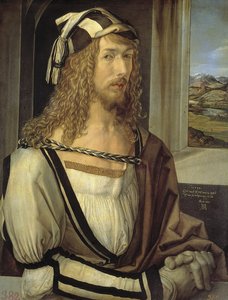
Albrecht Dürer
1471 - 1528 , Germania
Detalii rapide
- Artistic Movement Or Style: Renașterea Germană
- Artists Or Movements Influenced By This Artist: ['Renașterea Nordică']
- Artists Who Influenced This Artist:
- Leonardo da Vinci
- Raphael
- Giovanni Bellini
- Date Of Birth: 21 mai 1471
- Date Of Death: 6 aprilie 1528
- Full Name: Albrecht Dürer
- Nationality: German
- Notable Artworks:
- Apocalipsa
- Melencolia I
- Sf. Ioan în studiul său
- Place Of Birth: Nuremberg, Italia