

 Vezi în context
 Trimite
 Distribuie
 Detalii
 Ghidul

 Descarcă
 Produse similare
 Radiografie
 Diaporama
 Statistici
Sunlight and Shadow
 Acrylic On Canvas
- WallArt
- Hudson River School
 1862
1862- 19th Century
 105.0 x 90.0 cm
 Fine Arts Museums of San Francisco
 Citește mai mult
Giclée / Imprimare artistică
Printuri giclée sau pe canvas de calitate muzeală, cu proces de producție rapid și opțiuni flexibile de finisare. ( Comandă pictură realizată manual Treci la imagine digitală)




P118B lei10

P118H lei10

P118W lei10

P438Z lei10

P508JH lei12

P508YH lei12

P805H lei10

P805Z lei10

P919BZ lei10

P919G lei10

P919XJ lei10

P959ZH lei10

P968JZ lei12

W106C lei8

W218G lei10

W218JH lei8

W218Y lei10

W307PJ lei10

W316G lei10

W316PJ lei8

W316Y lei10

W398PJ lei8

W4111J lei10

W500HY lei15

W500JH lei15

W692G lei12

W849H lei8

W940BG lei15

W953PJ lei8




Alegeți dintre dimensiunile noastre prestabilite, care respectă proporțiile originale ale operei de artă.

Introduceți lățimea și înălțimea de care aveți nevoie, pentru a se potrivi ramei sau peretelui dumneavoastră. O printare poate fi doar tăiată, niciodată extinsă dincolo de dimensiunea imaginii originale, astfel încât o dimensiune cu o formă diferită va pierde o parte din imagine. Vă trimitem o simulare digitală pentru aprobare înainte de a imprima orice. Imaginea afișată pe această pagină nu prezintă tăierea reală — doar simularea arată acest lucru.
Livrare în întreaga lume () în 2 săptămâni, în loc de cele 4/5 săptămâni standard. (24 Octombrie)

Livrare expres gratuită la nivel mondial

Pânză de in premium

Asigurare completă pentru transport

Garanție de rambursare a taxelor vamale

Garanția fidelității culorilor

Politica de retur în 100 de zile (doar pentru defecte)

Garanție de rambursare 100%

Reducere pentru comenzi multiple
 Opțiunea cu sticlă este disponibilă doar pentru dimensiuni de sub 110 cm

Sunlight and Shadow
Giclée / Imprimare artistică
Dimensiune reproducere
-


Preț total
lei 370
A Glimpse of Divinity: Albert Bierstadt’s “Sunlight and Shadow”
Albert Bierstadt's "Sunlight and Shadow," painted in 1862, isn’t merely a landscape; it’s an immersive experience. This monumental canvas transports the viewer to the heart of the American West, specifically capturing a scene near Kassel, Germany – a deliberate nod to the Gothic Revival architecture that Bierstadt so admired. The painting immediately draws the eye with its dramatic lighting, a hallmark of the Hudson River School and, crucially, Bierstadt’s own unique approach to Luminism. He didn't simply depict a mountain view; he sought to evoke the sublime, that feeling of awe and reverence inspired by nature’s grandeur. Notice how the sunlight, fractured and diffused through the arched doorway of the distant church, casts an ethereal glow upon the weathered stone, imbuing it with a sense of ancient wisdom and spiritual resonance.
The Romantic Vision: Bierstadt and the Rocky Mountain School
Bierstadt’s artistic journey is deeply intertwined with the burgeoning identity of America itself. Born in Prussia and raised in New Bedford, Massachusetts, he developed a profound fascination for the landscapes that would define his legacy. His early studies in Düsseldorf provided him with an unparalleled technical mastery – a meticulous attention to detail and a sophisticated understanding of light and atmosphere, qualities he expertly translated to his depictions of the American wilderness. He was a key figure within the Hudson River School, but distinguished himself through his expansive scale and his ability to capture not just the visual beauty of the West, but also its emotional power. His work stands apart from earlier landscape painting by prioritizing an intensely personal response to nature – a desire to convey the sublime, rather than simply replicate what was seen.
Symbolism in Stone and Light: Interpreting the Scene
The composition of “Sunlight and Shadow” is rich with symbolic elements. The imposing Gothic Revival church, reminiscent of structures like the Löwenburg castle near Kassel, represents faith, tradition, and a connection to European artistic heritage. However, Bierstadt subtly contrasts this monumental structure with the more humble figure of a woman tending her child in the foreground – a poignant reminder of charity and compassion. The towering oak tree, a national symbol of Germany, anchors the scene, its branches reaching towards the heavens like supplicating arms. This deliberate inclusion speaks to the enduring power of faith amidst adversity, mirroring Christ’s crucifixion and resurrection. The play of light itself is crucial; it's not merely illumination but a vehicle for conveying emotion – warmth, serenity, and a sense of divine presence.
A Legacy of Grandeur: Reproductions and Artistic Inspiration
“Sunlight and Shadow” remains one of Albert Bierstadt’s most celebrated works, admired for its scale, technical brilliance, and evocative power. Today, high-quality reproductions offer a remarkable opportunity to experience this masterpiece in your own home or office. OriginalUniqueArt specializes in meticulously crafted hand-painted reproductions that capture the essence of Bierstadt's original vision. Consider how these reproductions can transform a room – bringing a touch of Romantic grandeur, spiritual depth, and the timeless beauty of the American West into your space. Further research reveals fascinating details about Bierstadt’s artistic process, including his use of stereoscopic photographs as reference material, demonstrating his commitment to both accuracy and emotional resonance. (See links below for further exploration).
- Size:** 105 x 90 cm
- Date:** 1862
- Artist:** Albert Bierstadt
Useful Resources: Google Arts & Culture, Wikipedia, OriginalUniqueArt
Întrebări și răspunsuri
Pentru ce utilizare este recomandată "Sunlight and Shadow" de Albert Bierstadt?
Utilizarea sugerată pentru "Sunlight and Shadow" de Albert Bierstadt este Statement. Poate servi și alte scopuri.
Ce dimensiune este recomandată pentru "Sunlight and Shadow" într-un Living Room?
Combinația recomandată pentru "Sunlight and Shadow" de Albert Bierstadt: o printare de dimensiunea Medium, ideală pentru o Living Room.
Pentru cine este recomandat "Sunlight and Shadow" de Albert Bierstadt ca cadou?
"Sunlight and Shadow" de Albert Bierstadt este recomandată ca cadou pentru Wedding. O reproducere a acestei opere de artă poate fi oferită ca prezent.
Biografie artist
A Pioneer of the American West: The Life and Art of Albert Bierstadt
Albert Bierstadt’s story is deeply intertwined with the formation of America itself. His early life, beginning in Prussia in 1830, set the stage for a lifelong fascination with the landscapes that would define his artistic legacy. Born into a family who emigrated to New Bedford, Massachusetts when he was just one year old, Bierstadt’s roots were firmly planted in the burgeoning maritime world of the United States. Initially self-taught, sketching with crayons as a youth, he quickly recognized the need for formal training and embarked on studies in Düsseldorf, Germany, in 1853. This European grounding proved crucial, providing him with technical mastery—a meticulous attention to detail and a sophisticated understanding of light and atmosphere—that he would later apply to his depictions of the American wilderness. It wasn’t merely replication that Bierstadt sought; he aimed to convey the sublime power and beauty of nature, creating immersive experiences for viewers.Capturing the Majesty: The Hudson River School and Beyond
Upon returning to the United States in 1857, Bierstadt swiftly became associated with the Hudson River School, a group of artists dedicated to portraying the American landscape with both accuracy and romantic idealism. While sharing their reverence for nature, Bierstadt distinguished himself through his ambitious scale and dramatic compositions. He wasn’t content with simply painting pretty pictures; he aimed to transport viewers into the heart of the wilderness. His breakthrough came in 1858 with a Swiss landscape exhibited at the National Academy of Design, earning him immediate acclaim and honorary membership. However, it was his subsequent expeditions westward—first with land surveyor Frederick W. Lander in 1859, then with author Fitz Hugh Ludlow in 1863 to Yosemite Valley—that truly ignited his artistic vision. These journeys weren’t merely observational; they were immersive experiences, allowing Bierstadt to absorb the grandeur of the Rocky Mountains, the vastness of the plains, and the awe-inspiring scale of canyons and waterfalls. He meticulously documented these scenes, translating them onto canvas with a remarkable ability to capture both the physical reality and the emotional impact of the wilderness.The Painter of Empires: Shaping Perceptions of the West
Bierstadt’s paintings weren't simply landscapes; they were statements about national identity and Manifest Destiny. His canvases—often enormous in size—depicted the American West not as a harsh, untamed frontier, but as a land of promise, abundance, and divine beauty. The Rocky Mountains, Lander’s Peak, completed in 1863 and purchased for an astonishing $25,000 (equivalent to nearly $400,000 today), exemplifies this approach. The painting isn't a precise topographical rendering; it’s a carefully constructed vision of idealized grandeur, bathed in golden light and imbued with a sense of spiritual significance. Bierstadt skillfully employed techniques learned during his time in Düsseldorf, utilizing atmospheric perspective and dramatic lighting to create a sense of depth and scale that dwarfed the human figures within the scene. This ability to evoke emotion, to inspire awe, made him immensely popular during his lifetime. He wasn’t just an artist; he was a cultural ambassador, shaping how Americans—and the world—perceived the West. His work fueled westward expansion by presenting it as a noble and divinely ordained undertaking.Influences and Techniques
Bierstadt's artistic style evolved significantly throughout his career. Initially influenced by European Romanticism, particularly the Düsseldorf School of painting, he developed a distinctive Luminist approach—a technique characterized by intense light and atmospheric effects. He meticulously studied nature, often sketching directly from life during his expeditions to the West. His technical skill was remarkable, honed through years of practice and informed by his understanding of color theory and composition. Bierstadt’s use of scale was particularly noteworthy; he frequently employed enormous canvases to capture the vastness of the landscapes he depicted, creating a sense of immersion for the viewer. He also drew inspiration from the Hudson River School, adopting their emphasis on capturing the beauty and sublimity of nature, but adding his own unique vision and dramatic flair.Legacy and Historical Significance
While Bierstadt’s popularity waned somewhat in the late 19th century as artistic tastes shifted towards Impressionism, his influence on American landscape painting remains undeniable. He demonstrated the power of large-scale canvases to create immersive experiences, a technique later adopted by many artists. His meticulous attention to detail and masterful use of light continue to inspire painters today. Beyond his technical achievements, Bierstadt’s work serves as a valuable historical document, offering insights into the evolving perceptions of the American West during a period of rapid change and expansion. He captured a moment in time—a vision of pristine wilderness before it was irrevocably altered by human intervention. His paintings are not just beautiful images; they are windows into a pivotal era in American history, reminding us of both the promise and the cost of westward expansion. His legacy endures, ensuring that his breathtaking landscapes will continue to captivate and inspire generations to come.
Albert Bierstadt
1830 - 1902 , Germania
Informații rapide
- Artistic Movement Or Style: Școala Hudson River
- Artists Or Movements Influenced By This Artist: ['Pictori americani']
- Artists Who Influenced This Artist:
- Turner
- David
- Date Of Birth: 7 ianuarie 1830
- Date Of Death: 18 februarie 1902
- Full Name: Albert Bierstadt
- Nationality: German-American
- Notable Artworks:
- Pâine și pâslă
- Munții Stâncoși
- Place Of Birth: Solingen, Germania
Articole conexe
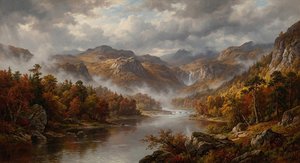
Școlile de Artă Hudson River: 10 Capodopere Iconice pentru Decorul Casei | OriginalUniqueArt.ro
Descoperă Școala Hudson River prin 10 capodopere iconice! Explorează picturile lui Thomas Cole, Frederic Church și Albert Bierstadt. Reproduceri de artă premium pentru un decor rafinat. Inspiră-te acum pe OriginalUniqueArt.com!

Albert Bierstadt: Luminosity, Landscape & the American Ideal
Explore the breathtaking landscapes of Albert Bierstadt, master of the American West & a leading figure in the Hudson River School. Discover his luminous style and iconic paintings – a timeless investment for art lovers.

The Sublime Landscape: Exploring the Hudson River School Movement
Explore the captivating world of the Hudson River School! Discover the history, artists, and defining characteristics of this iconic American art movement. Learn about Romanticism's influence & find inspiration for your collection.
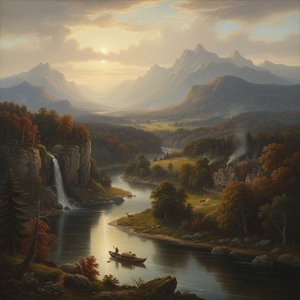
Capturing the American Spirit: A Journey Through Iconic Landscapes and the Legacy of the Hudson River School
Explore the profound beauty of American art history. From the Hudson River School to iconic landscapes, discover a curated journey through the masterpieces that defined a nation's spirit and the enduring legacy of American Romanticism.

Wild & Untamed: The High-Impact Energy of American Romanticism and the Hudson River School
Experience the raw power of American Romanticism. Explore the high-impact energy of the Hudson River School through premium, hand-painted oil reproductions that capture the sublime beauty and untamed spirit of the American wilderness for discerning collectors.


