

 Vezi în context
 Trimite
 Distribuie
 Detalii
 Ghidul

 Descarcă
 Produse similare
 Radiografie
 Diaporama
 Statistici
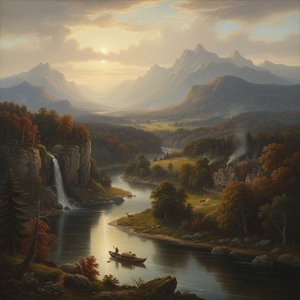
Cathedral Rocks, Yosemite
 Acrylic
- WallArt
- Hudson River School
 1870
1870 60.0 x 45.0 cm
 Marsh-Billings-Rockefeller National Historical Park
 Citește mai mult
Giclée / Imprimare artistică
Printuri giclée sau pe canvas de calitate muzeală, cu proces de producție rapid și opțiuni flexibile de finisare. ( Comandă pictură realizată manual Treci la imagine digitală)




P118B lei10

P118H lei10

P118W lei10

P438Z lei10

P508JH lei12

P508YH lei12

P805H lei10

P805Z lei10

P919BZ lei10

P919G lei10

P919XJ lei10

P959ZH lei10

P968JZ lei12

W106C lei8

W218G lei10

W218JH lei8

W218Y lei10

W307PJ lei10

W316G lei10

W316PJ lei8

W316Y lei10

W398PJ lei8

W4111J lei10

W500HY lei15

W500JH lei15

W692G lei12

W849H lei8

W940BG lei15

W953PJ lei8




Alegeți dintre dimensiunile noastre prestabilite, care respectă proporțiile originale ale operei de artă.

Introduceți lățimea și înălțimea de care aveți nevoie, pentru a se potrivi ramei sau peretelui dumneavoastră. O printare poate fi doar tăiată, niciodată extinsă dincolo de dimensiunea imaginii originale, astfel încât o dimensiune cu o formă diferită va pierde o parte din imagine. Vă trimitem o simulare digitală pentru aprobare înainte de a imprima orice. Imaginea afișată pe această pagină nu prezintă tăierea reală — doar simularea arată acest lucru.
Livrare în întreaga lume () în 2 săptămâni, în loc de cele 4/5 săptămâni standard. (23 Octombrie)

Livrare expres gratuită la nivel mondial

Pânză de in premium

Asigurare completă pentru transport

Garanție de rambursare a taxelor vamale

Garanția fidelității culorilor

Politica de retur în 100 de zile (doar pentru defecte)

Garanție de rambursare 100%

Reducere pentru comenzi multiple
 Opțiunea cu sticlă este disponibilă doar pentru dimensiuni de sub 110 cm

Cathedral Rocks, Yosemite
Giclée / Imprimare artistică
Dimensiune reproducere
-


Preț total
lei 370
A Vision of Sublime Wilderness: Albert Bierstadt’s Cathedral Rocks
Albert Bierstadt's "Cathedral Rocks," painted in 1870, stands as an iconic testament to the Hudson River School’s fascination with capturing the grandeur and spiritual power of the American West. More than just a depiction of scenery, it embodies a profound philosophical response to the burgeoning frontier spirit—a yearning for transcendence amidst untamed landscapes. The painting portrays Ferrar Glacier and its surrounding peaks in breathtaking detail, showcasing Bierstadt's masterful command of light and color. Watkins’ mammoth photograph served as inspiration for this artwork.- Subject Matter: The scene depicts Cathedral Rock, a dramatic cliff face dominated by snow-capped mountains situated within the Royal Society Range of Antarctica. Its jagged peaks pierce through swirling clouds, creating an atmosphere of awe and majesty.
- Style & Technique: Bierstadt adhered to the Hudson River School’s stylistic conventions—characterized by monumental scale, meticulous realism, and a deliberate use of atmospheric perspective. He employed oil paints on canvas with painstaking accuracy, layering glazes to achieve luminous tonal gradations that convey the palpable chill of glacial ice and the radiant glow of sunlight filtering through high altitudes.
- Historical Context: Painted during a period of intense exploration and westward expansion in America, “Cathedral Rocks” reflects the Romantic ideal of confronting nature’s sublime beauty. It aligns perfectly with Carleton Watkins' photographic expeditions documenting the American West, furthering the visual documentation of this era.
Symbolism & Emotional Impact
The painting transcends mere topographical representation; it speaks to a deeper spiritual yearning. The towering Cathedral Rock symbolizes resilience and permanence against the forces of time and erosion—a metaphor for humanity’s relationship with the natural world. Bierstadt's deliberate composition aims to evoke feelings of reverence and humility, prompting viewers to contemplate the immensity of creation and their own insignificance within its vastness. The ethereal light captures a moment of sublime beauty, mirroring the Romantic preoccupation with experiencing profound emotion.- Color Palette: Bierstadt utilized a predominantly cool color palette—dominantly blues and whites—to depict the glacial environment, emphasizing the icy expanse and conveying a sense of solitude. However, warmer hues like ochre and amber highlight the sunlit peaks, creating visual contrast and reinforcing the painting’s dramatic impact.
- Composition: The pyramidal arrangement of Cathedral Rock and its surrounding mountains directs the viewer's gaze upwards, mirroring the spiritual aspiration inherent in the Hudson River School movement. Bierstadt skillfully employs atmospheric perspective—reducing detail and color intensity with distance—to simulate the effects of altitude and enhance the illusion of depth.
A Legacy Enduring Inspiration
“Cathedral Rocks” continues to inspire artists and designers alike, demonstrating the enduring power of landscape painting to communicate emotion and convey philosophical ideas. Its meticulous technique and evocative imagery exemplify the Hudson River School’s commitment to capturing the sublime—a concept championed by Edmund Burke and Coleridge—and solidify Bierstadt's place as one of America’s foremost Romantic painters. Reproductions offer a remarkable opportunity to experience this masterpiece firsthand, bringing its breathtaking beauty into any interior space.Întrebări și răspunsuri
Când și din ce materiale a fost realizată opera „Cathedral Rocks, Yosemite”?
Tehnica utilizată pentru "Cathedral Rocks, Yosemite" de Albert Bierstadt este Acrylic, iar lucrarea datează din 1870.
Ce armonie de culori prezintă "Cathedral Rocks, Yosemite" de Albert Bierstadt?
Culorile din "Cathedral Rocks, Yosemite" de Albert Bierstadt prezintă o armonie Strong Color Unity. Armonia descrie modul în care culorile interacționează între ele.
„Cathedral Rocks, Yosemite” are o previzualizare în realitate augmentată?
„Cathedral Rocks, Yosemite” are o previzualizare în realitate augmentată: pagina Previzualizare AR a operei artistice o prezintă în propriul tău spațiu, pe un dispozitiv compatibil.
Biografie artist
A Pioneer of the American West: The Life and Art of Albert Bierstadt
Albert Bierstadt’s story is deeply intertwined with the formation of America itself. His early life, beginning in Prussia in 1830, set the stage for a lifelong fascination with the landscapes that would define his artistic legacy. Born into a family who emigrated to New Bedford, Massachusetts when he was just one year old, Bierstadt’s roots were firmly planted in the burgeoning maritime world of the United States. Initially self-taught, sketching with crayons as a youth, he quickly recognized the need for formal training and embarked on studies in Düsseldorf, Germany, in 1853. This European grounding proved crucial, providing him with technical mastery—a meticulous attention to detail and a sophisticated understanding of light and atmosphere—that he would later apply to his depictions of the American wilderness. It wasn’t merely replication that Bierstadt sought; he aimed to convey the sublime power and beauty of nature, creating immersive experiences for viewers.Capturing the Majesty: The Hudson River School and Beyond
Upon returning to the United States in 1857, Bierstadt swiftly became associated with the Hudson River School, a group of artists dedicated to portraying the American landscape with both accuracy and romantic idealism. While sharing their reverence for nature, Bierstadt distinguished himself through his ambitious scale and dramatic compositions. He wasn’t content with simply painting pretty pictures; he aimed to transport viewers into the heart of the wilderness. His breakthrough came in 1858 with a Swiss landscape exhibited at the National Academy of Design, earning him immediate acclaim and honorary membership. However, it was his subsequent expeditions westward—first with land surveyor Frederick W. Lander in 1859, then with author Fitz Hugh Ludlow in 1863 to Yosemite Valley—that truly ignited his artistic vision. These journeys weren’t merely observational; they were immersive experiences, allowing Bierstadt to absorb the grandeur of the Rocky Mountains, the vastness of the plains, and the awe-inspiring scale of canyons and waterfalls. He meticulously documented these scenes, translating them onto canvas with a remarkable ability to capture both the physical reality and the emotional impact of the wilderness.The Painter of Empires: Shaping Perceptions of the West
Bierstadt’s paintings weren't simply landscapes; they were statements about national identity and Manifest Destiny. His canvases—often enormous in size—depicted the American West not as a harsh, untamed frontier, but as a land of promise, abundance, and divine beauty. The Rocky Mountains, Lander’s Peak, completed in 1863 and purchased for an astonishing $25,000 (equivalent to nearly $400,000 today), exemplifies this approach. The painting isn't a precise topographical rendering; it’s a carefully constructed vision of idealized grandeur, bathed in golden light and imbued with a sense of spiritual significance. Bierstadt skillfully employed techniques learned during his time in Düsseldorf, utilizing atmospheric perspective and dramatic lighting to create a sense of depth and scale that dwarfed the human figures within the scene. This ability to evoke emotion, to inspire awe, made him immensely popular during his lifetime. He wasn’t just an artist; he was a cultural ambassador, shaping how Americans—and the world—perceived the West. His work fueled westward expansion by presenting it as a noble and divinely ordained undertaking.Influences and Techniques
Bierstadt's artistic style evolved significantly throughout his career. Initially influenced by European Romanticism, particularly the Düsseldorf School of painting, he developed a distinctive Luminist approach—a technique characterized by intense light and atmospheric effects. He meticulously studied nature, often sketching directly from life during his expeditions to the West. His technical skill was remarkable, honed through years of practice and informed by his understanding of color theory and composition. Bierstadt’s use of scale was particularly noteworthy; he frequently employed enormous canvases to capture the vastness of the landscapes he depicted, creating a sense of immersion for the viewer. He also drew inspiration from the Hudson River School, adopting their emphasis on capturing the beauty and sublimity of nature, but adding his own unique vision and dramatic flair.Legacy and Historical Significance
While Bierstadt’s popularity waned somewhat in the late 19th century as artistic tastes shifted towards Impressionism, his influence on American landscape painting remains undeniable. He demonstrated the power of large-scale canvases to create immersive experiences, a technique later adopted by many artists. His meticulous attention to detail and masterful use of light continue to inspire painters today. Beyond his technical achievements, Bierstadt’s work serves as a valuable historical document, offering insights into the evolving perceptions of the American West during a period of rapid change and expansion. He captured a moment in time—a vision of pristine wilderness before it was irrevocably altered by human intervention. His paintings are not just beautiful images; they are windows into a pivotal era in American history, reminding us of both the promise and the cost of westward expansion. His legacy endures, ensuring that his breathtaking landscapes will continue to captivate and inspire generations to come.
Albert Bierstadt
1830 - 1902 , Germania
Informații rapide
- Artistic Movement Or Style: Școala Hudson River
- Artists Or Movements Influenced By This Artist: ['Pictori americani']
- Artists Who Influenced This Artist:
- Turner
- David
- Date Of Birth: 7 ianuarie 1830
- Date Of Death: 18 februarie 1902
- Full Name: Albert Bierstadt
- Nationality: German-American
- Notable Artworks:
- Pâine și pâslă
- Munții Stâncoși
- Place Of Birth: Solingen, Germania
Articole conexe

Albert Bierstadt: Luminosity, Landscape & the American Ideal
Explore the breathtaking landscapes of Albert Bierstadt, master of the American West & a leading figure in the Hudson River School. Discover his luminous style and iconic paintings – a timeless investment for art lovers.

Școlile de Artă Hudson River: 10 Capodopere Iconice pentru Decorul Casei | OriginalUniqueArt.ro
Descoperă Școala Hudson River prin 10 capodopere iconice! Explorează picturile lui Thomas Cole, Frederic Church și Albert Bierstadt. Reproduceri de artă premium pentru un decor rafinat. Inspiră-te acum pe OriginalUniqueArt.com!
Capturing the American Spirit: A Journey Through Iconic Landscapes and the Legacy of the Hudson River School
Explore the profound beauty of American art history. From the Hudson River School to iconic landscapes, discover a curated journey through the masterpieces that defined a nation's spirit and the enduring legacy of American Romanticism.

Wild & Untamed: The High-Impact Energy of American Romanticism and the Hudson River School
Experience the raw power of American Romanticism. Explore the high-impact energy of the Hudson River School through premium, hand-painted oil reproductions that capture the sublime beauty and untamed spirit of the American wilderness for discerning collectors.

The Sublime Landscape: Exploring the Hudson River School Movement
Explore the captivating world of the Hudson River School! Discover the history, artists, and defining characteristics of this iconic American art movement. Learn about Romanticism's influence & find inspiration for your collection.


