Previzualizare
 Trimite prin felicitare
 Distribuie
 Detalii despre lucrare
 Ghid
Ghid

 Descarcă imaginea
 Produse similare
 Radiografie
 Galerie foto
 Întrebări și răspunsuri
 Statistici
Saint Sebastian

- 76.0 x 87.0 cm


 Vezi mai mult
Giclée / Imprimare artistică
Printuri giclée sau pe canvas de calitate muzeală, cu proces de producție rapid și opțiuni flexibile de finisare. ( Comandă pictură realizată manual Comută pe Imagine Digitală)




P118B lei10

P118H lei10

P118W lei10

P438Z lei10

P508JH lei12

P508YH lei12

P805H lei10

P805Z lei10

P919BZ lei10

P919G lei10

P919XJ lei10

P959ZH lei10

P968JZ lei12

W106C lei8

W218G lei10

W218JH lei8

W218Y lei10

W307PJ lei10

W316G lei10

W316PJ lei8

W316Y lei10

W398PJ lei8

W4111J lei10

W500HY lei15

W500JH lei15

W692G lei12

W849H lei8

W940BG lei15

W953PJ lei8




Alegeți dintre dimensiunile noastre prestabilite, care respectă proporțiile originale ale operei de artă.

Introduceți lățimea și înălțimea necesare pentru a se potrivi ramei sau peretelui dumneavoastră. O printare poate fi doar tăiată, niciodată extinsă dincolo de dimensiunea imaginii originale, astfel încât o dimensiune cu o formă diferită va pierde o parte din imagine. Vă trimitem o simulare digitală pentru aprobare înainte de a imprima orice. Imaginea afișată pe această pagină nu prezintă tăierea reală — doar simularea arată acest lucru.
Livrare în întreaga lume () în 2 săptămâni, în loc de cele 4/5 săptămâni standard. (8 Noiembrie)

Livrare expres gratuită la nivel mondial

Pânză de in de înaltă calitate

Asigurare completă pentru transport

Garanție de rambursare a taxelor vamale

Garanția fidelității culorilor

Politica de retur în 100 de zile (doar pentru defecte de fabricație)

Garanție de rambursare 100%

Ofertă pentru comenzi multiple
 Opțiunea cu sticlă este disponibilă doar pentru dimensiuni de sub 110 cm

Saint Sebastian
Giclée / Imprimare artistică
Dimensiune reproducere
-


Preț total calculat
lei 386
The Cool Composure of Mannerist Grace
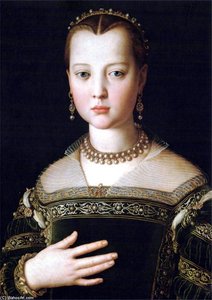
To stand before Agnolo Bronzino's depiction of Saint Sebastian is to encounter an embodiment of refined restraint—a hallmark of the High Renaissance transitioning into the sophisticated drama of Mannerism. This painting, dated to 1533, captures a moment steeped in classical allusion yet filtered through the unique lens of Florentine elegance. While the subject matter evokes martyrdom and divine suffering, Bronzino’s handling elevates the scene beyond mere piety; it becomes a study in poised physicality and aristocratic bearing. The very air around the figure seems imbued with a cool, almost intellectual composure that belies the narrative weight of his fate.
A Study in Form and Line
The visual evidence suggests an artist deeply concerned with structure and idealized form. The composition presents Saint Sebastian—rendered here with striking red hair and draped in rich crimson robes—in a pose that is both active and utterly controlled. He gazes outward, engaging the viewer directly, while his posture speaks of studied grace. One notes the subtle details: the bow held ready, suggesting an archer's readiness, juxtaposed with the more poignant element of the knife lying near the foreground. This careful arrangement of objects around the central figure guides the eye through a narrative tapestry woven from classical iconography and contemporary portraiture. The technique itself speaks to Bronzino’s mastery; every fold of the fabric, every strand of hair, is rendered with an almost enamel-like precision.
Historical Echoes and Artistic Lineage
Bronzino's career was one of absorbing and then perfecting influences. Having trained under masters like Pontormo, he absorbed emotional intensity only to temper it into his signature reserved elegance. This work reflects that maturation. Art historical research suggests a fascinating connection between this piece and earlier studies, perhaps even linking the figure’s pose to representations of the Evangelists in other Florentine chapels. It is as if Bronzino was not merely painting a saint, but participating in an ongoing visual dialogue with the great traditions of Italian art, refining them until they achieved a distinctly personal, polished sheen.
Symbolism and Emotional Resonance
The symbolism inherent in Saint Sebastian—the archer, the subject of arrows, the symbol of endurance—is potent. Yet, Bronzino’s interpretation softens this raw suffering with an almost courtly dignity. The vibrant red of his attire draws the eye immediately, a color traditionally associated with passion and sacrifice. For the modern collector or designer, this piece offers more than just religious iconography; it provides an anchor of sophisticated drama for any space. It speaks to enduring strength presented not through brute force, but through impeccable self-possession.
Bringing Renaissance Grandeur Home
Owning a reproduction of this work is to invite a fragment of 16th-century Florentine refinement into your contemporary life. The rich palette, the masterful handling of drapery, and the compelling gaze of the subject create an immediate focal point. Whether displayed in a formal drawing-room or alongside curated modern pieces, this artwork carries the weight of history while maintaining an air of timeless, cool sophistication. It is a piece that demands contemplation, rewarding the viewer with its layers of technical brilliance and quiet narrative power.
Întrebări și răspunsuri
„Saint Sebastian” prezintă contraste puternice între lumină și întuneric?
Nivelul de contrast al operei "Saint Sebastian" de Agnolo Bronzino este Statement.
Unde pot achiziționa o printă a lucrării "Saint Sebastian" de Agnolo Bronzino?
Pentru a achiziționa o ediție print a lucrării "Saint Sebastian" de Agnolo Bronzino, vă este suficient să o comandați pe pagina dedicată Print Fine Art: o printă fine art pe canvas din bumbac sau pe hârtie canvas arhivistică.
Culorile din "Saint Sebastian" de Agnolo Bronzino sunt vii sau discrete?
Culorile din "Saint Sebastian" de Agnolo Bronzino prezintă o saturație de Balanced Soft cu o intensitate de Balanced.
Biografie artist
Agnolo Bronzino: The Sculptor of Silence
Agnolo di Cosimo, known to history as Bronzino, emerged from the vibrant artistic landscape of Renaissance Florence in 1503, a period already brimming with genius. Born the son of a butcher—a humble origin for an artist destined to become one of the most sought-after portraitists of his era and a defining figure of Mannerism—his path diverged sharply from familial trade, guided instead by an innate talent that would see him achieve unparalleled renown. His early training began with Raffaellino del Garbo, but it was under the tutelage of Jacopo da Pontormo that Bronzino’s artistic sensibilities truly took shape. While absorbing Pontormo's innovative style—characterized by expressive distortions and a palpable sense of movement—he ultimately forged his own distinct voice—one characterized by a cool composure and refined detail markedly different from Pontormo’s often emotionally charged works. This early period was also profoundly influenced by studies with Andrea del Sarto, exposing him to the legacies of Michelangelo and Leonardo da Vinci—foundational influences that would subtly permeate his mature style. The young Bronzino swiftly demonstrated an aptitude for capturing not just physical likeness but a certain psychological depth, even in his earliest commissions.The Pontormo Connection: Shaping Mannerist Vision
Jacopo da Pontormo’s influence on Bronzino was paramount. Recognizing Pontormo's pioneering approach to portraying emotion and dynamism—a radical departure from the prevailing stylistic conventions of the High Renaissance—Bronzino embraced Pontormo’s expressive distortions as a cornerstone of his own artistic vision. This wasn’t merely imitation; it was an absorption of Pontormo’s spirit, transforming it into something uniquely Bronzino’s own. As Vasari famously noted, Pontormo instilled in Bronzino “a love for the grotesque and for the art of representing emotion.” The resulting style—often described as “early Mannerism”—was marked by elongated figures, swirling draperies, and a deliberate avoidance of naturalistic perspective. This stylistic choice reflected a broader intellectual preoccupation with exploring psychological states and conveying complex ideas through visual imagery—a hallmark of Mannerist thought. Bronzino’s collaboration with Pontormo on interior decorations for two Florentine churches solidified this formative relationship, establishing Pontormo as an indispensable mentor in shaping Bronzino's artistic trajectory.The Medici Patronage: A Royal Commission
Bronzino ascended to prominence thanks to the unwavering patronage of Cosimo I de’ Medici, Duke of Tuscany—a relationship that would define his career and solidify his position as Florence’s foremost artist for decades. Recognizing Bronzino’s exceptional talent and stylistic innovation, Cosimo commissioned him to decorate the Villa Imperiale in Pesaro—a project that showcased Bronzino's versatility as a fresco painter and cemented his reputation as a master craftsman. More importantly, Cosimo appointed Bronzino as the official court painter for his reign, securing him access to the wealthiest and most influential clientele in Europe. This role afforded Bronzino unparalleled opportunities to produce portraits of royalty—images that served not only as representations of power but also as symbols of dynastic ambition. The resulting portraits—characterized by their serene dignity and meticulous detail—became iconic examples of Mannerist portraiture, reflecting Cosimo’s desire for an aesthetic that conveyed both grandeur and restraint.Venus, Cupid & Time: Allegory Elevated
Perhaps Bronzino's most celebrated masterpiece is *Venus, Cupid, Folly and Time* (c. 1544–45), now housed in London’s National Gallery. This monumental allegory—a cornerstone of Mannerist art—represents a profound engagement with humanist philosophy and explores themes of love, desire, illusion, and mortality. Unlike the idealized depictions favored by Raphael or Michelangelo, Bronzino eschewed emotional expression in favor of intellectual contemplation. The figures are rendered with astonishing precision—the smooth skin of Venus, the delicate drapery of Cupid, the mischievous grin of Folly, and the solemn gaze of Time—all meticulously sculpted to convey an aura of timeless beauty and profound psychological complexity. The painting’s compositional arrangement—a deliberate distortion of perspective—further underscores its Mannerist aesthetic—challenging conventional notions of spatial representation and prioritizing symbolic meaning over visual realism. It exemplifies Bronzino's commitment to elevating art beyond mere imitation, transforming it into a vehicle for conveying philosophical ideas and exploring the human condition.A Legacy of Refinement: Influence Beyond Florence
Bronzino’s influence extended far beyond the confines of Florence—reaching across Europe and shaping the visual language of aristocratic portraiture for generations to come. His cool composure, refined technique, and stylistic innovations became hallmarks of Mannerist art—a movement that sought to transcend the limitations of naturalism and embrace intellectual abstraction. Artists throughout Italy and Germany admired Bronzino’s mastery—incorporating his elongated figures and stylized poses into their own compositions. He established a precedent for portraying emotion not through dramatic gesture but through subtle nuances of expression—a stylistic choice that would resonate with subsequent generations of painters. Though his style was often criticized as artificial or lacking in warmth, Bronzino's enduring legacy rests on his unwavering commitment to artistic excellence and his profound contribution to the development of Mannerist art—a testament to his singular genius as a sculptor of silence and a champion of refined elegance.- Born: November 17, 1503
- Died: November 23, 1572
- Key Movement: Mannerism
- Notable Works: *Venus, Cupid & Time*, Portraits of Cosimo I de’ Medici and Eleonora di Toledo

Agnolo Bronzino
1503 - 1572 , Italia
Detalii rapide
- Artistic Movement Or Style: Mannerism
- Artists Who Influenced This Artist:
- Pontormo
- Michelangelo
- Leonardo da Vinci
- Date Of Birth: 17 Noiembrie 1503
- Date Of Death: 23 Noiembrie 1572
- Full Name: Agnolo di Cosimo
- Nationality: Italian
- Notable Artworks:
- Venus, Cupid și Timpul
- Portrete Cosimo I și Eleonora Toledo
- Place Of Birth: Florența, Italia
Articole similare
Beyond Perfection: The Dramatic Elegance and Intellectual Tension of Renaissance Mannerism
Explore the captivating world of Renaissance Mannerism. Discover how artists moved beyond High Renaissance harmony into a realm of elegant distortion, psychological tension, and dramatic beauty that bridged the gap to the Baroque era.
Agnolo Bronzino: Mastering Courtly Portraiture & the Enigmatic Gaze of Renaissance Florence
Explore the captivating world of Agnolo Bronzino, Renaissance master portraitist. Discover his elegant style, symbolic depth & lasting influence on art history. Expert insights for collectors.

Giclée Prints: Archival Quality & Aesthetic Nuances for the Discerning Collector
Explore the world of giclée prints with OriginalUniqueArt. Learn about archival quality, aesthetic nuances & investment potential. Expert guidance for discerning art collectors seeking museum-quality reproductions and lasting value.

Echoes of Time: Exploring the Enduring Appeal & Historical Context of Vintage Art Prints
Explore the captivating world of vintage art prints! Discover their history, collecting tips & enduring appeal. Expert insights on chromolithography and building a legacy collection with OriginalUniqueArt.

The Enduring Legacy of Fine Art Prints: Technique, History & Aesthetic Impact
Explore the rich history & techniques of fine art prints. Discover investment potential, assess authenticity, and learn how to preserve your collection with expert guidance. Trusted insights for discerning collectors.