
 Previzualizare
 Trimite prin felicitare
 Distribuie
 Detalii despre lucrare
 Ghid
Ghid

 Descarcă imaginea
 Produse similare
 Radiografie
 Galerie foto
 Întrebări și răspunsuri
 Statistici
Study for a Painting

- 10.0 x 12.0 cm


 Vezi mai mult
Lucrarea de artă afișată pe această pagină este protejată de legile privind drepturile de autor, ceea ce înseamnă că nu putem crea sau vinde în mod legal o reproducere identică. Această protecție este garantată prin acorduri internaționale, precum Convenția de la Berna și de legile naționale, inclusiv cele prevăzute de Legea dreptului de autor din S.U.A. – Titlul 17. Toate drepturile rezervate. Orice reproducere neautorizată este interzisă.
Această metodă respectă pe deplin reglementările privind drepturile de autor, deoarece nu implică copierea sau duplicarea operei protejate. În schimb, este o reinterpretare creativă – o pictură nouă, influențată de original, dar care nu este identică cu acesta.
Giclée / Imprimare artistică
Printuri giclée sau pe canvas de calitate muzeală, cu proces de producție rapid și opțiuni flexibile de finisare. ( Comandă pictură realizată manual Comută pe Imagine Digitală)




P118B lei10

P118H lei10

P118W lei10

P438Z lei10

P508JH lei12

P508YH lei12

P805H lei10

P805Z lei10

P919BZ lei10

P919G lei10

P919XJ lei10

P959ZH lei10

P968JZ lei12

W106C lei8

W218G lei10

W218JH lei8

W218Y lei10

W307PJ lei10

W316G lei10

W316PJ lei8

W316Y lei10

W398PJ lei8

W4111J lei10

W500HY lei15

W500JH lei15

W692G lei12

W849H lei8

W940BG lei15

W953PJ lei8




Alegeți dintre dimensiunile noastre prestabilite, care respectă proporțiile originale ale operei de artă.

Introduceți lățimea și înălțimea necesare pentru a se potrivi ramei sau peretelui dumneavoastră. O printare poate fi doar tăiată, niciodată extinsă dincolo de dimensiunea imaginii originale, astfel încât o dimensiune cu o formă diferită va pierde o parte din imagine. Vă trimitem o simulare digitală pentru aprobare înainte de a imprima orice. Imaginea afișată pe această pagină nu prezintă tăierea reală — doar simularea arată acest lucru.
Livrare în întreaga lume () în 2 săptămâni, în loc de cele 4/5 săptămâni standard. (11 Noiembrie)

Livrare expres gratuită la nivel mondial

Pânză de in de înaltă calitate

Asigurare completă pentru transport

Garanție de rambursare a taxelor vamale

Garanția fidelității culorilor

Politica de retur în 100 de zile (doar pentru defecte de fabricație)

Garanție de rambursare 100%

Ofertă pentru comenzi multiple
 Opțiunea cu sticlă este disponibilă doar pentru dimensiuni de sub 110 cm

Study for a Painting
Giclée / Imprimare artistică
Dimensiune reproducere
-


Preț total calculat
lei 386
The Essence of Reduction: Ad Reinhardt’s Geometric Vision
In the vast, often turbulent landscape of twentieth-century abstraction, few works possess the quiet, magnetic intensity found in Ad Reinhardt’s “Study for a Painting.” Created in 1938, this miniature masterpiece serves as a profound window into the artist's relentless pursuit of purity. At a time when the art world was grappling with the heavy emotional weight and gestural turbulence of early Abstract Expressionism, Reinhardt offered a different, more cerebral path: one of radical simplification and intellectual rigor. This study is far more than a mere preparatory sketch; it is a distilled essence of an evolving philosophy, acting as a vital stepping stone toward his later, iconic monochrome paintings that would eventually redefine the boundaries of Minimalism.
The artwork immediately commands attention through its stark geometric arrangement, presenting a series of precisely defined planes and angular shapes that seem to float within the confines of the page. There is no illusion of depth or perspective here; instead, we are presented with a two-dimensional world constructed entirely from form and space. The deliberate use of negative space is not merely an aesthetic choice but a crucial element in establishing balance and visual interest. Each solid shape is carefully positioned to create a dynamic interplay with the surrounding emptiness, drawing the eye across the surface and inviting a deep, meditative contemplation.
A Mastery of Form and Technique
Reinhardt's meticulous approach to painting demanded an unwavering discipline that is palpable even in this early work. Utilizing a technique characterized by layering and precision, the artist explores the fundamental building blocks of visual language. The lines are crisp and unwavering, defining each form with absolute clarity—a characteristic that would become increasingly pronounced in his later, more famous "Black Paintings." This emphasis on geometric precision reflects a deep-seated fascination with order and structure, a conscious effort to strip away all extraneous detail and reveal the inherent qualities of color and shape themselves.
While the piece is rooted in the tradition of geometric abstraction, it also carries echoes of Cubism and Constructivism. The influence of Picasso’s fragmentation of form is undeniable, yet Reinhardt transcends mere imitation by taking these concepts to their logical extreme. He reduces subjects to their most essential components, moving away from the representation of reality toward what he famously termed "Art-as-Art." This radical proposition challenged viewers to confront the painting not as a window into another world, but as an uncompromising assertion of its own existence, devoid of sentimentality or external narrative.
Timeless Elegance for the Modern Collector
For the discerning art lover, collector, or interior designer, "Study for a Painting" offers a sophisticated touch of intellectual depth. Its minimalist aesthetic and restrained palette make it an incredibly versatile piece for contemporary curation. Whether placed in a gallery setting or used as a focal point in a modern living space, the work provides a sense of calm, structured elegance that complements both minimalist and mid-century modern decors.
Owning a high-quality reproduction of this study allows one to bring the profound stillness of Reinhardt’s vision into the home. It is an invitation to slow down, to look closer, and to find beauty in the most elemental forms. As a piece of decor, it does not merely occupy space; it transforms it, offering a window into a period of art history where the search for truth was found in the reduction of everything unnecessary, leaving behind only the pure, unadulterated essence of art.
Întrebări și răspunsuri
Este "Study for a Painting" de Ad Reinhardt în domeniul public și care este motivul?
Statutul drepturilor de autor pentru "Study for a Painting" - încă protejată de drepturile de autor - este determinat de data decesului artistului, în anul 1967.
Unde pot vizualiza "Study for a Painting" de Ad Reinhardt sub formă de diaporama?
Este disponibil un diaporama: pagina Galerie foto pentru "Study for a Painting" de Ad Reinhardt.
Cât de luminoasă este, în ansamblu, lucrarea "Study for a Painting"?
În general, "Study for a Painting" este înregistrată ca având o bright. Luminozitatea percepută descrie cât de deschisă sau întunecată pare lucrarea.
Biografie artist
A Life Dedicated to the Essence of Art
Ad Reinhardt, born Adolph Friedrich Reinhardt in Buffalo, New York, on December 24, 1913, was a figure who dedicated his life not merely to creating art, but to defining what art *could* be. His early years were marked by a familial mobility—his father’s work led the family to New York City—and a close bond with his cousin Otto. Even as a child, Reinhardt displayed an exceptional talent for drawing and painting, winning accolades in school that hinted at the rigorous artistic journey ahead. He wasn't simply interested in *making* images; he was driven by a need to understand the very foundations of visual expression. This intellectual curiosity led him to Columbia University where he studied art history under the influential Meyer Schapiro, an experience that profoundly shaped his thinking about aesthetics and the role of the artist. Further training at Columbia’s Teachers College, the American Artists School with Carl Holty and Francis Criss, and portraiture studies at the National Academy of Design under Karl Anderson solidified his technical skills—skills he would later deliberately attempt to transcend. Reinhardt believed he had mastered traditional techniques early on, freeing him to pursue a more conceptual path.From Geometric Beginnings to the “Ultimate” Black
Reinhardt’s artistic evolution was far from linear. He began with works rooted in geometric abstraction, exploring form and color with a precision that demonstrated his technical mastery. However, this early work served as a stepping stone toward something more radical. His involvement with the WPA Federal Art Project during the 1930s provided him with crucial support and exposure, allowing him to hone his craft while contributing to public art initiatives. The 1940s saw Reinhardt become an active member of American Abstract Artists (AAA), a group he considered pivotal to his development. He found kinship with fellow artists who shared a commitment to non-representational art, exhibiting regularly alongside them and engaging in lively debates about the future of painting. His association with Betty Parsons Gallery further cemented his place within the burgeoning New York art scene. Throughout the 1950s, Reinhardt embarked on a series of paintings exploring subtle variations within single hues—all red, all blue, all white—a deliberate reduction that foreshadowed his most iconic works. It was in the 1960s, however, that he achieved what many consider his defining achievement: the “black” paintings. These weren’t simply black canvases; they were meticulously crafted explorations of near-black shades, subtle gradations and textures designed to challenge perception and push the boundaries of painting itself. He referred to them as his "ultimate" paintings, suggesting a culmination of artistic endeavor—a point beyond which further progress was impossible. The process involved layering countless thin washes of gray, creating an illusion of depth and texture that defied simple categorization.Art-as-Art: A Philosophy of Pure Aestheticism
Central to understanding Reinhardt’s work is his philosophy of *Art-as-Art*. He vehemently believed in the autonomy of art, rejecting any notion that it should serve political, social, or narrative purposes. For Reinhardt, the value of a painting lay solely in its aesthetic qualities—its form, color, composition, and the way it engaged with the viewer on a purely visual level. This conviction led him to critique what he saw as problematic tendencies within the art world, particularly artists who prioritized messaging over aesthetics. He expressed these critiques through satirical cartoons and writings, often challenging prevailing artistic norms with wit and intellectual rigor. His friendships with Robert Lax and Thomas Merton, both of whom explored themes of simplicity in their respective fields, further informed his aesthetic principles. Reinhardt’s work resonated with a growing interest in minimalism and conceptual art, influencing artists who sought to strip away extraneous elements and focus on the essential qualities of their medium. He wasn't merely creating paintings; he was articulating a theoretical position about the nature of art itself. His famous cartoon “How to Look at Modern Art in America” perfectly encapsulated this stance, highlighting the distinction between genuine artistic expression and works driven by social or political agendas.The Black Paintings and Their Significance
Reinhardt’s “black” paintings represent the culmination of his artistic explorations. These large-scale canvases, typically five feet square, were not intended to depict anything specific but rather to explore the very nature of painting itself. The subtle variations in tone and texture created an illusion of depth and movement, inviting viewers to contemplate the act of seeing. He famously stated that these paintings were “the ultimate,” suggesting they represented a final stage of artistic development—a point beyond which further progress was impossible. Critics debated the meaning behind these works, with some interpreting them as meditations on darkness, silence, or the void, while others saw them simply as exercises in pure color and form. Regardless of interpretation, the black paintings stand as a testament to Reinhardt’s commitment to aesthetic autonomy and his willingness to challenge conventional notions of artistic representation.A Lasting Legacy: Minimalism, Conceptualism, and Beyond
Ad Reinhardt’s influence extends far beyond his own body of work. His “black” paintings are now recognized as seminal contributions to minimalist and monochrome painting, challenging conventional notions of representation and pushing the boundaries of visual perception. His writings on *Art-as-Art* continue to be studied by artists and critics alike, sparking debate about the role of art in society and the relationship between form and content. Though he was a key figure within Abstract Expressionism through his association with AAA and Betty Parsons Gallery, Reinhardt ultimately transcended categorization, paving the way for subsequent generations of conceptual and minimalist artists. He taught at numerous institutions—Brooklyn College, California School of Fine Arts, University of Wyoming, Yale University, and Hunter College—imparting his rigorous intellectual approach to aspiring artists. Even his involvement in protests – against MoMA in the 1940s, with “The Irascibles” against the Metropolitan Museum of Art in the 1950s, and through a lithograph for Artists and Writers Protest Against the Vietnam War in 1967—demonstrated a commitment to artistic freedom and social responsibility. Ad Reinhardt died on August 30, 1967, in New York City, leaving behind a legacy that continues to inspire and provoke. His work remains a powerful testament to the enduring power of abstract art and the importance of questioning fundamental assumptions about the nature of creativity itself. The Ad Reinhardt Estate is currently represented by David Zwirner Gallery, ensuring his continued presence within the contemporary art world.
Ad Reinhardt
1913 - 1967 , Statele Unite ale Americii
Detalii rapide
- Artistic Movement Or Style: Abstract Expressionism, Minimalism
- Artists Or Movements Influenced By This Artist:
- Artă ca Artă
- Minimalism
- Artists Who Influenced This Artist:
- Meyer Schapiro
- Robert Lax
- Thomas Merton
- Date Of Birth: 24 Decembrie 1913
- Date Of Death: 30 August 1967
- Full Name: Adolf Friedrich Reinhardt
- Nationality: American
- Notable Artworks:
- Untitled
- Roșu și Gri
- Numărul - (107)
- Place Of Birth: Buffalo, Statele Unite
Articole similare

Fernand Léger: Cele Mai Iconice 25 de Opere – Artă Modernă pentru Decorul Tău
Descoperă cele mai importante 25 de opere ale lui Fernand Léger – pionier al cubismului și tubismului! Explorează istoria, tehnicile și semnificația fiecărei pânze. Reproduceri artă de calitate muzeală pentru un decor modern și sofisticat pe OriginalUniqueArt.com.

Designing Your Forever Space: An Expert Guide to Elevating Your New Home with Neo-Abstract Art
Elevate your first home with the bold energy of Neo-Abstract Art. Our expert guide helps newlyweds master modern geometric compositions, textures, and color palettes. Discover how custom hand-painted oils and multi-panel designs can transform your new space into a curated masterpiece.

Cele mai importante 10 capodopere ale abstracției geometrice | Artă & Decor de lux pe OriginalUniqueArt.com
Descoperă cele mai importante 10 capodopere ale abstracției geometrice! Explorează istoria, artiștii (Mondrian, Kandinsky) și culorile vibrante care au definit arta modernă. Reproduceri de tablouri de lux pe OriginalUniqueArt.com pentru un decor interior rafinat. Explorează colecția online!
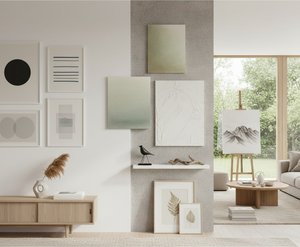
Top 10 Opere de Artă Minimaliste pentru un Decor Elegant | OriginalUniqueArt.ro
Descoperă top 10 opere de artă minimalistă de la Rothko la Mondrian! Explorează istoria, tehnicile și emoțiile din spatele acestor picturi abstracte iconice. Găsește inspirație pentru un decor elegant cu OriginalUniqueArt.ro – reproducere artă de calitate muzeală.

Contemporary Abstract Art: A Professional Buyer's Guide to Large-Scale Modern Decor for Hospitality and Corporate Interiors
A professional procurement guide for hotel designers and architects. Discover how to integrate large-scale contemporary abstract art into hospitality projects through high-volume, custom-sized oil reproductions, multi-panel layouts, and reliable global logistics.