


1


Atualizado em Outubro 2026 · classificado pela nossa pontuação de popularidade (pesquisas, visitas e pedidos de cada obra) · 437 obras de Thomas Sully em nosso catálogo
Em resumo
Aos olhos da galeria, a pintura mais famosa de Thomas Sully é Queen Victoria (1838), cuja obra original está exposta no Wallace Collection, em Londres. Thomas Jefferson (1743-1826), LL.D. 1786 (1823) e George Washington (1840) completam o trio que todos reconhecem. Dos 437 trabalhos de Thomas Sully em nosso catálogo, a galeria apresenta abaixo as 100 obras mais famosas, cada uma original, com seu ano, seu museu e o que a torna única.

Thomas Jefferson steps from the shadows of a doorway into a soft, overcast light. He is captured in a moment of transition, moving toward an outdoor setting that remains indistinct and atmospheric. His gaze is directed slightly upward and away, suggesting a mind preoccupied with matters beyond the immediate frame. He wears a long, dark purple or plum-colored coat with wide cuffs, a garment that holds its form through heavy,…

Thomas Sully rendered this portrait of George Washington in 1840. Executed in oil on canvas, the work captures the likeness of the American leader with a focus on formal dignity. The portrait belongs to the tradition of nineteenth-century American portraiture, reflecting the era's emphasis on character and status.

Thomas Sully’s “Mrs. Edward Hudson,” completed in 1814, stands as an emblem of the Victorian era's fascination with portraiture and its celebration of aristocratic status. More than just a likeness of Dr. Edward Hudson—a prominent physician and influential figure within London society—the painting embodies the ideals of refinement, intellect, and moral virtue that defined the period’s artistic sensibilities.

In the quietude of Thomas Sully’s 1841 masterpiece, Child Asleep (The Rosebud), we find more than a mere depiction of infancy; we encounter a profound meditation on innocence and the ephemeral nature of beauty. This exquisite oil on canvas serves as a cornerstone of American Romanticism, capturing a moment of absolute tranquility that seems to suspend time itself. The painting presents a serene tableau where a sleeping infant rests upon…

Thomas Sully’s “The Coleman Sisters,” painted in 1844, is more than just a portrait; it's a carefully constructed tableau of Victorian elegance imbued with an undercurrent of melancholic beauty. The painting depicts three young women – likely sisters – posed before a simple wall backdrop, their postures and expressions hinting at both composure and a quiet introspection that speaks volumes about the era’s societal expectations for women.

In this oil painting from 1810, we find ourselves drawn into a dramatic landscape at the edge of day. The composition centers on a reclining figure, William B. Wood, portrayed here through the persona of "Charles de Moor." He rests within a rugged terrain, his arm outstretched toward the left, guiding our gaze across the scene. There is a certain tension in his pose, an energy that suggests a narrative…

The Painter in the Shadows A young man gazes out from the canvas, his eyes meeting the viewer with a calm, contemplative stillness. He sits amidst the tools of his trade, the blurred shapes of a palette and paintbrushes resting in the foreground, hinting at a life lived through the application of pigment. The light falls heavily upon one side of his face, a technique of deep shadows and bright…

Colonel Samuel Boyer Davis is rendered in a full-length, vertical composition that emphasizes his military authority. He stands with a slight, dynamic tilt, positioned off-center against an atmospheric backdrop of swirling grey and beige clouds. This setting suggests the smoke and dust of a battlefield, providing a somber environment for the subject. The lighting, originating from the upper left, casts subtle shadows across his face and body, creating a sense…

The air in the room feels still, held in a quiet suspension as Eliza Melville Young McAllister meets the viewer's gaze. She sits with a poise that suggests a life of quiet refinement, her expression composed and steady. The light, soft and directional, spills from the upper left, brushing against the pale curve of her cheek and the delicate, translucent lace of her headpiece. This illumination creates a gentle depth,…
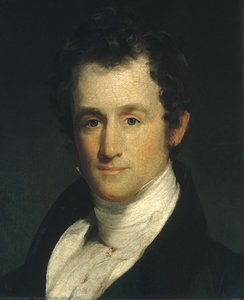 John Finley1821 · Metropolitan Museum of Art
12
 Portrait of Robert Erwin Gray1811 · Minneapolis Institute of Art
13
 John Sergeant1811 · National Portrait Gallery
14
 Mother and Son1840 · Metropolitan Museum of Art
15
 Portia, Merchant of Venice (Recto) / Sketch of a Woman's Head (Verso)1836 · Cincinnati Art Museum
16
 Isabella Tod Stewart1837 · Isabella Stewart Gardner Museum
17
 Mary Anne Heide Norris1830 · Philadelphia Museum of Art
18
 Thomas Ash II1807 · National Portrait Gallery
19
 Mary Harvey, Mrs. Paul Beck, Jr.1813 · Dallas Museum of Art
20
 Four Figure Studies
21
 Sketch after David's Napoleon Crossing the Alps; a Recumbent Nude Male; a Standing Female
22
 Lester Wallach (1820-1888)1847 · Yale University Art Gallery
23
 John Vaughan1819 · National Portrait Gallery
24
 Thomas Heyward, Jr.1854 · National Portrait Gallery
25
 Portrait of Colonel Jonathan Williams (1750-1815)1815 · Philadelphia Museum of Art
26
 William Alston1826 · Cincinnati Art Museum
27
 Mischief (Girl's Head)1866 · Reading Public Museum
28
 The Reverend George Houstoun Woodruff1819 · High Museum of Art
29
 Prison Scene from J. Fenimore Cooper’s “The Pilot”: “Cecelia Howard and Katherine Plowden arousing the prisoner Edward Griffith from his slumber.”1841 · Birmingham Museum of Art
30
 Mrs. Thomas Sully (Sarah Annis)1802 · Metropolitan Museum of Art
31
 Mrs. Joseph Hopkinson1808 · Gilcrease Museum
32
 Portrait of Mary Sicard David1813 · Cleveland Museum of Art
33
 George Frederick Cooke as Richard III1811 · Pennsylvania Academy of Fine Arts
34
 John Myers1814 · Museu de Belas Artes de Boston
35
 William Francis Taliaferro, Class of 1811 (1790-1836)1811
36
 George Mifflin Dallas, Class of 1810 (1792-1864)1810
37
 Mrs. William Wortley Worsley (Rebecca Smith)1805 · Metropolitan Museum of Art
38
 Daniel LaMotte1812 · Smithsonian American Art Museum
39
 Elizabeth Willing Jackson1822 · Pennsylvania Academy of Fine Arts
40
 Dr. Thomas Parke.1822
41
 Portrait of John W. Sandford1830 · El Paso Museum of Art
42
 Portrait of Margaret H. Sandford1830 · El Paso Museum of Art
43
 Mrs. James Gore King (Sarah Rogers Gracie King), Wife of "The Gold Beater"1831 · Nelson-Atkins Museum of Art
44
 Portrait of Willliam Henry Fitzhugh1824 · Rhode Island School of Design Museum of Art
45
 Mrs. Joseph Rotch (Anne Smith)1831 · Museu de Belas Artes de Boston
46
 Victor René Value and His Daughter Charlotte1828 · Museu de Belas Artes de Boston
47
 Thomas Jefferson Bryan (1800-1870)1831 · New York Historical Society
48
 John McAllister, Jr. (1786-1877)1831 · Harvard Art Museums
49
 Richard Stout of Allentown, New Jersey1831
50
 Mrs. Charles Gratiot1829
51
 John Quincy Adams1824 · National Gallery of Art
52
 The Leland Sisters1830 · National Gallery of Art
53
 Lord Byron1826
54
 Elizabeth Cook (Mrs. Benjamin Franklin Bache) as The Country Girl1839 · Yale University Art Gallery
55
 Self-Portrait of the Artist Painting His Wife (Sarah Annis Sully)1810 · Yale University Art Gallery
56
 Queen Victoria (1819-1901)1838 · Royal Collection
57
 Frances Anne Kemble as Beatrice1833 · Pennsylvania Academy of Fine Arts
58
 The Rosebud1839 · Museu de Belas Artes de Boston
59
 Fanny Kemble1833 · Museu de Belas Artes de Boston
60
 Blanch Sully (1814-1898)1834 · New Britain Museum of American Art
61
 Mrs. William Alston (Caroline Thomas, daughter of Robinson Thomas)1837
62
 Mary Stout, wife of Richard Stout1835
63
 Self-Portrait1850 · National Gallery of Art
64
 Mrs. Burnett of Philadelphia1844 · Toledo Museum of Art
65
 Portrait of James Cornell Biddle (1795–1838)1841 · Museum of Fine Arts
66
 Sea Nymph1840
67
 The Artist's Daughter1842 · New Britain Museum of American Art
68
 Macbeth in the witches' cave1840
69
 Mrs. Henry Robinson1849 · Indianapolis Museum of Art
70
 Samuel Sartain1852 · Pennsylvania Academy of Fine Arts
71
 Portrait of Mrs. George H. Crossman1861 · Dallas Museum of Art
72
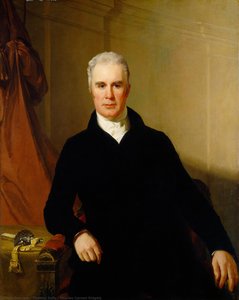 Charles Carnan Ridgely1820 · National Gallery of Art
73
 Portrait of a Child1866
74
 Major John Biddle1818 · Metropolitan Museum of Art
75
 The David Children1826 · National Gallery of Art
76
 Portrait of a Woman1810 · Reading Public Museum
77
 Francis HopkinsonNational Gallery of Art
78
 Sarah Annis Sully (Mrs. Thomas Sully)1832 · Metropolitan Museum of Art
79
 James Pollard Espy1849 · National Portrait Gallery
80
 Captain Charles Stewart1812 · National Gallery of Art
81
 Rosalie Spang1848 · Carnegie Museum of Art
82
 Rebecca Gratz1831
83
 Musidora1813 · Metropolitan Museum of Art
84
 Elizabeth Wadsworth, married Charles Augustus Murray
85
 Mary Ann Paton (Mrs Wood)National Portrait Gallery
86
 The Student1839 · Metropolitan Museum of Art
87
 Equestrian Portrait of George Washington1842 · The Abraham Lincoln Foundation of The Union League of Philadelphia
88
 Mrs. George Lingen1842 · Art Institute of Chicago
89
 Ann Biddle Hopkinson (Mrs. Francis Hopkinson)
90
 The Vanderkemp Children
91
 Governor Peyton Randolph1806 · Wilton House Museum
92
 Mrs. Samuel Neave Lewis and Her Daughter Martha1811 · Pennsylvania Academy of Fine Arts
93
 Portrait of Esther Fortune Warren and Her Daughter Hester1811 · Museum of Art
94
 Madame Jerome Bonaparte (Elizabeth Patterson)1805
95
 Mrs. Klapp (Anna Milnor)1814 · Art Institute of Chicago
96
 Three Classical Figures1810
97
 Untitled (D2X76L)1821 · Metropolitan Museum of Art
98
 Portrait of Thomas Jefferson1822
99
 Mrs. James Gibson (Elizabeth Bordley)1822
100
 The Interior of the Capuchin Chapel In the Piazza Barberini (after Francois Marius Granet)1821
Os quatro temas que mais se repetem nestas obras originais, cada um com o seu melhor exemplo.
Os 8 museus que detêm a maioria das pinturas desta página.
| Museu | Cidade | Obras de Thomas Sully | Pinturas desta lista |
|---|---|---|---|
 Metropolitan Museum of Art |
Nova York | 23 | George Washington, Child Asleep (The Rosebud), John Finley |
 National Gallery of Art |
Washington | 22 | The Coleman Sisters, William B. Wood as "Charles de Moor", John Quincy Adams |
 National Portrait Gallery |
Washington, D.C. | 6 | Thomas Sully, John Sergeant, Thomas Ash II |
 Pennsylvania Academy of Fine Arts |
Filadélfia | 8 | George Frederick Cooke as Richard III, Elizabeth Willing Jackson, Frances Anne Kemble as Beatrice |
 Museu de Belas Artes de Boston |
Boston | 7 | John Myers, Mrs. Joseph Rotch (Anne Smith), Victor René Value and His Daughter Charlotte |
 Yale University Art Gallery |
New Haven | 4 | Thomas Jefferson (1743-1826), LL.D. 1786, Lester Wallach (1820-1888), Elizabeth Cook (Mrs. Benjamin Franklin Bache) as The Country Girl |
 Cincinnati Art Museum |
Cincinnati | 4 | Portia, Merchant of Venice (Recto) / Sketch of a Woman's Head (Verso), William Alston |
 Dallas Museum of Art |
Dallas | 3 | Mary Harvey, Mrs. Paul Beck, Jr., Portrait of Mrs. George H. Crossman |
Escolha uma década para ver a obra original que a define.

This oil portrait, executed in 1807, presents a bust-length view of Thomas Ash II. The subject is positioned slightly off-center, facing toward the left while his gaze is directed toward the viewer. He is depicted with a white cravat that provides a sharp tonal contrast against the darker elements of his attire and the background. The lighting originates from the upper left, casting shadows along the right side of his…
Thomas Sully’s “Mrs. Edward Hudson,” completed in 1814, stands as an emblem of the Victorian era's fascination with portraiture and its celebration of aristocratic status. More than just a likeness of Dr. Edward Hudson—a prominent physician and influential figure within London society—the painting embodies the ideals of refinement, intellect, and moral virtue that defined the period’s artistic sensibilities.
Thomas Jefferson steps from the shadows of a doorway into a soft, overcast light. He is captured in a moment of transition, moving toward an outdoor setting that remains indistinct and atmospheric. His gaze is directed slightly upward and away, suggesting a mind preoccupied with matters beyond the immediate frame. He wears a long, dark purple or plum-colored coat with wide cuffs, a garment that holds its form through heavy,…
Thomas Sully rendered this portrait of George Washington in 1840. Executed in oil on canvas, the work captures the likeness of the American leader with a focus on formal dignity. The portrait belongs to the tradition of nineteenth-century American portraiture, reflecting the era's emphasis on character and status.

Thomas Sully presents a portrait of Thomas Heyward, Jr., executed about 1854. The work features a single male figure, rendered with the technical precision characteristic of the American portrait painter. Sully, who was born in Great Britain and spent much of his career in Philadelphia, Pennsylvania, was a prominent figure in nineteenth-century American art.

Thomas Sully executed Mischief (Girl's Head) in 1866. This oil on canvas painting belongs to the artist's later period, capturing a specific moment of youthful curiosity through a focused, intimate lens.
Queen Victoria (1838), Wallace Collection, Londres. Thomas Jefferson (1743-1826), LL.D. 1786 (1823) e George Washington (1840) vêm a seguir.
55 anos: Queen Victoria data de 1838, e Thomas Sully nasceu em 1783.
Queen Victoria, Thomas Jefferson (1743-1826), LL.D. 1786, George Washington, Dr. Edward Hudson, Child Asleep (The Rosebud), The Coleman Sisters, William B. Wood as "Charles de Moor", Thomas Sully, Colonel Samuel Boyer Davis e Eliza Melville Young McAllister (Mrs. John McAllister, Jr.) (1790-1853). O ranking acima apresenta o ano e o museu de cada uma.
Nosso catálogo contém 437 obras de Thomas Sully, datadas de 1802 a 1866.
Principalmente em Metropolitan Museum of Art (Nova York), National Gallery of Art (Washington) e National Portrait Gallery (Washington, D.C.). A tabela de museus acima lista todos eles.
Em 1810s: 25 das 100 obras nesta página foram feitas então, sendo Dr. Edward Hudson delas.
Nesta página, a mais antiga é Mrs. Thomas Sully (Sarah Annis) (1802) e a mais recente é Mischief (Girl's Head) (1866).
Man (18), Portrait (17) e Woman (10), entre as 100 obras nesta página.
Oil On Canvas, para 32 das 100 obras nesta página.
Romanticism e Neoclassicism, a julgar pelos originais nesta página.
George Washington, Child Asleep (The Rosebud) e John Finley: o Metropolitan Museum of Art, Nova York detém 11 das obras desta página.
Sim, como uma reprodução: a obra original permanece no seu museu, mas qualquer pintura desta página pode ser pintada à mão para você, feita sob encomenda uma a uma, a partir da própria página da pintura.


