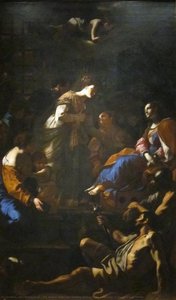
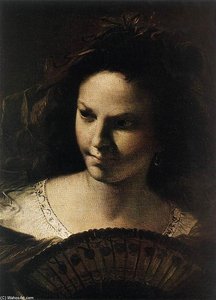
Retrato de Mattia Preti

As 98 Pinturas Mais Famosas de Mattia Preti, Cada Uma Única

Atualizado em Novembro 2026 · classificado pela nossa pontuação de popularidade (pesquisas, visitas e pedidos de cada obra) · 99 obras de Mattia Preti em nosso catálogo

Em resumo

The Marriage at Cana (1655) é a pintura de Mattia Preti que mais atrai olhares; a obra original pertence ao National Gallery, Londres. Depois disso, o olhar recai sobre Tribute Money (1640) e St. John the Baptist Preaching. Entre as 99 obras de Mattia Preti em nosso catálogo, estas 98 são as mais famosas, cada uma uma original única apresentada com o seu ano, o seu museu e a razão pela qual perdura.

1613 – 1699, Taverna Baroque dramatic lighting Mais obras: Bavarian State Painting Collections

As 10 principais pinturas de Mattia Preti, sob o olhar da galeria

1
The Marriage at Cana (1655) de Mattia Preti

The Marriage at Cana

1655 · Oil On Canvas · National Gallery, Londres

The air in the room feels heavy, thick with the scent of spilled wine and the heat of a crowded celebration. At the center of this bustling gathering, a miracle unfolds in silence. A long banquet table, draped in a stark white cloth, cuts through the darkness, acting as a stage for a divine transformation. Figures press against one another, their bodies overlapping in a dense, rhythmic movement that pulls…

2
Tribute Money (1640) de Mattia Preti

Tribute Money

1640 · Oil On Canvas · Pinacoteca di Brera, Milão

To stand before Mattia Preti's Tribute Money is to step directly into the charged atmosphere of 17th-century Italian devotion. This magnificent oil on canvas, executed in 1640, pulses with the dramatic energy characteristic of the Baroque period. It is not merely a depiction of an event; it is an immersive experience, masterfully orchestrated by Preti’s hand. The scene gathers a group of men around a central table, their gestures and…

3
St. John the Baptist Preaching de Mattia Preti

St. John the Baptist Preaching

Oil On Canvas · Legion of Honor, São Francisco

To stand before this depiction of St. John the Baptist is to be enveloped by the very breath of divine revelation. The scene pulses with an almost palpable energy, capturing that electrifying moment when sacred truth breaks through the mundane. At the heart of the composition stands St. John, a figure radiating both ascetic power and profound spiritual authority. He commands attention not merely through his central placement, but through…

4
Christ in Glory (1660) de Mattia Preti

Christ in Glory

1660 · Oil On Canvas · Museu do Prado, Madrid

A Triumph of Baroque Faith: Exploring Mattia Preti’s ‘Christ in Glory’ Mattia Preti, a Calabrian Knight of the Baroque, stands as an emblem of artistic dynamism and fervent devotion during his era. Born in Taverna, Calabria, on February 24, 1613, his journey was marked by absorbing diverse influences—primarily from Caravaggio—resulting in a uniquely expressive style characterized by dramatic chiaroscuro and meticulous realism that would define his oeuvre. Before 1630, he…

5
Clorinda Rescuing Sofronia and Olindo (1660) de Mattia Preti

Clorinda Rescuing Sofronia and Olindo

1660 · Oil On Canvas · J. Paul Getty Museum, Los Angeles

The air in the painting feels heavy, thick with the scent of iron and dust. A single, theatrical light cuts through the murky atmosphere, striking the pale skin of a woman seated on the right. She is the center of a storm, a figure of vulnerability amidst a crowded, muscular arrangement of limbs and steel. Around her, the composition erupts in a series of sweeping diagonals. Weapons and reaching arms…

6
Ecce Homo (1661) de Mattia Preti

Ecce Homo

1661 · Oil On Canvas · Musée Condé, Chantilly

In this treatment of Ecce Homo, Mattia Preti employs a highly theatrical arrangement to command the viewer's attention. The composition is built upon a balcony placed transversely, a clever spatial device that pushes the figure of Christ into the immediate foreground. This positioning creates an intimate, almost confrontational proximity between the subject and the observer. The artist’s style here is both dramatic and heroic, moving beyond simple naturalism to imbue…

7
Saint Paul the Hermit (1650) de Mattia Preti

Saint Paul the Hermit

1650 · Oil On Canvas · Museu Nacional d'Art de Catalunya, Barcelona

The shadows press in from every corner, leaving only a sliver of light to illuminate the weathered face of Saint Paul the Hermit. He sits in a profound, heavy silence, his body a map of ascetic devotion. Every line etched into his skin tells a story of years spent in the desert, away from the clamor of the world. His eyes are turned upward, searching the darkness for a light…

8
Wedding at Cana (1655) de Mattia Preti

Wedding at Cana

1655 · Oil On Canvas · National Gallery, Londres

Mattia Preti’s Wedding at Cana captures the first miracle of Christ during a wedding feast in Galilee. The scene brings together Christ, his mother, and the disciples within a crowded, festive setting. A long banquet table, draped in a white cloth, serves as the central stage for the unfolding event. Amidst the gathering, Mary directs the servants, while the steward observes the transformation of the liquid with astonishment.

9
Doubting Thomas (1660) de Mattia Preti

Doubting Thomas

1660 · Oil On Canvas · Kunsthistorisches Museum, Viena

In this oil on canvas, we find ourselves pulled into an intimate, almost uncomfortable proximity to a profound biblical encounter. The scene captures the precise second when the apostle Thomas seeks physical verification of the resurrection, reaching out to touch the wound in Christ's side. There is a heavy, palpable tension in the way the figures are arranged along a diagonal axis, guiding our gaze directly toward that central point…

10
The crucifixion of St Andrew (1651) de Mattia Preti

The crucifixion of St Andrew

1651 · Oil On Canvas · Art Gallery of South Australia, Adelaide

The crucifixion of St Andrew is an oil on canvas work by Mattia Preti. Created about 1651, this piece belongs to the Baroque movement of seventeenth-century Italy. The scene captures a moment of profound religious significance, focusing on the martyrdom of the saint. It is a heavy, physical depiction of faith under the weight of wood and shadow.

Pinturas famosas de Mattia Preti, números 11 a 98

11St John the Baptist before Herod (1665) de Mattia PretiSt John the Baptist before Herod1665 12Saint Veronica with the Veil (1657) de Mattia PretiSaint Veronica with the Veil1657 · Museu de Arte do Condado de Los Angeles 13Portrait of a Grand Master of the Knights of Malta, Martin de Redin (1660) de Mattia PretiPortrait of a Grand Master of the Knights of Malta, Martin de Redin1660 · Art Institute of Chicago 14Belisarius Receiving Alms (1660) de Mattia PretiBelisarius Receiving Alms1660 · Museum Boijmans Van Beuningen 15The Game of Draughts (1630) de Mattia PretiThe Game of Draughts1630 · Ashmolean Museum 16Ecce homo de Mattia PretiEcce homo 17Dice Players (1635) de Mattia PretiDice Players1635 · Museu Nacional de Cracóvia 18The Beheading of Saint John the Baptist (1640) de Mattia PretiThe Beheading of Saint John the Baptist1640 · National Gallery of Ireland 19The Pardon of St. John Chrysostom (1640) de Mattia PretiThe Pardon of St. John Chrysostom1640 · Cincinnati Art Museum 20Clorinda rescues Olindo and Sophronia (1646) de Mattia PretiClorinda rescues Olindo and Sophronia1646 · Musei di Strada Nuova 21Vocation of the Apostle Matthew (1637) de Mattia PretiVocation of the Apostle Matthew1637 · Kunsthistorisches Museum 22The Adoration of the Shepherds (1645) de Mattia PretiThe Adoration of the Shepherds1645 · Museu Nacional de Varsóvia 23the head of St. John presented to the king (1638) de Mattia Pretithe head of St. John presented to the king1638 24Bearded Old Man's Head (1656) de Mattia PretiBearded Old Man's Head1656 · Bavarian State Painting Collections 25Return of the Prodigal Son (1656) de Mattia PretiReturn of the Prodigal Son1656 · Bavarian State Painting Collections 26Mary Magdalene (1656) de Mattia PretiMary Magdalene1656 · Bavarian State Painting Collections 27Tobias and the Angel (1656) de Mattia PretiTobias and the Angel1656 · Bavarian State Painting Collections 28Saint Andrew (1656) de Mattia PretiSaint Andrew1656 · Bavarian State Painting Collections 29The Feast of Absalom (1658) de Mattia PretiThe Feast of Absalom1658 · Galeria Nacional do Canadá 30Salomé with the Head of St. John before Herod (1658) de Mattia PretiSalomé with the Head of St. John before Herod1658 · Gemäldegalerie Alte Meister im Schloss Wilhelmshöhe 31An Angel shows Hagar the Way (1656) de Mattia PretiAn Angel shows Hagar the Way1656 · Bavarian State Painting Collections 32Paul of Thebes (1675) de Mattia PretiPaul of Thebes1675 · Museu Nacional de Arte Antiga 33Self-portrait (1695) de Mattia PretiSelf-portrait1695 34The Vision of Saint Paul (1700) de Mattia PretiThe Vision of Saint Paul1700 35The Martyrdom of Saint Catherine (1700) de Mattia PretiThe Martyrdom of Saint Catherine1700 · MUŻA 36The Denial of Saint Peter (1700) de Mattia PretiThe Denial of Saint Peter1700 · Musée des Beaux-Arts 37The Raising of Lazarus (1650) de Mattia PretiThe Raising of Lazarus1650 · Galleria Nazionale d'Arte Antica 38The Concert (1630) de Mattia PretiThe Concert1630 · Museu Thyssen-Bornemisza 39A Man Cutting Tobacco (1660) de Mattia PretiA Man Cutting Tobacco1660 40Ceia de Herodes (1661) de Mattia PretiCeia de Herodes1661 · Toledo Museum of Art 41Apelle painting Campaspe (1600) de Mattia PretiApelle painting Campaspe1600 · Pinacoteca Stuard 42The Baptism of Christ (1661) de Mattia PretiThe Baptism of Christ1661 · Igreja Conventual de São João 43The Roman Empress Faustina Visiting Saint Catherine of Alexandria in Prison (1643) de Mattia PretiThe Roman Empress Faustina Visiting Saint Catherine of Alexandria in Prison1643 · The Dayton Art Institute 44Queen Tomyris Receiving the Head of Cyrus, King of Persia (1670) de Mattia PretiQueen Tomyris Receiving the Head of Cyrus, King of Persia1670 45St. George Victorious over the Dragon (1678) de Mattia PretiSt. George Victorious over the Dragon1678 · Collegiate Basilica of St. George 46St John Reproaching Herod (1662) de Mattia PretiSt John Reproaching Herod1662 · Museo de Bellas Artes de Sevilla 47Christ and the Money Changers (1600) de Mattia PretiChrist and the Money Changers1600 · Museo di Capodimonte 48Concert (detail) (1630) de Mattia PretiConcert (detail)1630 · Museu Hermitage 49Anjo Alado (1630) de Mattia PretiAnjo Alado1630 · Kunstpalast 50The Adoration of the Shepherds (1699) de Mattia PretiThe Adoration of the Shepherds1699 · Walker Art Gallery 51Christ and the Woman Taken in Adultery de Mattia PretiChrist and the Woman Taken in AdulterySaint Louis Art Museum 52The Martyrdom of Saint Paul de Mattia PretiThe Martyrdom of Saint PaulMuseum of Fine Arts 53Tobias Healing His Father's Blindness de Mattia PretiTobias Healing His Father's BlindnessMuseum of Fine Arts 54Martyrdom of Saint Erasmus de Mattia PretiMartyrdom of Saint ErasmusBavarian State Painting Collections 55Martyrdom of Saint Andrew de Mattia PretiMartyrdom of Saint Andrew 56St. Paul the Hermit de Mattia PretiSt. Paul the HermitCleveland Museum of Art 57Concert in the family de Mattia PretiConcert in the family 58Zachary on his knees, and studies of his head de Mattia PretiZachary on his knees, and studies of his head 59Old man sitting, holding a book, speaking to a young man de Mattia PretiOld man sitting, holding a book, speaking to a young man 60Musical angels, studies for a ceiling compartment de Mattia PretiMusical angels, studies for a ceiling compartment 61A Group of Saints and Angels de Mattia PretiA Group of Saints and Angels 62God the Father surrounded by angels de Mattia PretiGod the Father surrounded by angels 63The Release of St Peter from Prison de Mattia PretiThe Release of St Peter from PrisonAcademia de Belas Artes de Viena 64A Visitação (1649) de Mattia PretiA Visitação1649 · Virginia Museum of Fine Arts 65Pilate Washing his Hands (1663) de Mattia PretiPilate Washing his Hands1663 · Metropolitan Museum of Art 66The Martyrdom of Saint Gennaro (1685) de Mattia PretiThe Martyrdom of Saint Gennaro1685 · National Gallery of Art 67The Martyrdom of St. Bartholomew de Mattia PretiThe Martyrdom of St. BartholomewPokrajinski muzej Ptuj- Ormož 68Saint John the Baptist Preaching (1650) de Mattia PretiSaint John the Baptist Preaching1650 · Metropolitan Museum of Art 69St John Cast into Prison (1661) de Mattia PretiSt John Cast into Prison1661 · Igreja Conventual de São João 70Seated Bishop with Arms Extended and Three Attendant Figures de Mattia PretiSeated Bishop with Arms Extended and Three Attendant Figures 71Salome com a Cabeça de São João Batista de Mattia PretiSalome com a Cabeça de São João BatistaRingling Museum of Art 72Design for the Decoration of a Cupola with a Prophet, King David and Two Putti de Mattia PretiDesign for the Decoration of a Cupola with a Prophet, King David and Two Putti 73A Mother Entrusting Her Sons to Christ de Mattia PretiA Mother Entrusting Her Sons to ChristPinacoteca di Brera 74Beheading of St. Catherine de Mattia PretiBeheading of St. CatherineNational Museum of Fine Arts 75Holy martyr (Saint Stephan?) de Mattia PretiHoly martyr (Saint Stephan?)Museus Cívicos de Reggio Emilia 76Flying Angel (1699) de Mattia PretiFlying Angel1699 · Kunstpalast 77St Sebastian (1660) de Mattia PretiSt Sebastian1660 · Museo di Capodimonte 78Sophonisba Recebendo o Cálice (1670) de Mattia PretiSophonisba Recebendo o Cálice1670 · Musée des Beaux-Arts de Lyon 79St. Nicholas of Bari (1653) de Mattia PretiSt. Nicholas of Bari1653 · Museo di Capodimonte 80Aeneas, Anchises and Ascanius Fleeing Troy (1630) de Mattia PretiAeneas, Anchises and Ascanius Fleeing Troy1630 · Galleria Nazionale d'Arte Antica 81Saint John the Baptist de Mattia PretiSaint John the BaptistMuseo di Capodimonte 82Judith and Holofernes de Mattia PretiJudith and HolofernesMuseo di Capodimonte 83The Return of the Prodigal Son de Mattia PretiThe Return of the Prodigal Son 84The Martyrdom of Saint Peter (1630) de Mattia PretiThe Martyrdom of Saint Peter1630 · Musée de Grenoble 85Saint Anthony Abbot (1628) de Mattia PretiSaint Anthony Abbot1628 86Vanitas (1650) de Mattia PretiVanitas1650 87The Return of the Prodigal Son (1658) de Mattia PretiThe Return of the Prodigal Son1658 · Royal Palace of Naples 88The Four Evangelists (1650) de Mattia PretiThe Four Evangelists1650 · Galleria Regionale di Palazzo Abatellis 89Concert (1630) de Mattia PretiConcert1630 · Museu Hermitage 90The Banquet Of Baldassare de Mattia PretiThe Banquet Of Baldassare 91Absalom's Feast (1653) de Mattia PretiAbsalom's Feast1653 · Museo di Capodimonte 92The Madonna of Costantinople (1656) de Mattia PretiThe Madonna of Costantinople1656 · Museo di Capodimonte 93Christ and the Woman Taken in Adultery de Mattia PretiChrist and the Woman Taken in AdulteryGalleria Regionale di Palazzo Abatellis 94St. George on Horseback (1658) de Mattia PretiSt. George on Horseback1658 · Igreja Conventual de São João 95Saint John the Baptist Wearing the Red Tabard of the Order of Saint John (1671) de Mattia PretiSaint John the Baptist Wearing the Red Tabard of the Order of Saint John1671 · MUŻA 96The Banquet of the Rich Glutton (1685) de Mattia PretiThe Banquet of the Rich Glutton1685 · Galleria Nazionale d'Arte Antica 97Tomyris Plunges the Head of the Dead Cyrus Into a Vessel of Blood (1685) de Mattia PretiTomyris Plunges the Head of the Dead Cyrus Into a Vessel of Blood1685 98Plato and Diogenes (1690) de Mattia PretiPlato and Diogenes1690 · Museus Capitolinos

Pinturas famosas de Mattia Preti, período por período

Os temas que cativaram o olhar de Mattia Preti

Os quatro temas que mais se repetem nestas obras originais, cada um com o seu melhor exemplo.

Os museus que guardam os originais de Mattia Preti

Os 8 museus que detêm a maioria das pinturas desta página.

Museus Cidade Obras de Mattia Preti Pinturas desta lista
Bavarian State Painting Collections, MuniqueBavarian State Painting Collections Munique 7 Bearded Old Man's Head, Return of the Prodigal Son, Mary Magdalene
Museo di Capodimonte, NápolesMuseo di Capodimonte Nápoles 7 Christ and the Money Changers, St Sebastian, St. Nicholas of Bari
Igreja Conventual de São João, VallettaIgreja Conventual de São João Valletta 3 The Baptism of Christ, St John Cast into Prison, St. George on Horseback
National Gallery, LondresNational Gallery Londres 2 The Marriage at Cana, Wedding at Cana
Pinacoteca di Brera, MilãoPinacoteca di Brera Milão 2 Tribute Money, A Mother Entrusting Her Sons to Christ
Kunsthistorisches Museum, VienaKunsthistorisches Museum Viena 2 Doubting Thomas, Vocation of the Apostle Matthew
MUŻA, VallettaMUŻA Valletta 2 The Martyrdom of Saint Catherine, Saint John the Baptist Wearing the Red Tabard of the Order of Saint John
Galleria Nazionale d'Arte Antica, RomaGalleria Nazionale d'Arte Antica Roma 2 The Raising of Lazarus, Aeneas, Anchises and Ascanius Fleeing Troy

Mattia Preti ao longo das décadas: uma obra original única para cada uma

Obras por década

Escolha uma década para ver a obra original que a define.

Pinturas de Mattia Preti: perguntas para a galeria

Qual é a obra mais famosa de Mattia Preti?Revelar a resposta

The Marriage at Cana (1655), National Gallery, Londres. Tribute Money (1640) e St. John the Baptist Preaching vêm a seguir.

Com que idade Mattia Preti criou The Marriage at Cana?Revelar a resposta

42 anos: The Marriage at Cana data de 1655, e Mattia Preti nasceu em 1613.

Quais são as dez pinturas mais famosas de Mattia Preti?Revelar a resposta

The Marriage at Cana, Tribute Money, St. John the Baptist Preaching, Christ in Glory, Clorinda Rescuing Sofronia and Olindo, Ecce Homo, Saint Paul the Hermit, Wedding at Cana, Doubting Thomas e The crucifixion of St Andrew. O ranking acima apresenta o ano e o museu de cada uma.

Quantas obras de Mattia Preti são conhecidas?Revelar a resposta

Nosso catálogo contém 99 obras de Mattia Preti, datadas de 1628 a 1699.

Onde se pode ver os originais mais famosos de Mattia Preti?Revelar a resposta

Principalmente em Bavarian State Painting Collections (Munique), Museo di Capodimonte (Nápoles) e Igreja Conventual de São João (Valletta). A tabela de museus acima lista todos eles.

Em que período Mattia Preti criou as suas pinturas mais conhecidas?Revelar a resposta

Em 1650s: 22 das 98 obras nesta página foram feitas então, sendo The Marriage at Cana delas.

Qual pintura famosa de Mattia Preti é a mais antiga e qual é a mais recente?Revelar a resposta

Nesta página, a mais antiga é Saint Anthony Abbot (1628) e a mais recente é The Adoration of the Shepherds (1699).

Quais temas Mattia Preti preferia?Revelar a resposta

Man (31), Woman (15) e Drapery (14), entre as 98 obras nesta página.

Com quais materiais Mattia Preti mais pintou?Revelar a resposta

Oil On Canvas, para 53 das 98 obras nesta página.

A qual movimento pertence a obra de Mattia Preti?Revelar a resposta

Baroque dramatic lighting, a julgar pelos originais nesta página.

Quais originais de Mattia Preti posso ver no Bavarian State Painting Collections?Revelar a resposta

Bearded Old Man's Head, Return of the Prodigal Son e Mary Magdalene: o Bavarian State Painting Collections, Munique detém 7 das obras desta página.

Mattia Preti: um retrato do artista

Mattia Preti: A Baroque Master from Calabria

Mattia Preti, conhecido como *Il Cavalier Calabrese* – o Cavaleiro da Calábria – é uma figura central na pintura barroca italiana do século XVII. Nascido em Taverna, na Calábria, em 24 de fevereiro de 1613, sua jornada artística foi marcada por uma evolução dinâmica, absorvendo diversas influências e culminando em um estilo expressivo único que deixou uma marca indelével no mundo da arte, especialmente em Malta, onde passou grande parte de sua vida. Os primeiros anos de Preti foram moldados pela influência de Giovanni Battista Caracciolo, um pintor profundamente enraizado no movimento caravagista. Essa exposição inicial proporcionou-lhe um profundo entendimento do chiaroscuro dramático – a intensa interação entre luz e sombra – e um compromisso com a representação realista que se tornaria uma marca registrada de seu trabalho ao longo da carreira. Antes de 1630, juntou-se ao seu irmão Gregorio em Roma, imergindo no fermento artístico da cidade e estudando os mestres que definiram a época: Caravaggio, Guercino, Rubens, Guido Reni e Giovanni Lanfranco. Este período foi crucial, moldando não apenas suas habilidades técnicas, mas também sua sensibilidade estética.

A Forja de um Estilo Dinâmico

O desenvolvimento artístico de Preti não foi meramente imitação; foi uma síntese de influências, habilmente tecida em um estilo distintivo. Embora inicialmente imerso no caravagismo, ele gradualmente se moveu além de suas rígidas fronteiras, abraçando a dinâmica e a intensidade emocional que caracterizaram o Barroco do Alto. Seu tempo em Nápoles refinou ainda mais essa evolução, expondo-o ao vibrante trabalho de Luca Giordano. Este período viu as telas de Preti se expandirem com movimento energético, composições complexas e um senso aguçado de drama. Ele empregou magistralmente contrastes dramáticos entre luz e sombra, herdados de Caravaggio, não apenas como um dispositivo técnico, mas como um meio de intensificar o impacto emocional e guiar o olhar do espectador. Suas figuras estão imbuídas de emoção palpável, expressas por rostos expressivos e linguagem corporal dinâmica. Essa capacidade de evocar sentimentos poderosos – piedade, angústia, êxtase – tornou-se uma característica definidora de seu oeuvre. Ele não se contentava em simplesmente representar cenas; ele buscava *animá-las*, dando vida a narrativas bíblicas e iconografias religiosas.

Comissões e Masterpieces na Itália

A habilidade de Preti logo atraiu reconhecimento, levando a uma série de comissões significativas por toda a Itália. No início de sua carreira, criou impressionantes ciclos de afrescos para igrejas romanas como Sant’Andrea della Valle e San Carlo ai Catinari, demonstrando sua aptidão para pintura em grande escala decorativa. Seu trabalho na igreja de San Biagio em Modena demonstrou sua capacidade de adaptar seu estilo a diferentes configurações arquitetônicas. No entanto, algumas de suas obras mais ambiciosas – embora tristemente perdidas – foram os afrescos que pintou nas sete portas da cidade de Nápoles representando a Virgem ou santos entregando pessoas do flagelo. Embora apenas esboços permaneçam hoje, eles testemunham a escala e o impacto dessas criações monumentais. Essas comissões não eram simplesmente cumprir um pedido de um patrono; elas eram oportunidades para Preti se envolver com a vida religiosa e cultural das comunidades que servia, imbuindo sua arte de significado e propósito.

O Zenith em Malta: A Catedral de São João

No entanto, foi em Malta que Preti atingiu o auge de sua realização artística. Nomeado Cavaleiro da Ordem de São João em 1660, embarcou em um projeto transformador: a decoração completa do interior da Catedral de São João em Valletta. Esta empreitada – possivelmente sua maior conquista – envolveu uma série impressionante de pinturas representando a vida e o martírio de São João Batista. A escala colossal do projeto é de tirar o fôlego; Preti essencialmente criou uma narrativa visual que envolvia o espectador, imergindo-o na história do santo. O ambiente barroco opulento forneceu a tela perfeita para seu estilo dramático, e a obra resultante consolidou sua reputação como um dos principais pintores da Europa. Seu trabalho na Catedral de São João não era meramente decorativo; era um ato de devoção, uma prova de sua fé e uma expressão poderosa da identidade religiosa da Ordem.

Um Legado Duradouro

Preti continuou a receber comissões de toda a Europa após seu sucesso em Malta, consolidando sua posição como figura central na arte barroca italiana. Ele morreu em 1699, deixando para trás um rico legado artístico que continua a inspirar e cativar públicos hoje. Seu uso magistral da luz e sombra, composições dinâmicas e capacidade de transmitir emoções intensas permanecem características marcantes de seu estilo. Sua contribuição é preservada em museus como o Museu Capodimonte em Nápoles, e através de reproduções disponibilizadas por plataformas como OriginalUniqueArt.com, garantindo que sua arte alcance novas gerações. O impacto duradouro do trabalho de Preti é talvez mais vividamente sentido nas paredes da Catedral de São João, um testemunho impressionante de seu gênio artístico e dedicação inabalável ao estilo barroco. *Il Cavalier Calabrese* realmente merece seu título, não apenas como cavaleiro, mas como um mestre pintor que iluminou o mundo com sua visão.