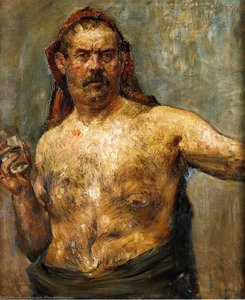
Portrait of Lovis Corinth

The 100 Most Famous Lovis Corinth Paintings, a Gallery Selection

Updated Outubro 2026 · ranked by our popularity score (searches, visits and orders for each work) · 501 works by Lovis Corinth in our catalogue

In short

Of all the originals Lovis Corinth left, the most famous is Na Casa de Abate (1893). Close behind it come Wilhelmine com uma Bola (1915) and Portrait of the Painter Paul Eugène Gorge (1908). Our catalog holds 501 works by Lovis Corinth; the gallery has kept the 100 the world admires most, each shown with its date, its museum and its story.

1858 – 1925, Tauwade Expressionist painting Most works: Berlinische Galerie

Lovis Corinth's top 10 paintings: the gallery's choice

1
Na Casa de Abate (1893) by Lovis Corinth

Na Casa de Abate

1893 · Óleo sobre tela

Uma Representação Dinâmica do Trabalho e da Indústria A obra "Na Casa de Abate", de Lovis Corinth, é um retrato poderoso da intensidade bruta e do esforço físico envolvidos na atividade de açougue. Criada em 1893, esta peça captura a cena agitada do processamento de carne com uma composição dinâmica que atrai o espectador para o coração da ação. O foco central recai sobre uma grande peça de carne sendo…

2
Wilhelmine com uma Bola (1915) by Lovis Corinth

Wilhelmine com uma Bola

A obra apresenta uma jovem menina sentada em uma cadeira, capturada em um estilo pictórico que evoca o início do século XX e suas raízes no expressionismo alemão. Os pinceladas soltas e a busca por transmitir emoções dominam a composição, afastando-se da precisão realista em favor de uma interpretação mais profunda da psicologia humana.

3
Portrait of the Painter Paul Eugène Gorge (1908) by Lovis Corinth

Portrait of the Painter Paul Eugène Gorge

1908 · Acrylic On Canvas · Staatsgalerie Moderner Kunst, Munique

Lovis Corinth’s “Portrait of the Painter Paul Eugène Gorge,” completed in 1908, transcends mere representation; it embodies a pivotal moment in German Expressionism and offers a profound glimpse into Corinth’s artistic vision. Housed within the Staatsgalerie Moderner Kunst in Munich, this oil on canvas painting isn't simply a likeness of another artist—it’s a carefully constructed meditation on identity, creativity, and the complexities of human experience.

5
Reclining Female Nude (1907) by Lovis Corinth

Reclining Female Nude

1907 · Acrylic On Canvas · Austrian Gallery Belvedere, Viena

Reclining Female Nude – A Study in Expressionist Sensuality The painting “Reclining Female Nude,” created by Lovis Corinth in 1907, stands as a cornerstone of Expressionism’s exploration of the human psyche. More than just a depiction of nudity—though undeniably sensual—it delves into themes of vulnerability, desire, and the confrontation with primal instincts. Corinth's masterful technique employs bold brushstrokes and vibrant color palettes to convey not merely what is seen but…

6
Portrait of Georg Brandes (1925) by Lovis Corinth

Portrait of Georg Brandes

1925 · Oil On Canvas · Koninklijk Museum voor Schone Kunsten, Antuérpia

Lovis Corinth’s “Portrait of Georg Brandes” stands as a cornerstone of German Expressionism, capturing not merely likeness but profound psychological insight. Painted in 1925, this monumental canvas – measuring 92 x 70 cm and currently residing at the Koninklijk Museum voor Schone Kunsten in Antwerp – transcends mere representation; it’s an immersive experience into Brandes' inner world and Corinth’s masterful artistic vision.

7
Last Self Portrait (1925) by Lovis Corinth

Last Self Portrait

1925 · Oil On Canvas · Kunsthaus Zürich, Zurique

Lovis Corinth's "Last Self Portrait," painted in 1925, isn’t merely a depiction of an individual; it’s a profound meditation on identity, mortality, and the very nature of self-awareness. Created during a period of intense personal struggle for the artist – marked by the loss of his beloved wife – the painting vibrates with a palpable sense of melancholy and introspection. Corinth, a master of capturing raw emotion through bold brushwork…

8
The Singer Frieda Halbe (1905) by Lovis Corinth

The Singer Frieda Halbe

1905 · Oil On Canvas · Austrian Gallery Belvedere, Viena

Lovis Corinth's "The Singer Frieda Halbe," painted in 1905, is a captivating portrait that exemplifies the artist’s transition from late Impressionism towards early Expressionism. Measuring 120 x 90 cm and currently residing at the Österreichische Galerie Belvedere in Vienna, Austria, this oil on canvas piece offers a compelling window into the artistic sensibilities of the era and showcases Corinth's remarkable ability to capture both physical likeness and emotional depth.

9
Cesare Borgia (Arthur Kraft) (1914) by Lovis Corinth

Cesare Borgia (Arthur Kraft)

1914 · Oil On Canvas · Alte Nationalgalerie, Berlim

In the evocative portrait Cesare Borgia (Arthur Kraft), created in 1914, we encounter a moment where history and raw emotion collide through the masterful hand of Lovis Corinth. This vertical oil painting transcends mere likeness, offering instead a theatrical and deeply psychological study of a man ensconced in the grandeur of traditional attire. The subject, captured with an intense presence, sits upon a chair that seems almost secondary to the…

10
Self-portrait in armor (1914) by Lovis Corinth

Self-portrait in armor

1914 · Oil On Canvas · Hamburger Kunsthalle, Hamburgo

A man stares directly through the canvas, his gaze steady and unyielding. He is encased in metallic armor, the silvery surfaces catching a sharp light that descends from the upper left. This light carves deep shadows into the folds of his skin and the contours of the breastplate, creating a sense of immense physical volume. The armor is not a smooth, polished surface but a landscape of heavy impasto, where…

The Lovis Corinth selection continues, 11 to 100

11Homeric Laughter, First Version (1909) by Lovis CorinthHomeric Laughter, First Version1909 · Bayerische Staatsgemaldesammlungen 12Portrait of Frau Schreiber (1902) by Lovis CorinthPortrait of Frau Schreiber1902 · Staatliche Kunstsammlungen 13Male Portrait (1879) by Lovis CorinthMale Portrait1879 · Hamburger Kunsthalle 14Large Self Portrait at the Walchensee (1924) by Lovis CorinthLarge Self Portrait at the Walchensee1924 · Bayerische Staatsgemaldesammlungen 15Paradise (1911) by Lovis CorinthParadise1911 16Cat's Breakfast (1913) by Lovis CorinthCat's Breakfast1913 17Fishermen's Cemetery at Nidden (1893) by Lovis CorinthFishermen's Cemetery at Nidden1893 · Bayerische Staatsbibliothek 18Portrait of Gerhart Hauptmann (1900) by Lovis CorinthPortrait of Gerhart Hauptmann1900 · Kunsthalle Mannheim 19Hans Rosenhagen (1899) by Lovis CorinthHans Rosenhagen1899 · Alte Nationalgalerie 20Portrait of Dr Ferdinand Mainzer (1899) by Lovis CorinthPortrait of Dr Ferdinand Mainzer1899 · National Gallery 21Reclining Nude (1899) by Lovis CorinthReclining Nude1899 · Kunsthalle Bremen 22Porträt Albert Kaumann (1910) by Lovis CorinthPorträt Albert Kaumann1910 · Hamburger Kunsthalle 23Anny Schaumberg with a doll (1886) by Lovis CorinthAnny Schaumberg with a doll1886 · Museu Nacional de Varsóvia 24Italian Woman in a Yellow Chair (1912) by Lovis CorinthItalian Woman in a Yellow Chair1912 · Niedersächsisches Landesmuseum 25Male Nude (1886) by Lovis CorinthMale Nude1886 · Yale University Art Gallery 26Still Life with Chrysanthemums and Amaryllis (1922) by Lovis CorinthStill Life with Chrysanthemums and Amaryllis1922 · Austrian Gallery Belvedere 27Study for the Painting "Die Totenklage" (1908) by Lovis CorinthStudy for the Painting "Die Totenklage"1908 · Staatliche Kunstsammlungen Dresden 28Self-Portrait (1917) by Lovis CorinthSelf-Portrait1917 · Art Institute of Chicago 29Female Nude on Studio Stool (1885) by Lovis CorinthFemale Nude on Studio Stool1885 30The Eighty-Year-Old Woman (1882) by Lovis CorinthThe Eighty-Year-Old Woman1882 31Portrait of Herr Fehleisen (1883) by Lovis CorinthPortrait of Herr Fehleisen1883 32Portrait of a Gentleman (1883) by Lovis CorinthPortrait of a Gentleman1883 33Portrait of the Aunt in Moterau (1880) by Lovis CorinthPortrait of the Aunt in Moterau1880 34Portrait of Ohm in Moterau (1880) by Lovis CorinthPortrait of Ohm in Moterau1880 35Old Italian woman (1883) by Lovis CorinthOld Italian woman1883 36Laughing Girl (1883) by Lovis CorinthLaughing Girl1883 37Portrait des the Artist Albertus Wirth (1884) by Lovis CorinthPortrait des the Artist Albertus Wirth1884 38On the Balcony in Bordighera (1912) by Lovis CorinthOn the Balcony in Bordighera1912 · Museum Folkwang 39Sunday Peace (1887) by Lovis CorinthSunday Peace1887 40Portrait of the Father Franz Heinrich Corinth with Letter (1887) by Lovis CorinthPortrait of the Father Franz Heinrich Corinth with Letter1887 · Kunstforum Ostdeutsche Galerie 41Old Woman (1887) by Lovis CorinthOld Woman1887 42Portrait of the Actor Hugo Rogall (1890) by Lovis CorinthPortrait of the Actor Hugo Rogall1890 43The old drinker (1889) by Lovis CorinthThe old drinker1889 44Woman Reading (1888) by Lovis CorinthWoman Reading1888 45Falschspieler (1887) by Lovis CorinthFalschspieler1887 46Sitting female nude (1886) by Lovis CorinthSitting female nude1886 47Parisian with a high comb (1886) by Lovis CorinthParisian with a high comb1886 48Nude Girl (1886) by Lovis CorinthNude Girl1886 · Minneapolis Institute of Art 49Portrait of a Woman with hat (1898) by Lovis CorinthPortrait of a Woman with hat1898 · Lenbachhaus 50Portrait of the Painter Karl Strathmann (1895) by Lovis CorinthPortrait of the Painter Karl Strathmann1895 51Group of Women (Friends, large version) (1904) by Lovis CorinthGroup of Women (Friends, large version)1904 · Staatliche Kunstsammlungen Dresden 52Portrait of Frau Schreiber (1901) by Lovis CorinthPortrait of Frau Schreiber1901 53Portrait of the Painter Fritz Rumpf (1901) by Lovis CorinthPortrait of the Painter Fritz Rumpf1901 · Berlinische Galerie 54Demon (1899) by Lovis CorinthDemon1899 55Black Shadows (1903) by Lovis CorinthBlack Shadows1903 · Hamburger Kunsthalle 56Portrait Ruederer (1904) by Lovis CorinthPortrait Ruederer1904 57Three graces (1904) by Lovis CorinthThree graces1904 · Bavarian State Painting Collections 58Portrait of Gertrud Mainzer with Lucie (1901) by Lovis CorinthPortrait of Gertrud Mainzer with Lucie1901 59Portrait of the sculptor Friedrich (1904) by Lovis CorinthPortrait of the sculptor Friedrich1904 · Fogg Museum 60Portrait of Eduard, Count Keyserling (1900) by Lovis CorinthPortrait of Eduard, Count Keyserling1900 · Neue Pinakothek 61Hymn to Michelangelo (1911) by Lovis CorinthHymn to Michelangelo1911 · Lenbachhaus 62Draft for Orpheus (1908) by Lovis CorinthDraft for Orpheus1908 · Staatliche Kunstsammlungen Dresden 63Judgment of Paris (1907) by Lovis CorinthJudgment of Paris1907 · Staatliche Kunstsammlungen Dresden 64Portrait of Frau Douglas (1909) by Lovis CorinthPortrait of Frau Douglas1909 · Museum der bildenden Künste 65Two Female Nudes (1910) by Lovis CorinthTwo Female Nudes1910 66Standing Nude (1911) by Lovis CorinthStanding Nude1911 · Niedersächsisches Landesmuseum 67The Apostle Paul (1911) by Lovis CorinthThe Apostle Paul1911 · Kunsthalle Mannheim 68Young Woman in the Greenery (1911) by Lovis CorinthYoung Woman in the Greenery1911 69Spoils of War (1911) by Lovis CorinthSpoils of War1911 · Museum Kunstpalast 70Charlotte Corinth at her Dressing Table (1911) by Lovis CorinthCharlotte Corinth at her Dressing Table1911 · Hamburger Kunsthalle 71The Capture of Samson (1907) by Lovis CorinthThe Capture of Samson1907 · Landesmuseum Mainz 72Magdalena Weeping (1911) by Lovis CorinthMagdalena Weeping1911 · Alte Nationalgalerie 73Höllenfragment [Hell, fragment] (1911) by Lovis CorinthHöllenfragment [Hell, fragment]1911 74Portrait of a man in a slouch hat (after Frans Hals) (1907) by Lovis CorinthPortrait of a man in a slouch hat (after Frans Hals)1907 · New Gallery 75Der Fanatiker (1911) by Lovis CorinthDer Fanatiker1911 · Museum Georg Schäfer 76Ice Skating Rink in The Tiergarten, Berlin (1909) by Lovis CorinthIce Skating Rink in The Tiergarten, Berlin1909 77Self Portrait as Standard Bearer (1911) by Lovis CorinthSelf Portrait as Standard Bearer1911 78The Large Martyrdom (1907) by Lovis CorinthThe Large Martyrdom1907 79Angelica with Dragon (1914) by Lovis CorinthAngelica with Dragon1914 · Berlinische Galerie 80Portrait of a Man (1914) by Lovis CorinthPortrait of a Man1914 · Berlinische Galerie 81Ariosto (1914) by Lovis CorinthAriosto1914 · Berlinische Galerie 82The Suitors Fighting Odysseus (1913) by Lovis CorinthThe Suitors Fighting Odysseus1913 · Berlinische Galerie 83Veiled Dancer (1913) by Lovis CorinthVeiled Dancer1913 84Portrait of Rudolf Rittner as "Florian Geyer" (II. Version) (1912) by Lovis CorinthPortrait of Rudolf Rittner as "Florian Geyer" (II. Version)1912 85Wilhelmine in Traditional Costume (1913) by Lovis CorinthWilhelmine in Traditional Costume1913 86Girl, Undressing (1917) by Lovis CorinthGirl, Undressing1917 87Self-Portrait in Fur and Fur Cap (1916) by Lovis CorinthSelf-Portrait in Fur and Fur Cap1916 88Portrait of a Woman (1917) by Lovis CorinthPortrait of a Woman1917 89Self-Portrait as a Nuremberg Landsknecht (1913) by Lovis CorinthSelf-Portrait as a Nuremberg Landsknecht1913 90The Hairdresser (1915) by Lovis CorinthThe Hairdresser1915 · Alte Nationalgalerie 91Thomas (1912) by Lovis CorinthThomas1912 · Yale University Art Gallery 92Homer (1914) by Lovis CorinthHomer1914 · Berlinische Galerie 93Odysseus in the battle with the suitors (1913) by Lovis CorinthOdysseus in the battle with the suitors1913 · Berlinische Galerie 94Ruggiero and His Page (1914) by Lovis CorinthRuggiero and His Page1914 · Berlinische Galerie 95The Rose – Portrait of Lucie Mainzer (1914) by Lovis CorinthThe Rose – Portrait of Lucie Mainzer1914 96Death and the Maiden (1913) by Lovis CorinthDeath and the Maiden1913 97Old Man in Armour (1915) by Lovis CorinthOld Man in Armour1915 98Grandmother and Granddaughter (1919) by Lovis CorinthGrandmother and Granddaughter1919 · Niedersächsisches Landesmuseum 99Portrait of Admiral Alfred von Tirpitz (1917) by Lovis CorinthPortrait of Admiral Alfred von Tirpitz1917 100Portrait of Frau Luther (1911) by Lovis CorinthPortrait of Frau Luther1911 · Niedersächsisches Landesmuseum

Lovis Corinth's famous paintings, period by period

The subjects that held Lovis Corinth's eye

The four subjects that come back most often in these originals, each with its finest example.

The museums that keep Lovis Corinth's originals

The 8 museums that hold the most of the paintings on this page.

Museum City Works by Lovis Corinth Paintings from this list
Berlinische Galerie, BerlimBerlinische Galerie Berlim 10 Portrait of the Painter Fritz Rumpf, Angelica with Dragon, Portrait of a Man
Hamburger Kunsthalle, HamburgoHamburger Kunsthalle Hamburgo 15 Self-portrait in armor, Male Portrait, Porträt Albert Kaumann
Alte Nationalgalerie, BerlimAlte Nationalgalerie Berlim 20 Cesare Borgia (Arthur Kraft), Hans Rosenhagen, Magdalena Weeping
Niedersächsisches Landesmuseum, HanoverNiedersächsisches Landesmuseum Hanover 17 Italian Woman in a Yellow Chair, Standing Nude, Grandmother and Granddaughter
Staatliche Kunstsammlungen Dresden, DresdenStaatliche Kunstsammlungen Dresden Dresden 8 Study for the Painting "Die Totenklage", Group of Women (Friends, large version), Draft for Orpheus
Austrian Gallery Belvedere, VienaAustrian Gallery Belvedere Viena 11 Reclining Female Nude, The Singer Frieda Halbe, Still Life with Chrysanthemums and Amaryllis
Lenbachhaus, MuniqueLenbachhaus Munique 15 Portrait of a Woman with hat, Hymn to Michelangelo
Bayerische Staatsgemaldesammlungen, MuniqueBayerische Staatsgemaldesammlungen Munique 5 Homeric Laughter, First Version, Large Self Portrait at the Walchensee

Lovis Corinth decade by decade: the original that defines each

Works per decade

Pick a decade to see the original that defines it.

Collectors' questions about Lovis Corinth's paintings

Which work is Lovis Corinth most famous for?Reveal the answer

Na Casa de Abate (1893). Wilhelmine com uma Bola (1915) and Portrait of the Painter Paul Eugène Gorge (1908) come next.

What age was Lovis Corinth when Na Casa de Abate was made?Reveal the answer

35 years old: Na Casa de Abate dates from 1893, and Lovis Corinth was born in 1858.

What are the ten most famous Lovis Corinth paintings?Reveal the answer

Na Casa de Abate, Wilhelmine com uma Bola, Portrait of the Painter Paul Eugène Gorge, Self Portrait with a Glass, Reclining Female Nude, Portrait of Georg Brandes, Last Self Portrait, The Singer Frieda Halbe, Cesare Borgia (Arthur Kraft) and Self-portrait in armor. The ranking above gives each one's year and museum.

How many paintings did Lovis Corinth leave?Reveal the answer

Our catalog holds 501 works by Lovis Corinth, dated from 1879 to 1925.

In which museums do Lovis Corinth's masterpieces hang?Reveal the answer

Mostly in Berlinische Galerie (Berlim), Hamburger Kunsthalle (Hamburgo) and Alte Nationalgalerie (Berlim). The museum table above lists them all.

In which years did Lovis Corinth paint the most famous works?Reveal the answer

In 1910s: 42 of the 100 works on this page were made then, Wilhelmine com uma Bola among them.

What are the first and the last famous originals of Lovis Corinth?Reveal the answer

On this page, the earliest is Male Portrait (1879) and the latest Portrait of Georg Brandes (1925).

Which subjects did Lovis Corinth choose most often?Reveal the answer

Man (10), Portrait (7) and Woman (5), across the 100 works on this page.

Which technique did Lovis Corinth use most?Reveal the answer

Oil On Canvas, for 24 of the 100 works on this page.

To which art movement does Lovis Corinth belong?Reveal the answer

Expressionist painting and Expressionist landscape, judging by the originals on this page.

Which Lovis Corinth works hang at the Berlinische Galerie?Reveal the answer

Portrait of the Painter Fritz Rumpf, Angelica with Dragon and Portrait of a Man: the Berlinische Galerie, Berlim holds 8 of the works on this page.

Can I commission a reproduction of a Lovis Corinth painting?Reveal the answer

Yes, as a reproduction: the original stays in its museum, but any painting on this page can be painted by hand for you, made to order one at a time, from the painting's own page.

Lovis Corinth: life and work

A Life Forged in Paint: The World of Lovis Corinth

Lovis Corinth, nascido Franz Heinrich Louis em 21 de julho de 1858, na província prussiana do leste, foi uma figura que personificou a tumultuada transição do século XIX para o início do século XX no mundo da arte. Sua jornada não foi um reconhecimento imediato, mas sim uma evolução gradual impulsionada por estudo incansável, influências diversas e, em última análise, por uma tragédia pessoal. Os primeiros anos de Corinth estavam enraizados nos paisagens rurais de seu berço, Tapiau, onde seu pai trabalhava como alfaiate. Essa exposição precoce à fisicalidade do trabalho e à beleza bruta da natureza permeou sutilmente seu trabalho posterior, mesmo em meio a explorações estilísticas mais sofisticadas. Inicialmente, ele buscou estudos na Academia de Königsberg em 1876, mas logo percebeu que a tradição acadêmica sozinha não satisfaria suas ambições artísticas. Um período de viagens seguiu, levando-o a Munique, Antuérpia e finalmente Paris – cada cidade servindo como um passo crucial em seu desenvolvimento. Em Munique, ele absorveu o realismo meticuloso defendido por Ludwig von Löfftz, aperfeiçoando suas habilidades observacionais e dominando a técnica. Antuérpia apresentou-o à intensidade dramática do Barroco de Rubens, enquanto Paris expôs-o ao crescente movimento impressionista, embora sua resposta inicial tenha sido uma observação cautelosa em vez de um abraço imediato.

From Naturalism to a Synthesis of Styles

O desenvolvimento artístico de Corinth não foi marcado por revoluções rápidas, mas sim pela assimilação e síntese gradual de influências diversas. Seu trabalho inicial incluiu fortemente o naturalismo, refletindo os padrões acadêmicos predominantes da época. Pinturas como “Na Abatedouro” (1878), com sua representação sem compromisso de cadáveres de animais, demonstram esse compromisso com a representação realista, mas mesmo aqui, uma intensidade emocional nascente começa a surgir. O próprio assunto – grotesco e visceral – sugere uma disposição para enfrentar verdades desconfortáveis, uma característica que Corinth se destacou por sua capacidade única de capturar a essência de seus modelos, indo além da mera representação física. Ele não apenas reproduzia a aparência externa; ele buscava revelar a alma interior, as emoções e os pensamentos de seus sujeitos. Essa habilidade o tornou um mestre em retratos psicológicos, capazes de transmitir uma profunda compreensão do caráter humano através de gestos sutis, olhares expressivos e composições cuidadosamente consideradas. A influência dos mestres antigos, particularmente Rubens, instilou nele um amor pela composição dinâmica e pelo traço expressivo. No entanto, sua exposição ao Impressionismo – inicialmente visto com ceticismo – provou ser transformador. Ele não simplesmente adotou os efeitos de luz quebrados e fugazes de Monet ou Renoir; em vez disso, integrou esses elementos à sua própria visão única, criando um estilo que combinava a vitalidade impressionista com uma sensibilidade distintamente alemã. Essa síntese o posicionaria como uma ponte entre o Impressionismo e o Expressionismo, duas correntes que definiram o cenário artístico do início do século XX.

A Master of Portraiture and Landscape

Embora Corinth explorasse vários gêneros ao longo de sua carreira – incluindo cenas bíblicas e temas mitológicos – ele é talvez mais lembrado por seus retratos e paisagens. Seu retrato não era apenas uma representação da aparência física; era um esforço para penetrar nas profundezas psicológicas de seus modelos, revelando suas vidas interiores através de gestos sutis, olhares expressivos e composições cuidadosamente consideradas. Ele possuía uma notável capacidade de transmitir caráter e emoção com economia surpreendente de meios. Da mesma forma, seus paisagens não eram simplesmente representações de vistas cênicas, mas sim respostas emocionais à natureza. A região de Walchensee nos Alpes Bávaros tornou-se uma fonte particular de inspiração para ele, fornecendo-lhe um tesouro de motivos que explorou repetidamente ao longo de sua vida posterior. Essas pinturas são caracterizadas por suas cores vibrantes, traços dinâmicos e um senso de energia bruta que reflete o próprio engajamento apaixonado de Corinth com o mundo natural. Ele não estava interessado em representações idílicas; em vez disso, ele buscava capturar o poder selvagem e o drama inerente da paisagem.

Tragedy, Resilience and Lasting Legacy

Um momento crucial na vida de Corinth – e, em certa medida, no desenvolvimento artístico dele – foi um derrame cerebral que sofreu em dezembro de 1911. A paralisia que causou em seu lado esquerdo ameaçou o fim de sua carreira. No entanto, com determinação inabalável e o apoio de sua esposa, Charlotte Berend-Corinth, ele relembrou a pintura, adaptando-se às suas limitações físicas e desenvolvendo um estilo ainda mais expressivo. Este período marcou um ponto de virada em seu trabalho, à medida que suas pinturas se tornaram cada vez mais ousadas, gestuais e carregadas de emoção. A experiência de confrontar a mortalidade e a adversidade física infundiu sua arte com uma nova sensação de urgência e autenticidade. Ele abraçou um traço solto e uma paleta de cores intensificada, antecipando muitas das inovações estilísticas que definiriam o Expressionismo. Corinth foi um líder influente na cena artística alemã, desempenhando um papel fundamental na promoção da inovação e no desafiar as convenções tradicionais. Sua influência se estendeu além de sua própria pintura; ele também era um respeitado professor e escritor sobre arte, publicando ensaios como “Sobre Aprender a Pintar” em 1908, oferecendo insights em sua filosofia artística e abordagem técnica. Ele serviu como presidente da Secessão de Berlim de 1915 até sua morte em 1925, defendendo ideias artísticas progressistas e fomentando uma comunidade criativa vibrante. O legado de Lovis Corinth reside não apenas em sua notável obra, mas também em seu compromisso inabalável com a integridade artística e em sua capacidade de transformar a tragédia pessoal em expressão artística profunda. Ele permanece uma figura fundamental na história da arte alemã, um mestre que conectou duas eras e deixou uma marca indelével nas gerações de artistas que o seguiram.

All 501 works by Lovis Corinth →