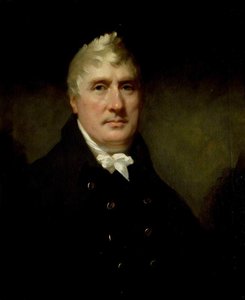
Retrato de Henry Raeburn

As 100 Pinturas Mais Famosas de Henry Raeburn, uma Seleção da Galeria

Atualizado em Outubro 2026 · classificado pela nossa pontuação de popularidade (pesquisas, visitas e pedidos de cada obra) · 438 obras de Henry Raeburn em nosso catálogo

Em resumo

De todas as obras originais deixadas por Henry Raeburn, a mais famosa é Reverendo Dr. Robert Walker (1755–1808) Patinando no Duddingston Loch (1795), da coleção do Scottish National Gallery, em Edimburgo. Logo atrás vêm Justina Camilla Wynne, Mrs Alexander Finlay of Glencorse (1785 1814) (1810) e Young Girl Holding Flowers (1798). Nosso catálogo contém 438 obras de Henry Raeburn; a galeria preservou as 100 que o mundo mais admira, cada uma exibida com sua data, seu museu e sua história.

1756 – 1823, Stockbridge Scottish neoclassicism Mais obras: Galeria Nacional de Retratos de Escócia

As 10 principais pinturas de Henry Raeburn: a escolha da galeria

1
Reverendo Dr. Robert Walker (1755–1808) Patinando no Duddingston Loch (1795) de Henry Raeburn

Reverendo Dr. Robert Walker (1755–1808) Patinando no Duddingston Loch

1795 · Óleo sobre tela · Scottish National Gallery, Edimburgo

O ar parece cortante e frio enquanto uma figura solitária desliza pela vasta extensão congelada de Duddingston Loch. Trata-se de um homem de estatura, vestido com um pesado casaco preto e uma cartola, mas que se move com uma leveza que desafia sua vestimenta formal. Uma perna está erguida, em um equilíbrio delicado, enquanto suas mãos descem para segurar o pé, capturando um instante fugaz de alegria em meio ao…

2
Justina Camilla Wynne, Mrs Alexander Finlay of Glencorse (1785 1814) (1810) de Henry Raeburn

Justina Camilla Wynne, Mrs Alexander Finlay of Glencorse (1785 1814)

1810 · Oil On Canvas · Scottish National Gallery, Edimburgo

To gaze upon this portrait of Justina Camilla Wynne, Mrs Alexander Finlay of Glencorse, is to step directly into the refined atmosphere of the early nineteenth century. Rendered with an exquisite mastery that speaks to the height of Neoclassicism, the painting captures more than just a likeness; it encapsulates an entire era's idealization of feminine dignity and quiet grandeur. The subject is presented in a pose of effortless elegance, seated…

3
Young Girl Holding Flowers (1798) de Henry Raeburn

Young Girl Holding Flowers

1798 · Oil On Canvas · Museu do Louvre, Paris

Henry Raeburn's "Young Girl Holding Flowers," painted in 1798 and currently residing within the hallowed halls of the Musée du Louvre, is more than just a charming pastoral scene; it’s a profound meditation on youth, beauty, and the fleeting joys of nature. This exquisite oil-on-canvas work captures a young girl, seemingly lost in contemplation as she cradles a vibrant bouquet of wildflowers. Raeburn's masterful technique—characterized by soft, luminous colors and…

4
Henry Mackenzie (1810) de Henry Raeburn

Henry Mackenzie

1810 · Oil On Canvas

To stand before this portrait is to encounter not merely a likeness, but a carefully curated moment of intellectual gravity. Painted by the master of Scottish realism, Henry Raeburn in 1810, this work captures Henry Mackenzie with an arresting dignity that seems to transcend the passage of time. The composition itself speaks volumes; while the subject occupies a central space, his slight off-centering lends a subtle dynamism, preventing the formality…

5
Professor Dugald Stewart (1753–1828), Philosopher (1810) de Henry Raeburn

Professor Dugald Stewart (1753–1828), Philosopher

1810 · Oil On Canvas · Galeria Nacional de Retratos de Escócia, Edimburgo

To stand before Henry Raeburn’s portrait of Professor Dugald Stewart is to encounter not merely a likeness, but an embodiment of Enlightenment intellect. Painted in 1810, this work transcends simple portraiture; it is a carefully constructed meditation on genius itself. The subject, Professor Dugald Stewart, is presented in a three-quarter view that immediately draws the viewer into a direct, compelling dialogue. Raeburn masterfully isolates him against a background so deep…

6
Pringle Fraser (1804) de Henry Raeburn

Pringle Fraser

1804 · Oil On Canvas · Tate Gallery, Londres

To stand before this portrait of Pringle Fraser is to encounter not merely a likeness, but a carefully constructed moment of contemplation. Painted around 1804, this work captures the essence of early nineteenth-century masculine dignity. The subject commands attention through his direct, almost challenging gaze. He is presented in attire that speaks of respectable standing—the crisp white shirt contrasting sharply with the somber black vest and tie. This deliberate contrast…

7
Allan Maconochie (1748–1816), 1st Lord Meadowbank, Judge (1814) de Henry Raeburn

Allan Maconochie (1748–1816), 1st Lord Meadowbank, Judge

1814 · Oil On Canvas · Galeria Nacional de Retratos de Escócia, Edimburgo

To stand before Henry Raeburn’s portrait of Allan Maconochie is to encounter not merely a likeness, but a carefully curated study in character and societal standing. Painted in 1814, this work transcends simple portraiture; it is a document of early nineteenth-century British gentry, imbued with the quiet weight of authority. Raeburn, the master chronicler of Scottish life elevated to national prominence, captures Maconochie—the 1st Lord Meadowbank and Judge—with an unflinching…

8
John Balmanno, MD, President, FPSG (1800–1802, 1806–1808, 1818–1820 1826–1828) (1820) de Henry Raeburn

John Balmanno, MD, President, FPSG (1800–1802, 1806–1808, 1818–1820 1826–1828)

1820 · Oil On Canvas · Nhs Greater Glasgow And Clyde, Glasgow

This captivating portrait captures John Balmanno, MD, in a moment of considered repose. The sitter is presented with an air of profound accomplishment and quiet authority, hallmarks of the distinguished professional of the early nineteenth century. Dressed in the sober elegance expected of a man of his standing—a tailored suit and tie speak to a life navigated within academic and civic circles—he occupies a space that feels both intimate and…

9
George Malcolm (1790) de Henry Raeburn

George Malcolm

1790 · Oil On Canvas · Courtauld Gallery, Londres

To stand before this portrait of George Malcolm is to step directly into the refined drawing rooms of the late eighteenth century. Painted around 1790, this oil on canvas captures more than just a likeness; it arrests a moment of profound contemplation. The subject, depicted as a gentleman in his prime with distinguished white hair, meets the viewer's gaze with an intensity that is both direct and deeply thoughtful. His…

10
John James Audubon (1785–1851) de Henry Raeburn

John James Audubon (1785–1851)

Oil On Canvas · Temple Newsam House, Leeds

This meticulously rendered portrait of John James Audubon, executed in shades of gray, black, and white, offers a profound glimpse into the mind and character of one of history’s most celebrated ornithologists. Attributed to the masterful hand of Sir Henry Raeburn, a Scottish painter renowned for his realism and ability to capture the essence of his subjects, this artwork transcends a simple likeness; it's an embodiment of dedication, intellect, and…

A seleção de Henry Raeburn continua, de 11 a 100

11Portrait of Catherine Vorontsova (1810) de Henry RaeburnPortrait of Catherine Vorontsova1810 · Museu Estatal Pushkin de Artes Visuais 12Daniel Stewart (1741–1814) (1812) de Henry RaeburnDaniel Stewart (1741–1814)1812 · The Merchant's Hall 13Mrs. Anne Hart (1810) de Henry RaeburnMrs. Anne Hart1810 · Staatliche Museen zu Berlin 14Charles Gordon of Buthlaw, Lonmay and Cairness (1747–1797) (1790) de Henry RaeburnCharles Gordon of Buthlaw, Lonmay and Cairness (1747–1797)1790 · The National Trust For Scotland 15William Law of Elvinston (1714-1806) (1795) de Henry RaeburnWilliam Law of Elvinston (1714-1806)1795 · Kunsthistorisches Museum 16A Young Lady (1795) de Henry RaeburnA Young Lady1795 · Tate Gallery 17Mrs Downey (1787) de Henry RaeburnMrs Downey1787 · Tate Gallery 18Rear-Admiral Charles Inglis (1783) de Henry RaeburnRear-Admiral Charles Inglis1783 · National Gallery of Scotland 19Mrs H.W. Lauzun (1796) de Henry RaeburnMrs H.W. Lauzun1796 · Tate Gallery 20Adam Rolland of Gask II (1800) de Henry RaeburnAdam Rolland of Gask II1800 · Art Institute of Chicago 21Robert Cunninghame Graham of Gartmore, d. 1797. Poet and politician (1794) de Henry RaeburnRobert Cunninghame Graham of Gartmore, d. 1797. Poet and politician1794 · Galeria Nacional de Retratos de Escócia 22Lady Montgomery, née Helen Graham, d. 1828. (1818) de Henry RaeburnLady Montgomery, née Helen Graham, d. 1828.1818 · Galeria Nacional de Retratos de Escócia 23Ann Fraser, Mrs. Alexander Fraser Tytler (1802) de Henry RaeburnAnn Fraser, Mrs. Alexander Fraser Tytler1802 · Brooklyn Museum 24Sir Walter Scott (1822) de Henry RaeburnSir Walter Scott1822 · National Gallery of Scotland 25Mrs John Campbell of Kilberry (1802) de Henry RaeburnMrs John Campbell of Kilberry1802 · Bavarian State Painting Collections 26Lady Dalrymple de Henry RaeburnLady DalrympleTate Gallery 27Professor James Gregory (1753–1821) (1798) de Henry RaeburnProfessor James Gregory (1753–1821)1798 · The National Trust For Scotland 28William Glendonwyn (1800) de Henry RaeburnWilliam Glendonwyn1800 · Museu Fitzwilliam 29Robert Brown of Newhall (1792) de Henry RaeburnRobert Brown of Newhall1792 · Art Institute of Chicago 30Sir James Montgomery, Second Baronet of Stanhope (1804) de Henry RaeburnSir James Montgomery, Second Baronet of Stanhope1804 · Detroit Institute of Arts 31Portrait of David Cowan (1823) de Henry RaeburnPortrait of David Cowan1823 · Auckland Art Gallery Toi o Tāmaki 32Eleanor Margaret Gibson-Carmichael (1802) de Henry RaeburnEleanor Margaret Gibson-Carmichael1802 · Art Institute of Chicago 33Portrait of a Man. (1810) de Henry RaeburnPortrait of a Man.1810 · Museu Nacional de Varsóvia 34Sir William Napier (1810) de Henry RaeburnSir William Napier1810 · Fine Arts Museums of San Francisco 35Mrs. Alexander Campbell of Possil (1756) de Henry RaeburnMrs. Alexander Campbell of Possil1756 · Detroit Institute of Arts 36Master James Hay (1793) de Henry RaeburnMaster James Hay1793 · Auckland Art Gallery Toi o Tāmaki 37Portrait of John Baillie (1772-1833) (1817) de Henry RaeburnPortrait of John Baillie (1772-1833)1817 · Minneapolis Institute of Art 38Andrew Spottiswoode (1815) de Henry RaeburnAndrew Spottiswoode1815 · Art Gallery of New South Wales 39Portrait of a Man with Gray Hair (1815) de Henry RaeburnPortrait of a Man with Gray Hair1815 · Art Institute of Chicago 40E. Finley, Esquire (1800) de Henry RaeburnE. Finley, Esquire1800 · Birmingham Museum of Art 41Mrs. James Wedderburn, née Isabelle Clerk (1819) de Henry RaeburnMrs. James Wedderburn, née Isabelle Clerk1819 · Yale University Art Gallery 42Sir Duncan Campbell of Barcaldine (1812) de Henry RaeburnSir Duncan Campbell of Barcaldine1812 · Fine Arts Museums of San Francisco 43Resemblance of a Girl and a Boy (1800) de Henry RaeburnResemblance of a Girl and a Boy1800 · Slovak National Gallery 44Alexander Murray, 8th Baron Elibank (1800) de Henry RaeburnAlexander Murray, 8th Baron Elibank1800 · Detroit Institute of Arts 45Portrait of a Man (1812) de Henry RaeburnPortrait of a Man1812 · Statens Museum For Kunst 46Dr. Mackenzie of Edinburgh (1790) de Henry RaeburnDr. Mackenzie of Edinburgh1790 · Augustiner Museum 47Portrait of Mrs. George Bell (1801) de Henry RaeburnPortrait of Mrs. George Bell1801 · Minneapolis Institute of Art 48Alexander Leith of Freeland de Henry RaeburnAlexander Leith of FreelandThe National Trust For Scotland 49William Stuart Forbes, elder son of Sir William Forbes of Pitsligo, 1802–1826 (1811) de Henry RaeburnWilliam Stuart Forbes, elder son of Sir William Forbes of Pitsligo, 1802–18261811 · Scottish National Gallery 50Thomas Williamson Ramsay (1756–1838) (1810) de Henry RaeburnThomas Williamson Ramsay (1756–1838)1810 · National Trust 51Portrait of Sir Patrick Inglis, Baronet of Sunnyside (1790) de Henry RaeburnPortrait of Sir Patrick Inglis, Baronet of Sunnyside1790 · Minneapolis Institute of Art 52Bailie William Galloway (1716–1801) (1798) de Henry RaeburnBailie William Galloway (1716–1801)1798 · The Merchant's Hall 53Admiral Adam Duncan (1731-1804), 1st Viscount Duncan (1731) de Henry RaeburnAdmiral Adam Duncan (1731-1804), 1st Viscount Duncan1731 · National Maritime Museum 54Rev. Dr John Erskine, 1721 - 1803. Theologian (1804) de Henry RaeburnRev. Dr John Erskine, 1721 - 1803. Theologian1804 · Galeria Nacional de Retratos de Escócia 55Quintin McAdam (1815) de Henry RaeburnQuintin McAdam1815 · Yale Center for British Art 56Lady Anne Torphicen de Henry RaeburnLady Anne TorphicenFinnish National Gallery 57Mrs Robert Adam (1780) de Henry RaeburnMrs Robert Adam1780 58Portrait of James Veitch, Lord Eliock (1776) de Henry RaeburnPortrait of James Veitch, Lord Eliock1776 59Portrait of Lady Cathcart (1776) de Henry RaeburnPortrait of Lady Cathcart1776 60Portrait of Mrs Allan Maconochie of Meadowbank and one of her sons (1787) de Henry RaeburnPortrait of Mrs Allan Maconochie of Meadowbank and one of her sons1787 61Portrait of Thomas Wood (1790) de Henry RaeburnPortrait of Thomas Wood1790 · Indianapolis Museum of Art 62Portrait of a Man Seated in an Armchair (said to be William Fairlie) (1795) de Henry RaeburnPortrait of a Man Seated in an Armchair (said to be William Fairlie)1795 · Museu de Belas Artes de Boston 63Mr George Paterson of Castle Huntly (1734–1813) (1790) de Henry RaeburnMr George Paterson of Castle Huntly (1734–1813)1790 · Mcmanus: Dundee's Art Galleries And Museums 64Lady Anne Miller of Glenlee (1788) de Henry RaeburnLady Anne Miller of Glenlee1788 65Dr Nathaniel Spens in the uniform of the Royal Company of Archers (1793) de Henry RaeburnDr Nathaniel Spens in the uniform of the Royal Company of Archers1793 66Miss Macartney (1794) de Henry RaeburnMiss Macartney1794 67William Beveridge (1795) de Henry RaeburnWilliam Beveridge1795 · Scottish National Gallery 68Miss Eleanor Urquhart (1795) de Henry RaeburnMiss Eleanor Urquhart1795 · National Gallery of Art 69Portrait of Andrew Wauchope of Niddrie (1800) de Henry RaeburnPortrait of Andrew Wauchope of Niddrie1800 · Instituto de Arte de Dayton 70Lieutenant-General Sir Hildebrand Oakes, 1st Bt GCB (1754-1822) (1802) de Henry RaeburnLieutenant-General Sir Hildebrand Oakes, 1st Bt GCB (1754-1822)1802 · Killerton 71Mrs. Macdowall (1800) de Henry RaeburnMrs. Macdowall1800 · Indianapolis Museum of Art 72Miss Elizabeth Haig (1799) de Henry RaeburnMiss Elizabeth Haig1799 73Edward Satchwell Fraser (1803) de Henry RaeburnEdward Satchwell Fraser1803 74John Tait of Harviestoun (1800) de Henry RaeburnJohn Tait of Harviestoun1800 · Fine Arts Museums of San Francisco 75Frances Harriet Wynne (1786 1860), Mrs Hamilton of Kames (1811) de Henry RaeburnFrances Harriet Wynne (1786 1860), Mrs Hamilton of Kames1811 · Scottish National Gallery 76Professor Andrew Dalzel (1742–1806), Classical Scholar (1798) de Henry RaeburnProfessor Andrew Dalzel (1742–1806), Classical Scholar1798 · Galeria Nacional de Retratos de Escócia 77Portrait of Mrs George Joseph Bell, née Barbara Shaw (1790-1883) (1806) de Henry RaeburnPortrait of Mrs George Joseph Bell, née Barbara Shaw (1790-1883)1806 78Sir Charles Forbes (1774-1849) (1810) de Henry RaeburnSir Charles Forbes (1774-1849)1810 · National Library of Wales 79Henry David Erskine, Twelfth Earl of Buchan (1805) de Henry RaeburnHenry David Erskine, Twelfth Earl of Buchan1805 · Detroit Institute of Arts 80Portrait of Robert Sym (1810) de Henry RaeburnPortrait of Robert Sym1810 · Rhode Island School of Design Museum of Art 81Lieutenant General Duncan Campbell (1810) de Henry RaeburnLieutenant General Duncan Campbell1810 · Cleveland Museum of Art 82Portrait of Hugh Hope (1810) de Henry RaeburnPortrait of Hugh Hope1810 · Cleveland Museum of Art 83Robert Hay (1805) de Henry RaeburnRobert Hay1805 · Museu de Belas Artes de Boston 84The Hon. Lady Jane Ogilvie (1811) de Henry RaeburnThe Hon. Lady Jane Ogilvie1811 85William Law (1756–1823), Depute Sherriff of East Lothian de Henry RaeburnWilliam Law (1756–1823), Depute Sherriff of East LothianJohn Muir House 86Mrs Charles Steuart (1794) de Henry RaeburnMrs Charles Steuart1794 · Tate Gallery 87John Playfair (1748–1819) (1814) de Henry RaeburnJohn Playfair (1748–1819)1814 88Samuel Anderson (1811) de Henry RaeburnSamuel Anderson1811 89The 1st Viscount Melville (1805) de Henry RaeburnThe 1st Viscount Melville1805 90John Rennie (1761–1821), Engineer (1810) de Henry RaeburnJohn Rennie (1761–1821), Engineer1810 · Galeria Nacional de Retratos de Escócia 91Portrait of Sir Walter Scott and his dogs (1820) de Henry RaeburnPortrait of Sir Walter Scott and his dogs1820 92Peter Van Brugh Livingston (1792-1868) (1819) de Henry RaeburnPeter Van Brugh Livingston (1792-1868)1819 · New York Historical Society 93Robert Shuttleworth (1784–1818) (1818) de Henry RaeburnRobert Shuttleworth (1784–1818)1818 · Gawthorpe Hall 94William Scott Elliot of Arkleton (1811 1901) (1815) de Henry RaeburnWilliam Scott Elliot of Arkleton (1811 1901)1815 · Metropolitan Museum of Art 95Charles Grant (1746–1823), MP (1819) de Henry RaeburnCharles Grant (1746–1823), MP1819 · Inverness Library 96James Duff, 4th Earl of Fife (1815) de Henry RaeburnJames Duff, 4th Earl of Fife1815 · University of Dundee 97William Urquhart (c.1794–1840) (1815) de Henry RaeburnWilliam Urquhart (c.1794–1840)1815 98Dr Gardiner (1726–1807) (1806) de Henry RaeburnDr Gardiner (1726–1807)1806 · Scottish National Gallery 99Portrait of The Reverend Robert Walker Skating de Henry RaeburnPortrait of The Reverend Robert Walker Skating 100Mrs. Irvine J. Boswell (1820) de Henry RaeburnMrs. Irvine J. Boswell1820 · Detroit Institute of Arts

Pinturas famosas de Henry Raeburn, período por período

Os temas que cativaram o olhar de Henry Raeburn

Os quatro temas que mais se repetem nestas obras originais, cada um com o seu melhor exemplo.

Os museus que guardam os originais de Henry Raeburn

Os 8 museus que detêm a maioria das pinturas desta página.

Museus Cidade Obras de Henry Raeburn Pinturas desta lista
Galeria Nacional de Retratos de Escócia, EdimburgoGaleria Nacional de Retratos de Escócia Edimburgo 29 Professor Dugald Stewart (1753–1828), Philosopher, Allan Maconochie (1748–1816), 1st Lord Meadowbank, Judge, Robert Cunninghame Graham of Gartmore, d. 1797. Poet and politician
Scottish National Gallery, EdimburgoScottish National Gallery Edimburgo 37 Reverendo Dr. Robert Walker (1755–1808) Patinando no Duddingston Loch, Justina Camilla Wynne, Mrs Alexander Finlay of Glencorse (1785 1814), William Stuart Forbes, elder son of Sir William Forbes of Pitsligo, 1802–1826
Tate Gallery, LondresTate Gallery Londres 8 Pringle Fraser, A Young Lady, Mrs Downey
Detroit Institute of Arts, DetroitDetroit Institute of Arts Detroit 5 Sir James Montgomery, Second Baronet of Stanhope, Mrs. Alexander Campbell of Possil, Alexander Murray, 8th Baron Elibank
Art Institute of Chicago, ChicagoArt Institute of Chicago Chicago 4 Adam Rolland of Gask II, Robert Brown of Newhall, Eleanor Margaret Gibson-Carmichael
Fine Arts Museums of San Francisco, São FranciscoFine Arts Museums of San Francisco São Francisco 3 Sir William Napier, Sir Duncan Campbell of Barcaldine, John Tait of Harviestoun
Minneapolis Institute of Art, MinneapolisMinneapolis Institute of Art Minneapolis 3 Portrait of John Baillie (1772-1833), Portrait of Mrs. George Bell, Portrait of Sir Patrick Inglis, Baronet of Sunnyside
The National Trust For Scotland, TurriefThe National Trust For Scotland Turrief 6 Charles Gordon of Buthlaw, Lonmay and Cairness (1747–1797), Professor James Gregory (1753–1821)

Henry Raeburn década a década: a obra original que define cada uma

Obras por década

Escolha uma década para ver a obra original que a define.

Perguntas de colecionadores sobre as pinturas de Henry Raeburn

Por qual obra Henry Raeburn é mais conhecido(a)?Revelar a resposta

Reverendo Dr. Robert Walker (1755–1808) Patinando no Duddingston Loch (1795), Scottish National Gallery, Edimburgo. Justina Camilla Wynne, Mrs Alexander Finlay of Glencorse (1785 1814) (1810) e Young Girl Holding Flowers (1798) vêm a seguir.

Qual era a idade de Henry Raeburn quando Reverendo Dr. Robert Walker (1755–1808) Patinando no Duddingston Loch foi feita?Revelar a resposta

39 anos: Reverendo Dr. Robert Walker (1755–1808) Patinando no Duddingston Loch data de 1795, e Henry Raeburn nasceu em 1756.

Quais são as dez pinturas mais famosas de Henry Raeburn?Revelar a resposta

Reverendo Dr. Robert Walker (1755–1808) Patinando no Duddingston Loch, Justina Camilla Wynne, Mrs Alexander Finlay of Glencorse (1785 1814), Young Girl Holding Flowers, Henry Mackenzie, Professor Dugald Stewart (1753–1828), Philosopher, Pringle Fraser, Allan Maconochie (1748–1816), 1st Lord Meadowbank, Judge, John Balmanno, MD, President, FPSG (1800–1802, 1806–1808, 1818–1820 1826–1828), George Malcolm e John James Audubon (1785–1851). O ranking acima apresenta o ano e o museu de cada uma.

Quantas pinturas Henry Raeburn deixou?Revelar a resposta

Nosso catálogo contém 438 obras de Henry Raeburn, datadas de 1776 a 1823.

Em quais museus estão expostas as obras-primas de Henry Raeburn?Revelar a resposta

Principalmente em Galeria Nacional de Retratos de Escócia (Edimburgo), Scottish National Gallery (Edimburgo) e Tate Gallery (Londres). A tabela de museus acima lista todos eles.

Em que anos Henry Raeburn pintou as suas obras mais famosas?Revelar a resposta

Em 1810s: 34 das 100 obras nesta página foram feitas então, sendo Justina Camilla Wynne, Mrs Alexander Finlay of Glencorse (1785 1814) delas.

Quais são as primeiras e as últimas obras originais famosas de Henry Raeburn?Revelar a resposta

Nesta página, a mais antiga é Portrait of James Veitch, Lord Eliock (1776) e a mais recente é Portrait of David Cowan (1823).

Quais temas Henry Raeburn escolheu com mais frequência?Revelar a resposta

Portrait (43), Man (39) e Dark background (28), entre as 100 obras nesta página.

Qual técnica Henry Raeburn mais utilizou?Revelar a resposta

Oil On Canvas, para 90 das 100 obras nesta página.

A qual movimento artístico pertence Henry Raeburn?Revelar a resposta

Scottish neoclassicism e Romantismo, a julgar pelos originais nesta página.

Quais obras de Henry Raeburn estão expostas no Galeria Nacional de Retratos de Escócia?Revelar a resposta

Professor Dugald Stewart (1753–1828), Philosopher, Allan Maconochie (1748–1816), 1st Lord Meadowbank, Judge e Robert Cunninghame Graham of Gartmore, d. 1797. Poet and politician: o Galeria Nacional de Retratos de Escócia, Edimburgo detém 7 das obras desta página.

Henry Raeburn: vida e obra

A Ascensão de um Mestre Escocês: A Vida e a Arte de Sir Henry Raeburn

Sir Henry Raeburn surgiu no final do século XVIII, um período de intensa transformação cultural na Escócia – o chamado Iluminismo. Sua trajetória é uma ode à paixão pela arte, ao autodidatismo e à capacidade de capturar a essência da alma humana através da pintura. Nascido em 1756, em Stockbridge, uma vila nos arredores de Edimburgo, Raeburn enfrentou as adversidades típicas da época: a perda precoce dos pais e a necessidade de se sustentar desde cedo. Essa experiência formativa moldaria sua visão artística, influenciando-o a valorizar a autenticidade e a individualidade em seus retratos. Inicialmente, Raeburn trilhou um caminho pouco convencional para o mundo da arte. Após abandonar os estudos formais na Heriot’s Hospital, Edimburgo, onde aprendera alguns princípios de desenho, ele se dedicou à aprendizagem do ofício de ourives e joalheiro, sob a tutela de James Gilliland. Essa experiência, aparentemente distante da pintura, proporcionou-lhe uma base sólida em detalhes minuciosos e precisão técnica – habilidades que seriam cruciais para o desenvolvimento de seu estilo característico. A atenção aos mínimos detalhes, a capacidade de reproduzir com fidelidade as texturas e os contornos, tornaram-se marcas registradas de sua obra. A transição para a pintura a óleo foi gradual, mas decisiva. Raeburn mergulhou nesse novo meio com uma dedicação incansável, absorvendo conhecimento através do estudo das obras de mestres como Joshua Reynolds, que conhecera durante uma breve viagem à Inglaterra. No entanto, ele não se limitou a imitar os modelos; Raeburn desenvolveu um estilo próprio, marcado por uma abordagem direta e espontânea. Abandonando as técnicas tradicionais de desenho preparatório, ele pintava diretamente sobre a tela, criando composições dinâmicas e expressivas. Essa liberdade criativa permitiu-lhe capturar a personalidade e o estado de espírito de seus modelos com uma intensidade incomum.

Da Miniatura à Grandiosidade: A Evolução Artística

A vida de Raeburn tomou um rumo inesperado em 1778, quando ele se casou com Anne Edgar, uma viúva rica que lhe proporcionou estabilidade financeira e acesso a um círculo social influente. Essa união permitiu-lhe dedicar-se integralmente à pintura, abandonando as preocupações comerciais e mergulhando de corpo e alma em seu trabalho artístico. A partir da década de 1780, Raeburn começou a produzir retratos de grande qualidade, que rapidamente lhe renderam reconhecimento na sociedade escocesa. Seus primeiros trabalhos revelavam uma técnica ainda em desenvolvimento, mas já prenunciavam o estilo vigoroso e expressivo que viria a consagrá-lo como um dos maiores pintores de retrato da época. Um marco fundamental em sua carreira foi a viagem a Roma, por volta de 1786. Lá, Raeburn teve a oportunidade de estudar as obras dos grandes mestres clássicos, absorvendo técnicas e inspirações que enriqueceriam seu repertório artístico. Embora tenha permanecido na cidade apenas por um curto período, essa experiência transformadora influenciou profundamente sua visão da arte, despertando-o para a importância da luz, da cor e da composição. Ao retornar à Escócia, Raeburn incorporou esses novos conhecimentos em sua obra, criando retratos mais sofisticados e expressivos.

Capturando a Alma Humana: A Técnica e o Estilo de Raeburn

A técnica de Raeburn é caracterizada por uma combinação única de precisão e espontaneidade. Ele era mestre na reprodução fiel das características físicas de seus modelos, mas também possuía um talento excepcional para capturar sua personalidade e seu estado de espírito. Para isso, ele utilizava uma paleta de cores vibrantes e contrastes dramáticos, criando efeitos de luz e sombra que conferiam profundidade e realismo às suas obras. Um dos aspectos mais marcantes do estilo de Raeburn é o uso da “técnica quadrada”, como ficou conhecida. Essa técnica consistia em pintar com pinceladas rápidas e vigorosas, criando uma sensação de movimento e dinamismo. Ao contrário dos artistas que utilizavam pinceladas suaves e delicadas, Raeburn preferia pinceladas ousadas e expressivas, que transmitiam a energia e a vitalidade de seus modelos. Além disso, Raeburn era conhecido por sua habilidade em criar retratos psicológicos, que revelavam a complexidade da alma humana. Ele não se contentava em simplesmente reproduzir a aparência física de seus modelos; ele buscava capturar suas emoções, seus pensamentos e suas aspirações. Seus retratos são, portanto, testemunhos valiosos da sociedade escocesa do século XVIII, oferecendo um retrato multifacetado de uma época de grandes transformações culturais e sociais.

Reconhecimento e Legado: Um Ícone Escocês

Ao longo de sua carreira, Raeburn conquistou o reconhecimento de seus pares e a admiração do público. Em 1815, foi eleito membro da Royal Academy de Londres, um feito notável para um artista que havia surgido nos arredores de Edimburgo. Sua nomeação representava um reconhecimento oficial de sua importância no cenário artístico britânico. Raeburn faleceu em Edimburgo em 1823, deixando um legado duradouro na história da arte escocesa. Seus retratos são considerados obras-primas do gênero, admirados por sua beleza estética, sua expressividade psicológica e sua precisão técnica. As pinturas de Raeburn estão expostas em importantes museus e galerias ao redor do mundo, incluindo a Scottish National Gallery em Edimburgo e o Frick Collection em Nova York. Sua obra continua a inspirar artistas e estudiosos, perpetuando seu nome como um dos maiores pintores de retrato da história.