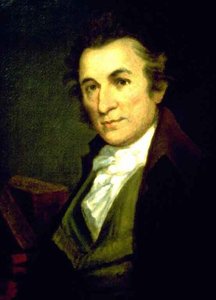
Retrato de George Romney

Pinturas de George Romney: As 100 mais famosas, sob o olhar de uma galeria

Atualizado em Outubro 2026 · classificado pela nossa pontuação de popularidade (pesquisas, visitas e pedidos de cada obra) · 1.201 obras de George Romney em nosso catálogo

Em resumo

Aos olhos da galeria, a pintura mais famosa de George Romney é Lady Hamilton as Circe (1782), cuja obra original está exposta no Tate Gallery, em Londres. Portrait of Emma Hart [later Lady Hamilton] as Miranda (1785) e Portrait of John Wesley (1789) completam o trio que todos reconhecem. Dos 1,201 trabalhos de George Romney em nosso catálogo, a galeria apresenta abaixo as 100 obras mais famosas, cada uma original, com seu ano, seu museu e o que a torna única.

1734 – 1802, Dalton-in-Furness Neoclassical style Mais obras: Philadelphia Museum of Art

As 10 principais pinturas de George Romney na galeria

1
Lady Hamilton as Circe (1782) de George Romney

Lady Hamilton as Circe

1782 · Oil On Canvas · Tate Gallery, Londres

George Romney's “Lady Hamilton as Circe,” painted in 1782, transcends mere portraiture; it embodies the spirit of Neoclassical art—a movement dedicated to reviving classical ideals of beauty and rationality. Housed within the Tate Gallery’s collection in London, this canvas offers a glimpse into a pivotal moment in British artistic history and illuminates the captivating allure of Emma Hamilton, Lord Nelson's mistress.

2
Portrait of Emma Hart [later Lady Hamilton] as Miranda (1785) de George Romney

Portrait of Emma Hart [later Lady Hamilton] as Miranda

1785 · Oil On Canvas · Philadelphia Museum of Art, Filadélfia

A single upward glance defines this oil sketch. The subject, Emma Hart, turns her face toward a light source from above, her eyes wide with a sense of longing or awe. Her dark, voluminous hair spills around her shoulders in thick, gestural strokes of deep brown and ochre. The skin of her forehead and chin catches the light, rendered in fleshy pinks and creams that emerge from a shadowed, textured…

3
Portrait of John Wesley (1789) de George Romney

Portrait of John Wesley

1789 · Oil On Canvas · Philadelphia Museum of Art, Filadélfia

The face of John Wesley emerges from a deep, atmospheric darkness. Light falls from the upper left, striking the high ridge of a brow and the soft texture of white hair. This illumination catches the crisp edge of a clerical collar, a bright white anchor against the heavy, earthy tones of his clothing. The eyes look directly forward, meeting the viewer with a steady, quiet gaze. Wrinkles trace paths across…

4
Portrait of Vice-Admiral Sir Hyde Parker, 5th Baronet (1782) de George Romney

Portrait of Vice-Admiral Sir Hyde Parker, 5th Baronet

1782 · Oil On Canvas · National Maritime Museum, Londres

The air feels heavy with the scent of salt and the lingering sulfur of gunpowder. Vice-Admiral Sir Hyde Parker stands in the center of this unfolding drama, his presence a steady anchor against the chaos of the sea. He is dressed in his undress uniform, the dark fabric of his coat absorbing the light, contrasted sharply by the crisp white of his trim. His right hand rests upon an unbuckled…

5
Emma Hart (c.1765–1815), Lady Hamilton, as Circe (1782) de George Romney

Emma Hart (c.1765–1815), Lady Hamilton, as Circe

1782 · Oil On Canvas

In this oil on canvas from around 1782, we encounter Emma Hart transformed into the mythological figure Circe. The scene is set within a rugged, rocky landscape that recedes into deep shadows, creating an atmosphere of profound mystery. At the center of the composition, the figure dominates the foreground, her form illuminated by a strong light source from the upper left. This lighting casts heavy shadows across the terrain, emphasizing…

6
Portrait of Ralph Willett (1800) de George Romney

Portrait of Ralph Willett

1800 · Oil On Canvas

George Romney captures a moment of profound, quiet intellect in this portrait of Ralph Willett. The sitter is positioned in a thoughtful pose, resting his chin upon his hand—a gesture traditionally associated with wisdom and the pursuit of reason. This posture, combined with his steady, inward gaze, reflects the intellectual currents of the late 18th century. The composition is asymmetrical, with the subject seated on the right, looking toward the…

7
Portrait of Mrs. Verelst (1773) de George Romney

Portrait of Mrs. Verelst

1773 · Oil On Canvas · Birmingham Museum and Art Gallery, Birmingham

George Romney’s “Portrait of Mrs. Verelst,” painted in 1773, is more than merely a likeness; it’s a meticulously crafted window into the social and aesthetic sensibilities of Georgian England. Executed with remarkable sensitivity and technical skill, this portrait captures not just the physical appearance of its subject but also an underlying sense of quiet dignity and restrained elegance – hallmarks of Romney's distinctive style. The painting depicts Mrs. Verelst, a…

8
Emma Hart (1765–1815), as Miranda (1786) de George Romney

Emma Hart (1765–1815), as Miranda

1786 · Oil On Canvas · Abbot Hall Art Gallery, Kendal

In the grand tapestry of eighteenth-century British portraiture, few images capture the delicate intersection of classical myth and human vulnerability as exquisitely as George Romney’s Emma Hart (1765–18 8), as Miranda. This captivating oil on canvas serves as a profound testament to the artist's ability to breathe life into both subject and story, presenting a woman of striking presence whose gaze seems to bridge the gap between the painted world…

9
Sir Thomas Rumbold (1736–1791), Bt (1777) de George Romney

Sir Thomas Rumbold (1736–1791), Bt

1777 · Oil On Canvas

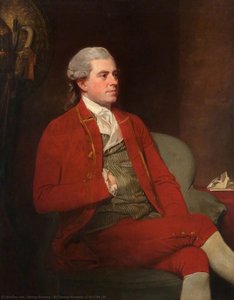
A man sits anchored in an armchair, his presence defined by the heavy drape of a crimson coat. The fabric catches the light, revealing the subtle textures of fine wool and the structured lines of a gentleman's station. He wears a white wig, its pale curls framing a face marked by a mustache and a steady, direct gaze. There is a stillness in his posture, a quiet composure that suggests…

10
Lady Hamilton as (1782) de George Romney

Lady Hamilton as

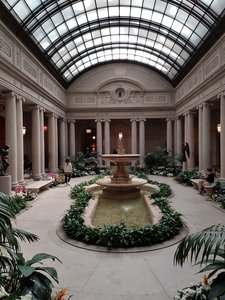
1782 · Acrylic On Canvas · The Frick Collection, Nova Iorque

George Romney’s “Lady Hamilton as Circe,” painted in 1792, is more than just a portrait; it's an exquisitely crafted tableau vivant—a frozen moment brimming with narrative and psychological depth. This captivating work, now housed within the collections of the Frick Collection, offers a glimpse into the life of Emma Hart, later Lady Hamilton, a woman whose beauty, ambition, and scandalous affair with Lord Nelson captivated Regency England. Romney’s masterful handling…

Pinturas de George Romney, classificadas de 11 a 100

11Emma, Lady Hamilton (1791) de George RomneyEmma, Lady Hamilton1791 · USC Fisher Museum of Art 12Charles Lennox, 3rd Duke of Richmond and Lennox de George RomneyCharles Lennox, 3rd Duke of Richmond and LennoxNational Portrait Gallery 13John Robinson of Denston Hall, Suffolk (1779) de George RomneyJohn Robinson of Denston Hall, Suffolk1779 · Harvard Art Museums 14Portrait of Mary Rutledge Smith and Son Edward (1786) de George RomneyPortrait of Mary Rutledge Smith and Son Edward1786 15William Sotheron, The Younger, of Darrington (1788) de George RomneyWilliam Sotheron, The Younger, of Darrington1788 · Fine Arts Museums of San Francisco 16Portrait of Colin Dunlop of Garmyle (1754) de George RomneyPortrait of Colin Dunlop of Garmyle1754 17Sir William Hamilton (1784) de George RomneySir William Hamilton1784 18Portrait of a Man (1759) de George RomneyPortrait of a Man1759 · Yale Center for British Art 19Madame de Genlis (1792) de George RomneyMadame de Genlis1792 · Fine Arts Museums of San Francisco 20Portrait of the Willett Children (1791) de George RomneyPortrait of the Willett Children1791 · Philadelphia Museum of Art 21Peter Romney de George RomneyPeter RomneyNational Portrait Gallery 22Wilson Gale-Braddyll (1776) de George RomneyWilson Gale-Braddyll1776 · Birmingham Museum of Art 23Sarah Ley, Mrs Richard Tickell (1770–after 1817) (1759) de George RomneySarah Ley, Mrs Richard Tickell (1770–after 1817)1759 · Ascott House 24Portrait of a Young Man at his Desk (1795) de George RomneyPortrait of a Young Man at his Desk1795 · Städel Museum 25Emma Hart as The Spinstress (1785) de George RomneyEmma Hart as The Spinstress1785 · English Heritage 26Shute Barrington, Bishop of Durham (1786) de George RomneyShute Barrington, Bishop of Durham1786 27Portrait of Marianne Holbech (1782) de George RomneyPortrait of Marianne Holbech1782 · Philadelphia Museum of Art 28Mr. Forbes (1780) de George RomneyMr. Forbes1780 · National Gallery of Art 29Portrait of Mrs. Finch (1790) de George RomneyPortrait of Mrs. Finch1790 · Philadelphia Museum of Art 30Portrait of a Gentleman (1777) de George RomneyPortrait of a Gentleman1777 31Lady in a Brown Robe (1785) de George RomneyLady in a Brown Robe1785 · Tate Gallery 32Major-General Sir Archibald Campbell (1792) de George RomneyMajor-General Sir Archibald Campbell1792 33James Romney (1760) de George RomneyJames Romney1760 · Yale Center for British Art 34Edmund Law, Bishop of Carlisle (1771) de George RomneyEdmund Law, Bishop of Carlisle1771 · National Gallery of Victoria 35James Clitherow (1731–1805) (1780) de George RomneyJames Clitherow (1731–1805)1780 · Boston Manor House 36Colonel Clitherow (1784) de George RomneyColonel Clitherow1784 · Detroit Institute of Arts 37John Flaxman Modeling the Bust of William Hayley (1795) de George RomneyJohn Flaxman Modeling the Bust of William Hayley1795 · Yale Center for British Art 38Portrait of the Dentist Bartholomew Ruspini (1800) de George RomneyPortrait of the Dentist Bartholomew Ruspini1800 · Statens Museum For Kunst 39Princess Anne Lady de la Pole (1786) de George RomneyPrincess Anne Lady de la Pole1786 · Museu de Belas Artes de Boston 40Portrait of Charlotte Smith de George RomneyPortrait of Charlotte SmithAbbot Hall Art Gallery 41Portrait of a woman (1780) de George RomneyPortrait of a woman1780 · Musée Cognacq-Jay 42Elizabeth, Duchess-Countess of Sutherland (1782) de George RomneyElizabeth, Duchess-Countess of Sutherland1782 · Cincinnati Art Museum 43Miss Clavering (1782) de George RomneyMiss Clavering1782 · Detroit Institute of Arts 44Mrs James Carmichael Smyth, died 1803 (1789) de George RomneyMrs James Carmichael Smyth, died 18031789 · Galeria Nacional de Retratos de Escócia 45Mary Hyde (née Foxcroft) (1767) de George RomneyMary Hyde (née Foxcroft)1767 · Yale Center for British Art 46Lady Altamont (1788) de George RomneyLady Altamont1788 · Tate Gallery 47Lady Hamilton como uma Vestal (1800) de George RomneyLady Hamilton como uma Vestal1800 · English Heritage 48Portrait of Colin MacKenzie (1777) de George RomneyPortrait of Colin MacKenzie1777 · Minneapolis Institute of Art 49Portrait of the Honorable Mrs. Beresford (1785) de George RomneyPortrait of the Honorable Mrs. Beresford1785 · Philadelphia Museum of Art 50Portrait of Mrs. Tickell (1792) de George RomneyPortrait of Mrs. Tickell1792 · Philadelphia Museum of Art 51Portrait of Sir John Reade (1788) de George RomneyPortrait of Sir John Reade1788 · Philadelphia Museum of Art 52Lady Hamilton as Tragedy (1791) de George RomneyLady Hamilton as Tragedy1791 · Harvard Art Museums 53Niobid de George RomneyNiobid 54Mrs Siddons (1784) de George RomneyMrs Siddons1784 · The Ashmolean Museum of Art and Archaeology 55The Hartley Children (1783) de George RomneyThe Hartley Children1783 · Detroit Institute of Arts 56Sarah Phipps (née Peckham) (1780) de George RomneySarah Phipps (née Peckham)1780 · Yale Center for British Art 57The Willet Children (1800) de George RomneyThe Willet Children1800 58Portrait of a Lady (probably Mrs James Collingwood) (1765) de George RomneyPortrait of a Lady (probably Mrs James Collingwood)1765 · Walker Art Gallery 59Sir John Orde (1785) de George RomneySir John Orde1785 · Museu Nacional de Arte Antiga 60Portrait of Sir John Papillon Twisden, 7th Baronet (1782) de George RomneyPortrait of Sir John Papillon Twisden, 7th Baronet1782 61Catherine Clemens (1788) de George RomneyCatherine Clemens1788 · Neue Pinakothek 62William Pitt the Younger (1783) de George RomneyWilliam Pitt the Younger1783 · Tate Gallery 63Portrait of Maria and Catherine, the Daughters of Edward Thurlow, 1st Baron Thurlow (1783) de George RomneyPortrait of Maria and Catherine, the Daughters of Edward Thurlow, 1st Baron Thurlow1783 · Yale University Art Gallery 64David Scott, Esq., of Dunniald (1794) de George RomneyDavid Scott, Esq., of Dunniald1794 · Fine Arts Museums of San Francisco 65Portrait of a Woman, Said to Be Emily Bertie Pott (died 1782) (1781) de George RomneyPortrait of a Woman, Said to Be Emily Bertie Pott (died 1782)1781 · Metropolitan Museum of Art 66Thomas Paine (1792) de George RomneyThomas Paine1792 · National Portrait Gallery 67Esther Taubman, née Christian (1786) de George RomneyEsther Taubman, née Christian1786 · Manx Museum 68Millicent Watson (1750) de George RomneyMillicent Watson1750 · Museum of Fine Arts 69Mrs. Henry Ainslie with her child (1750) de George RomneyMrs. Henry Ainslie with her child1750 70Elizabeth, Lady Blunt (1764) de George RomneyElizabeth, Lady Blunt1764 · Museum of Fine Arts 71Portrait of Mrs. Dawes (1765) de George RomneyPortrait of Mrs. Dawes1765 72Portrait of an Adolescent (1775) de George RomneyPortrait of an Adolescent1775 · Musée des Beaux-Arts de Pau 73Portrait of a Lady (1770) de George RomneyPortrait of a Lady1770 · National Gallery of Ireland 74Mrs Ellen Morewood (1770) de George RomneyMrs Ellen Morewood1770 75Ann Wilson (née Harrison) and Her Daughter, Sybill (1776) de George RomneyAnn Wilson (née Harrison) and Her Daughter, Sybill1776 · Yale Center for British Art 76Portrait of Jane Dawkes Robinson de George RomneyPortrait of Jane Dawkes RobinsonIndianapolis Museum of Art 77Portrait of a flag officer (1767) de George RomneyPortrait of a flag officer1767 78Ann Verelst (1751–1823) (1772) de George RomneyAnn Verelst (1751–1823)1772 79Thomas Rackett the Younger (1756–1840) (1768) de George RomneyThomas Rackett the Younger (1756–1840)1768 80Henrietta, Countess of Warwick, and Her Children (1787) de George RomneyHenrietta, Countess of Warwick, and Her Children1787 · The Frick Collection 81Major Archibald Robertson of Lawers (1782) de George RomneyMajor Archibald Robertson of Lawers1782 · Museum of Fine Arts, St. Petersburg, Florida, USA 82Portrait of Mrs. Richard Thompson (1780) de George RomneyPortrait of Mrs. Richard Thompson1780 83Robert Child (1739 - 1782) (1781) de George RomneyRobert Child (1739 - 1782)1781 · Osterley Park And House 84Mrs. Richard Pryce Corbet and Her Daughter Mary (1783) de George RomneyMrs. Richard Pryce Corbet and Her Daughter Mary1783 · Cincinnati Art Museum 85Mary and Louise Kent (1785) de George RomneyMary and Louise Kent1785 · Cincinnati Art Museum 86William Chafyn Grove (1731–1793) (1780) de George RomneyWilliam Chafyn Grove (1731–1793)1780 · Museu de Belas Artes de Boston 87Miss Frances Mary Harford (1780) de George RomneyMiss Frances Mary Harford1780 · The Frick Collection 88Portrait of Emma Hart, later Lady Hamilton (1784) de George RomneyPortrait of Emma Hart, later Lady Hamilton1784 · Museu de Belas Artes de Boston 89Portrait of Sir Thomas Frankland, 6th Baronet (1750–1831) (1777) de George RomneyPortrait of Sir Thomas Frankland, 6th Baronet (1750–1831)1777 90Henry Cruger (1739–1827) (1782) de George RomneyHenry Cruger (1739–1827)1782 · New York Historical Society 91Portrait of Mr. Edmund Poulter (1780) de George RomneyPortrait of Mr. Edmund Poulter1780 · Gemäldegalerie 92Lady Hamilton as St Cecilia (1785) de George RomneyLady Hamilton as St Cecilia1785 93The Right Honourable Charles Philip Yorke (1764–1834) (1782) de George RomneyThe Right Honourable Charles Philip Yorke (1764–1834)1782 · Auckland Art Gallery Toi o Tāmaki 94Miss Frances Mary Harford (1780) de George RomneyMiss Frances Mary Harford1780 95Joseph Allen (1713–1796) (1778) de George RomneyJoseph Allen (1713–1796)1778 · Dulwich Picture Gallery 96Sir Henry Bayly (1744–1812), 3rd Bt, 9th Baron Paget, Later 1st Earl of Uxbridge of the Second Creation, Holding Copper Ore from the Mona Mine (1785) de George RomneySir Henry Bayly (1744–1812), 3rd Bt, 9th Baron Paget, Later 1st Earl of Uxbridge of the Second Creation, Holding Copper Ore from the Mona Mine1785 97Thomas Rackett the Elder (c.1725–1799) (1776) de George RomneyThomas Rackett the Elder (c.1725–1799)1776 98The Infant Shakespeare Attended by Nature and the Passions (1786) de George RomneyThe Infant Shakespeare Attended by Nature and the Passions1786 · Vanderbilt Museum of Art 99Titania, Puck and the Changeling, from Shakespeare's 'A Midsummer Night's Dream' (1793) de George RomneyTitania, Puck and the Changeling, from Shakespeare's 'A Midsummer Night's Dream'1793 · National Gallery of Ireland 100Portrait of Mary Tighe (1747-1791), Poet (1795) de George RomneyPortrait of Mary Tighe (1747-1791), Poet1795 · National Gallery of Ireland

Pinturas famosas de George Romney, período por período

Os temas que cativaram o olhar de George Romney

Os quatro temas que mais se repetem nestas obras originais, cada um com o seu melhor exemplo.

Os museus que guardam os originais de George Romney

Os 8 museus que detêm a maioria das pinturas desta página.

Museus Cidade Obras de George Romney Pinturas desta lista
Philadelphia Museum of Art, FiladélfiaPhiladelphia Museum of Art Filadélfia 12 Portrait of Emma Hart [later Lady Hamilton] as Miranda, Portrait of John Wesley, Portrait of the Willett Children
Yale Center for British Art, New HavenYale Center for British Art New Haven 10 Portrait of a Man, James Romney, John Flaxman Modeling the Bust of William Hayley
Tate Gallery, LondresTate Gallery Londres 16 Lady Hamilton as Circe, Lady in a Brown Robe, Lady Altamont
National Portrait Gallery, LondresNational Portrait Gallery Londres 17 Charles Lennox, 3rd Duke of Richmond and Lennox, Peter Romney, Thomas Paine
Museu de Belas Artes de Boston, BostonMuseu de Belas Artes de Boston Boston 7 Princess Anne Lady de la Pole, William Chafyn Grove (1731–1793), Portrait of Emma Hart, later Lady Hamilton
National Gallery of Ireland, DublinNational Gallery of Ireland Dublin 5 Portrait of a Lady, Titania, Puck and the Changeling, from Shakespeare's 'A Midsummer Night's Dream', Portrait of Mary Tighe (1747-1791), Poet
The Frick Collection, Nova IorqueThe Frick Collection Nova Iorque 4 Lady Hamilton as, Henrietta, Countess of Warwick, and Her Children, Miss Frances Mary Harford
Fine Arts Museums of San Francisco, São FranciscoFine Arts Museums of San Francisco São Francisco 4 William Sotheron, The Younger, of Darrington, Madame de Genlis, David Scott, Esq., of Dunniald

George Romney, uma pintura emblemática por década

Obras por década

Escolha uma década para ver a obra original que a define.

Pinturas de George Romney: a galeria responde

Qual pintura de George Romney é a mais famosa de todas?Revelar a resposta

Lady Hamilton as Circe (1782), Tate Gallery, Londres. Portrait of Emma Hart [later Lady Hamilton] as Miranda (1785) e Portrait of John Wesley (1789) vêm a seguir.

Qual era a idade de George Romney ao concluir Lady Hamilton as Circe?Revelar a resposta

48 anos: Lady Hamilton as Circe data de 1782, e George Romney nasceu em 1734.

Quais são as 10 principais pinturas de George Romney?Revelar a resposta

Lady Hamilton as Circe, Portrait of Emma Hart [later Lady Hamilton] as Miranda, Portrait of John Wesley, Portrait of Vice-Admiral Sir Hyde Parker, 5th Baronet, Emma Hart (c.1765–1815), Lady Hamilton, as Circe, Portrait of Ralph Willett, Portrait of Mrs. Verelst, Emma Hart (1765–1815), as Miranda, Sir Thomas Rumbold (1736–1791), Bt e Lady Hamilton as. O ranking acima apresenta o ano e o museu de cada uma.

Quantas obras George Romney criou?Revelar a resposta

Nosso catálogo contém 1,201 obras de George Romney, datadas de 1750 a 1800.

Onde estão expostos os originais mais famosos de George Romney?Revelar a resposta

Principalmente em Philadelphia Museum of Art (Filadélfia), Yale Center for British Art (New Haven) e Tate Gallery (Londres). A tabela de museus acima lista todos eles.

Quando é que George Romney criou as suas pinturas mais famosas?Revelar a resposta

Em 1780s: 51 das 100 obras nesta página foram feitas então, sendo Lady Hamilton as Circe delas.

Quais são as obras mais famosas de George Romney no início e no fim de sua carreira?Revelar a resposta

Nesta página, a mais antiga é Millicent Watson (1750) e a mais recente é Portrait of Ralph Willett (1800).

Quais temas George Romney mais explorou?Revelar a resposta

Portraiture (24), Man (21) e Portrait (17), entre as 100 obras nesta página.

Em qual técnica George Romney mais trabalhou?Revelar a resposta

Oil On Canvas, para 63 das 100 obras nesta página.

Com qual movimento George Romney está associado(a)?Revelar a resposta

Neoclassical style, a julgar pelos originais nesta página.

Quais obras originais de George Romney o Philadelphia Museum of Art possui?Revelar a resposta

Portrait of Emma Hart [later Lady Hamilton] as Miranda, Portrait of John Wesley e Portrait of the Willett Children: o Philadelphia Museum of Art, Filadélfia detém 8 das obras desta página.

George Romney: o artista

Juventude, Família e Formação

Nascido em 26 de dezembro de 1734, em Beckside, Dalton-in-Furness, Lancashire, George Romney ingressou em um mundo de artesanato prático. Ele era o terceiro de onze filhos de John Romney, um marceneiro, e Anne Simpson. Seus primeiros anos foram moldados pelos ritmos domésticos de uma numerosa família no noroeste da Inglaterra. Embora tenha frequentado a escola na vizinha Dendron, sua educação formal foi breve; aos onze anos, foi retirado de seus estudos para iniciar um aprendizado no negócio de marcenaria de seu pai.

A precisão exigida pelo ofício de seu pai provavelmente influenciou sua atenção posterior aos detalhes, embora suas inclinações pendessem para algo mais ilustrativo. Um relojoeiro local despertou seu interesse inicial pelo desenho, proporcionando um redirecionamento sutil das ferramentas de marcenaria de seu lar. Esse talento nascente acabou por levá-lo para longe da oficina de móveis e em direção ao estudo da retratística. Ele buscou Christopher Steele, um retratista itinerante baseado em Kendal, para refinar suas habilidades. Sob a tutela de Steele, Romney começou a transitar de um aprendiz de artesão para um estudante da forma humana.

Estabelecendo uma Reputação em Londres

Por volta de 1762, George Romney deixou as paisagens do norte de Lancashire para enfrentar a atmosfera competitiva de Londres. Ele chegou à capital em busca de fortuna e reconhecimento, impulsionado por uma ambição que transcendia sua formação inicial. A cidade revelou-se um cadinho desafiador para um recém-chegado, mas ele navegou por suas complexidades sociais com uma facilidade natural. Rapidamente, estabeleceu-se como um habilidoso pintor de retratos, encontrando seu lugar nos círculos da alta sociedade que ditavam os gostos estéticos da época.

Sua ascensão foi marcada por uma competição direta com as figuras mais proeminentes de sua era, incluindo Thomas Gainsborough e Joshua Reynolds. Embora esses contemporâneos detivessem uma influência significativa, George Romney esculpiu um espaço distinto para si mesmo. Ele tornou-se um dos pintores de retratos britânicos mais populares do final do século XVIII, atendendo tanto à crescente classe mercantil quanto à nobreza estabelecida. Sua habilidade em transitar pelas mutáveis hierarquias sociais da era Georgiana garantiu sua presença nos salões mais sofisticados de seu tempo.

Técnica e Estilo Artístico

A abordagem de George Romney em relação à tela era definida por um equilíbrio delicado entre o detalhe meticuloso e a pincelada expressiva. Ele favorecia uma técnica refinada que evitava o excesso de carga de alguns de seus contemporâneos, optando, em vez disso, por pinceladas suaves que produziam uma sensação de realismo gentil. Este método permitia-lhe renderizar as texturas sutis de tecidos e da pele com uma sofisticação silenciosa. Sua paleta frequentemente dependia de cores suaves, o que contribuía para uma atmosfera de calma e compostura em suas composições. Em vez de confiar em artifícios dramáticos, ele buscava capturar a essência de seus modelos através de uma compreensão aguçada da psicologia humana, uma qualidade refletida nas expressões matizadas que alcançava.

Seu repertório técnico era vasto, estendendo-se muito além da pintura a óleo finalizada sobre tela. Ele era um desenhista prolífico que utilizava esboços, cartões e até pequenos estudos em miniatura para desenvolver suas ideias. Essa prática disciplinada permitia-lhe experimentar a forma e a luz antes de se comprometer com uma escala maior. Sua habilidade de traduzir esses estudos preliminares em retratos polidos ajudou-o a navegar pelo competitivo cenário social de Londres, onde era frequentemente convocado para retratar as principais figuras da era com precisão e graça.

A Influência de Emma Hamilton

A trajetória da produção criativa de George Romney sofreu uma mudança profunda após o seu encontro com Emma Hart, a mulher que mais tarde seria conhecida como Lady Hamilton. Ela tornou-se muito mais do que um tema frequente; foi a sua modelo mais célebre e uma musa que exerceu uma influência poderosa sobre a sua imaginação. A relação entre ambos era intensa e avassaladora, uma conexão que afetou profundamente a vida pessoal do artista e o seu foco profissional. Através dela, George Romney encontrou um caminho para transcender as restrições do retrato convencional, adentrando um território muito mais imaginativo e poético.

Sob o feitiço de Emma, George Romney produziu uma sequência de temas shakespearianos e outras fantasias literárias. Estas obras permitiram-lhe explorar temas de fantasia e narrativa literária, utilizando a gama expressiva dela para dar vida a personagens dramáticas. Ele pintou mais de 80 retratos dela, sendo que cada tentativa capturava uma faceta diferente da sua personalidade. Este período de intensa colaboração viu o artista a experimentar com a composição e o simbolismo, evoluindo para as telas mais imaginativas e poéticas que viriam a definir os seus anos tardios.

Anos Finais e Morte

A última década da vida de George Romney foi marcada por um recuo gradual dos círculos sociais que outrora impulsionaram sua carreira. Em 1794, a doença começou a limitar seriamente sua prática de retratística, desacelerando a produção prolífica que havia definido seus anos de auge. Este declínio na produtividade não foi meramente uma questão de interesse decrescente, mas sim uma luta física que sombreou seus anos finais. O homem que um dia competiu com as figuras mais proeminentes da era Georgiana viu-se, progressivamente, deixado à margem por sua própria saúde.

Por volta de 1799, a necessidade de buscar repouso tornou-se inegável. George Romney retornou, com a saúde debilitada, a Kendal para estar com sua esposa, Molly. Este período de convalescença no Noroeste foi uma coda silenciosa para uma vida dedicada aos efervescentes centros artísticos de Londres e Paris. Ele permaneceu um desenhista poderoso, mesmo quando sua capacidade de assumir encomendas de grande escala diminuía. Faleceu em Kendal, Westmorland, Inglaterra, em 15 de novembro de 1802. Seus restos mortais foram sepultados em Dalton, devolvendo-o à paisagem de seu nascimento.

Onde Ver as Obras Hoje

A distribuição das telas sobreviventes de George Romney reflete o arco geográfico de sua vida, desde suas raízes no norte até sua eventual proeminência na capital. Em Londres, sua presença é sentida com maior intensidade nas coleções da Tate Gallery, que preserva dezessete de suas obras, e da National Portrait Gallery, que detém dez. Estas instituições oferecem um vislumbre do artista no auge de sua influência social, capturando os rostos da era georgiana com a profundidade psicológica que definiu sua carreira.

Para além da capital, sua conexão com o Noroeste permanece visível através do acervo da Abbot Hall Art Gallery, em Kendal, que mantém nove de suas pinturas. Esta coleção estabelece um elo com a região onde sua vida começou e onde encontrou seu tranquilo desfecho. Seu alcance estende-se também através do Atlântico, com diversas obras sob a guarda do Metropolitan Museum of Art, em Nova York. Entre estas, destaca-se o Portrait of Sir Chaloner Ogle, 1st Baronet, de 1782.