Pascal-Adolphe-Jean Dagnan-Bouveret: Uma Vida no Naturalismo
- Nascimento: 7 de janeiro de 1852, Paris, França
- Falecimento: 3 de julho de 1929
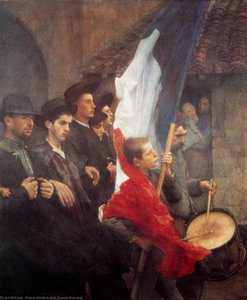
Pascal-Adolphe-Jean Dagnan-Bouveret foi um proeminente artista francês, celebrado por suas contribuições fundamentais à escola naturalista. Sua obra é definida por um realismo profundo, detalhes meticulosos e representações da vida cotidiana, frequentemente imersas em temas da cultura bretã e de contemplação religiosa. Criado inicialmente em Paris, ele dedicou grande parte de sua carreira à região de Franche-Comté.
Primeiros Anos e Formação Artística
- Origens Familiares: Dagnan foi criado por seu avô após seu pai emigrar para o Brasil, adotando posteriormente o sobrenome do avô, Bouveret.
- Educação Formal: A partir de 1869, ele estudou na École des Beaux-Arts em Paris sob a tutela dos renomados instrutores Alexandre Cabanel e Jean-Léon Gérôme. Este treinamento rigoroso proporcionou uma base sólida nas técnicas clássicas.
- Influências Iniciais: Suas primeiras obras refletem o estilo acadêmico predominante durante seus estudos, mas ele logo desenvolveu uma sensibilidade naturalista distinta.
Carreira e Obras Notáveis
- A Ascensão como Artista Naturalista: A carreira de Dagnan-Bouveret ganhou impulso com obras como "An Accident" (1880), que lhe rendeu a medalha de primeira classe no Salon, marcando sua chegada triunfal à cena artística.
- Reconhecimento e Prêmios: Ele continuou a receber aclamações, incluindo uma medalha de honra por “Horses at the Watering Trough” em 1885.
- Principais Obras: Diversas pinturas destacam-se como representativas de seu estilo e temáticas:
- "Woman in Breton Costume Seated in a Meadow" (Metropolitan Museum of Art, Nova York) – exemplifica seu foco nos temas bretões.
- “Les Bretonnes au Pardon” (Musée Calouste Gulbenkian, Lisboa) – captura a atmosfera de um festival religioso tradicional da Bretanha.
- "Portrait of Brittany Girl" – demonstra sua maestria no retrato e atenção aos detalhes.
- "Hamlet and the Gravediggers" (1883) – revela sua habilidade em retratar cenas dramáticas da literatura.
- “In the Meadow” (1892) – uma representação serena da vida rural.
- "The Last Supper" (exibida no Salon de Champ-de-Mars em 1896) – uma obra religiosa de grande escala que demonstra sua ambição e talento.
- A Influência da Fotografia: Dagnan foi um dos primeiros a adotar a fotografia, utilizando-a como ferramenta para intensificar o realismo em suas pinturas. Ele fotografava modelos vestidos com trajes de época, usando essas imagens como referências precisas para suas composições.
Desenvolvimento e Estilo Artístico
- Naturalismo: Dagnan-Bouveret foi uma figura central no movimento naturalista, que buscava retratar a vida cotidiana com um realismo inabalável, evitando idealizações ou o romantismo excessivo.
- Temas Bretões: Uma parte significativa de sua obra foca na Bretanha, refletindo sua fascinação por sua cultura, paisagens e tradições religiosas.
- Pinturas Religiosas: Em uma fase posterior de sua carreira, ele voltou-se cada vez mais para temas religiosos, criando obras monumentais como "A Última Ceia", que buscavam inspiração nos mestres do Renascimento.
- Habilidade Técnica: Suas pinturas são caracterizadas por um detalhamento minucioso, uma renderização magistral de luz e sombra, e um profundo senso de observação silenciosa.
Legado e Significância Histórica
- Influência na Arte: O compromisso de Dagnan-Bouveret com o realismo e seu uso inovador da fotografia influenciaram gerações subsequentes de artistas.
- Reconhecimento: Ele alcançou um sucesso considerável em vida, recebendo inúmeros prêmios e honrarias, tornando-se Oficial da Legião de Honra (1891) e membro do Institut de France (1900).
- Apreciação Contínua: Hoje, suas obras integram o acervo de grandes museus ao redor do mundo, garantindo que sua contribuição para a arte francesa seja eternamente lembrada e valorizada.
Perguntas e Respostas
Quais pseudônimos ou nomes alternativos Pascal-Adolphe-Jean Dagnan-Bouveret possui?
Pascal-Adolphe-Jean Dagnan-Bouveret aparece sob os nomes alternativos Pascal Dagnan Bouveret, Dagnan-Bouveret.
Como posso encontrar todas as obras de Pascal-Adolphe-Jean Dagnan-Bouveret em uma determinada técnica?
A página Todos os Meios agrupa as obras de Pascal-Adolphe-Jean Dagnan-Bouveret por técnica.
Como posso ver todas as obras criadas por Pascal-Adolphe-Jean Dagnan-Bouveret?
Todas as obras de Pascal-Adolphe-Jean Dagnan-Bouveret no este site podem ser visualizadas na página de Todas as Obras de Arte do artista.