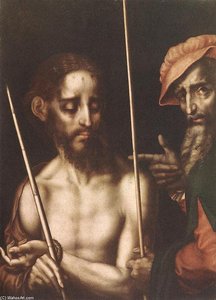
Retrato de Luis De Morales

As 50 Pinturas Mais Famosas de Luis De Morales, Cada Uma Única

Atualizado em Novembro 2026 · classificado pela nossa pontuação de popularidade (pesquisas, visitas e pedidos de cada obra) · 51 obras de Luis De Morales em nosso catálogo

Em resumo

Virgin and Child with the Infant St John the Baptist (1550) é a pintura de Luis De Morales que mais atrai olhares; a obra original pertence ao Museu do Prado, Madrid. Depois disso, o olhar recai sobre The Crucifixion (1566) e The Annuncation (1565). Entre as 51 obras de Luis De Morales em nosso catálogo, estas 50 são as mais famosas, cada uma uma original única apresentada com o seu ano, o seu museu e a razão pela qual perdura.

1509 – 1586, Badajoz Spanish renaissance Mais obras: Museu do Prado

As 10 principais pinturas de Luis De Morales, sob o olhar da galeria

1
Virgin and Child with the Infant St John the Baptist (1550) de Luis De Morales

Virgin and Child with the Infant St John the Baptist

1550 · Oil On Canvas · Museu do Prado, Madrid

In this 1550 portrait, the Virgin Mary holds the infant Jesus in a close, physical embrace. The child is depicted nursing, a detail that grounds the religious scene in a moment of biological necessity and maternal intimacy. To the left and right of the central figures, two winged beings—angels or saints—occupy the periphery of the frame. These figures are positioned against a backdrop of dense trees, which provides a sense…

2
The Crucifixion (1566) de Luis De Morales

The Crucifixion

1566 · Oil On Panel · Museu do Prado, Madrid

The heavy silence of the scene is held within The Crucifixion, a profound work of religious art created by the Spanish painter Luis de Morales. Dating to 1566, this piece captures a moment of intense spiritual weight. The central focus remains fixed upon the Crucifixion of Jesus Christ, a subject that demands the viewer's immediate and solemn attention.

3
The Annuncation (1565) de Luis De Morales

The Annuncation

1565 · Oil On Panel · Museu do Prado, Madrid

The Annunciation by Luis de Morales captures a moment of divine stillness. Painted about 1565, the work presents a quiet encounter between the celestial and the earthly. The Archangel Gabriel and the Virgin Mary occupy a shared, intimate space, separated by a single white lily in a slender vase. A white dove descends through soft light, marking the presence of the Holy Spirit above the figures.

4
The Resurrection of Christ (1566) de Luis De Morales

The Resurrection of Christ

1566 · Oil · Museu do Prado, Madrid

A sudden, vertical force breaks the stillness of the tomb. Christ rises from the heavy stone sarcophagus, his body caught in a moment of divine momentum. The light is not merely a glow; it is a weightless, golden flood that carves the musculature of his torso out of the surrounding shadows. Behind him, a shroud of reddish-pink fabric billows like a sudden flame, tracing the path of his upward movement.…

5
The Birth of the Virgin (1562) de Luis De Morales

The Birth of the Virgin

1562 · Oil · Museu do Prado, Madrid

The air in the room feels heavy, thick with the quiet gravity of a life beginning. Within this shallow, intimate space, four women gather, their forms tightly grouped as if to shield the profound miracle unfolding before them. A woman reclines in the bed, her presence marked by the soft contours of her face and the weight of the linens surrounding her. Nearby, another figure holds a newborn infant, the…

6
The Virgin and Child with a Spindle (1566) de Luis De Morales

The Virgin and Child with a Spindle

1566 · Oil · Museu do Prado, Madrid

The composition is a vertical portrait set against a dark, undifferentiated background. In the center, the Virgin Mary holds the Christ Child. She wears a red gown beneath a heavy blue mantle, while a translucent veil rests upon her head. The skin of both figures appears pale and luminous against the deep shadows. The child holds a wooden spindle, its straight, thin lines cutting through the soft folds of the…

7
Saint John the Baptist (1566) de Luis De Morales

Saint John the Baptist

1566 · Oil On Panel · Museu do Prado, Madrid

The portrait presents a close-up, bust-length view of Saint John the Baptist, positioned slightly off-center. He gazes toward the left with an expression defined by weariness and contemplation. The composition utilizes a chiaroscuro technique, where a strong directional light source illuminates one side of the face, carving out the hollows of the eyes and the texture of the beard against deep, shadowy recesses. This interplay of light and dark creates…

8
Virgin and Child-Morales (1586) de Luis De Morales

Virgin and Child-Morales

1586 · Oil On Canvas · Museu Nacional de Machado de Castro, Coimbra

The Virgin gently cradles her son within a space defined by shadow and soft light. A newborn hand tucks through the folds of a red gown, searching for milk. This small gesture anchors the composition, pulling the viewer into a quiet, domestic moment of care. The faces of mother and child lean toward one another, their gazes interlocking with a tender, silent weight. Behind them, a pitch-dark background swallows the…

9
Ecce Homo (1565) de Luis De Morales

Ecce Homo

1565 · Oil On Canvas · Museu do Prado, Madrid

The shadows press closely against the figure, creating a void that seems to swallow everything but the man himself. In this vertical portrait, the upper torso and head of Jesus Christ emerge from a near-black background, caught in a heavy, dramatic chiaroscuro. A soft light descends from the upper left, catching the smooth, porcelain-like texture of his skin and casting gentle shadows across the musculature of his chest and arms.…

10
Pietà de Luis De Morales

Pietà

Oil On Panel · Museu do Louvre, Paris

In the quiet, somber depths of Luis de Morales’s Pietà, one encounters more than just a religious scene; one enters a profound meditation on human suffering and divine grace. Executed between 1565 and 1570, this masterpiece serves as a cornerstone of the Spanish Renaissance, capturing the exact moment when the weight of mortality meets the infinite strength of maternal love. The painting depicts the Virgin Mary cradling the lifeless, broken…

Pinturas famosas de Luis De Morales, números 11 a 50

11Christ Justifying his Passion (1565) de Luis De MoralesChrist Justifying his Passion1565 · Museu do Prado 12Christ, Man of Sorrows (1566) de Luis De MoralesChrist, Man of Sorrows1566 · Museu do Prado 13Pietà (1567) de Luis De MoralesPietà1567 · Museu do Prado 14Saint Juan de Ribera (1566) de Luis De MoralesSaint Juan de Ribera1566 · Museu do Prado 15Ecce Homo (1547) de Luis De MoralesEcce Homo1547 · Staatliche Kunstsammlungen Dresden 16The Adoration of the Shepherds (1567) de Luis De MoralesThe Adoration of the Shepherds1567 · Museu do Prado 17Man of Sorrows (1560) de Luis De MoralesMan of Sorrows1560 · Minneapolis Institute of Art 18The Lamentation (1560) de Luis De MoralesThe Lamentation1560 · Metropolitan Museum of Art 19The Purification of the Virgin or The Presentation in the Temple (1562) de Luis De MoralesThe Purification of the Virgin or The Presentation in the Temple1562 · Museu do Prado 20Pietà (1560) de Luis De MoralesPietà1560 · Real Academia de Bellas Artes de San Fernando 21Ecce Homo (1570) de Luis De MoralesEcce Homo1570 · Museu Nacional d'Art de Catalunya 22The Virgin and Child with the Infant Saint John the Baptist (1570) de Luis De MoralesThe Virgin and Child with the Infant Saint John the Baptist1570 · Museu do Prado 23The Virgin Dolorosa (1565) de Luis De MoralesThe Virgin Dolorosa1565 · Museu do Prado 24The Adoration of the Magi (1567) de Luis De MoralesThe Adoration of the Magi1567 · Museu do Prado 25Christ Carrying the Cross (1547) de Luis De MoralesChrist Carrying the Cross1547 · Bavarian State Painting Collections 26Christ Carrying the Cro (1546) de Luis De MoralesChrist Carrying the Cro1546 · Yale University Art Gallery 27Triptych of the Pietà, St John and St Mary Magdalene (1567) de Luis De MoralesTriptych of the Pietà, St John and St Mary Magdalene1567 · Museu do Prado 28Holy Family (1557) de Luis De MoralesHoly Family1557 · Hispanic Society Museum - Library 29Saint Jerome in the Wilderness (1570) de Luis De MoralesSaint Jerome in the Wilderness1570 · National Gallery of Ireland 30Ecce Homo (1565) de Luis De MoralesEcce Homo1565 · Fundación Banco Santander 31Christ before Pilate (1570) de Luis De MoralesChrist before Pilate1570 · Real Academia de Bellas Artes de San Fernando 32Christ Carrying the Cross (1566) de Luis De MoralesChrist Carrying the Cross1566 · Museo del Patriarca 33The Agony in the Garden (1545) de Luis De MoralesThe Agony in the Garden1545 · Museu do Prado 34Madonna and Child de Luis De MoralesMadonna and ChildBowes Museum 35The Virgin and Child (1567) de Luis De MoralesThe Virgin and Child1567 · The Ashmolean Museum of Art and Archaeology 36Virgin and Child (1520) de Luis De MoralesVirgin and Child1520 · Museu do Caramulo 37Virgin and Child with a Spindle (1567) de Luis De MoralesVirgin and Child with a Spindle1567 · Staatliche Museen zu Berlin 38Christ at the Column de Luis De MoralesChrist at the ColumnMuseu Nacional de Belas Artes 39Virgin and Child de Luis De MoralesVirgin and ChildMuseu de Belas Artes de Boston 40Madonna and Child de Luis De MoralesMadonna and ChildCampion Hall 41Pietà 1724 de Luis De MoralesPietà 1724 42Christ at the Column de Luis De MoralesChrist at the ColumnKingston Lacy 43Triptych of Bishop Juan de Ribera de Luis De MoralesTriptych of Bishop Juan de RiberaMuseu de Cádis 44The Virgin and Child de Luis De MoralesThe Virgin and ChildNational Gallery 45Ecce Homo de Luis De MoralesEcce HomoHispanic Society Museum - Library 46Christ as the Man of Sorrows de Luis De MoralesChrist as the Man of Sorrows 47St Stephen de Luis De MoralesSt StephenMuseu do Prado 48Madonna with the Child (1570) de Luis De MoralesMadonna with the Child1570 · Museu do Prado 49Mater Dolorosa (1570) de Luis De MoralesMater Dolorosa1570 · Museu Hermitage 50Madonna with the Child (1570) de Luis De MoralesMadonna with the Child1570 · Museu Hermitage

Pinturas famosas de Luis De Morales, período por período

Os temas que cativaram o olhar de Luis De Morales

Os quatro temas que mais se repetem nestas obras originais, cada um com o seu melhor exemplo.

Os museus que guardam os originais de Luis De Morales

Os 8 museus que detêm a maioria das pinturas desta página.

Museus Cidade Obras de Luis De Morales Pinturas desta lista
Museu do Prado, MadridMuseu do Prado Madrid 21 Virgin and Child with the Infant St John the Baptist, The Crucifixion, The Annuncation
Real Academia de Bellas Artes de San Fernando, MadridReal Academia de Bellas Artes de San Fernando Madrid 2 Pietà, Christ before Pilate
Hispanic Society Museum - Library, Nova YorkHispanic Society Museum - Library Nova York 2 Holy Family, Ecce Homo
Museu Hermitage, São PetersburgoMuseu Hermitage São Petersburgo 2 Mater Dolorosa, Madonna with the Child
Museu Nacional de Machado de Castro, CoimbraMuseu Nacional de Machado de Castro Coimbra 1 Virgin and Child-Morales
Museu do Louvre, ParisMuseu do Louvre Paris 1 Pietà
Staatliche Kunstsammlungen Dresden, DresdenStaatliche Kunstsammlungen Dresden Dresden 1 Ecce Homo
Minneapolis Institute of Art, MinneapolisMinneapolis Institute of Art Minneapolis 1 Man of Sorrows

Luis De Morales ao longo das décadas: uma obra original única para cada uma

Obras por década

Escolha uma década para ver a obra original que a define.

Pinturas de Luis De Morales: perguntas para a galeria

Qual é a obra mais famosa de Luis De Morales?Revelar a resposta

Virgin and Child with the Infant St John the Baptist (1550), Museu do Prado, Madrid. The Crucifixion (1566) e The Annuncation (1565) vêm a seguir.

Com que idade Luis De Morales criou Virgin and Child with the Infant St John the Baptist?Revelar a resposta

41 anos: Virgin and Child with the Infant St John the Baptist data de 1550, e Luis De Morales nasceu em 1509.

Quais são as dez pinturas mais famosas de Luis De Morales?Revelar a resposta

Virgin and Child with the Infant St John the Baptist, The Crucifixion, The Annuncation, The Resurrection of Christ, The Birth of the Virgin, The Virgin and Child with a Spindle, Saint John the Baptist, Virgin and Child-Morales, Ecce Homo e Pietà. O ranking acima apresenta o ano e o museu de cada uma.

Quantas obras de Luis De Morales são conhecidas?Revelar a resposta

Nosso catálogo contém 51 obras de Luis De Morales, datadas de 1520 a 1586.

Onde se pode ver os originais mais famosos de Luis De Morales?Revelar a resposta

Principalmente em Museu do Prado (Madrid), Real Academia de Bellas Artes de San Fernando (Madrid) e Hispanic Society Museum - Library (Nova York). A tabela de museus acima lista todos eles.

Em que período Luis De Morales criou as suas pinturas mais conhecidas?Revelar a resposta

Em 1560s: 23 das 50 obras nesta página foram feitas então, sendo The Crucifixion delas.

Qual pintura famosa de Luis De Morales é a mais antiga e qual é a mais recente?Revelar a resposta

Nesta página, a mais antiga é Virgin and Child (1520) e a mais recente é Virgin and Child-Morales (1586).

Quais temas Luis De Morales preferia?Revelar a resposta

Man (22), Woman (20) e Dark background (18), entre as 50 obras nesta página.

Com quais materiais Luis De Morales mais pintou?Revelar a resposta

Oil On Panel, para 27 das 50 obras nesta página.

A qual movimento pertence a obra de Luis De Morales?Revelar a resposta

Spanish renaissance, a julgar pelos originais nesta página.

Quais originais de Luis De Morales posso ver no Museu do Prado?Revelar a resposta

Virgin and Child with the Infant St John the Baptist, The Crucifixion e The Annuncation: o Museu do Prado, Madrid detém 21 das obras desta página.

Luis De Morales: um retrato do artista

Luis de Morales: O Pintor Divino de Badajoz

Luis de Morales (c. 1509 – 9 de maio de 1586), afetuosamente conhecido como “El Divino”, ergue-se como uma das figuras mais reverenciadas da arte do Renascimento espanhol — um pintor cuja espiritualidade profunda e realismo surpreendente cativaram o público durante toda a sua vida e continuam a inspirar admiração séculos depois. Nascido em Badajoz, Extremadura, a jornada artística de Morales desenrolou-se sob o pano de fundo de ideais humanistas emergentes e fervor religioso, moldando-o como um mestre inigualável da iconografia devocional e consolidando o seu legado como o artista quintessencial da sua era.
  • Primeiros Anos e Influências: Pouco se sabe com certeza sobre os anos formativos de Morales, além dos registos documentados que indicam o seu nascimento em Badajoz por volta de 1509. A sua formação artística provavelmente começou sob a tutela de Hernando Sturmio, um pintor flamengo estabelecido em Badajoz, e possivelmente de Pedro de Campaña, um artista proeminente radicado em Sevilha — locais renomados pelas suas vibrantes tradições artísticas durante o Renascimento.
  • A Escola Lombarda e Ecos Florentinos: As primeiras obras de Morales trazem marcas inconfundíveis da escola lombarda de Leonardo da Vinci – caracterizada pelo subtil sfumato (contornos suaves) e pela perspetiva atmosférica. Simultaneamente, ele absorveu influências de Michelangelo, cujas esculturas monumentais lhe instilaram uma compreensão magistral da anatomia e do gesto expressivo. Estas experiências formativas impactaram profundamente a sua sensibilidade artística.

Um Período Definido pela Precisão Anatómica e Profundidade Espiritual

A produção artística de Morales pode ser amplamente dividida em dois períodos distintos, refletindo a evolução das tendências estilísticas e correntes intelectuais da época. A primeira fase, abrangendo aproximadamente de 1539 a 1560, testemunhou um envolvimento contínuo com a estética florentina — particularmente o rigor anatómico de Michelangelo — resultando em pinturas imbuídas de uma emoção palpável e tensão dramática. Obras como La Virgen del Pajarito exemplificam este estilo inicial, exibindo um detalhe meticuloso e transmitindo uma profunda contemplação espiritual.
  • O Segundo Florescimento: Após o seu casamento com Leonor de Chaves e a subsequente mudança para Alcántara, Morales viveu um extraordinário renascimento artístico. Este período viu o surgimento de obras-primas que desafiaram os limites da técnica renascentista — especialmente em termos de precisão anatómica — inspirando-se em pintores alemães e flamengos que defendiam o chiaroscuro (o contraste entre luz e sombra) e a observação meticulosa da natureza.
  • Conquistas Notáveis: Entre as suas pinturas mais celebradas estão La Piedad (1560), abrigada na Catedral de Badajoz, uma representação arrebatadora de Maria a lamentar a morte de Jesus — um testemunho da habilidade inigualável de Morales em transmitir a emoção do luto; San Juan de Ribera (1564), residente no Museu do Prado, em Madrid; e Ecce Homo, exibida na Hispanic Society of America. Estas obras permanecem como símbolos duradouros da piedade renascentista e da excelência artística.

Legado e Reconhecimento

A influência de Luis de Morales estendeu-se muito além do seu próprio tempo, estabelecendo-o como um pilar da arte do Renascimento espanhol e assegurando o seu lugar entre os maiores pintores da sua geração. A sua devoção inabalável aos temas religiosos — expressa com um realismo de tirar o fôlego e imbuída de uma emoção palpável — ressoou profundamente com o público por toda a Europa. Hoje, as suas pinturas encontram-se em instituições prestigiadas ao redor do mundo — incluindo o Museu do Prado, em Madrid, e a Kingston Lacy House, em Dorset — atestando o seu mérito artístico duradouro e importância histórica. O legado de Morales continua a inspirar artistas e estudiosos, garantindo que “El Divino” permaneça como um farol de arte espiritual para as gerações vindouras.

Obras Selecionadas

  • La Virgen del Pajarito (Virgem do Passarinho) (1546), guardada na igreja de San Agustín, em Madrid.
  • La Piedad (1560), guardada na Catedral de Badajoz.
  • San Juan de Ribera (1564), no Museu do Prado, Madrid.
  • Ecce Homo, na Kingston Lacy House (National Trust), Dorset, Reino Unido.
  • Virgen de la leche (Virgem do Leite), no Museu do Prado.
  • St. Jerome in the Wilderness (São Jerónimo no Deserto), na National Gallery of Ireland, Dublin.