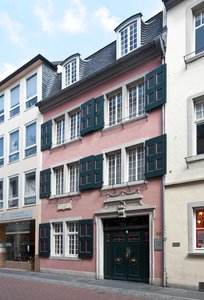
Retrato de Ludwig Van Beethoven

As 30 Pinturas Mais Famosas de Ludwig Van Beethoven, Cada Uma Única

Atualizado em Novembro 2026 · classificado pela nossa pontuação de popularidade (pesquisas, visitas e pedidos de cada obra) · 30 obras de Ludwig Van Beethoven em nosso catálogo

Em resumo

Sonate für Klavier und Violoncello (A-Dur) op. 69 (1809) é a pintura de Ludwig Van Beethoven que mais atrai olhares; a obra original pertence ao Beethoven-Haus Bonn, Bonn. Depois disso, o olhar recai sobre Sonata for piano (A major) op. 101 (1816) e Letter to Nannette Streicher (1817). Entre as 30 obras de Ludwig Van Beethoven em nosso catálogo, estas 30 são as mais famosas, cada uma uma original única apresentada com o seu ano, o seu museu e a razão pela qual perdura.

1770 – 1827, Bonn Romanticism Mais obras: Beethoven-Haus Bonn

As 10 principais pinturas de Ludwig Van Beethoven, sob o olhar da galeria

1
Sonate für Klavier und Violoncello (A-Dur) op. 69 (1809) de Ludwig Van Beethoven

Sonate für Klavier und Violoncello (A-Dur) op. 69

1809 · Lithograph · Beethoven-Haus Bonn, Bonn

To gaze upon this depiction of Sonate für Klavier und Violoncello (A-Dur) op. 69 is to step directly into the vibrant, intellectual atmosphere of early nineteenth-century Vienna. This work transcends mere portraiture; it captures a moment suspended in time—a confluence of artistic genius and profound musical dialogue. The scene itself, rendered with an almost luminous quality, places us before two figures deeply engrossed in their craft. One musician, perhaps embodying…

2
Sonata for piano (A major) op. 101 (1816) de Ludwig Van Beethoven

Sonata for piano (A major) op. 101

1816 · Acrylic On Canvas · Beethoven-Haus Bonn, Bonn

Beethoven's Sonata for Piano in A major, Op. 101, isn’t merely a musical composition; it’s a profound exploration of the human spirit grappling with darkness and striving towards light. Completed in 1816, during a period marked by increasing deafness and personal turmoil, this work stands as a testament to his enduring genius – a beacon of hope amidst a storm.

3
Letter to Nannette Streicher (1817) de Ludwig Van Beethoven

Letter to Nannette Streicher

1817 · Acrylic On Paper · Beethoven-Haus Bonn, Bonn

WahooArt.com presents a meticulously crafted hand-painted reproduction of “Letter to Nannette Streicher,” a poignant relic from the twilight years of Ludwig van Beethoven's life. This isn't merely an image; it’s a tangible connection to one of history’s most tormented and brilliant musical minds. The original letter, penned in 1817, offers a rare glimpse into the composer’s personal world – a world increasingly shrouded by deafness and profound emotional struggle. The…

4
Quartet for 2 violins, viola, violoncello (B flat major) op. 130 (1827) de Ludwig Van Beethoven

Quartet for 2 violins, viola, violoncello (B flat major) op. 130

1827 · Acrylic On Canvas · Beethoven-Haus Bonn, Bonn

Elegant Reflection of Classical Heritage This exquisite vintage sheet music cover embodies the timeless elegance of early 19th-century musical artistry. Designed for Beethoven’s renowned Quartet in B-flat major, Op. 130, it captures the grandeur and sophistication associated with classical music’s golden age. The intricate line work, ornate typography, and decorative motifs evoke a sense of nobility and artistic prestige, making it a captivating piece for collectors and interior decorators alike.…

5
Deafness letter (1801) de Ludwig Van Beethoven

Deafness letter

1801 · Manuscript · Beethoven-Haus Bonn, Bonn

In the quiet intimacy of a single sheet of paper, we find one of the most profound intersections of human suffering and artistic resilience. The Deafness Letter, penned by Ludwig van Beethoven in 1801, is far more than a mere historical artifact; it is a visceral, handwritten fragment of a soul in crisis. This piece captures the moment when the composer, facing the terrifying onset of auditory loss, reached out…

6
Sonata for piano and violoncello (A major) op. 69, 1st movement (1808) de Ludwig Van Beethoven

Sonata for piano and violoncello (A major) op. 69, 1st movement

1808 · Painting · Beethoven-Haus Bonn, Bonn

A Symphony of Light and Shadow In the heart of 1808 Vienna, a city vibrating with artistic tension and intellectual fervor, this evocative painting captures more than just a musical moment; it captures the very essence of Ludwig van Beethoven’s spirit. As the composer navigated the encroaching silence of his deafness, his music—and this visual tribute to his Sonata for Piano and Violoncello in A major—became a vital bridge between…

7
Sonata for piano and violin (A major) op. 47, 1st movement (1803) de Ludwig Van Beethoven

Sonata for piano and violin (A major) op. 47, 1st movement

1803 · Acrylic On Canvas · Beethoven-Haus Bonn, Bonn

Ludwig van Beethoven's "Sonata for Piano and Violin in A major, Op. 47," often known as the “Kreutzer Sonata,” isn’t merely a musical composition; it’s a visceral experience, a window into the turbulent soul of one of history’s most transformative composers. Completed in 1803 during a period of intense personal and professional upheaval for Beethoven – marked by increasing deafness and shifting patronage – this sonata stands as a testament…

8
Sketchbook (1823) de Ludwig Van Beethoven

Sketchbook

1823 · Pencil · Beethoven-Haus Bonn, Bonn

To gaze upon this 1823 sketchbook fragment is to step directly into the private sanctuary of a musical genius. This piece, a delicate relic from the twilight years of Ludwig van Beethoven, transcends mere notation; it is a tactile window into the creative struggle and the profound solitude of one of history's most transformative minds. The aged, worn paper, bearing the weight of nearly two centuries, serves as a silent…

9
Letter to Nephew Karl (1825) de Ludwig Van Beethoven

Letter to Nephew Karl

1825 · Giclée Print · Beethoven-Haus Bonn, Bonn

This exquisite hand-painted reproduction captures a poignant moment in the life of Ludwig van Beethoven – a direct correspondence with his nephew, Karl, penned in 1825. More than just a letter, it’s a tangible link to a musical genius grappling with both artistic ambition and personal vulnerability. The photograph itself, a meticulously rendered black-and-white image, reveals the delicate script of the handwritten document, a testament to Beethoven's enduring skill as…

10
Quartet for two violins, viola and cello (A minor) op. 132 (1825) de Ludwig Van Beethoven

Quartet for two violins, viola and cello (A minor) op. 132

1825 · Acrylic On Canvas · Beethoven-Haus Bonn, Bonn

Ludwig van Beethoven's String Quartet No. 15 in A minor, Op. 132, stands as a profound testament to the composer’s evolving inner world during his late period—a time marked by increasing deafness and an intense grappling with mortality, faith, and the very nature of artistic expression. Completed in 1825, just months before his death, this quartet isn't merely a collection of musical notes; it’s a deeply personal narrative etched into…

Pinturas famosas de Ludwig Van Beethoven, números 11 a 30

Pinturas famosas de Ludwig Van Beethoven, período por período

Os temas que cativaram o olhar de Ludwig Van Beethoven

Os quatro temas que mais se repetem nestas obras originais, cada um com o seu melhor exemplo.

Os museus que guardam os originais de Ludwig Van Beethoven

O museu que detém a maioria das pinturas desta página.

Museus Cidade Obras de Ludwig Van Beethoven Pinturas desta lista
Beethoven-Haus Bonn, BonnBeethoven-Haus Bonn Bonn 30 Sonate für Klavier und Violoncello (A-Dur) op. 69, Sonata for piano (A major) op. 101, Letter to Nannette Streicher

Ludwig Van Beethoven ao longo das décadas: uma obra original única para cada uma

Obras por década

Escolha uma década para ver a obra original que a define.

Pinturas de Ludwig Van Beethoven: perguntas para a galeria

Qual é a obra mais famosa de Ludwig Van Beethoven?Revelar a resposta

Sonate für Klavier und Violoncello (A-Dur) op. 69 (1809), Beethoven-Haus Bonn, Bonn. Sonata for piano (A major) op. 101 (1816) e Letter to Nannette Streicher (1817) vêm a seguir.

Com que idade Ludwig Van Beethoven criou Sonate für Klavier und Violoncello (A-Dur) op. 69?Revelar a resposta

39 anos: Sonate für Klavier und Violoncello (A-Dur) op. 69 data de 1809, e Ludwig Van Beethoven nasceu em 1770.

Quais são as dez pinturas mais famosas de Ludwig Van Beethoven?Revelar a resposta

Sonate für Klavier und Violoncello (A-Dur) op. 69, Sonata for piano (A major) op. 101, Letter to Nannette Streicher, Quartet for 2 violins, viola, violoncello (B flat major) op. 130, Deafness letter, Sonata for piano and violoncello (A major) op. 69, 1st movement, Sonata for piano and violin (A major) op. 47, 1st movement, Sketchbook, Letter to Nephew Karl e Quartet for two violins, viola and cello (A minor) op. 132. O ranking acima apresenta o ano e o museu de cada uma.

Quantas obras de Ludwig Van Beethoven são conhecidas?Revelar a resposta

Nosso catálogo contém 30 obras de Ludwig Van Beethoven, datadas de 1790 a 1827.

Onde se pode ver os originais mais famosos de Ludwig Van Beethoven?Revelar a resposta

Principalmente em Beethoven-Haus Bonn (Bonn). A tabela de museus acima lista todos eles.

Em que período Ludwig Van Beethoven criou as suas pinturas mais conhecidas?Revelar a resposta

Em 1800s: 11 das 30 obras nesta página foram feitas então, sendo Sonate für Klavier und Violoncello (A-Dur) op. 69 delas.

Qual pintura famosa de Ludwig Van Beethoven é a mais antiga e qual é a mais recente?Revelar a resposta

Nesta página, a mais antiga é Three sonatas for piano (E flat major, F minor, D major) WoO 47 (1790) e a mais recente é Quartet for 2 violins, viola, violoncello (B flat major) op. 130 (1827).

Quais temas Ludwig Van Beethoven preferia?Revelar a resposta

Music (9), Classical music (9) e Classical (7), entre as 30 obras nesta página.

Com quais materiais Ludwig Van Beethoven mais pintou?Revelar a resposta

Acrylic On Canvas, para 14 das 30 obras nesta página.

A qual movimento pertence a obra de Ludwig Van Beethoven?Revelar a resposta

Romanticism, a julgar pelos originais nesta página.

Quais originais de Ludwig Van Beethoven posso ver no Beethoven-Haus Bonn?Revelar a resposta

Sonate für Klavier und Violoncello (A-Dur) op. 69, Sonata for piano (A major) op. 101 e Letter to Nannette Streicher: o Beethoven-Haus Bonn, Bonn detém 30 das obras desta página.

Ludwig Van Beethoven: um retrato do artista

primeira infância e primórdios musicais

ludwig van beethoven, um renomado compositor e pianista alemão, nasceu em bonn, alemanha, em 1770. demonstrando seu talento musical desde muito jovem, ele começou a estudar música sob a tutela de diversos mestres antes de se mudar para vienna, cidade onde passaria a maior parte de sua vida. apesar de enfrentar a surdez durante grande parte de sua carreira, beethoven continuou a compor algumas das obras mais icônicas da música clássica, incluindo a sinfonia nº 9 e a sonata ao luar. suas composições inovadoras fundiram vozes e instrumentos, criando uma sonoridade única que influenciou inúmeros músicos ao longo dos séculos. algumas das obras notáveis de beethoven incluem: a maior conquista de beethoven foi elevar a música instrumental, até então considerada inferior à vocal, ao mais alto nível de arte. sua influência na música clássica é imensurável, com suas obras figurando entre as mais executadas em todo o repertório. explore mais do trabalho de beethoven em OriginalUniqueArt.com: ludwig van beethoven - wikipedia