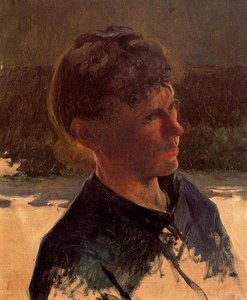
Retrato de José Jiménez Aranda

As 76 Pinturas Mais Famosas de José Jiménez Aranda, Cada Uma Única

Atualizado em Novembro 2026 · classificado pela nossa pontuação de popularidade (pesquisas, visitas e pedidos de cada obra) · 76 obras de José Jiménez Aranda em nosso catálogo

Em resumo

Una desgracia (1890) é a pintura de José Jiménez Aranda que mais atrai olhares. Depois disso, o olhar recai sobre El Quijote 4 e Small naturalists. Entre as 76 obras de José Jiménez Aranda em nosso catálogo, estas 76 são as mais famosas, cada uma uma original única apresentada com o seu ano, o seu museu e a razão pela qual perdura.

1837 – 1903, Sevilha Costumbrista Mais obras: Museu do Prado

As 10 principais pinturas de José Jiménez Aranda, sob o olhar da galeria

1
Una desgracia (1890) de José Jiménez Aranda

Una desgracia

1890 · Oil

We are looking at Una desgracia, a work from 1890 by the Spanish painter José Jiménez Aranda. This piece represents a significant moment in the artist's career, marking a shift toward the costumbrismo style that would define much of his later output. It is a somber, black and white depiction of a group of people gathered before a building under construction. The scene, set in the 19th century, captures a…

2
El Quijote 4 de José Jiménez Aranda

El Quijote 4

Oil

The artwork titled El Quijote 4 is a creation by the Spanish painter José Jiménez Aranda. It captures a specific, restless moment drawn from the literary world of Miguel de Cervantes. Within the frame, the knight Don Quixote and his companion Sancho Panza are mounted upon their horses. They move through a landscape of sudden motion, caught in the midst of an encounter or a skirmish involving several other figures.…

3
Small naturalists de José Jiménez Aranda

Small naturalists

Oil On Canvas

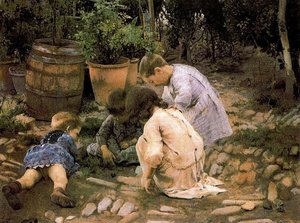
Three children crouch upon the earth, their bodies forming a soft triangle of curiosity. They are bent low, eyes fixed on the small, moving lives hidden among the stones and dirt. A large barrel and several terracotta pots sit in the background, grounding the scene in a lived-in, unmanicured space. The light is diffused, as if filtered through a heavy, overcast sky, casting no harsh shadows upon the ground. Everything…

4
Figaro's Shop (1875) de José Jiménez Aranda

Figaro's Shop

1875 · Oil On Canvas · Walters Art Museum, Baltimore

The afternoon sun spills across a dusty street, casting soft shadows that dance against the weathered plaster of a building. In front of a doorway, life unfolds in a quiet, rhythmic pulse. A man sits with a guitar, his fingers coaxing melodies from the strings, while others gather around a table, lost in the easy gravity of conversation. There is a sense of a world caught in mid-breath. A woman’s…

5
The old naturalist (1880) de José Jiménez Aranda

The old naturalist

1880 · Oil

A single man stands amidst a silent assembly of taxidermied birds. He is dressed in the heavy, structured attire of the 18th century, wearing a tricorne hat and a long frock coat that anchors him to the floorboards. His mouth is open, caught in a sudden gasp or a sharp intake of breath. Around him, the stillness of the museum room is broken only by the presence of these preserved…

6
The Hato (1896) de José Jiménez Aranda

The Hato

1896 · Oil On Canvas

The Hato emerges from the brush of José Jiménez Aranda, a painter who carries the spirit of Seville, Spain, within his work. Born in 1837, Aranda brings a deep understanding of light and shadow to this scene. The painting, created about 1896, captures a quiet, suspended moment in a sun-dappled woodland. It is a scene of rest where a large, reclining hunting dog and a sleeping infant share a peaceful…

7
Spring in Seville (1903) de José Jiménez Aranda

Spring in Seville

1903 · Oil On Canvas · Fundación Banco Santander, Madrid

Spring in Seville by José Jiménez Aranda presents a large-scale oil on canvas composition created about 1903. The subject matter focuses on the various festivities and traditions associated with the season in Seville, Spain. The painting incorporates specific cultural references, including elements of bullfighting, known as corridas de toros. These elements are integrated into a dense arrangement of figures and objects that characterize the local customs of the period.

Pinturas famosas de José Jiménez Aranda, números 11 a 76

11Un lance en la Plaza de Toros (1880) de José Jiménez ArandaUn lance en la Plaza de Toros1880 12Holy Week in Seville (1879) de José Jiménez ArandaHoly Week in Seville1879 · Fine Arts Museums of San Francisco 13The Dancing Lesson (1888) de José Jiménez ArandaThe Dancing Lesson1888 14The painter's family de José Jiménez ArandaThe painter's family 15Couple de José Jiménez ArandaCouple 16Study for ''La murga'' de José Jiménez ArandaStudy for ''La murga'' 17Sketch illustration for''Captain Montoya de José Jiménez ArandaSketch illustration for''Captain Montoya 18Study for ''Un sermón en el patio de los naranjos'' de José Jiménez ArandaStudy for ''Un sermón en el patio de los naranjos'' 19El Quijote de José Jiménez ArandaEl Quijote 20Academical study 1 de José Jiménez ArandaAcademical study 1 21the drunk de José Jiménez Arandathe drunk 22El Quijote 1 de José Jiménez ArandaEl Quijote 1 23El Quijote 6 de José Jiménez ArandaEl Quijote 6 24Preparatory drawing for a painting de José Jiménez ArandaPreparatory drawing for a painting 25The jump of the bull de José Jiménez ArandaThe jump of the bull 26El Quijote 7 de José Jiménez ArandaEl Quijote 7 27Figure de José Jiménez ArandaFigure 28El Quijote 9 de José Jiménez ArandaEl Quijote 9 29Study for ''Los dulces del santo'' de José Jiménez ArandaStudy for ''Los dulces del santo'' 30Portrait of the artist's father de José Jiménez ArandaPortrait of the artist's father 31Study of dogs de José Jiménez ArandaStudy of dogs 32El Quijote 5 de José Jiménez ArandaEl Quijote 5 33Fruit seller de José Jiménez ArandaFruit seller 34Study for ''Tartarín sur les Alpes'' de José Jiménez ArandaStudy for ''Tartarín sur les Alpes'' 35El Quijote 3 de José Jiménez ArandaEl Quijote 3 36Study of a soldier de José Jiménez ArandaStudy of a soldier 37Nude de José Jiménez ArandaNude 38Study of a soldier 1 de José Jiménez ArandaStudy of a soldier 1 39Study for ''Galanterías'' de José Jiménez ArandaStudy for ''Galanterías'' 40small talk de José Jiménez Arandasmall talk 41El Quijote 2 de José Jiménez ArandaEl Quijote 2 42Retrato de Emilio Sala de José Jiménez ArandaRetrato de Emilio Sala 43El Quijote 8 de José Jiménez ArandaEl Quijote 8 44Retrato de Mujer de José Jiménez ArandaRetrato de Mujer 45Juez de José Jiménez ArandaJuez 46Good night de José Jiménez ArandaGood night 47Fugure studies de José Jiménez ArandaFugure studies 48The old canary de José Jiménez ArandaThe old canary 49Study de José Jiménez ArandaStudy 50The sweet saint de José Jiménez ArandaThe sweet saint 51Portrait (Studio) de José Jiménez ArandaPortrait (Studio) 52A gourmet de José Jiménez ArandaA gourmet 53Retrato de José Jiménez ArandaRetrato 54Portrait of the artists mother de José Jiménez ArandaPortrait of the artists mother 55Tocando el violin de José Jiménez ArandaTocando el violin 56Study of horses de José Jiménez ArandaStudy of horses 57Study of horses 1 de José Jiménez ArandaStudy of horses 1 58Paisaje boscoso de José Jiménez ArandaPaisaje boscoso 59Study of a horse de José Jiménez ArandaStudy of a horse 60Paisaje de José Jiménez ArandaPaisaje 61Landscape in Alcalá de Guadaira de José Jiménez ArandaLandscape in Alcalá de Guadaira 62Academical study de José Jiménez ArandaAcademical study 63Landscape with rocks de José Jiménez ArandaLandscape with rocks 64En la iglesia de José Jiménez ArandaEn la iglesiaMuseu do Prado 65Birds Corner de José Jiménez ArandaBirds Corner 66Hombre de color de José Jiménez ArandaHombre de color 67Hombre Sentado de José Jiménez ArandaHombre Sentado 68Woman turning off the light (Good Night) de José Jiménez ArandaWoman turning off the light (Good Night) 69Study for ''Un concierto ante su Eminencia'' de José Jiménez ArandaStudy for ''Un concierto ante su Eminencia'' 70Dos Mujeres de José Jiménez ArandaDos Mujeres 71Retrato de Sorolla de José Jiménez ArandaRetrato de SorollaMuseu do Prado 72The morning in Alcalá de Guadaira de José Jiménez ArandaThe morning in Alcalá de Guadaira 73The departure of Christ's Passion during Holy Week in Seville de José Jiménez ArandaThe departure of Christ's Passion during Holy Week in Seville 74El violinista de José Jiménez ArandaEl violinista 75Pine-trees at Alcalá de Guadaira de José Jiménez ArandaPine-trees at Alcalá de Guadaira 76La esclava de José Jiménez ArandaLa esclavaMuseu do Prado

Pinturas famosas de José Jiménez Aranda, período por período

Os temas que cativaram o olhar de José Jiménez Aranda

Os quatro temas que mais se repetem nestas obras originais, cada um com o seu melhor exemplo.

Os museus que guardam os originais de José Jiménez Aranda

Os 5 museus que detêm a maioria das pinturas desta página.

Museus Cidade Obras de José Jiménez Aranda Pinturas desta lista
Museu do Prado, MadridMuseu do Prado Madrid 3 En la iglesia, Retrato de Sorolla, La esclava
Walters Art Museum, BaltimoreWalters Art Museum Baltimore 1 Figaro's Shop
Fundación Banco Santander, MadridFundación Banco Santander Madrid 1 Spring in Seville
Museo Carmen Thyssen Málaga, MálagaMuseo Carmen Thyssen Málaga Málaga 1 A Pass in the Bullring
Fine Arts Museums of San Francisco, São FranciscoFine Arts Museums of San Francisco São Francisco 1 Holy Week in Seville

José Jiménez Aranda ao longo das décadas: uma obra original única para cada uma

Obras por década

Escolha uma década para ver a obra original que a define.

Pinturas de José Jiménez Aranda: perguntas para a galeria

Qual é a obra mais famosa de José Jiménez Aranda?Revelar a resposta

Una desgracia (1890). El Quijote 4 e Small naturalists vêm a seguir.

Com que idade José Jiménez Aranda criou Una desgracia?Revelar a resposta

53 anos: Una desgracia data de 1890, e José Jiménez Aranda nasceu em 1837.

Quais são as dez pinturas mais famosas de José Jiménez Aranda?Revelar a resposta

Una desgracia, El Quijote 4, Small naturalists, Figaro's Shop, The old naturalist, The Hato, Spring in Seville, The first child, Don Quixote and Sancho Panza e A Pass in the Bullring. O ranking acima apresenta o ano e o museu de cada uma.

Quantas obras de José Jiménez Aranda são conhecidas?Revelar a resposta

Nosso catálogo contém 76 obras de José Jiménez Aranda, datadas de 1870 a 1903.

Onde se pode ver os originais mais famosos de José Jiménez Aranda?Revelar a resposta

Principalmente em Museu do Prado (Madrid), Walters Art Museum (Baltimore) e Fundación Banco Santander (Madrid). A tabela de museus acima lista todos eles.

Em que período José Jiménez Aranda criou as suas pinturas mais conhecidas?Revelar a resposta

Em 1870s: 3 das 76 obras nesta página foram feitas então, sendo Figaro's Shop delas.

Qual pintura famosa de José Jiménez Aranda é a mais antiga e qual é a mais recente?Revelar a resposta

Nesta página, a mais antiga é A Pass in the Bullring (1870) e a mais recente é Spring in Seville (1903).

Quais temas José Jiménez Aranda preferia?Revelar a resposta

Portrait (5), Melancholy (4) e Spanish art (4), entre as 76 obras nesta página.

Com quais materiais José Jiménez Aranda mais pintou?Revelar a resposta

Oil On Canvas, para 4 das 76 obras nesta página.

A qual movimento pertence a obra de José Jiménez Aranda?Revelar a resposta

Costumbrista e Contemporary realism, a julgar pelos originais nesta página.

Quais originais de José Jiménez Aranda posso ver no Museu do Prado?Revelar a resposta

En la iglesia, Retrato de Sorolla e La esclava: o Museu do Prado, Madrid detém 3 das obras desta página.

José Jiménez Aranda: um retrato do artista

A Life Immersed in Light and Shadow

José Jiménez Aranda, born in the vibrant city of Seville in 1837, was a painter who navigated the complex currents of 19th-century Spanish art with remarkable versatility. His life, spanning just over six decades, coincided with an era of profound transformation—socially, politically, and artistically—and his work serves as a compelling reflection of this dynamic period. From rigorous academic training to embracing the influence of masters like Goya and Velázquez, and later finding inspiration in the luminous scenes championed by Mariano Fortuny, Aranda’s artistic journey was one of continuous evolution. He wasn't merely a recorder of his time; he was an interpreter, capturing both the grandeur of historical moments and the quiet intimacy of everyday life with equal skill. The tragic loss of his wife and daughter in 1892 cast a long shadow over his later years, prompting a return to Seville where he dedicated himself to teaching and continued to refine his distinctive style, leaving behind a legacy that continues to resonate within Spanish art history.

Formative Years and Artistic Pilgrimages

Aranda’s artistic inclinations were nurtured from an early age, receiving initial instruction from Manuel Cabral and Eduardo Cano de la Peña. This foundational training proved crucial when, in 1851, he entered the Real Academia de Bellas Artes de Santa Isabel de Hungría in Seville. The Academy provided a rigorous grounding in classical techniques, but it was his subsequent travels that truly ignited his artistic vision. A pivotal moment came during an extended stay in Rome between 1871 and 1878, where he encountered the work of Mariano Fortuny. Fortuny’s influence is palpable in Aranda's paintings from this period—a shared fascination with luminous color, meticulous detail, and a penchant for depicting elegant scenes often set in historical contexts. This wasn't simply imitation; Aranda absorbed Fortuny’s techniques and adapted them to his own sensibilities. Before Rome, however, he immersed himself in the masterpieces of Spanish art at the Museo del Prado in Madrid, studying the works of Goya and Velázquez with a discerning eye. These masters instilled in him an appreciation for dramatic lighting, psychological depth, and the power of observation—qualities that would become hallmarks of his own style. He also spent time as a restorer and designer of stained glass in Jerez de la Frontera, further honing his technical skills and developing a keen understanding of color and composition.

Parisian Refinement and Costumbrista Visions

The years Aranda spent in Paris (1881-1890) were arguably the most commercially successful of his career. He specialized in what became known as “tableautin” painting—small-scale genre scenes, often depicting 18th-century life with a refined elegance reminiscent of Fortuny. These works found favor among collectors and established Aranda’s reputation as a skilled and sophisticated painter. However, upon returning to Madrid, his artistic focus shifted. He began to explore *costumbrismo*, a distinctly Spanish genre that focused on depicting the customs, traditions, and everyday life of the people. Paintings like “Una Desgracia” (A Disaster) from 1890 demonstrate this new direction—a poignant portrayal of human suffering rendered with both realism and emotional depth. This work earned him a first medal at the Nacional exhibition, solidifying his position as a leading figure in Spanish art. It was a move away from the purely decorative towards a more socially conscious form of representation, reflecting a growing engagement with the realities of contemporary Spain.

A Monumental Legacy: Don Quijote and Beyond

While Aranda produced numerous paintings throughout his career—dynamic bullfighting scenes like “A Pass in the Bullring” (1870), insightful social commentaries such as “Slave for Sale” (c. 1897)—it is perhaps his illustrations for a tercentenary edition of *Don Quijote* that represent his most ambitious and enduring achievement. He created an astonishing 689 highlighted drawings for this project, a monumental undertaking that showcased not only his technical virtuosity but also his deep understanding of Cervantes’ masterpiece. These illustrations are more than mere accompaniments to the text; they are interpretations—vivid, expressive renderings of iconic scenes and characters that capture the spirit of the novel. Beyond *Don Quijote*, Aranda dedicated himself to teaching at the Academy of Fine Arts in Seville after returning to his birthplace, nurturing a new generation of Spanish artists including Daniel Vázquez Díaz, Eugenio Hermoso, Ricardo López Cabrera, Manuel González Santos, and Sanz Arizmendi. His influence extended beyond his own artistic output, shaping the course of Spanish painting for years to come. He became a pivotal figure in the Alcala de Guadaíra circle of landscape painters, further enriching the artistic landscape of Spain.

Enduring Significance

José Jiménez Aranda’s legacy lies in the breadth and depth of his work—from the elegant historical scenes influenced by Fortuny to the insightful portrayals of everyday life rooted in *costumbrismo*. He was a master of technique, known for his meticulous attention to detail, refined brushwork, and ability to capture the essence of Spanish culture. His illustrations for Don Quijote stand as a testament to his versatility and artistic vision, cementing his place as a significant figure in 19th-century Spanish art. Though perhaps not as widely recognized today as some of his contemporaries, Aranda’s paintings continue to captivate viewers with their beauty, sensitivity, and enduring relevance—a lasting tribute to a life dedicated to the pursuit of artistic excellence.